

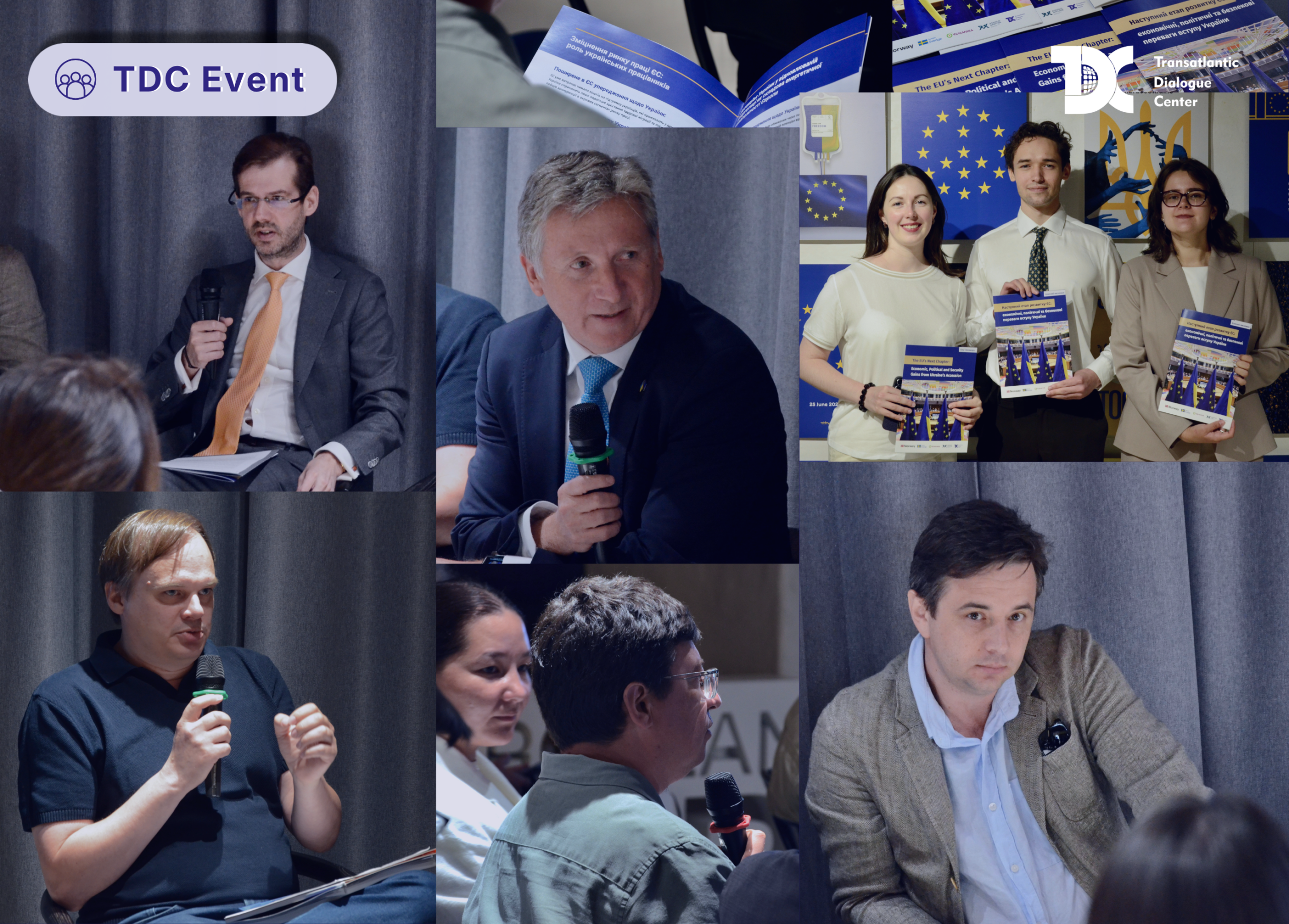
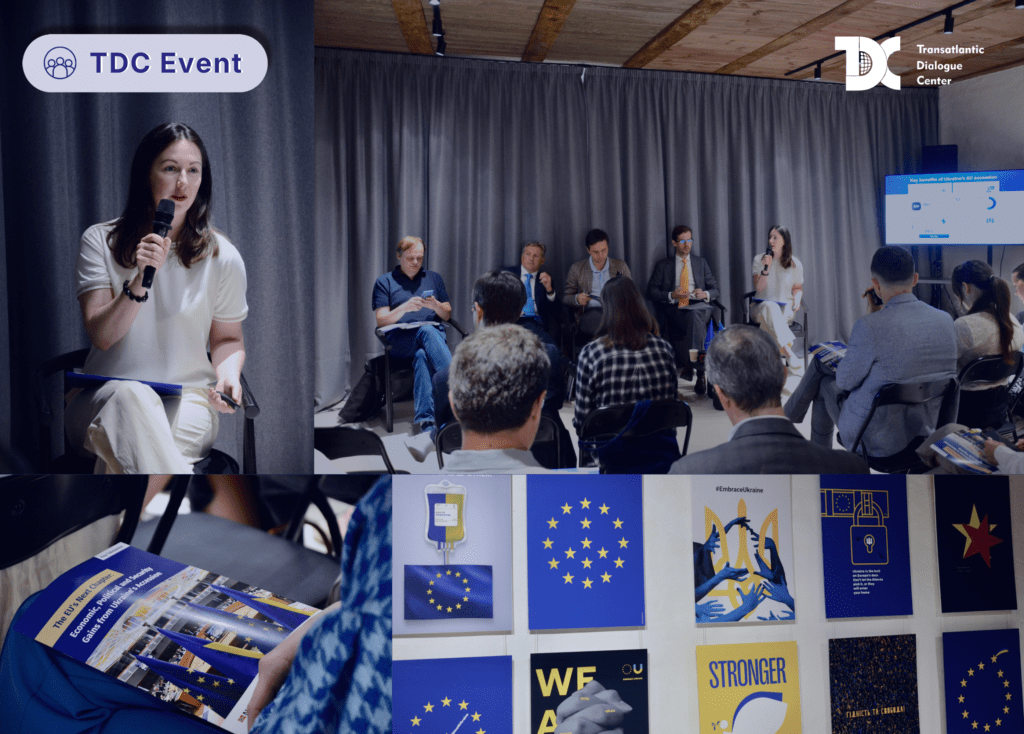
22 липня Transatlantic Dialogue Center (TDC) провів панельну дискусію «Зміна наративу: що ЄС здобуває від вступу України», у партнерстві з EuroHUB. Захід зібрав представників органів влади, аналітиків у сфері політики та експертів громадянського суспільства, щоб переосмислити дебати про розширення, зосередивши їх на стратегічних можливостях і довгострокових перевагах, які членство України дає Європейському Союзу.
Під час заходу TDC презентував своє нове дослідження, «Наступний розділ ЄС: економічні, політичні та безпекові здобутки від вступу України», у якому розглянуто, як вступ України може посилити ЄС у сферах оборони, технологій, сільського господарства та енергетики.
У панелі взяли участь Ростислав Огризко, заступник Державного секретаря Кабінету Міністрів України; Ярослав Тимофєюк, керівник Політичного відділу Представництва ЄС в Україні; Леонід Літра, старший науковий співробітник Центру «Нова Європа» та старший науковий співробітник ECFR; а також Дмитро Шульга, директор програми «Європа і світ» Міжнародного фонду «Відродження». Модераторкою дискусії була Маріанна Фахурдінова, координаторка Програми партнерства ЄС–Україна в TDC та експертка CEPA.
Дискусія була зосереджена на зміні наративу щодо розширення — від уявних витрат до конкретних переваг в окремих секторах. Учасники неодноразово наголошували, що дебати про вступ більше не зводяться лише до геостратегічної необхідності. Європейська автономія, інтеграція оборонної промисловості, експертиза в ІТ та реформа CAP тепер також є частиною обговорення, а членство України розглядається як каталізатор давно назрілих реформ ЄС.
Доповідачі стверджували, що ціна відмови від розширення й надалі залишається справжньою сліпою зоною у поточних дебатах. Історичні паралелі — від занепокоєнь щодо розширення 2004 року, коли вважали, що ЄС стане «надто великим, щоб діяти», до Бухарестського рішення НАТО 2008 року — свідчать, що ціна бездіяльності неодноразово виявлялася вищою за ціну інтеграції.
Дискусія також торкнулася обмежень транзакційної логіки. Підхід до вступу за формулою «ви приймаєте нас, ми вас захищаємо» було визнано таким, що підриває довіру, необхідну для спільного членства в Союзі. Як наголосили учасники панелі, довіру потрібно вибудувати до вступу, а не після нього.
Щодо комунікації учасники зазначили, що існує невикористаний потенціал у тому, як Україна повідомляє державам-членам ЄС про свій поступ у реформах та інтеграції. Хорватська модель підготовки до вступу, за якої експертні делегації безпосередньо презентували досягнення у столицях ЄС, була наведена як приклад, який Україні варто наслідувати.
Ще одним визначеним викликом було розмаїття внутрішніх політичних контекстів у країнах ЄС: 27 відмінних політичних середовищ формують позиції держав-членів, тому універсальний підхід до адвокації не буде ефективним. Рекомендація, що випливала з дискусії, була чіткою: запросити колег із ЄС до відвертого діалогу, прямо відповісти на їхні занепокоєння та зіставити кожне з них із конкретною перевагою у відповідному секторі.
Ключовий висновок: Дискусія підкреслила, що розширення — це не акт благодійності щодо України. Це інвестиція ЄС у власну економічну конкурентоспроможність, безпекову стійкість та інституційне оновлення. Що довше відкладається це рішення, то вищою стає ціна бездіяльності.
TDC висловлює вдячність спікерам за змістовну та орієнтовану на майбутнє дискусію. Запис усього заходу доступний тут.
Звіт підготовлено Центром трансатлантичного діалогу за підтримки Фонду «Аскольд і Дір» у межах проєкту «Сильне громадянське суспільство України — рушій реформ і демократії», який реалізує ISAR Ednannia за фінансування Норвегії та Швеції. За зміст цієї публікації відповідає виключно Центр трансатлантичного діалогу; він у жодному разі не може вважатися таким, що відображає погляди урядів Норвегії та Швеції або ISAR Ednannia.
Цей текст автоматично перекладено з англомовного оригіналу, який досі доступний при зміні мови сайту на англійську