TDC举办专题讨论会“改变叙事:乌克兰加入欧盟能为欧盟带来什么”

Clock Icon 3 分钟阅读
7 月 22, 2026

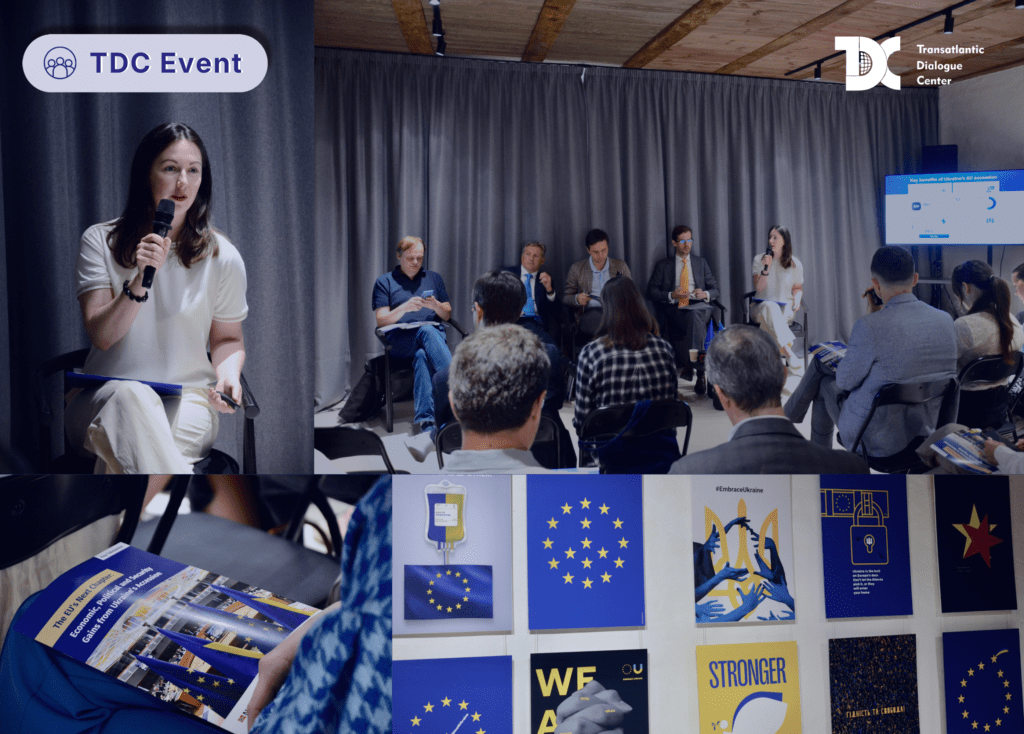
On July 22, the Transatlantic Dialogue Center (TDC) held a panel discussion, “Changing the Narrative: What the EU Gains from Ukraine’s Accession”, in partnership with EuroHUB. The event brought together government officials, policy analysts, and civil society experts to reframe the enlargement debate around the strategic opportunities and long-term benefits Ukraine’s membership offers the European Union.

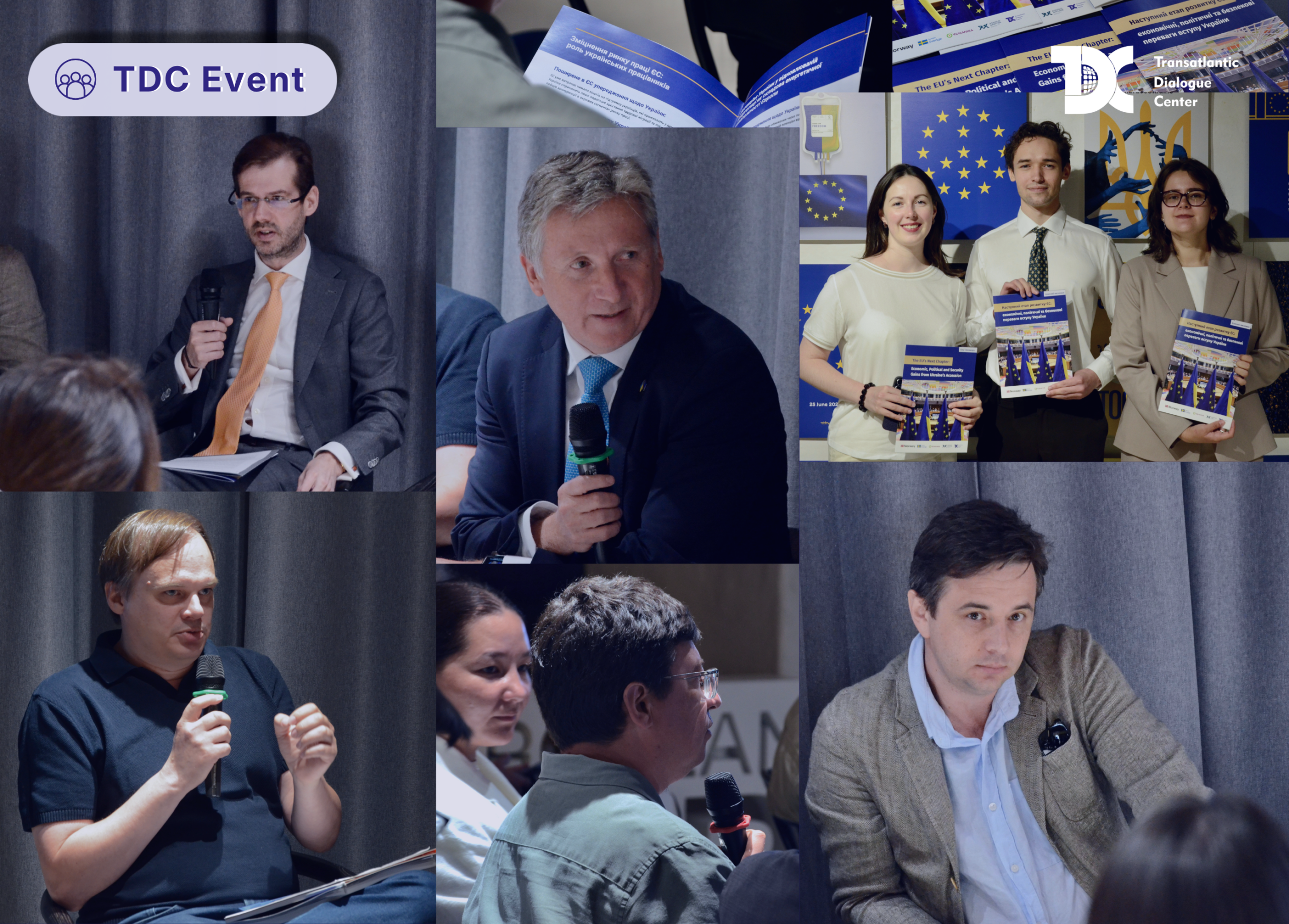
During the event, TDC presented its latest research, “The EU’s Next Chapter: Economic, Political and Security Gains from Ukraine’s Accession”, which examines how Ukraine’s accession could strengthen the EU across defense, technology, agriculture, and energy.

本次讨论会嘉宾包括Rostyslav Ohryzko,乌克兰内阁副国务秘书;Jarosław Timofiejuk,欧盟驻乌克兰代表团政治处处长;Leonid Litra,新欧洲中心高级研究员及ECFR高级研究员;以及Dmytro Shulga,国际复兴基金会“欧洲与世界”项目主任。讨论会由Marianna Fakhurdinova主持,她是TDC欧盟—乌克兰伙伴关系项目协调员及CEPA研究员。

The discussion centered on shifting the enlargement narrative from perceived costs to concrete, sector-specific gains. A recurring theme was that the accession debate is no longer framed solely around geostrategic necessity. European autonomy, defense industry integration, IT expertise, and CAP reform are now part of the conversation, with Ukraine’s membership positioned as a catalyst for long-overdue EU reforms.

Speakers argued that the cost of non-enlargement remains the real blind spot in current debates. Drawing on historical parallels from the 2004 enlargement concerns about the EU becoming “too big to act” to NATO’s 2008 Bucharest decision, the cost of inaction has repeatedly proven higher than the cost of integration.

The discussion also addressed the limits of transactional logic. Framing accession as “you take us, we defend” was identified as undermining the trust required for shared membership. Trust, panelists emphasized, must be built before accession, not after it.

Regarding communication, participants noted that there is untapped potential in how Ukraine communicates its reform and integration progress to EU member states. Croatia’s pre-accession playbook, sending expert delegations to present achievements directly in EU capitals, was cited as a model Ukraine should replicate.

A further challenge identified was the diversity of domestic political contexts across the EU: 27 distinct environments shape member-state positions, and a one-size-fits-all advocacy approach will not be effective. The recommendation that emerged from the discussion was clear: invite EU counterparts into an honest dialogue, address their concerns directly, and pair each concern with a concrete, sector-specific benefit.

Key takeaway: The discussion underscored that enlargement is not an act of charity toward Ukraine. It represents an investment by the EU in its own economic competitiveness, security resilience, and institutional renewal. The longer this decision is postponed, the higher the cost of inaction becomes.

TDC extends its gratitude to the speakers for a substantive and forward-looking discussion. A recording of the full event is available here.

本报告由跨大西洋对话中心在Askold and Dir Fund支持下编制,是“乌克兰强大公民社会——改革与民主的推动力”项目的一部分。该项目由ISAR Ednannia实施,并由挪威和瑞典资助。本出版物内容完全由跨大西洋对话中心负责,绝不应被视为反映挪威政府、瑞典政府及ISAR Ednannia的观点。

本文由英文原文自动翻译而成;切换网站语言至英语后,仍可查看英文原文。