

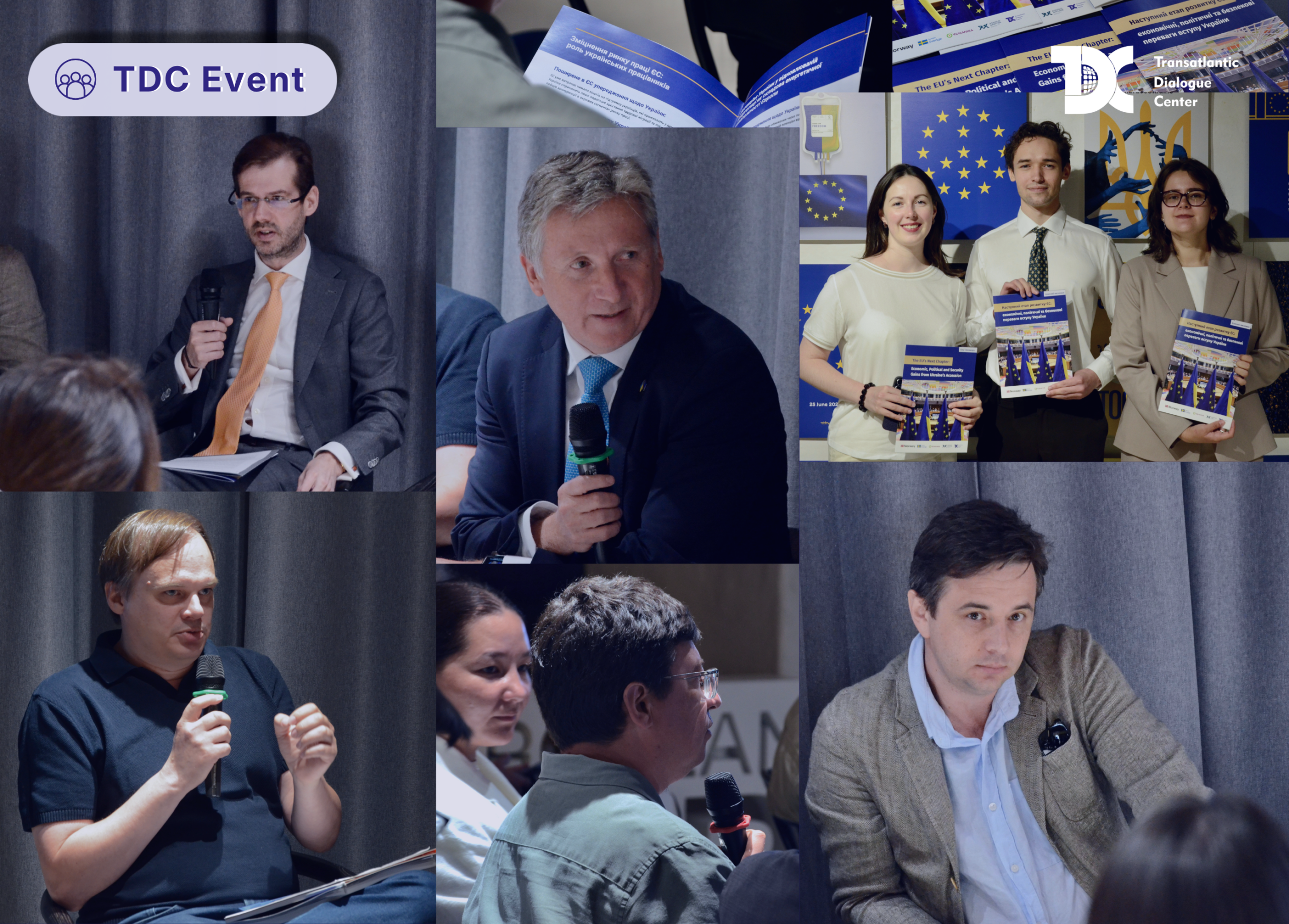
El 22 de julio, el Transatlantic Dialogue Center (TDC) celebró un panel, «Changing the Narrative: What the EU Gains from Ukraine’s Accession», en colaboración con EuroHUB. El evento reunió a funcionarios gubernamentales, analistas de políticas públicas y expertos de la sociedad civil para replantear el debate sobre la ampliación en torno a las oportunidades estratégicas y los beneficios a largo plazo que la adhesión de Ucrania ofrece a la Unión Europea.
Durante el evento, TDC presentó su investigación más reciente, «The EU’s Next Chapter: Economic, Political and Security Gains from Ukraine’s Accession», que examina cómo la adhesión de Ucrania podría fortalecer a la UE en los ámbitos de la defensa, la tecnología, la agricultura y la energía.
El panel contó con la participación de Rostyslav Ohryzko, Vicesecretario de Estado del Gabinete de Ministros de Ucrania; Jarosław Timofiejuk, Jefe de la Sección Política de la Delegación de la UE en Ucrania; Leonid Litra, Investigador Sénior del New Europe Center y Senior Fellow en ECFR; y Dmytro Shulga, Director del Programa «Europa y el Mundo» de la International Renaissance Foundation. La discusión fue moderada por Marianna Fakhurdinova, Coordinadora del Programa de Asociación UE-Ucrania del TDC e Investigadora en CEPA.
La discusión se centró en desplazar la narrativa sobre la ampliación desde los costes percibidos hacia beneficios concretos y específicos por sectores. Un tema recurrente fue que el debate sobre la adhesión ya no se enmarca únicamente en torno a la necesidad geoestratégica. La autonomía europea, la integración de la industria de defensa, la experiencia en TI y la reforma de la PAC forman ahora parte de la conversación, con la membresía de Ucrania presentada como un catalizador de reformas de la UE largamente postergadas.
Los ponentes argumentaron que el coste de la no ampliación sigue siendo el verdadero punto ciego de los debates actuales. A partir de paralelismos históricos, desde las preocupaciones durante la ampliación de 2004 sobre una UE que se volviera «demasiado grande para actuar» hasta la decisión de la OTAN en Bucarest en 2008, el coste de la inacción ha demostrado repetidamente ser mayor que el coste de la integración.
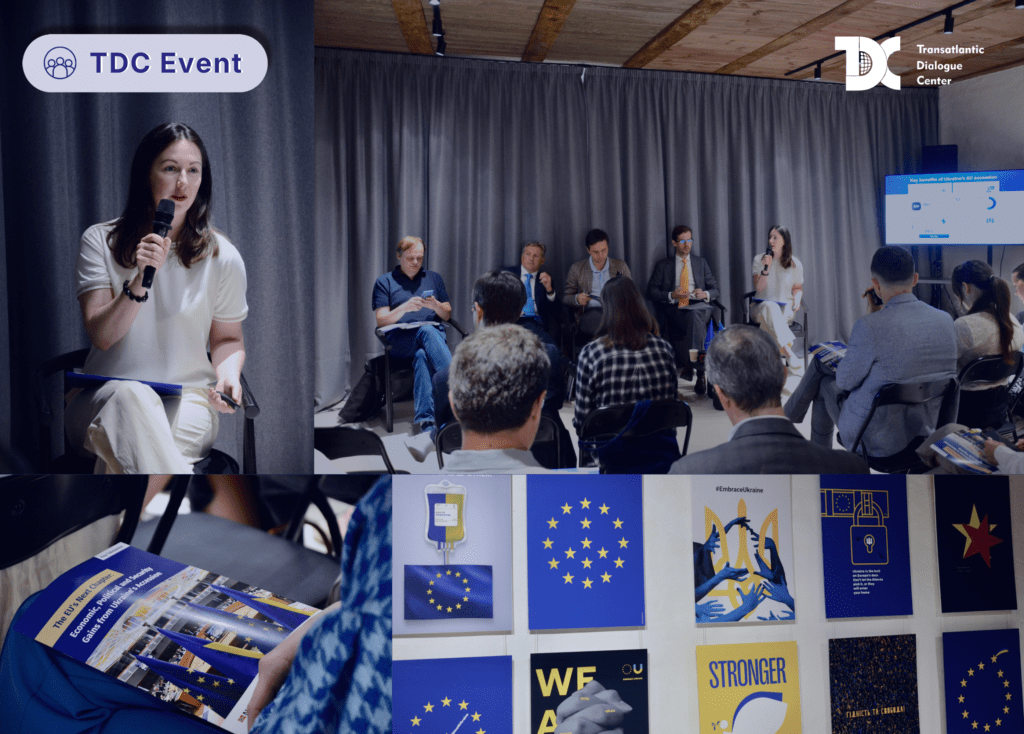
La discusión también abordó los límites de la lógica transaccional. Presentar la adhesión como «ustedes nos aceptan, nosotros los defendemos» fue identificado como un enfoque que socava la confianza necesaria para una membresía compartida. Los panelistas subrayaron que la confianza debe construirse antes de la adhesión, no después.
En cuanto a la comunicación, los participantes señalaron que existe un potencial no aprovechado en la forma en que Ucrania comunica sus avances en materia de reformas e integración a los Estados miembros de la UE. El modelo croata previo a la adhesión, basado en el envío de delegaciones de expertos para presentar los logros directamente en las capitales europeas, fue citado como un ejemplo que Ucrania debería replicar.
Otro desafío identificado fue la diversidad de contextos políticos internos dentro de la UE: 27 entornos distintos configuran las posiciones de los Estados miembros, por lo que un enfoque de incidencia único para todos no será eficaz. La recomendación surgida de la discusión fue clara: invitar a las contrapartes de la UE a un diálogo honesto, abordar directamente sus preocupaciones y vincular cada inquietud con un beneficio concreto y específico por sector.
Conclusión clave: La discusión subrayó que la ampliación no es un acto de caridad hacia Ucrania. Representa una inversión de la UE en su propia competitividad económica, resiliencia en materia de seguridad y renovación institucional. Cuanto más se posponga esta decisión, mayor será el coste de la inacción.
TDC expresa su agradecimiento a los ponentes por una discusión sustantiva y orientada al futuro. La grabación completa del evento está disponible aquí.
El informe fue elaborado por el Transatlantic Dialogue Center con el apoyo del Askold and Dir Fund, en el marco del proyecto «Strong Civil Society of Ukraine, a Driver towards Reforms and Democracy», implementado por ISAR Ednannia y financiado por Noruega y Suecia. El contenido de esta publicación es de exclusiva responsabilidad del Transatlantic Dialogue Center y no puede interpretarse en modo alguno como reflejo de las opiniones del Gobierno de Noruega, el Gobierno de Suecia ni de ISAR Ednannia.