
 15 دقائق للقراءة
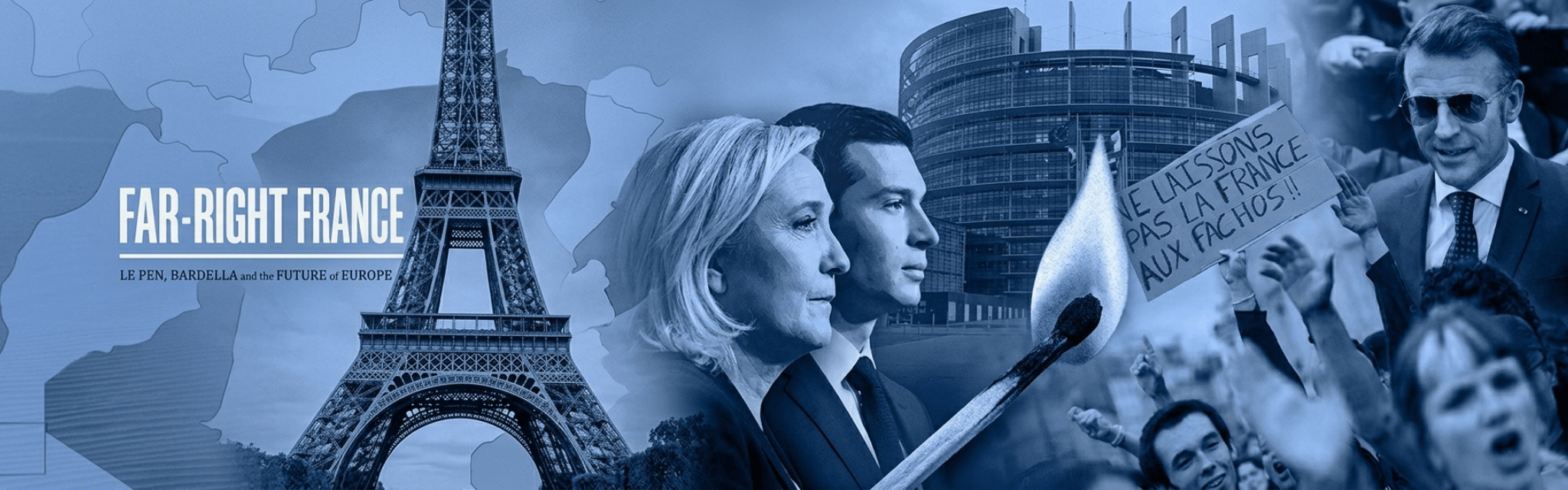
France, one of the key pillars of European strategic autonomy and wartime support for Ukraine, is entering a period of political uncertainty. As the 2027 presidential election approaches, it remains unclear whether Paris will preserve its current foreign-policy course or move toward a new vision of France’s role in Europe and the world. With Emmanuel Macron leaving the Élysée and mainstream liberal forces losing ground to both the Rassemblement National (RN) and the left-wing Nouveau Front Populaire, French foreign policy may soon be shaped by actors outside the traditional governing establishment.
This paper focuses on Jordan Bardella, the leader of the RN and one of the most consequential figures in contemporary French politics. Once viewed largely as a useful instrument in Marine Le Pen’s broader strategy, Bardella is no longer merely a protest-vote candidate or a loyalist protégé. By refining the party’s public image after decades of Le Pen family dominance, he has helped transform the RN from a marginalized force into a party preparing for power. Recent polling underscores this shift: according to an Ifop poll, Bardella could secure around 37% of the vote in the first round of the 2027 presidential election, outpacing both far-left and centrist rivals and polling higher than Marine Le Pen herself.
Understanding Bardella’s foreign-policy recalibration is therefore essential for assessing France’s future role in European security and Ukraine’s relations with Paris.
Jordan Bardella’s political importance lies less in ideological originality than in political packaging. Born in the Parisian suburbs and entering the National Front — later rebranded as the Rassemblement National — at the age of 16, Bardella quickly rose through the party’s hierarchy. By his early twenties, he had become one of the RN’s most visible young figures and was widely perceived as a disciplined protégé of Marine Le Pen.
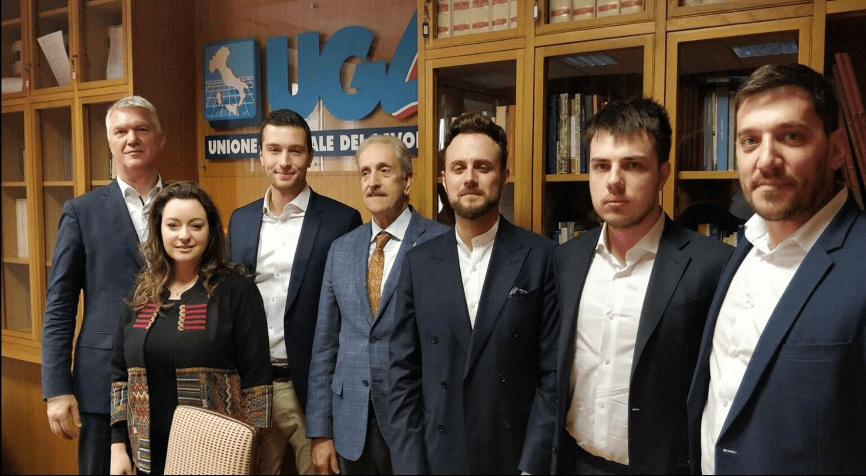
His early political direction reflected the RN’s traditional worldview. He was a vocal critic of President Emmanuel Macron’s European integration policies, which were to be substituted by euroscepticism, anti-globalism, strict anti-immigration policies, and a long-standing suspicion of Atlanticism. His early foreign-policy gestures also reflected the party’s historical sympathies toward Russia. He used sarcastic rhetoric to defend Vladimir Putin’s domestic approval ratings and, in 2019, organized a conference in Rome for European far-right youth movements, where representatives connected to United Russia and other Russian right-wing circles were present. Unlike some older RN figures, however, Bardella has generally avoided being personally defined by pro-Russian affiliations, even though his political formation took place inside a party long shaped by Moscow-friendly networks.
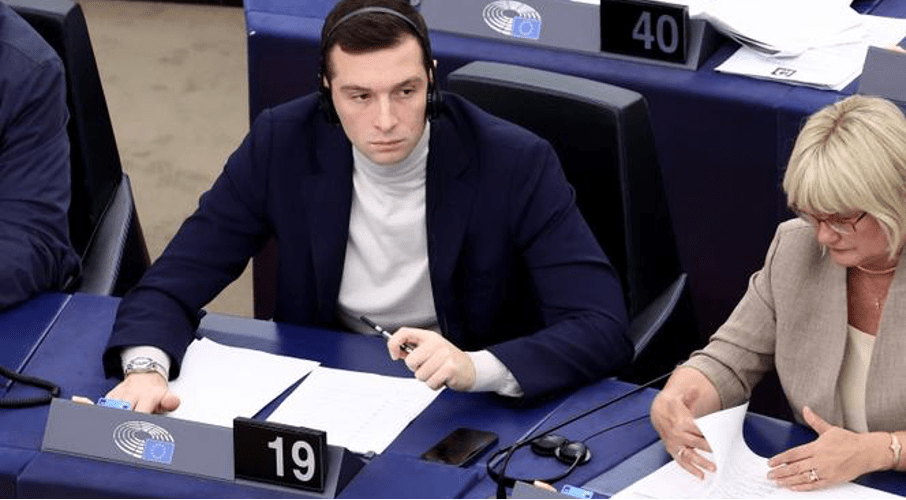
A turning point came in 2019, when Marine Le Pen appointed Bardella to lead the RN list in the European Parliament elections. The party came first in France, turning the 23-year-old into one of the youngest Members of the European Parliament and giving him national visibility. His record in Brussels was criticized for absenteeism (political opponents, such as left-wing MEP Manon Aubry, famously labeled him a “ghost parliamentarian” due to his rare appearances at parliamentary sessions), but the mandate served its main political purpose: Bardella became the youthful, disciplined, media-friendly face of a party seeking to move beyond its old reputation.
Throughout the COVID-19 pandemic, Bardella tactically capitalized on public discontent. He maintained strict partisan discipline and heavily criticized government measures. He rigorously opposed mandated lockdowns and compulsory vaccination, viewing them as infringements on civil liberties, and argued that the rejection of the Russian vaccine was driven by geopolitical animosity rather than scientific assessment. Taken together, Bardella's leadership of the RN's successful 2019 European Parliament campaign and his high-profile opposition to the government's Covid-19 policies were the two main catalysts for his rise from an internally recognized party figure to one of France's most prominent national politicians.
Since then, Bardella has built his appeal around a polished and accessible public image. His social media presence, especially among younger voters, and his carefully controlled public persona have allowed him to present the RN as younger, more professional, and more respectable. French media have sometimes described him as the “Ken of French politics” — a label that captures both his visual appeal and the criticism that his political surface often appears smoother than his ideological substance. While it sometimes takes hundreds of pages for some politicians to articulate their beliefs, Bardella instead sticks to the general flow of French politics, presenting exactly what his audience wants to hear from him.
This ambiguity is central to his political function. Bardella has rarely articulated a foreign-policy doctrine independent from the RN’s broader strategic needs. His strength lies not in producing new ideas, but in adapting the party’s message to the political moment. In this sense, he is not a revolutionary figure within the RN. He is the most effective representative of its next stage: making an old far-right brand appear electorally viable without fully revising its nationalist core.
To understand the significance of Bardella’s rise, it is necessary to understand the legacy he inherited. The Rassemblement National traces its origins to the National Front, founded in 1972 by Jean-Marie Le Pen. For decades, the party remained on the margins of French politics because of its nationalism, anti-immigration agenda, and repeated controversies surrounding its founder. A major breakthrough came in 2002, when Jean-Marie Le Pen unexpectedly reached the second round of the presidential election, proving that the far right could no longer be treated as politically irrelevant.
Marine Le Pen later launched a strategy of de-demonisation, designed to make the party acceptable to a broader electorate. This included expelling her father from the party, changing its name, softening its tone, and gradually abandoning some of its most radical proposals. Yet even under Marine Le Pen, the RN retained a strong reputation for Euroscepticism, opposition to Atlanticism, and closeness to Russia. Throughout the 2010s, the party criticized NATO, opposed deeper European integration, and cultivated political and financial links with Moscow, most notably through a €9 million loan from a Moscow-linked bank in 2014.
Russia’s full-scale invasion of Ukraine made this legacy politically costly. What had once been acceptable to parts of the French electorate during a period of Euroscepticism and relative sympathy for Russia became a liability after 2022. A majority of French citizens condemned Russia’s invasion, while support for Ukraine became part of the mainstream political consensus. Bardella therefore took over the RN at a moment when the party had to distance itself from its old Russia-friendly image without alienating its traditional electorate.
His response has been evolutionary rather than revolutionary. Under Bardella’s leadership, the RN has adjusted its public line on Russia, abandoned explicit Frexit-style rhetoric, courted business and investor circles, and broadened its appeal beyond traditional far-right networks. Yet this should not be mistaken for a full ideological transformation. The RN still maintains a nationalist platform centered on sovereignty, immigration control, protectionism, and skepticism toward supranational institutions. Thus, Bardella’s project is not to remake the party from scratch, but to remove the liabilities that prevent it from governing.
This is the essence of the Bardella model: normalization without full moderation.
Ukraine is the area where Bardella’s foreign-policy recalibration matters most for Kyiv. The RN’s historical association with Russia created a serious credibility problem after 2022. Bardella had to respond to two pressures at once: the pro-Ukrainian shift in French public opinion and the continued caution, skepticism, or anti-interventionism of parts of the RN electorate.
Bardella’s answer has been a carefully constructed middle position. He has condemned Russia’s full-scale invasion, recognized Ukraine’s sovereignty, and acknowledged Russia as a threat to French and European security. Yet he has also maintained strict limits on what France should do for Ukraine. His position is therefore not one of open hostility toward Kyiv, but of conditional and restrained support.
A first visible shift in Bardella’s public tone came in 2023. He stated that European leaders had been naïve about Vladimir Putin’s ambitions and argued that “one cannot be a European patriot and remain indifferent to the violation of the sovereignty of a European state.” He also suggested that the war could not end without the withdrawal of Russian forces and the restoration of Ukrainian sovereignty. These statements marked a clear departure from the RN’s older rhetoric, which had often treated Russia as a natural partner or at least as a counterweight to American and EU influence.
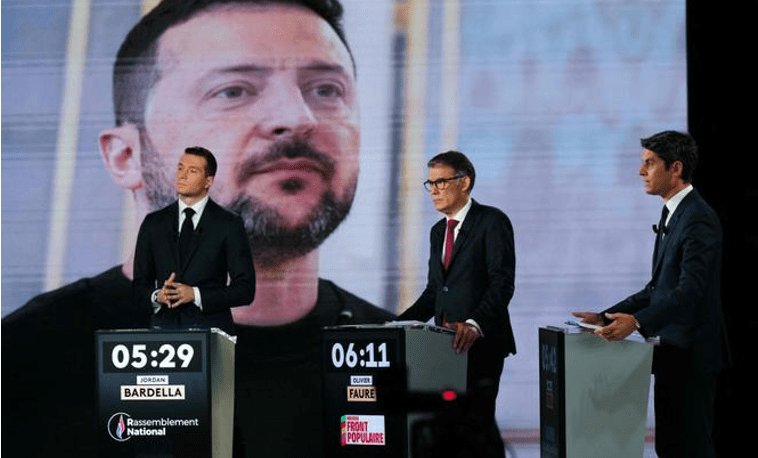
However, Bardella’s support was limited from the beginning. While he did not reject military assistance to Ukraine outright, he framed it primarily in defensive terms. When asked about weapons such as tanks, aircraft, or long-range missile systems, Ukraine needed for more ambitious battlefield operations, he avoided committing to their delivery. This hesitation simultaneously satisfied both the RN’s traditional anti-interventionist instincts and the preferences of its electorate. At the time, a significant share of RN voters followed the war closely and supported some level of assistance to Ukraine, but remained deeply wary of escalation or direct French involvement.
The 2024 electoral cycle sharpened these limits. Ahead of both the European Parliament elections and the French legislative elections, the RN’s campaign remained focused mainly on domestic issues: immigration, purchasing power, institutional reform, and criticism of Macronism. The party’s platform made little room for Ukrainian security beyond broader references to French sovereignty and the need to preserve national control over nuclear deterrence. This absence is itself revealing: Bardella was willing to condemn Russia when necessary, but he did not seek to build a proactive Ukraine policy into the RN’s governing agenda.
At the same time, the war remained politically relevant in France, especially after President Macron raised the possibility of Western troops being deployed to Ukraine. Bardella responded by establishing one of his clearest “red lines”: no French troops on Ukrainian soil. He argued that direct French military involvement would risk escalation with a nuclear power and rejected any scenario in which France would become a direct party to the war. If Bardella agreed to the necessity of using direct French military power, he would have satisfied only 15% of the RN electorate. Thus, such a move allowed him to present himself as responsible and protective of French interests while avoiding the appearance of sympathy for Moscow.
A second red line concerned long-range weapons. Bardella opposed or avoided supporting the delivery of long-range missiles to Ukraine, again framing the issue through the risk of escalation. This is one of the most important limitations from Kyiv’s perspective. For Ukraine, long-range capabilities are central to degrading Russian military logistics, striking occupation infrastructure, and reducing Russia’s ability to wage war. Bardella’s reluctance, therefore, suggests that under his leadership, French support could remain politically visible but militarily constrained.
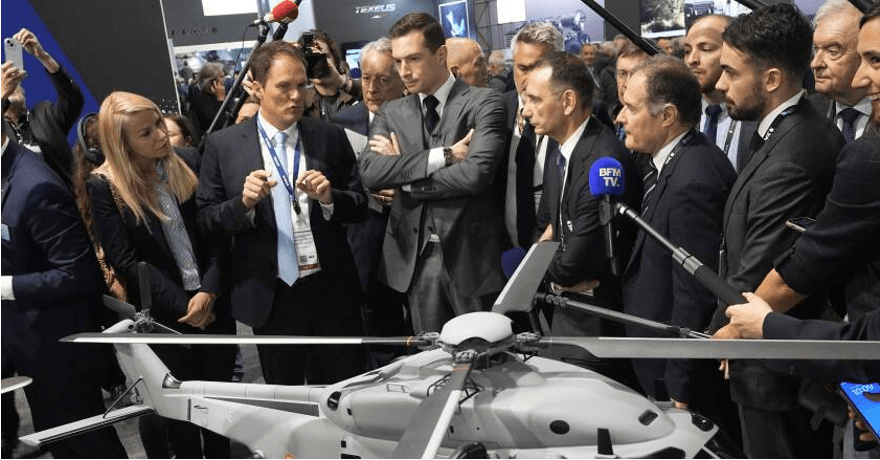
Bardella has also opposed the accelerated accession of Ukraine to the European Union. He has argued that fast-tracking Ukraine’s membership could drag the EU more directly into the war and deepen the Union’s internal burdens. This position fits the RN’s broader European policy: the party no longer campaigns for Frexit, but remains hostile to enlargement, further federalization, and the transfer of additional authority to EU institutions. For Ukraine, this means that a Bardella-led France could become a significant obstacle not only on military policy, but also on the EU accession track.
His institutional record in the European Parliament reinforces this ambiguity. Bardella has supported some Ukraine-related resolutions, but mainly those centered on humanitarian or accountability issues rather than more strategic military commitments. These include initiatives related to the return of Ukrainian children deported by Russia, the protection of women and civilians affected by the war, and accountability for Russian attacks on Ukrainian civilians. Such votes show that Bardella is not unwilling to support Ukraine in principle, especially on issues that are morally clear and politically non-controversial. Yet they also indicate the boundaries of his support: humanitarian solidarity is easier for the RN to accept than strategic military escalation or EU enlargement.
Bardella’s position should not be read as a simple continuation of the RN’s old pro-Russian line. Since 2022, he has repeatedly criticized Russia, recognized the threat it poses, and tried to distance the party from its earlier Moscow-friendly image. He also publicly diverged from parts of the RN’s old guard, including on symbolic questions such as whether Vladimir Putin should be treated as an acceptable diplomatic guest while Ukraine is fighting Russia’s invasion. These gestures matter because they show that the RN under Bardella understands the political costs of open pro-Russianism.
But the shift has clear limits. Bardella’s Ukraine policy is less a strategic commitment to Ukrainian victory than an effort to define the minimum level of support compatible with French public opinion and RN electoral politics. He can condemn Moscow, support Ukrainian sovereignty, and endorse humanitarian initiatives. But he remains reluctant on the issues that would require higher political risk: long-range weapons, direct military deterrence, accelerated EU membership, and any framing of Ukraine’s defense as a binding French strategic obligation. His position can be summarized as support within politically safe limits.
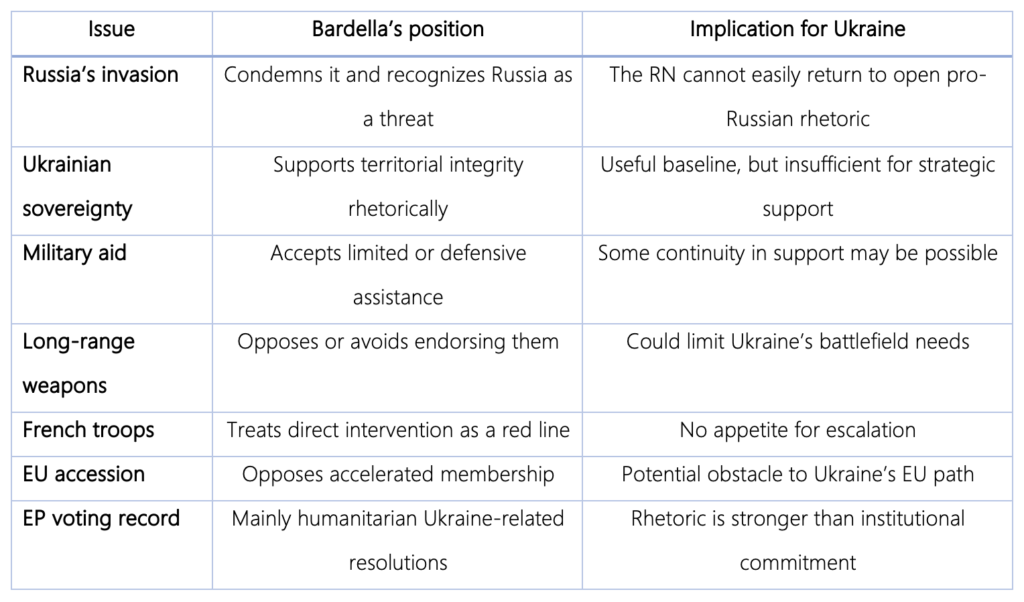
For Kyiv, the most realistic risk is therefore not that a Bardella-led France would abruptly align with Russia. The greater risk is that French support would become narrower, more conditional, and more focused on politically safe areas. France could continue to support Ukraine rhetorically and diplomatically, while avoiding the most consequential forms of assistance. In practice, this could mean greater emphasis on humanitarian aid, civilian protection, reconstruction, and accountability for Russian crimes, but less willingness to lead on advanced weapons, security guarantees, or Ukraine’s EU integration.
This creates a difficult but not impossible environment for Ukrainian diplomacy. Bardella’s sensitivity to public opinion means that Ukraine’s position in France would depend not only on elite-level contacts but also on the broader French public debate. If French voters associate Ukraine primarily with escalation, cost, or EU enlargement fatigue, Bardella will have little incentive to move beyond limited support. If, however, Ukraine is framed as central to European security, French sovereignty, and resistance to Russian imperial pressure, the political space for cooperation may be wider.
Humanitarian issues may offer the most accessible entry point. The return of deported Ukrainian children, protection of civilians, accountability for war crimes, and support for reconstruction are difficult for the RN to oppose openly and can be framed in terms of justice, sovereignty, and protection of European civilians. However, Ukraine should avoid allowing the relationship to be reduced to a humanitarian consensus alone. The broader message should remain that Ukraine’s defense is part of Europe’s defense — and that limiting Russia’s ability to wage war is not a favor to Kyiv, but a strategic interest for France.
In this sense, Bardella represents a more complex challenge than the older French far right. He is not simply repeating Moscow’s narratives, but he is also not offering Ukraine a reliable strategic partnership. His position is best understood as controlled support: enough to avoid the stigma of pro-Russianism, but limited enough to remain acceptable to a nationalist, anti-escalation electorate.
Bardella’s European policy reflects the same pattern of adaptation. The RN is no longer campaigning for France to leave the European Union or the eurozone. Instead, Bardella promotes a looser “Europe of Nations” built around sovereignty, national vetoes, border control, and reduced powers for EU institutions.
This marks a significant change in method, though not necessarily in worldview. The old RN often presented European integration as something France should escape. Bardella presents it as something France should reshape. He has rejected Frexit and instead argued that the EU is “obsolete” in its current form and needs a new architecture that restores national sovereignty over migration, regulation, energy, and economic policy. He has also called for reducing France’s financial contribution to the EU budget and limiting the authority of the European Commission.
In his 2024 speech “Building the 21st-century Europe,” Bardella framed the European elections as a referendum on Macron’s leadership and outlined the RN’s vision of a Europe that “protects, produces, and respects national sovereignty.” This included stricter immigration controls, rejection of the EU Migration Pact, economic protectionism, energy sovereignty, priority for French nuclear power, opposition to further enlargement, and preservation of France’s veto power.
The RN’s 2024 campaign slogan — “Yes to France, Yes to Europe” — captured this repositioning. The party no longer seeks to appear anti-European in the sense of opposing Europe’s existence. Instead, it presents itself as the defender of a different Europe: more national, more protectionist, less federal, and more hostile to supranational constraints.
For Europe, Bardella’s strategy is significant because it illustrates a broader lesson for the far right after Brexit and Russia’s invasion of Ukraine. Openly leaving the EU has become less attractive. The more electorally viable strategy is to remain inside the institutional framework while trying to redirect it from within. Bardella is not trying to destroy the EU from the outside. He is trying to redefine what the EU should be from the inside.
For Ukraine, this matters directly. A France led by such a vision would likely be more skeptical of EU enlargement, more defensive of national vetoes, and less enthusiastic about treating Ukraine’s accession as a geopolitical priority. Even if France remained inside the European consensus on Ukraine, it could become a more cautious and obstructive actor on the EU track.
Bardella’s approach to the United States is similarly reactive and interest-based rather than doctrinal. The RN’s programs do not contain a detailed strategy for Washington. Instead, the party relies on familiar themes of French sovereignty, European strategic autonomy, and resistance to external pressure.
Bardella initially welcomed Donald Trump’s return to the presidency as a choice made by the American electorate and praised elements of Trump’s economic patriotism. Yet he has also distanced himself from automatic alignment with Washington. In response to Trump’s tariff threats, Bardella called for a firm European response and argued that relations with the United States should be guided by strategic interests rather than ideological affinity. The RN also reportedly declined overt political support from Trump-linked circles, seeking to avoid the impression of foreign interference in French politics.
This distancing intensified when association with parts of the American right became politically costly. Bardella withdrew from a conservative rally in Washington after Steve Bannon made a gesture widely condemned as Nazi-like. He has also criticized certain US policies as imperial or erratic, especially when such criticism aligned with French public skepticism toward American power.
At the same time, Bardella has softened parts of the RN’s traditional NATO position. He has stated that the party would not support leaving NATO’s integrated command while the war in Ukraine continues. This does not turn the RN into an Atlanticist party. Rather, it shows once again that Bardella is willing to suspend or adjust older party positions when they become strategically inconvenient.
His US policy, therefore, reinforces the broader pattern of his foreign policy: selective alignment, strong emphasis on sovereignty, and careful adaptation to domestic opinion. He can admire Trump-style economic nationalism without becoming a French Trumpist. He can speak the language of strategic autonomy without necessarily committing to a more ambitious European security role in Ukraine.
For Kyiv, this ambiguity matters. Strategic autonomy under Bardella could mean a stronger European capacity to act independently. But it could also become a justification for a more transactional France, less willing to take risks for Ukraine and more focused on limiting external commitments.
Bardella’s rise does not mean that Ukraine should expect an openly hostile France. It does mean that Ukraine should prepare for a possible French leadership whose support is more conditional, more symbolic, and more dependent on domestic political incentives.
First, Ukrainian messaging should connect support for Kyiv to French and European sovereignty. Bardella’s political language is built around sovereignty, national interest, and protection from external pressure. Ukraine should therefore avoid framing support as a moral demand or an obligation imposed by Brussels. Instead, it should emphasize that resisting Russian aggression strengthens European security, protects French strategic autonomy, and prevents Moscow from reshaping the continent by force.
Second, Ukraine should work with French public opinion, not only with political elites. If Bardella’s foreign policy is highly sensitive to domestic incentives, then the long-term sustainability of French support for Ukraine will depend on whether French citizens see Ukrainian security as connected to their own. Public diplomacy, cultural outreach, expert engagement, and communication with conservative and right-leaning audiences in France may become increasingly important.
Third, humanitarian issues can serve as an entry point, but they should not replace the security agenda. The return of deported Ukrainian children, protection of civilians, accountability for Russian war crimes, and reconstruction are areas where Bardella and the RN may find it easier to support Ukraine without alienating their electorate. However, Kyiv should not allow cooperation to be reduced only to humanitarian questions. The broader argument must remain that Ukraine’s defense is part of Europe’s defense. Fourth, Ukraine should prepare for a more transactional relationship. A Bardella-led France would likely evaluate support for Kyiv through the lens of French political benefit, public opinion, and national interest. This does not make cooperation impossible. But it would require more careful framing, more attention to domestic French debates, and more emphasis on why helping Ukraine is compatible with the RN’s own language of sovereignty and strategic autonomy.
The principal conclusion of this paper is that Bardella’s foreign policy should be interpreted primarily through the prism of domestic politics. His positions on Ukraine, the European Union, the United States, and NATO have evolved not because of a coherent geopolitical doctrine, but because of his effort to align the RN with prevailing trends in French public opinion while preserving the party’s nationalist identity.
Bardella is neither an old-style pro-Russian radical nor a reliable pro-Ukrainian partner. Under his leadership, the RN has adopted the most Ukraine-compatible position in its history: it condemns Russia’s invasion, recognizes Ukraine’s sovereignty, and acknowledges the Russian threat. Yet this position remains limited and conditional. Bardella opposes direct French military involvement, rejects or avoids support for long-range weapons, resists accelerated Ukrainian EU accession, and frames foreign policy through the preferences of his electorate.
His European policy follows the same logic. Bardella has abandoned Frexit rhetoric, but not the RN’s sovereigntist worldview. He no longer seeks to leave the EU, but to reshape it into a looser Europe of nations. His approach to the United States is equally selective: he can borrow from Trump’s economic patriotism while distancing himself from Washington when it becomes politically inconvenient.
For Ukraine, the key risk is not a sudden French turn toward Moscow. The more likely risk is a narrowing of French support: less ambition, fewer risks, stronger red lines, and greater dependence on public opinion. At the same time, Bardella’s need to appear responsible, patriotic, and resistant to Russian pressure creates limited space for engagement.
The challenge for Ukraine is therefore to prepare for a European political environment in which support for Kyiv may increasingly come not from stable ideological commitment, but from shifting domestic calculations. In such an environment, Ukraine’s task is to make support for its defense politically useful, strategically logical, and publicly defensible for leaders whose instincts are nationalist, cautious, and electorally driven.
إن الآراء والأفكار والمواقف المعبر عنها في الأوراق المنشورة على هذا الموقع تخص المؤلفين وحدهم، ولا تعكس بالضرورة آراء مركز الحوار عبر الأطلسي أو لجانه أو منظماته التابعة. وتهدف هذه الأوراق إلى تحفيز الحوار والنقاش، ولا تمثل مواقف سياسية رسمية لمركز الحوار عبر الأطلسي أو لأي منظمات أخرى قد يكون المؤلفون مرتبطين بها.