

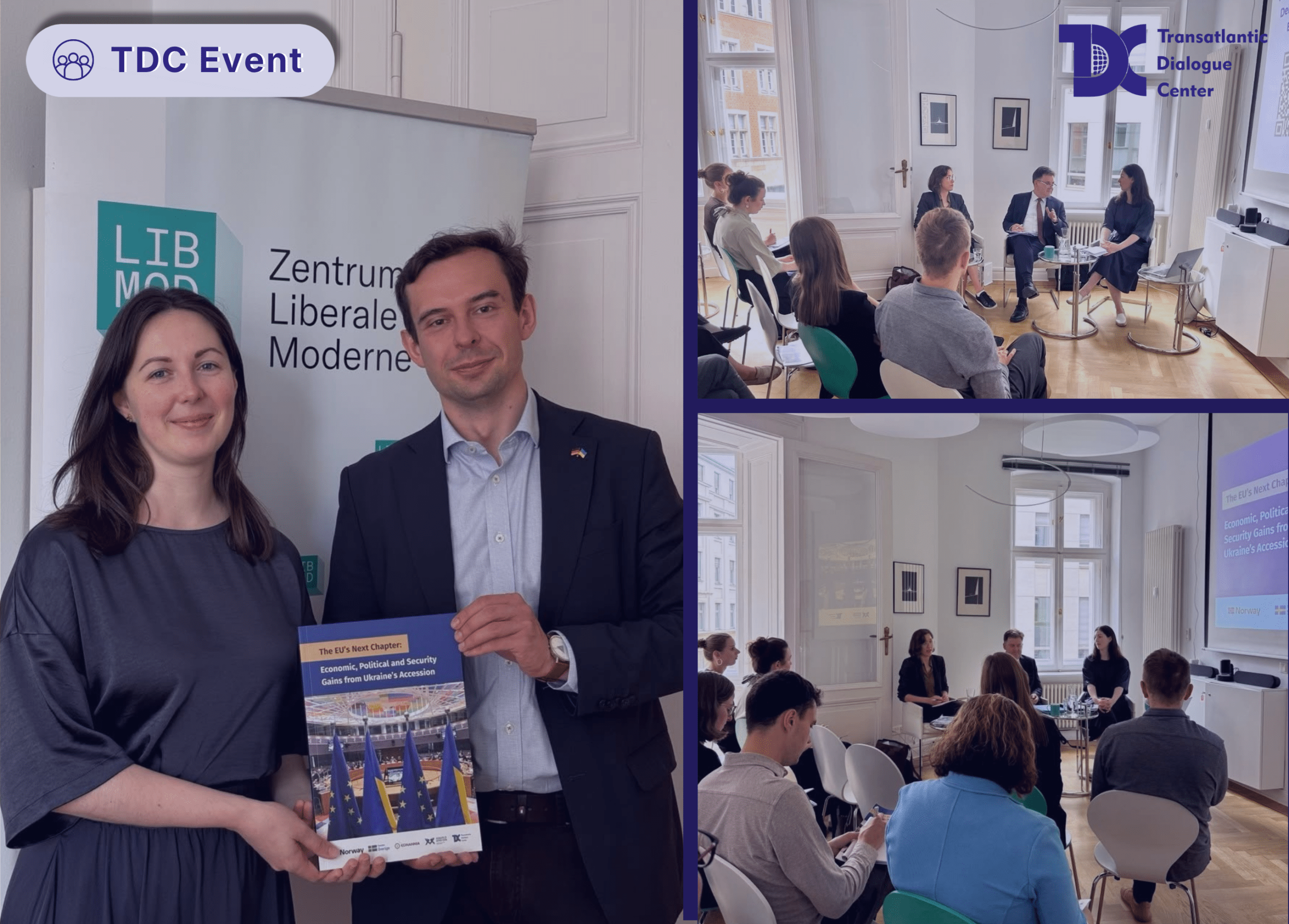
Після презентації в Брюсселі Центр трансатлантичного діалогу (TDC) представив своє найновіше дослідження — «Наступний розділ ЄС: економічні, політичні та безпекові переваги вступу України» на спільному заході з Zentrum Liberale Moderne (LibMod) у Берліні. Дослідження презентувала Маріанна Фахурдінова, координаторка Програми партнерства Україна — ЄС у TDC, а організував захід Степан Русин, координатор Програми партнерства Німеччина — Україна у TDC.
Головна теза презентації полягала в тому, що вступ України — це не лише політичне рішення. Спираючись на дані звіту, Фахурдінова продемонструвала, що членство України може заповнити документально підтверджені структурні прогалини ЄС у таких сферах, як оборонне виробництво, енергетична безпека, технологічна конкурентоспроможність і критично важливі ланцюги постачання.
Презентація ґрунтувалася на п’яти підкріплених даними прикладах:
- Критична сировина. До 2030 року ЄС потребуватиме вшестеро більше критичної сировини для здійснення зеленого та цифрового переходів. Україна володіє покладами 25 із 34 видів критичної мінеральної сировини ЄС, зокрема необхідної для виробництва зброї, сонячних панелей і акумуляторів.
- Оборонне виробництво. Нині приблизно 80% оборонних закупівель ЄС припадає на постачальників з-за меж Союзу. Виробничі потужності оборонної промисловості України з 2022 року зросли вп’ятеро, причому значна частка її продукції виявилася конкурентнішою за ціною, ніж альтернативи, доступні європейським партнерам.
- Продовольча безпека. ЄС щороку виробляє близько 3 мільйонів тонн сої, але споживає понад 35 мільйонів тонн. Україна вирощує приблизно 6 мільйонів тонн і здатна диверсифікувати та стабілізувати ланцюги постачання ЄС.
- Кібербезпека. У 2024 році в ЄС було зафіксовано понад 11 000 кіберінцидентів. Під час повномасштабної війни Україна відбила приблизно 14 000 кібератак, накопичивши перевірений у реальних умовах досвід, який неможливо відтворити жодними навчаннями мирного часу.
- Ринок праці. До 2050 року ЄС може зіткнутися з дефіцитом у 57 мільйонів працівників. Більшість українців, які нині проживають у державах-членах ЄС, уже інтегровані в ринок праці та мають високий рівень освіти, тож їхній внесок у демографічну стійкість Європи є реальним уже зараз, а не гіпотетичним.
Загалом дослідження охоплює вісім секторів — від оборонної промисловості й цифрових технологій до енергетичної безпеки, критичної сировини, продовольчої безпеки та трудової мобільності — і пропонує комплексну основу для розуміння вступу України як джерела довгострокових переваг для Європейського Союзу.
TDC висловлює вдячність Дарії Маллінг (LibMod) і Вільфріду Їльґе (DGAP) за їхній експертний внесок в обговорення.
Повний звіт доступний за посиланням.
Звіт підготовлено Центром трансатлантичного діалогу за підтримки Фонду «Аскольд і Дір» у межах проєкту «Сильне громадянське суспільство України — рушій реформ і демократії», який реалізує ISAR Ednannia за фінансування Норвегії та Швеції. За зміст цієї публікації відповідає виключно Центр трансатлантичного діалогу; він у жодному разі не може вважатися таким, що відображає погляди урядів Норвегії та Швеції або ISAR Ednannia.
Цей текст автоматично перекладено з англомовного оригіналу, який досі доступний при зміні мови сайту на англійську