

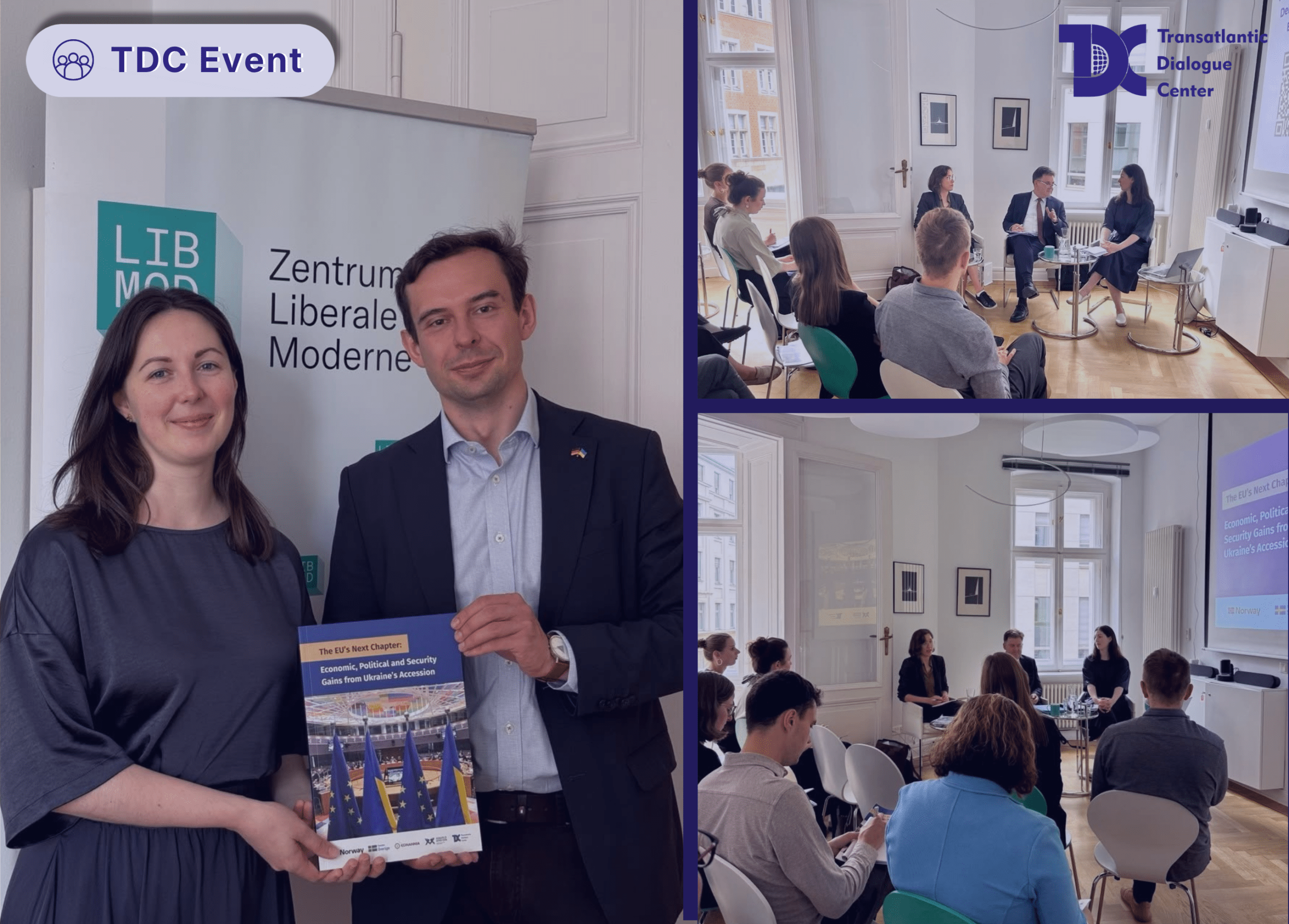
Tras el lanzamiento en Bruselas, el Transatlantic Dialogue Center (TDC) presentó su investigación más reciente, «El próximo capítulo de la UE: beneficios económicos, políticos y de seguridad de la adhesión de Ucrania», en un evento conjunto con Zentrum Liberale Moderne (LibMod) en Berlín. La presentación estuvo a cargo de Marianna Fakhurdinova, Coordinadora del Programa de Asociación UE-Ucrania del TDC, y fue organizada por Stepan Rusyn, Coordinador del Programa de Cooperación con Alemania del TDC.
El argumento central de la presentación fue que la adhesión de Ucrania no es solo una decisión política. A partir de los datos del informe, Fakhurdinova demostró que la membresía de Ucrania podría cubrir brechas estructurales documentadas en la producción de defensa, la seguridad energética, la competitividad tecnológica y las cadenas de suministro críticas de la UE.
La presentación se estructuró en torno a cinco casos basados en datos:
- Materias primas críticas. La UE necesitará seis veces más materias primas críticas para 2030 a fin de sostener sus transiciones verde y digital. Ucrania posee 25 de los 34 minerales críticos de la UE, incluidos aquellos esenciales para la producción de armamento, paneles solares y baterías.
- Producción de defensa. Aproximadamente el 80 % de las adquisiciones de defensa de la UE procede actualmente de fuera de la Unión. La capacidad de producción de defensa de Ucrania se ha quintuplicado desde 2022, y una parte significativa de su producción resulta más competitiva en costes que las alternativas disponibles para los socios europeos.
- Seguridad alimentaria. La UE produce aproximadamente 3 millones de toneladas de soja al año, pero consume más de 35 millones de toneladas. Ucrania cultiva alrededor de 6 millones de toneladas y está en condiciones de diversificar y estabilizar las cadenas de suministro de la UE.
- Ciberseguridad. La UE registró más de 11 000 incidentes cibernéticos en 2024. Ucrania ha repelido aproximadamente 14 000 ciberataques durante la guerra a gran escala, acumulando una experiencia probada sobre el terreno que ningún ejercicio en tiempos de paz puede replicar.
- Mercado laboral. La UE podría enfrentar una escasez de 57 millones de trabajadores para 2050. La mayoría de los ucranianos que residen actualmente en Estados miembros de la UE ya están integrados en el mercado laboral y cuentan con altos niveles de educación, lo que representa una contribución inmediata, y no hipotética, a la resiliencia demográfica de Europa.
La investigación abarca ocho sectores en total, desde la industria de defensa y las tecnologías digitales hasta la seguridad energética, las materias primas críticas, la seguridad alimentaria y la movilidad laboral, ofreciendo un marco integral para entender la adhesión de Ucrania como una fuente de beneficios a largo plazo para la Unión Europea.
TDC expresa su agradecimiento a Daria Malling (LibMod) y Wilfried Jilge (DGAP) por sus contribuciones expertas a la discusión.
El informe completo está disponible aquí.
El informe fue elaborado por el Transatlantic Dialogue Center con el apoyo del Askold and Dir Fund, en el marco del proyecto «Strong Civil Society of Ukraine, a Driver towards Reforms and Democracy», implementado por ISAR Ednannia y financiado por Noruega y Suecia. El contenido de esta publicación es de exclusiva responsabilidad del Transatlantic Dialogue Center y no puede interpretarse en modo alguno como reflejo de las opiniones del Gobierno de Noruega, el Gobierno de Suecia ni de ISAR Ednannia.