

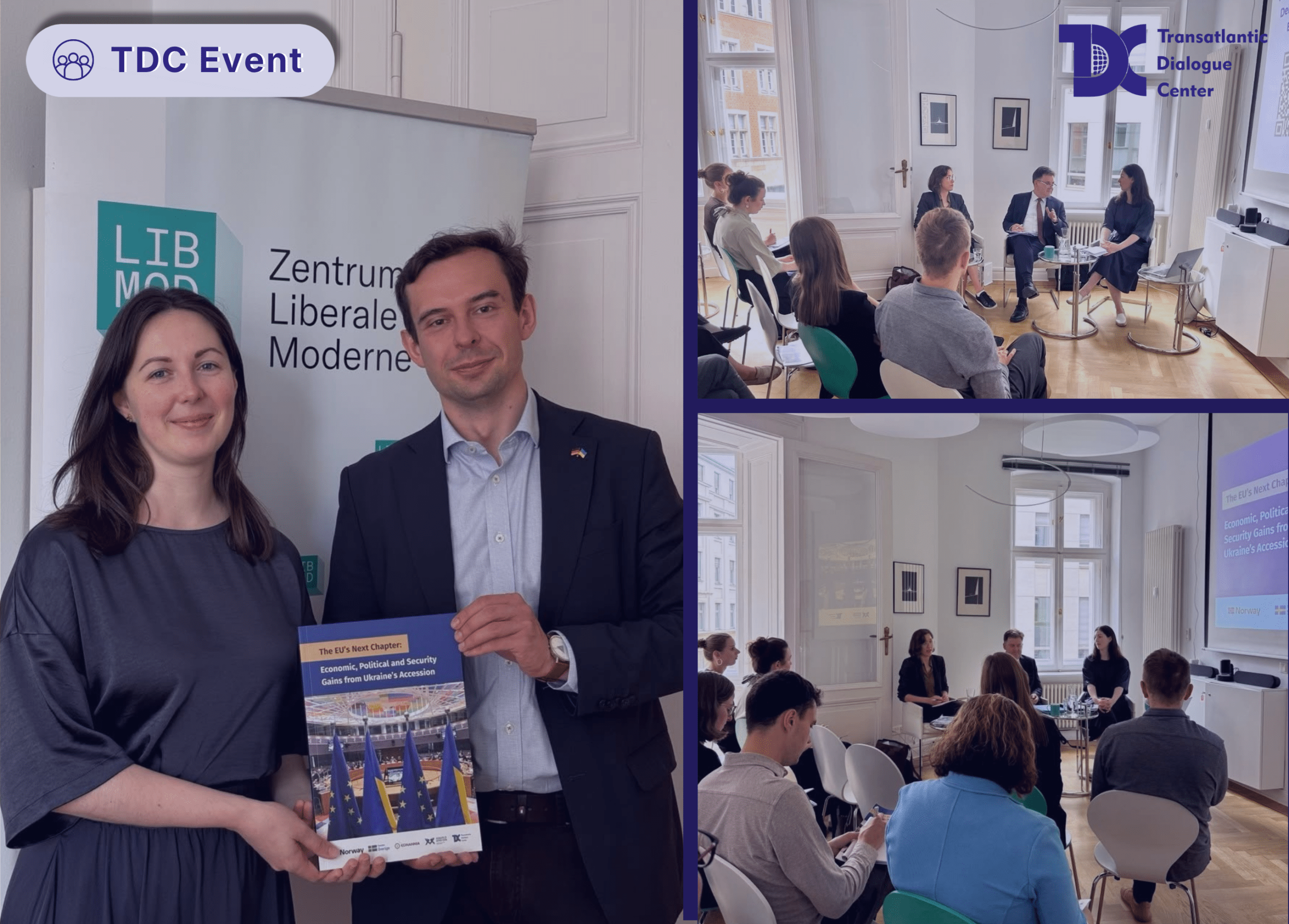
عقب الإطلاق في بروكسل، قدّم مركز الحوار عبر الأطلسي (TDC) أحدث أبحاثه، «الفصل التالي للاتحاد الأوروبي: مكاسب اقتصادية وسياسية وأمنية من انضمام أوكرانيا»، في فعالية مشتركة مع Zentrum Liberale Moderne (LibMod) في برلين. وقدّمت العرض Marianna Fakhurdinova, منسقة برنامج الشراكة بين الاتحاد الأوروبي وأوكرانيا في TDC، ونظمه Stepan Rusyn, منسق برنامج الشراكة بين ألمانيا وأوكرانيا في TDC.
تمثلت الحجة الرئيسية للعرض في أن انضمام أوكرانيا ليس مجرد قرار سياسي. واستنادًا إلى بيانات التقرير، بيّنت Fakhurdinova أن عضوية أوكرانيا يمكن أن تسد فجوات هيكلية موثقة لدى الاتحاد الأوروبي في إنتاج الدفاع، وأمن الطاقة، والقدرة التنافسية التكنولوجية، وسلاسل التوريد الحرجة.
استند العرض إلى خمس حالات مدعومة بالبيانات:
- المواد الخام الحرجة. سيحتاج الاتحاد الأوروبي بحلول 2030 إلى مواد خام حرجة أكثر بستة أضعاف للحفاظ على تحوّليه الأخضر والرقمي. وتمتلك أوكرانيا 25 من أصل 34 معدنًا حرجًا لدى الاتحاد الأوروبي، بما في ذلك المعادن الأساسية لإنتاج الأسلحة والألواح الشمسية والبطاريات.
- إنتاج الدفاع. يُورَّد حاليًا نحو 80% من مشتريات الاتحاد الأوروبي الدفاعية من خارج الاتحاد. وقد ازدادت قدرة أوكرانيا التصنيعية الدفاعية خمسة أضعاف منذ عام 2022، ويثبت جزء كبير من إنتاجها أنه أكثر قدرة على المنافسة من حيث التكلفة مقارنةً بالبدائل المتاحة للشركاء الأوروبيين.
- الأمن الغذائي. ينتج الاتحاد الأوروبي نحو 3 ملايين طن من الصويا سنويًا، لكنه يستهلك أكثر من 35 مليون طن. وتزرع أوكرانيا نحو 6 ملايين طن، وهي في موقع يؤهلها لتنويع سلاسل توريد الاتحاد الأوروبي وتحقيق استقرارها.
- الأمن السيبراني. سجّل الاتحاد الأوروبي أكثر من 11,000 حادثة سيبرانية في 2024. وقد صدّت أوكرانيا نحو 14,000 هجوم سيبراني خلال الحرب الشاملة، مكتسبة خبرة مجرَّبة ميدانيًا لا يمكن لأي تدريب في زمن السلم تكرارها.
- سوق العمل. قد يواجه الاتحاد الأوروبي نقصًا قدره 57 مليون عامل بحلول 2050. ومعظم الأوكرانيين المقيمين حاليًا في الدول الأعضاء في الاتحاد الأوروبي مندمجون بالفعل في سوق العمل ويتمتعون بمستويات تعليمية عالية، ما يمثل إسهامًا فوريًا لا افتراضيًا في المرونة الديموغرافية لأوروبا.
يغطي البحث ثمانية قطاعات إجمالًا — من صناعة الدفاع والتقنيات الرقمية إلى أمن الطاقة والمواد الخام الحرجة والأمن الغذائي وتنقل العمالة — ويقدم إطارًا شاملًا لفهم انضمام أوكرانيا بوصفه مصدرًا لمكاسب طويلة الأجل للاتحاد الأوروبي.
يتقدم TDC بالشكر إلى Daria Malling (LibMod) وWilfried Jilge (DGAP) لمساهمتيهما الخبيرتين في النقاش.
التقرير الكامل متاح هنا.
The report is produced by Transatlantic Dialogue Center with the support of the Askold and Dir Fund as a part of the Strong Civil Society of Ukraine – a Driver towards Reforms and Democracy project, implemented by ISAR Ednannia, funded by Norway and Sweden. The contents of this publication are the sole responsibility of Transatlantic Dialogue Center and can in no way be taken to reflect the views of the Government of Norway, the Government of Sweden and ISAR Ednannia.
تُرجم هذا النص تلقائيًا من الأصل باللغة الإنجليزية، الذي يظل متاحًا عند تغيير لغة الموقع إلى الإنجليزية.