

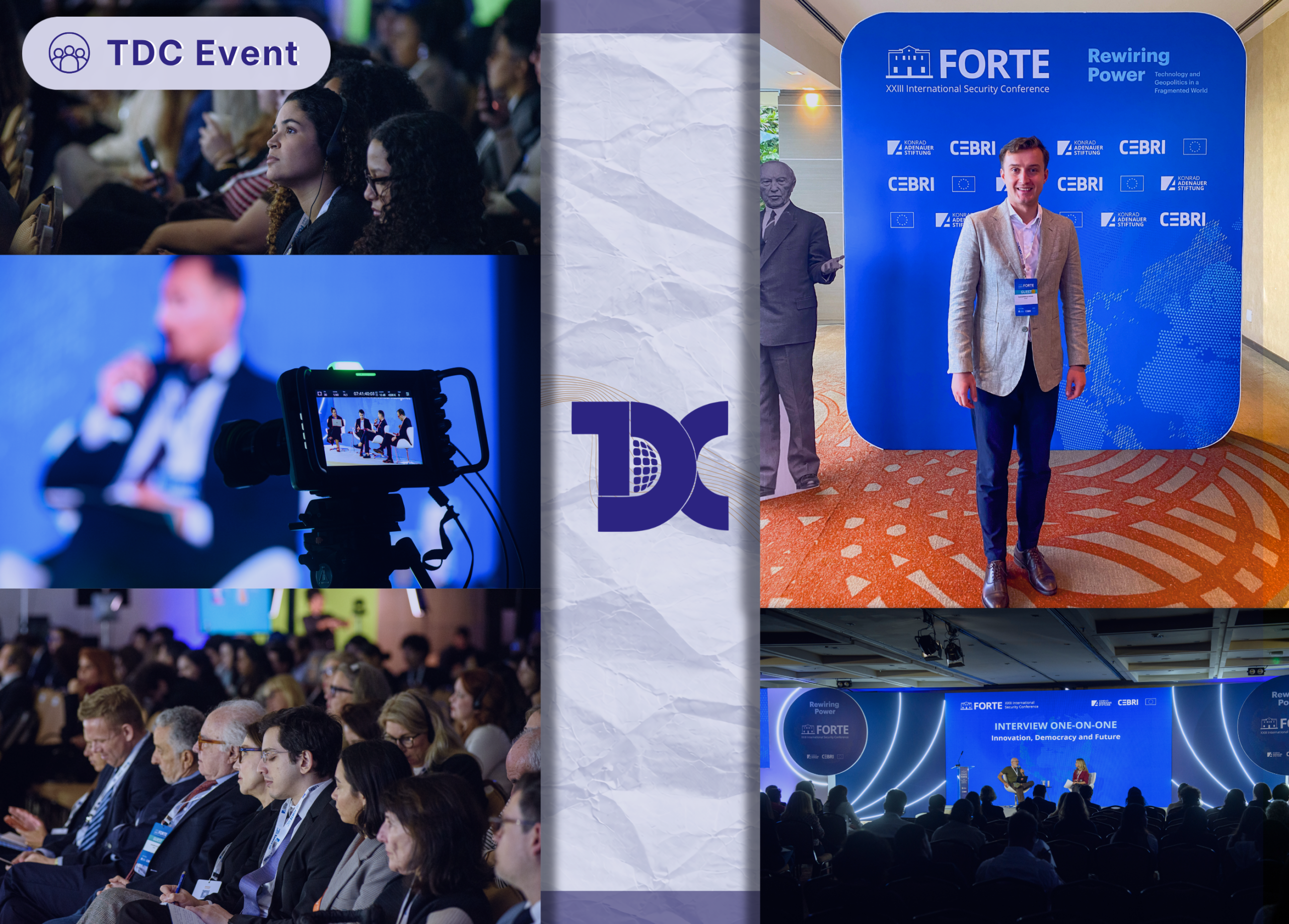
16–17 червня 2026 року Transatlantic Dialogue Center (TDC) взяв участь у XXIII Міжнародній конференції з безпеки FORTE в Ріо-де-Жанейро — найбільшому безпековому форумі Латинської Америки та ключовій платформі діалогу між регіоном і Європою. Конференцію спільно організували Фонд Конрада Аденауера в Бразилії (KAS Brasil), Бразильський центр міжнародних відносин (CEBRI) та Делегація ЄС у Бразилії.
Тема 2026 року — «Перепрошивання влади: технології та геополітика у фрагментованому світі» — об’єднала політиків, аналітиків та експертів з оборони для обговорення того, як технологічні зрушення, штучний інтелект та оборонні інновації змінюють глобальний баланс між демократіями й авторитарними режимами. П’ять панелей і ключова доповідь були присвячені майбутньому глобальної влади в добу технологічних зрушень, ШІ та ризикам послаблення демократичних інститутів, оборонним інноваціям для Європи та Латинської Америки, геополітиці рідкісноземельних мінералів, а також ролі дронів, летальних автономних систем озброєння (LAWS) і ШІ в сучасній війні.
Серед спікерів були Celso Amorim, головний радник Президента Бразилії з питань зовнішньої політики; Benedikt Franke, віцеголова та генеральний директор Мюнхенської безпекової конференції (MSC); Brynja Oskarsdottir, директорка Комітету з науки і технологій Парламентської асамблеї НАТО; а також Peter Neumann, професор воєнних досліджень King’s College London.
Оборонні інновації та ШІ стали центральною темою. Учасники панелей розглянули, як дрони, LAWS і системи на основі ШІ посилюють бойові спроможності на полі бою, водночас створюючи нові вразливості для демократичних інституцій. Цикли адаптації, що спостерігаються в сучасній війні, вимагають від Європи та Латинської Америки переосмислити оборонні закупівлі, готовність і стійкість інституцій.
Геополітику критично важливих мінералів було визначено як ключову стратегічну лінію розлому. Стратегічна автономія та ланцюги постачання для оборонної промисловості дедалі більше залежать від забезпечення рідкісноземельними елементами й критично важливою сировиною на тлі посилення глобальної конкуренції — що безпосередньо впливає і на Європу, і на Латинську Америку.
Обговорення також підкреслили нагальність тіснішої координації між Латинською Америкою та Європою у сфері кібербезпеки та співпраці в оборонній промисловості, оскільки технологічні зрушення випереджають спроможність окремих держав реагувати.
TDC представляв Олександр Сливчук, координатор Програми співпраці з Іспанією та Латинською Америкою. На полях конференції Сливчук провів низку зустрічей високого рівня з бразильськими та європейськими аналітичними центрами (CEBRI, IESP-UERJ), експертами Університету Сан-Паулу, а також представниками Сенату Бразилії та Міністерства закордонних справ. Він також зустрівся з провідними бразильськими медіа, зокрема Folha de S.Paulo та Estadão, щоб розвивати партнерства у сфері безпеки, технологій і демократичної стійкості між Україною та регіоном.
TDC вітає подальшу співпрацю та цінує можливості сприяти обміну між освітньою і практичною сферами у питаннях взаємодії України з Латинською Америкою.
Цей текст автоматично перекладено з англомовного оригіналу, який досі доступний при зміні мови сайту на англійську