

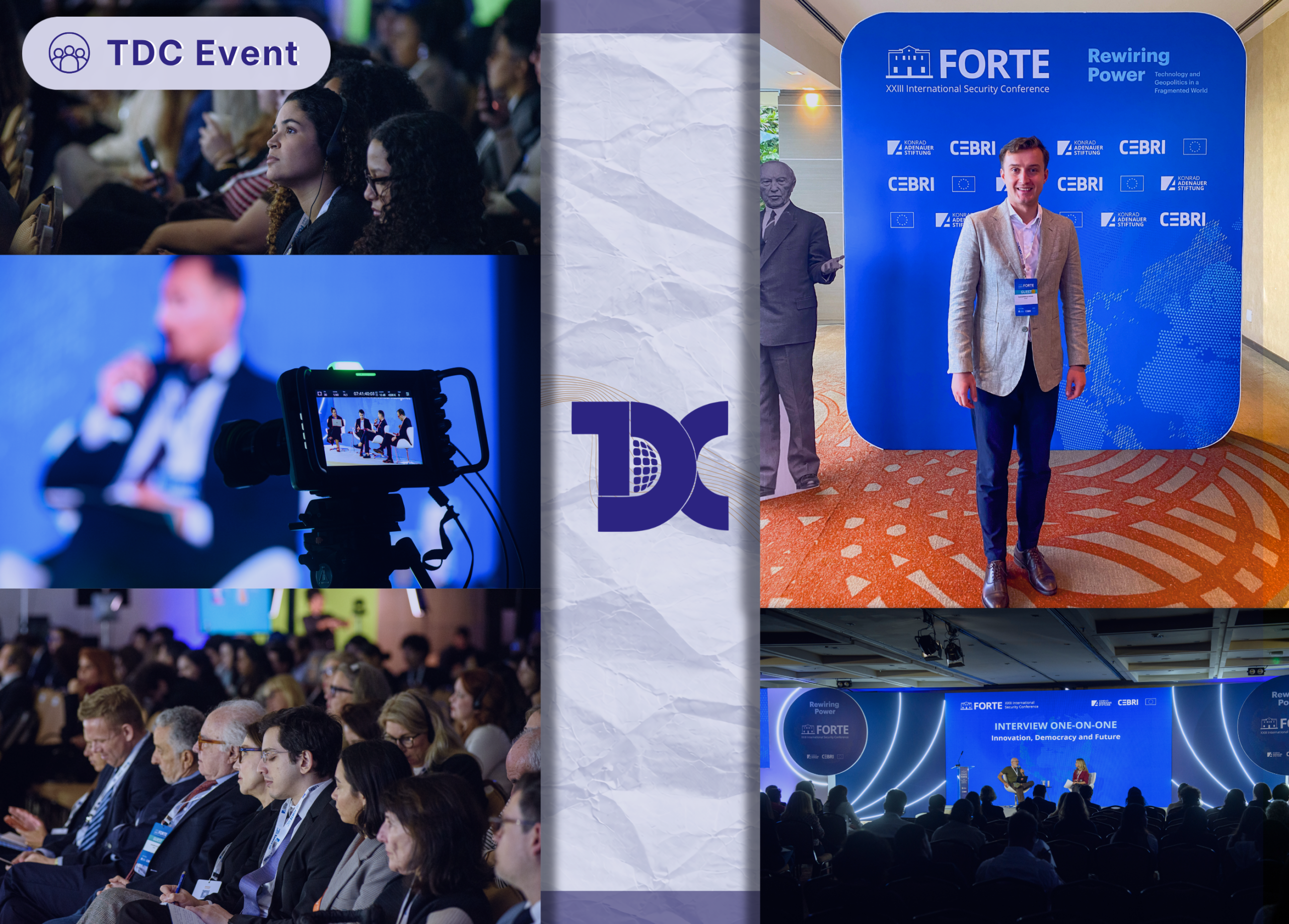
في 16–17 يونيو 2026، شارك مركز الحوار عبر الأطلسي (TDC) في المؤتمر الدولي الثالث والعشرين للأمن FORTE في ريو دي جانيرو — أكبر منتدى أمني في أمريكا اللاتينية ومنصة رئيسية للحوار بين المنطقة وأوروبا. ونُظم المؤتمر بصورة مشتركة من قبل مؤسسة كونراد أديناور في البرازيل (KAS Brasil)، والمركز البرازيلي للعلاقات الدولية (CEBRI)، و بعثة الاتحاد الأوروبي لدى البرازيل.
كان موضوع عام 2026، «إعادة تشكيل القوة: التكنولوجيا والجغرافيا السياسية في عالم متشظٍ»، جامعًا صانعي السياسات والمحللين وخبراء الدفاع لبحث كيفية إعادة تشكيل الاضطراب التكنولوجي والذكاء الاصطناعي والابتكار الدفاعي للتوازن العالمي بين الديمقراطيات والأنظمة السلطوية. وتناولت خمس حلقات نقاش وخطاب رئيسي مستقبل القوة العالمية في عصر الاضطراب التكنولوجي، والذكاء الاصطناعي ومخاطر تآكل المؤسسات الديمقراطية، والابتكار الدفاعي لأوروبا وأمريكا اللاتينية، وجيوبوليتيك المعادن الأرضية النادرة، ودور الطائرات المسيّرة وأنظمة الأسلحة ذاتية التشغيل الفتاكة (LAWS) والذكاء الاصطناعي في الحروب الحديثة.
ومن بين المتحدثين سيلسو أموريم، المستشار الرئيسي للسياسة الخارجية لرئيس البرازيل؛ بنديكت فرانكه، نائب الرئيس والرئيس التنفيذي لمؤتمر ميونيخ للأمن (MSC)؛ برينيا أوسكارسدوتير، مديرة لجنة العلوم والتكنولوجيا في الجمعية البرلمانية لحلف الناتو؛ و بيتر نيومان، أستاذ دراسات الحرب في كلية كينغز بلندن.
الابتكار الدفاعي والذكاء الاصطناعي شكّلا محورًا رئيسيًا. وبحث المشاركون في الحلقات كيف تعمل الطائرات المسيّرة وLAWS والأنظمة المعتمدة على الذكاء الاصطناعي كمضاعفات للقوة في ساحة المعركة، بينما تولد مواطن ضعف جديدة للمؤسسات الديمقراطية. وتتطلب دورات التكيّف الملحوظة في الحروب الحديثة من أوروبا وأمريكا اللاتينية معًا إعادة التفكير في مشتريات الدفاع والجاهزية والمرونة المؤسسية.
أما الجغرافيا السياسية للمعادن الحرجة فقد اعتُبرت خط صدع استراتيجيًا حاسمًا. ويعتمد الاستقلال الاستراتيجي وسلاسل الإمداد الدفاعية بصورة متزايدة على تأمين العناصر الأرضية النادرة والمواد الخام الحرجة وسط احتدام المنافسة العالمية — بما يترتب عليه من آثار مباشرة لأوروبا وأمريكا اللاتينية على السواء.
وأكدت المناقشات أيضًا إلحاح تعزيز التنسيق بين أمريكا اللاتينية وأوروبا في مجالي الأمن السيبراني والتعاون الصناعي الدفاعي، إذ يتجاوز الاضطراب التكنولوجي قدرة الدول منفردة على الاستجابة.
مثّل TDC أوليكساندر سليفشوك, منسق برنامج التعاون مع إسبانيا وأمريكا اللاتينية. وعلى هامش المؤتمر، أجرى سليفشوك سلسلة من اللقاءات رفيعة المستوى مع مراكز الفكر البرازيلية والأوروبية (CEBRI، IESP-UERJ)، وخبراء في جامعة ساو باولو، وممثلي مجلس الشيوخ البرازيلي ووزارة الخارجية. كما التقى بوسائل إعلام برازيلية رائدة، منها Folha de S.Paulo وEstadão، لتعزيز الشراكات في مجالات الأمن والتكنولوجيا والمرونة الديمقراطية بين أوكرانيا والمنطقة.
TDC welcomes continued cooperation and values opportunities to support education-to-practice exchange on Ukraine’s engagement with Latin America.
تُرجم هذا النص تلقائيًا من الأصل باللغة الإنجليزية، الذي يظل متاحًا عند تغيير لغة الموقع إلى الإنجليزية.