

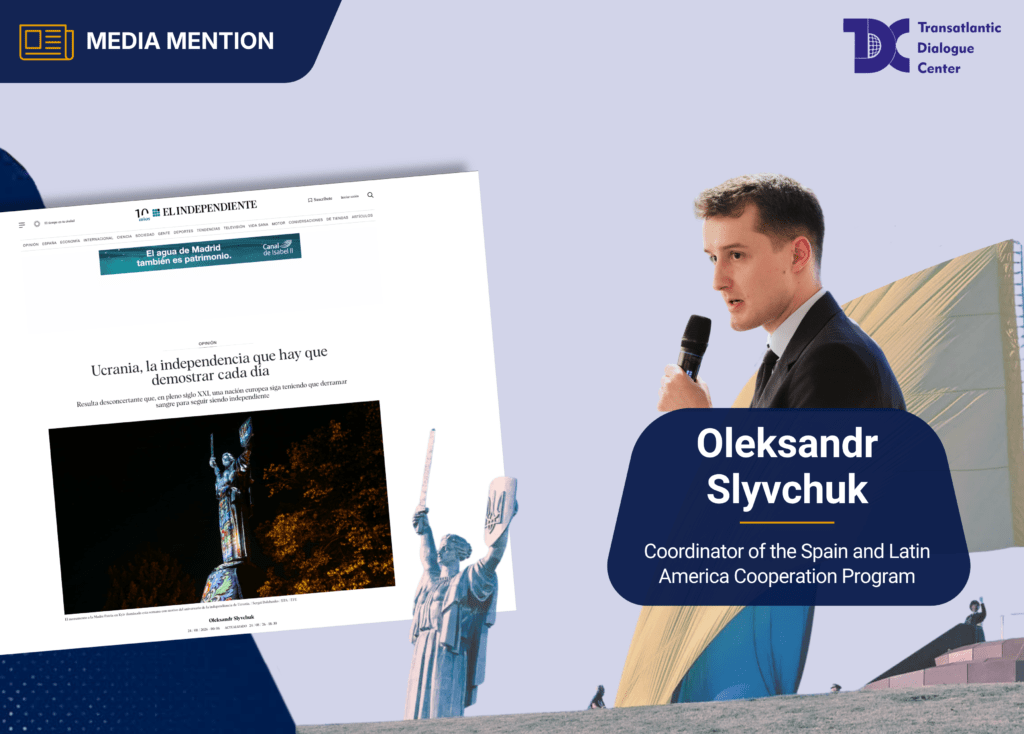
ओलेक्सांद्र स्लिवचुक, ट्रांसअटलांटिक डायलॉग सेंटर में स्पेन और लैटिन अमेरिका सहयोग कार्यक्रम के समन्वयक, ने एल इंडिपेंदिएंते में यूक्रेन की स्वतंत्रता के 35 वर्ष पूरे होने के अवसर पर एक विचार-लेख प्रकाशित किया और इस बात पर विचार किया कि यूक्रेन के विरुद्ध रूस के युद्ध का यूरोपीय सुरक्षा और अंतरराष्ट्रीय कानून के भविष्य के लिए क्या अर्थ है। कृपया ध्यान दें कि लेख स्पेनिश में प्रकाशित हुआ है।
लेख में, स्लिवचुक तर्क देते हैं कि युद्ध का परिणाम केवल पूर्वी यूरोप के लिए नहीं, बल्कि पूरे महाद्वीप की सुरक्षा का प्रश्न है। यूक्रेन की जीत या हार यह मिसाल कायम करेगी कि अंतरराष्ट्रीय कानून का अब भी कोई मूल्य है—या यह कि अंतरराष्ट्रीय संबंधों में बल ही एकमात्र तर्क बन जाएगा।
स्लिवचुक यह भी जोर देकर कहते हैं कि क्षेत्रीय रियायतें आक्रामकता को समाप्त नहीं करतीं। इतिहास में किसी आक्रांता को दी गई हर रियायत ने अगले हमले को रोकने के बजाय केवल टाला है। एक तथाकथित “क्षेत्रीय समझौता” उस समस्या का समाधान नहीं करेगा जो ऐसे रूस से उत्पन्न होती है, जिसने पूरे यूक्रेन को नियंत्रित करने का अपना लक्ष्य नहीं छोड़ा है।
विचार-लेख रूस के आक्रमण को साम्राज्यवादी प्रतिशोधवाद के रूप में प्रस्तुत करता है, न कि सीमा विवाद के रूप में। स्लिवचुक व्लादिमीर पुतिन के जुलाई 2021 के उस लेख का उल्लेख करते हैं, जिसमें एक अलग राज्य के रूप में यूक्रेन के अस्तित्व के अधिकार को नकारा गया था। इसे वह इस बात का प्रमाण बताते हैं कि मॉस्को का युद्ध यूक्रेन की संप्रभुता स्वीकार करने से उसके इनकार में निहित है। वह कहते हैं कि रूस ने सहयोग के आधार पर अपने पड़ोसियों के साथ सह-अस्तित्व में रहना कभी नहीं सीखा।
अंत में, स्लिवचुक इस बात पर जोर देते हैं कि 1991 में यूक्रेन की स्वतंत्रता कोई नई शुरुआत नहीं थी, बल्कि देश की राज्यत्व-परंपरा की निरंतरता थी। सोवियत शासन के सत्तर से अधिक वर्षों के दौरान, यूरोप में निर्वासन में यूक्रेनी सरकार काम करती रही और 1992 में उसके अंतिम राष्ट्रपति ने सत्ता के प्रतीक औपचारिक रूप से नवनिर्वाचित राष्ट्रपति लियोनिद क्रावचुक को हस्तांतरित कर दिए।
पूरा लेख यहाँ पढ़ें: लिंक.
यह पाठ अंग्रेज़ी मूल से स्वचालित रूप से अनुवादित किया गया है, जो साइट की भाषा अंग्रेज़ी में बदलने पर अब भी उपलब्ध है।