
 22 min de lecture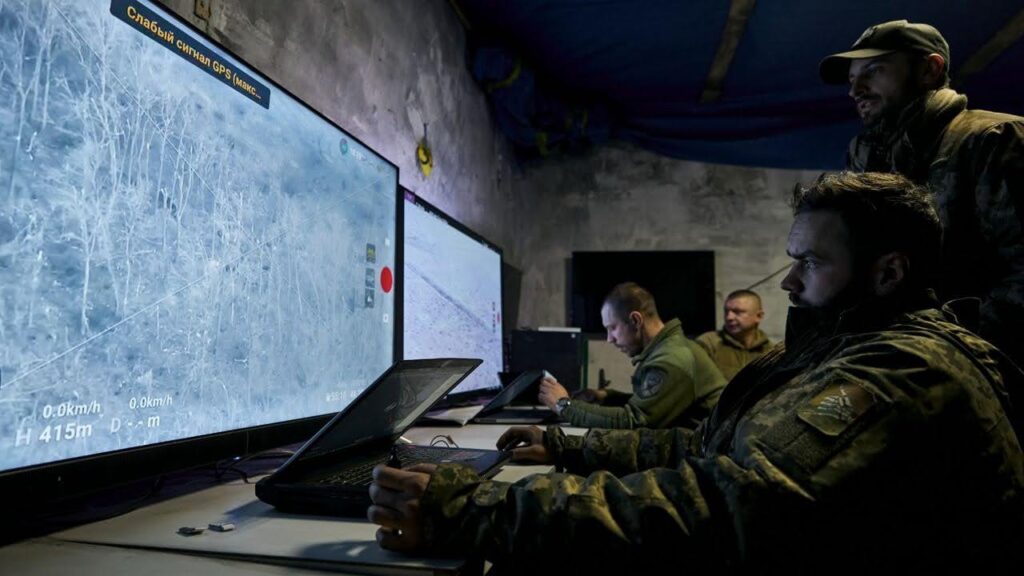
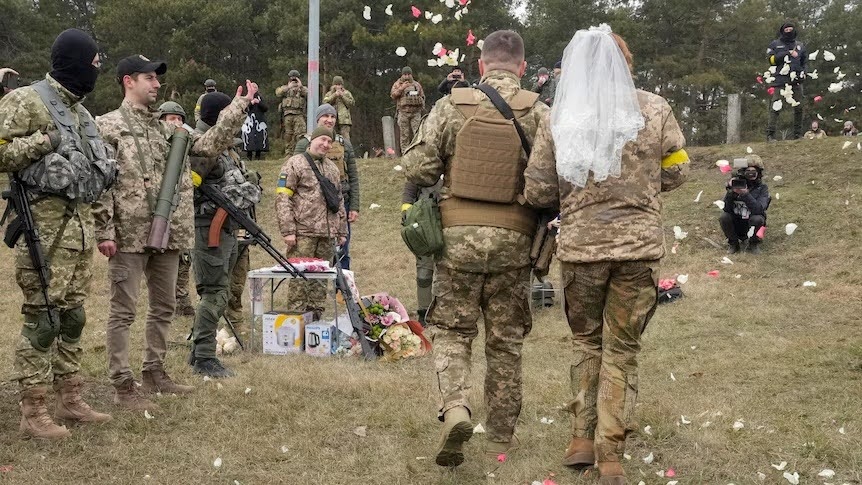
Toutes les guerres produisent, consciemment ou non, leur propre récit officiel. Un couple se marie quelques jours avant que tous deux ne partent pour le front. Des grands-mères tricotent des filets de camouflage. C’est par ce récit que l’Occident en est venu à appréhender la guerre. Il est vrai et légitime ; la rhétorique du courage et de la résistance est devenue la pierre angulaire de la manière dont l’Ukraine se présente au monde extérieur depuis l’invasion à grande échelle. Et, face à la lassitude croissante liée à la guerre, elle se révèle particulièrement efficace pour soutenir la communication stratégique et le moral national.
Cela étant, où se situe donc le problème du récit héroïque s’il n’est ni faux ni exagéré ? Le principal problème tient au fait qu’il ne suffit pas de le présenter comme le seul cadre explicatif disponible pour rendre compte du succès de la résistance ukrainienne. Le récit héroïque répond à la question « La société civile ukrainienne est-elle courageuse et résiliente ? », mais pas à la question « Pourquoi et comment l’État ukrainien est-il capable de résister indéfiniment dans une guerre asymétrique ? » Si l’on n’analyse que le courage individuel, on passe à côté de l’explication de la mise en place d’un système de production à grande échelle ou de la coordination du réseau militaire sur la ligne de front.
L’explication principale réside dans les institutions qui ont engagé une transformation accélérée et ont formalisé ces actes individuels de courage de la société civile pour en faire des infrastructures institutionnelles. Pour mieux comprendre pourquoi Kyiv a décidé de mener ces transformations rapides, quel en a été le tournant et pourquoi ce sont précisément ces transformations, plutôt que d’autres, qui ont été mises en œuvre, il faut revenir à 2014 et à leur expression la plus aboutie : Brave1. Analyser la création de cet écosystème revient à étudier les formes les plus poussées d’expression institutionnelle par lesquelles l’Ukraine, sous la pression d’une agression extérieure, a bâti une architecture technologique multidimensionnelle capable de relier horizontalement, et presque simultanément, les jeunes entreprises, les investisseurs, les développeurs et les structures étatiques. Dans une hiérarchie verticale et centralisée, ces acteurs fonctionneraient de manière lente et bureaucratique.
Il ne s’agit pas de retirer le mérite à un camp pour l’attribuer à un autre, mais de cerner le problème que pose la manière dont les médias occidentaux en rendent compte. En se concentrant uniquement sur l’image du soldat courageux, le récit omet le plus souvent le cadre institutionnel — largement édifié à partir de la base, comme un mouvement citoyen — qui a permis de développer une capacité institutionnelle fondée sur ce courage.
En outre, idéaliser la résistance individuelle est politiquement dangereux. Cela dégage l’agresseur extérieur de sa responsabilité et, dans une certaine mesure, normalise la souffrance d’une société entière en la présentant indirectement, presque comme un trait culturel ou une caractéristique nationale. Elle n’est pas présentée comme la conséquence directe d’une invasion, face à laquelle la société attaquée n’a aucun choix. Selon le journaliste Peter Swope, l’idéalisation médiatique du sacrifice au combat finit par détourner l’attention de la véritable brutalité de la guerre. Reconnaître cela ne diminue en rien la valeur de ce que fait la société civile ukrainienne ; au contraire, cela lui restitue son humanité et sa réalité, en montrant que la souffrance ne fait pas partie de sa nature.
En outre, même la communication de guerre menée sous la direction du président ukrainien a évité de construire un récit centré sur l’individu. Selon une analyseréalisée avec NVivo, Zelenskyy a prononcé « Ukraine » 1.726 fois et « peuple » 1.236 fois au cours des six premiers mois de la guerre. Le pronom « je », employé dans un sens personnel, n’a presque jamais été relevé. Lorsqu’il énumère les réalisations dans ses discours, il ne construit pas un culte de la personnalité, mais une identité collective, utilisant « nous » pour désigner le peuple ukrainien et « vous » pour s’adresser aux défenseurs du pays. Même le plus haut représentant de la résistance ukrainienne en Occident a structuré sa communication dans le sens opposé, en la centrant sur la capacité d’action collective plutôt que sur sa propre capacité d’action. Par conséquent, une interprétation centrée sur l’individu est une simplification excessive venue de l’extérieur, et non le reflet de la manière dont l’Ukraine se présente elle-même.
Il importe de souligner que l’année 2022 marque le début de l’invasion à grande échelle, et non celui de l’agression russe. C’est donc en 2014, avec l’annexion de la Crimée et l’invasion russe de l’est de l’Ukraine, que Kyiv a compris qu’aucune garantie extérieure — diplomatique, juridique ou militaire — ne pouvait remplacer sa propre capacité d’autodéfense. Il est dès lors essentiel de comprendre que si l’escalade territoriale de la guerre en 2022 n’a pas été un « choc », c’est avant tout parce que l’Ukraine investissait depuis huit ans dans sa propre infrastructure institutionnelle, avant que celle-ci ne devienne déterminante pour sa résistance.
Alors que l’Ukraine cherchait à reprendre le contrôle de la Crimée, déjà annexée par la Russie, le président de l’époque, Petro Poroshenko, s’est rendu aux États-Unis pour demander au Congrès une aide militaire létale accrue, notamment des missiles Javelin. L’administration Obama a limité les livraisons à une aide strictement humanitaire et non létale (gilets pare-balles, lunettes de vision nocturne, véhicules), rejetant les demandes d’envoi d’un soutien militaire létal. Le manque quasi total de soutien étranger à l’Ukraine au cours des premières années suivant 2014 s’expliquait principalement par la théorie militaire de la « domination dans l’escalade ». Élaborée par Herman Kahn, cette théorie est représentée par une échelle de quarante-quatre barreaux: au bas de l’échelle se trouve une crise de faible intensité et, au sommet, la guerre nucléaire totale. La domination dans l’escalade dépend des capacités et de la crédibilité de l’acteur. Celui-ci peut dominer l’escalade face à l’adversaire si trois conditions sont simultanément réunies : disposer d’une capacité réelle d’escalade, rendre crédible l’existence de cette possibilité et faire en sorte que l’adversaire reconnaisse la possibilité de ces deux situations. Appliquée à la guerre dans le Donbas, cette théorie conduisait, du point de vue occidental, à considérer que la Russie avait démontré cette domination à Ilovaïsk et à Debaltseve, où, indépendamment des avancées ukrainiennes, elle avait déployé des moyens supplémentaires et l’avait emporté. À toute escalade ukrainienne, la Russie répondrait par une escalade supérieure. Washington en a donc conclu que toute aide serait contre-productive, tant pour les États-Unis que, surtout, pour l’Ukraine.
Cette interprétation des événements sous l’angle de la domination dans l’escalade n’est ni isolée ni rétrospective. Les groupes de réflexion spécialisés dans la sécurité ont vivement critiqué le fait que l’application défensive de cette doctrine ait produit le résultat même qu’elle visait à éviter. Selon l’Atlantic Council, la réponse à l’occupation de la Crimée constituait « une erreur géopolitique majeure aux proportions historiques, qui a enhardi Vladimir Putin et préparé le terrain à la plus grande invasion européenne depuis la Seconde Guerre mondiale ». L’absence d’escalade a été interprétée comme un succès de la dissuasion. Or, il s’agissait en réalité d’un signe de faiblesse. Les avertissements verbaux sans coût réel — ce que James Fearon appelle des paroles en l’air— n’ont pas modifié les calculs de l’adversaire, puisqu’ils n’impliquent aucun engagement. Les seuls signaux qui comportent un coût seraient une mobilisation militaire explicite ou un engagement public difficile à retirer. Entre 2014 et 2018, la Maison-Blanche a envoyé au Kremlin des signaux sans coût, sans jamais les transformer en signaux coûteux et crédibles. Ce n’est qu’en 2018 que les États-Unis ont fourni leur première aide non létale, en livrant des missiles antichars Javelin, une initiative ensuite suivie par d’autres pays, comme la République tchèque.
Les déclarations répétées de l’OTAN, de l’UE, des États-Unis et de l’Allemagne affirmant qu’ils n’interviendraient pas directement en cas d’invasion russe ont eu une incidence considérable sur le calcul des coûts de la Russie. Compte tenu de la rareté des armes létales et de l’absence d’engagement des alliés occidentaux, l’armée russe a estimé que l’armée ukrainienne ne pourrait pas résister indéfiniment ; elle a donc jugé que les coûts d’une guerre contre l’Ukraine seraient acceptables et limités, sans entraîner de conséquences majeures pour le pays ou son économie.
De nombreuses analyses internationales ont relevé que la faible réaction à l’annexion de la Crimée avait «enhardi» la Russie. Cette perspective du Kremlin confirme que l’absence d’engagement occidental en 2014 a suffi pour que l’agresseur conclue que la guerre lui apporterait davantage de bénéfices que de coûts. Il ne s’agit donc pas d’une perception erronée de l’Ukraine à l’égard de ses alliés occidentaux. Le fait que deux acteurs aux intérêts diamétralement opposés s’accordent à dire que le soutien à l’Ukraine entre 2014 et 2021 était insuffisant pour créer une véritable dissuasion montre qu’il s’agit d’un constat vérifié des deux côtés.
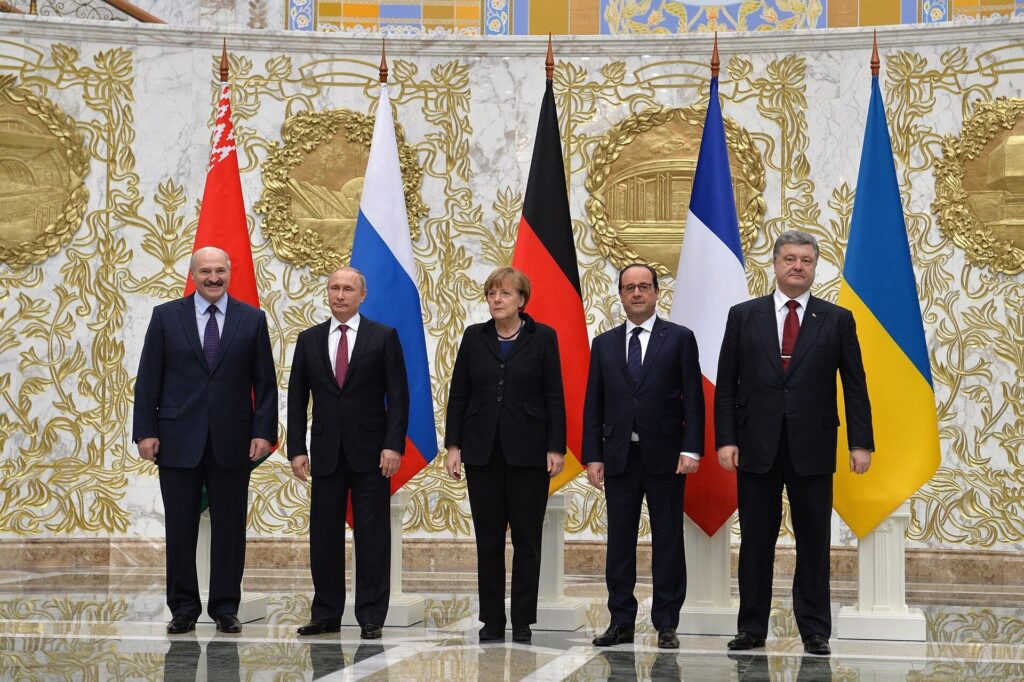
Il ne s’agit donc pas d’une méfiance infondée envers ses alliés, mais d’une évaluation réaliste de la situation fondée sur des éléments empiriques. Sur cette base, l’Ukraine a pris la décision de ne pas s’en remettre exclusivement à des accords, à des acteurs extérieurs, à des mémorandums ni même à des organisations internationales pour garantir sa propre sécurité et son intégrité territoriale. Le processus de Minsk, conduit par la France et l’Allemagne entre 2014 et 2015, a conforté Kyiv dans cette conclusion.
Si la réticence des alliés à armer l’Ukraine constituait un signal militaire indiquant que l’Occident n’était pas disposé à supporter des coûts réels en échange de la sécurité de l’Ukraine, les processus de Minsk ont démontré la même chose sur le plan diplomatique.
Il s’agissait de plans de paix promus par le président ukrainien de l’époque, qui couvraient toute une série de domaines multidimensionnels : la sécurité, les questions humanitaires, les enjeux économiques et les aspects politiques. Le premier accord a été signé en septembre 2014 à la suite de la « tragédied’Ilovaïsk », et Minsk II en février 2015. Bien que les deux accords prévoient un cessez-le-feu, le retrait des armes lourdes de la frontière et un statut spécial pour les régions séparatistes du Donbas sous la supervision de l’OSCE, des violations du cessez-le-feu ont été signalées quelques minutes seulement après leur entrée en vigueur. Toutefois, l’échec opérationnel des accords étant déjà largement documenté, une question a été peu analysée : pourquoi ont-ils été conçus de telle manière que, même pendant leur mise en œuvre, de nombreux analystes tenaient leur échec pour acquis ? Aucune obligation directe n’était imposée à la Russie dans le conflit, Moscou se présentant comme médiateur plutôt que comme partie belligérante et se plaçant ainsi sur le même plan que la France, l’Allemagne et l’OSCE — alors même qu’elle apportait un soutien militaire aux forces séparatistes sur le terrain. Le fait de ne pas reconnaître la Russie comme partie au conflit sur le papier, alors qu’elle dirigeait manifestement le conflit dans les faits, a donné au Kremlin toute latitude pour accroître ou réduire l’intensité de l’invasion à sa guise à tout moment : intensifier les combats lorsqu’il avait intérêt à faire pression sur Kyiv, ou les réduire afin d’alléger la pression internationale sur la Russie. Tout cela sans coût politique réel, alors qu’un tel coût aurait existé si la Russie avait été reconnue comme État agresseur et partie au conflit.
Ce défaut de conception fondamental a conduit les accords de Minsk au même résultat que celui déjà observé sur le plan militaire : un engagement sans coût réel, laissant la porte ouverte au non-respect. De même que des avertissements verbaux avaient été lancés sans être appuyés par des armes létales, des cadres de compromis ont été établis sans être soutenus par des mécanismes contraignants de mise en œuvre.
Les constats militaires et diplomatiques aboutissent à la même conclusion par deux raisonnements indépendants : ni l’aide militaire — limitée par la domination dans l’escalade — ni le cadre diplomatique — entravé par des accords mal conçus — n’ont établi de mécanismes de mise en œuvre. Cette double confirmation explique pourquoi Kyiv a conclu qu’aucune garantie extérieure ne pouvait remplacer sa propre capacité d’autodéfense.
C’est pourquoi les transformations institutionnelles de l’Ukraine — inégales, imparfaites, mais progressives et réelles — ont commencé en 2014, et non en 2022. L’invasion à grande échelle n’a pas conduit l’Ukraine à tirer ces conclusions ; elle les a plutôt confirmées. Par conséquent, la résistance et la résilience de l’Ukraine depuis 2022 ne sont pas une réaction spontanée, mais le fruit du travail d’un État qui avait consacré huit ans à bâtir une infrastructure institutionnelle que le choc de 2022 allait finalement rendre opérationnelle.
Face à l’absence de réaction internationale aux événements en Ukraine, Kyiv comme la société civile ukrainienne ont répondu par de profondes transformations internes du secteur de la défense, dont certaines ont dû être bâties de toutes pièces. Ces trois transformations ne peuvent être comprises séparément, car c’est précisément leur coexistence qui explique pourquoi et à quel moment l’Ukraine a décidé, à partir de 2022, de réunir ces trois éléments qui évoluaient séparément depuis près d’une décennie. Cela a conduit à la création de Brave1, mais il faut d’abord expliquer les trois composantes à son origine.
La première transformation a consisté à délaisser la doctrine du commandement centralisé au profit du commandement par mission, doctrine ancienne largement adoptée par les forces armées modernes. Ce modèle souligne l’importance de chefs qui font confiance à leurs subordonnés, leur accordent la liberté de prendre des décisions cruciales en temps réel et de s’adapter aux circonstances sans avoir besoin de directives rigides et constantes. En 2014, l’armée ukrainienne ne présentait aucune des caractéristiques de ce modèle ; les différents bataillons de l’armée ukrainienne manquaient d’ initiative et n’avaient aucune interopérabilité pratique. Lorsque l’autorisation de lancer une attaque arrivait enfin, l’occasion tactique était déjà passée.
Avec le soutien des États-Unis et de certains pays européens membres de l’OTAN, l’Ukraine a créé pour la première fois un corps professionnel de sous-officiers (NCO), une fonction qui était jusque-là presque inexistante. Ce fut la première étape vers l’adoption d’une prise de décision décentralisée et la mise en place d’un mécanisme de confiance mutuelle entre les différents échelons. Ces unités ont acquis des compétences essentielles pour affiner le commandement par mission : compréhension commune, intention du commandant, ordres de mission, initiative disciplinée et acceptation du risque, ce qui leur a conféré un avantage considérable sur la Russie.
Le deuxième ensemble de réformes repose sur un changement des priorités d’approvisionnement et sur la fin du monopole de la production d’armes. Avant 2014, Ukroboronprom (un conglomérat d’entreprises du complexe militaro-industriel du pays) déterminait les armes à développer, orientant la production en fonction de son propre intérêt à maintenir les systèmes d’armes de l’ère soviétique plutôt qu’à développer de nouvelles capacités. Pour une telle entreprise, il était plus économique et plus simple de produire les mêmes chars et les mêmes munitions sans modifier la chaîne de production que d’investir dans de nouvelles technologies, des chercheurs, une prise de risques et davantage de temps. Ainsi, même si des changements ont bien eu lieu, ils sont restés minimes : en 2020, 20 % des projets de R&D étaient en cours depuis vingt ans ou plus sans aucun résultat tangible et servaient de mécanismes de détournement des fonds publics. Ukroboronprom se caractérisait par de grands scandales de corruption, une classification excessive des informations et un processus décisionnel excessivement vertical : seules 13 % des demandes d’ équipements nouveaux ou modernisés formulées par l’état-major général ont été satisfaites entre 2014 et 2020.
À mesure que les différentes affaires de corruption au sein d’Ukroboronprom étaient révélées, la pression extérieure exercée par les organisations anticorruption de la société civile ukrainienne s’est accrue, notamment celle de NAKO, la Commission indépendante de lutte contre la corruption, qui surveille la corruption, défend la transparence et veille à l’obligation de rendre des comptes afin de soutenir la sécurité nationale et la souveraineté de l’Ukraine. Elle a été fondée en 2016 dans le cadre d’une initiative conjointe de Transparency International Ukraine et de Transparency International Defense & Security. Grâce à la pression de NAKO et des partenaires occidentaux, elle a contraint Ukroboronprom à se soumettre à un audit international en 2017. En 2018, l’entreprise s’est engagée à ce que l’audit respecte les normes internationales et comporte une évaluation de sa gouvernance d’entreprise conformément aux normes de l’OCDE. NAKO a participé directement à la rédaction du projet de loi réformant le conglomérat, en soumettant des amendements précis au Parlement ukrainien, la Verkhovna Rada, avant son adoption, notamment pour désigner le Cabinet des ministres comme seule entité de gestion des entreprises transformées de l’industrie de la défense et réduire ainsi, entre autres mesures, les conflits d’intérêts.
Il en a résulté une loi signée par Volodymyr Zelenskyy en 2021, qui imposait la transformation d’ Ukroboronprom en société par actions, conformément aux normes de gouvernance d’entreprise de l’OCDE. Avec un actionnaire unique — l’État, représenté par le Cabinet des ministres —, la loi a établi la restructuration des 118 entreprises dispersées du groupe, avec pour objectif explicite d’instaurer des normes modernes de gouvernance d’entreprise afin de les protéger contre les risques de corruption, les conflits d’intérêts et l’influence politique directe, et de permettre la création de coentreprises avec des partenaires nationaux et étrangers, ainsi que le transfert de technologies et l’attraction d’investissements directs, y compris étrangers, pour fabriquer des armements modernes.
Le dernier volet de Brave1 est l’essor d’une culture du drone. Jusqu’en 2014, les forces armées ukrainiennes ne disposaient d’aucun drone moderne. Ce qui s’en rapprochait le plus était le Tupolev Tu-143, un véhicule aérien sans pilote (UAV) de reconnaissance tactique à courte portée, développé par l’Union soviétique pendant la guerre froide. Il était donc déjà presque inutilisable dans les opérations militaires modernes. La réponse à cette lacune n’est pas venue du ministère de la Défense, mais de la société civile et des bénévoles. Pendant l’invasion russe de l’est de l’Ukraine, Volodymyr Kochetkov-Sukach et plusieurs collègues ont fondé Aerorozvidka, une organisation non gouvernementale qui soutient étroitement l’armée ukrainienne et se consacre à la construction ou à la modification de drones commerciaux, achetés dans des commerces de détail ordinaires, afin de les rendre aptes à un usage militaire. Parallèlement, Come Back Alive, l’une des plus grandes ONG d’Ukraine, a été fondée pour recueillir des fonds destinés à l’achat de véhicules sans pilote et de matériel de renseignement, mais aussi à la formation des soldats.
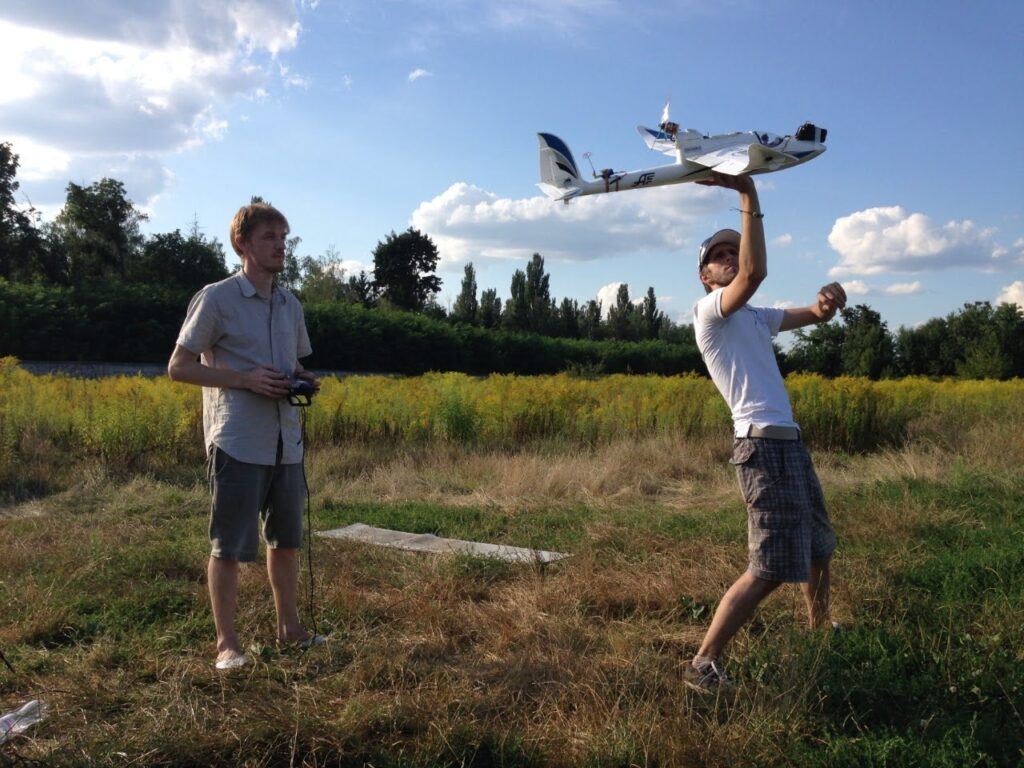
Au fil du temps, les deux organisations ont évolué jusqu’à jouer un rôle clé dans ces transformations. Aerorozvidka a fait œuvre de pionnier dans le domaine des véhicules aériens sans pilote multirotors, comme l’ octocoptère R18, capable d’emporter des charges utiles ou de larguer des munitions avec précision, avec un décollage vertical, une autonomie de vol de 40 minutes et une capacité d’emport de 5 kg. Come Back Alive est devenue l’une des premières organisations à obtenir la licence lui permettant d’acheter à l’étranger des biens militaires et à double usage, y compris des armes létales.
Cependant, le fait que cette innovation soit née dans la société civile plutôt qu’au sein d’une structure étatique imposait de réelles limites et démontrait la nécessité de Brave1. L’intégration des armes mises au point par des jeunes entreprises issues de la société civile était lente et inégale. Par exemple, le drone de reconnaissance Furia, développé en 2014 par l’entreprise Athlon Avia, établie à Kyiv, n’a été officiellement adopté qu’en 2019. L’innovation existait, mais il a fallu du temps pour jeter un pont entre ces innovations et les institutions chargées de formaliser ces avancées.
Les trois principaux piliers sur lesquels s’est appuyée la création de Brave1 sont donc les suivants :
Le problème ne résidait donc pas dans un manque de volonté ou de législation, mais dans l’absence d’un écosystème capable de fusionner ces trois transformations en un système à même de fonctionner à la vitesse imposée par une guerre à grande échelle.
Cet écosystème institutionnel est également l’une des principales raisons pour lesquelles l’aide militaire et financière des alliés se révèle si efficace. À certains égards, cette aide est essentielle, car l’Ukraine reste fortement tributaire des systèmes de défense aérienne fournis par les États-Unis — en particulier les systèmes Patriot — pour protéger ses infrastructures critiques. Cependant, la considérer comme l’unique facteur expliquant la résilience du pays revient à négliger la capacité d’action propre de l’Ukraine et cet écosystème en plein essor. Cette aide a joué un rôle indispensable de multiplicateur ; toutefois, elle ne peut fonctionner que sur une base déjà existante dans le pays. Sans infrastructure institutionnelle capable de l’intégrer, de l’exploiter et de la déployer efficacement, l’aide aurait été bien moins efficace qu’elle ne l’est aujourd’hui.
La plateforme a été officiellement lancée en 2023 dans le cadre d’une initiative commune du ministère de la Transformation numérique de l’Ukraine, du ministère de la Défense de l’Ukraine, de l’état-major général des forces armées ukrainiennes, du Conseil national de sécurité et de défense de l’Ukraine, du ministère des Industries stratégiques de l’Ukraine et du ministère de l’Économie de l’Ukraine.
À ce jour, il s’agit de la seule plateforme technologique qui fasse le lien entre les entreprises de technologies de défense, l’État et les forces armées, mais aussi les investisseurs, les organisations bénévoles, les médias et tous ceux qui contribuent, par la technologie, à rapprocher l’Ukraine de la victoire. Son objectif premier est de créer une voie accélérée, libérée de la bureaucratie qui entrave la prise de décision, pour le développement des technologies de défense, couvrant toutes les étapes de leur création, de l’idée initiale à la certification militaire officielle.
L’approche de Brave1 poursuit plusieurs objectifs essentiels : investir pour répondre aux besoins des forces de sécurité et de défense et leur accorder la priorité ; créer une plateforme réunissant toutes les parties prenantes du secteur ; assurer les échanges avec les forces de défense et recueillir leurs retours sur l’utilisation des technologies ; et apporter un soutien global aux projets actuellement prioritaires.
Il convient toutefois d’expliquer d’abord en détail le fonctionnement global de Brave1 afin de comprendre son impact et son évolution. La procédure de candidature est lancée par les développeurs eux-mêmes lorsqu’ils s’inscrivent sur le portail de l’Ukrainian Startup Fund (USF), une démarche relativement simple et peu bureaucratique. Un processus de vérification exclut les entreprises liées à la Russie ou dont les antécédents en matière de respect des obligations fiscales ou de légalité sont douteux. Avant Brave1, il n’existait aucun point d’entrée unique pour les développeurs de technologies de défense, ce qui freinait de nombreux fabricants aux premiers stades du développement. Une fois approuvé, le projet est transmis à un comité d’environ 80 experts issus des milieux scientifique, technique et militaire. Chaque projet est confié à trois de ces experts, qui l’évaluent selon différents critères — évolutivité, pertinence pour la sécurité nationale, applicabilité sur la ligne de front, etc. — et lui attribuent une note, le seuil minimal requis étant de 6. Les projets classés dans les 50 % inférieurs ne sont pas retenus. Les 50 % supérieurs deviennent des participants officiels de Brave1 et obtiennent le statut « BRV1 ». Parmi eux, seuls les 20 à 25 % les mieux classés peuvent prétendre à des subventions allant de $50,000 à $200,000 par produit, et non par entreprise, ce qui signifie qu’une même entreprise ayant plusieurs développements en cours peut demander plusieurs subventions simultanément.
Selon les chiffres officiels , en avril 2025, Brave1 avait distribué quelque $30 millions au titre d’environ 500 subventions. Pour les développeurs étrangers, l’initiative « Test In Ukraine » a été lancée en 2025 afin de leur offrir la possibilité de tester leurs systèmes dans des conditions de combat réelles aux côtés d’unités ukrainiennes possédant une vaste expérience du champ de bataille. À ce jour, 45 entreprises ont rejoint l’initiative. Enfin, pour être homologués, les produits ukrainiens doivent obtenir un numéro de nomenclature OTAN (NSN) afin de pouvoir être achetés par l’État. Dans les pays de l’UE ou aux États-Unis, cette procédure peut prendre deux à trois ans.
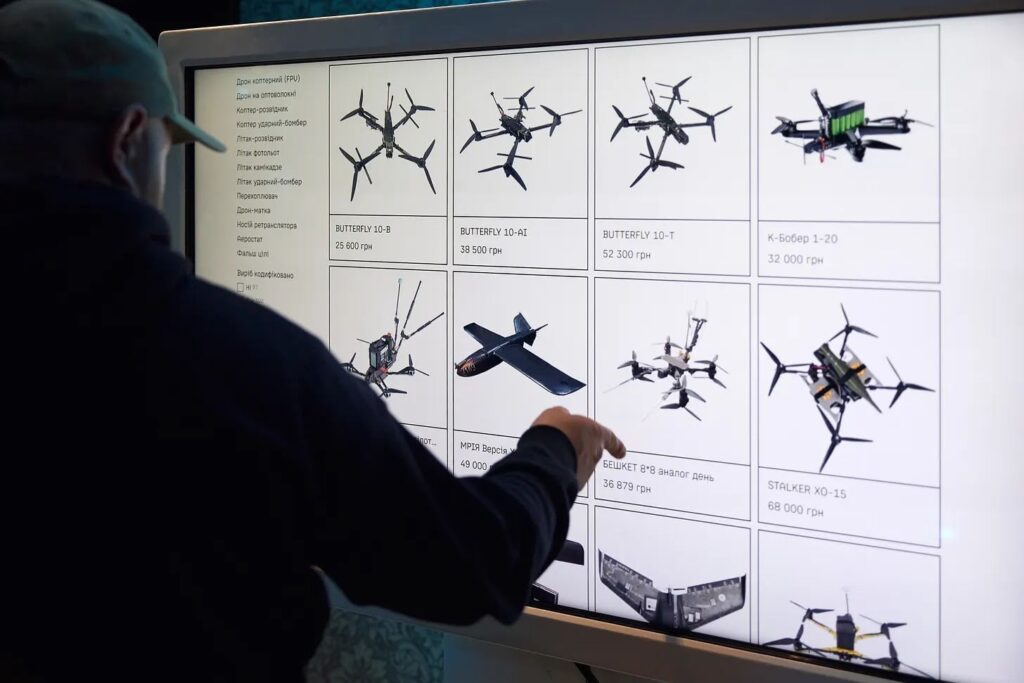
Pour accélérer l’innovation, Brave1 accompagne toutefois les développeurs tout au long de ce processus et ramène le délai à deux ou trois mois. Au cours de sa première année, Brave1 fonctionnait principalement comme un dispositif de subventions, accordant 186 subventions d’une valeur de $3 millions pour financer le développement d’idées et de prototypes, plutôt que de produits finis. L’une des entreprises bénéficiaires a décrit Brave1 comme un « investisseur providentiel » public, en raison des petites subventions accordées à de nouveaux projets, à de jeunes entreprises et à des activités de R&D en phase initiale. Une autre entreprise a salué l’aide apportée par la plateforme pour organiser des essais de ses produits sur le terrain, en collaboration avec des unités des forces de défense. Deux ans plus tard, en 2025, les inventions s’étaient multipliées ; toutefois, le changement le plus important résidait dans ce que cette évolution avait rendu possible : des projets réels, achevés et prêts à être déployés. Compte tenu du grand nombre de ces projets, Brave1 Market a été lancé en avril 2025 : une plateforme en ligne sur laquelle les unités militaires peuvent se connecter et parcourir un catalogue de plus d’un millier de produits, allant des drones aux outils fondés sur l’IA. Les achats s’effectuent comme dans une boutique en ligne ordinaire : l’unité passe directement commande au moyen de son budget, ce qui permet de gagner le temps habituellement consacré au processus d’approvisionnement.
L’examen du fonctionnement de Brave1 montre clairement que la plateforme a effectivement intégré les réformes documentées. La composition du comité d’experts est passée de membres militaires à des membres civils, chaque projet étant évalué au cas par cas. Avant les réformes de 2014, un ordre devait parcourir toute la chaîne de commandement avant de pouvoir être exécuté. Chez Brave1, ni les civils ni les militaires n’attendent l’autre partie ; il n’existe aucune hiérarchie rigide. Un projet peut ainsi passer de l’inscription à l’obtention d’une subvention en quelques semaines plutôt qu’en plusieurs années — un processus qui prenait auparavant beaucoup plus de temps dans l’ancien système de l’état-major général. En outre, cela permet aux technologies les plus nécessaires dans le contexte du conflit d’atteindre beaucoup plus rapidement le champ de bataille, sans que les délais ne retardent la réaction tactique.
Comme indiqué précédemment, les principaux problèmes d’Ukroboronprom étaient sa lenteur, son opacité et le fait que le conglomérat décidait quoi produire en fonction de ses propres intérêts, plutôt que des besoins de la guerre. Brave1 surmonte ces problèmes de plusieurs manières. Sa plateforme permet à des milliers de développeurs et de jeunes entreprises de concourir pour une même subvention selon un système de notation identique pour tous, abandonnant ainsi la priorité accordée à telle ou telle entreprise sur la base d’intérêts étrangers au développement technologique. Ses critères sont donc fondés sur les besoins réels et immédiats de la ligne de front, plutôt que sur ce qui est le plus facile à produire. Les critères officiels et les notes sont établis par différents experts possédant une connaissance directe du combat. Chaque projet est analysé et évalué en fonction des besoins précis du moment.
Jusqu’ici, nous avons toutefois expliqué comment les entreprises et les développeurs entrent en relation avec l’État. C’est précisément l’Army of Drones Bonus System qui explique comment les actions individuelles de chaque soldat sur la ligne de front peuvent orienter et améliorer la production de tout un pays, en déterminant ce qui doit y être produit.
L’Army of Drones Bonus System répond à la question de savoir qui décide quels produits proposés sur Brave1 Market doivent être fabriqués en plus grande quantité et à quel moment. Seuls ceux qui se trouvent sur la ligne de front savent quel modèle précis de drone est le plus efficace contre le dernier système de guerre électronique russe, en évolution constante.
Dans le cadre de ce mécanisme lancé en 2025, chaque unité ukrainienne qui détruit des cibles militaires russes au moyen de drones et en fournit la preuve vidéo reçoit un nombre de points déterminé en fonction des dégâts infligés. Ces « e-points » peuvent être échangés sur Brave1 pour acheter de nouveaux drones ukrainiens ou le matériel dont les unités ont le plus besoin à ce moment-là. La livraison est assurée par DOT-Chain Defense et prend généralement environ 10 jours, ou 6 si le produit est en stock. Selon les sources les plus fiables, 20 points sont accordés pour chaque attaque qui cause des dégâts et 40 pour chaque attaque qui entraîne une destruction — même si leur nombre varie selon les priorités militaires du moment. Actuellement, afin de s’adapter aux besoins de la ligne de front, des points sont attribués non seulement pour l’élimination de forces ennemies et la perturbation des opérations de minage, mais aussi pour les missions de reconnaissance et de logistique. Chaque point vaut environ 10,000 hryvnias — $224 au taux de change actuel. En 2025, 4 milliards d’UAH ont été mobilisés en seulement 2.5 mois pour acheter le matériel demandé par les unités, et jusqu’à 820,000 cibles ennemies ont été frappées.
Mais ce qui importe, c’est le système de points: si 12 points sont attribués pour la mort d’un soldat ennemi, sa capture avec l’aide d’un drone en rapporte 120. Bien que les analystes débattent de la légitimité d’un système de points et de son éventuel effet déshumanisant sur le conflit, cette conception n’est pas arbitraire. Les Conventions de Genève et le droit international humanitaire imposent de protéger les prisonniers de guerre, d’évacuer les blessés et de réduire au minimum les souffrances et les pertes au combat. En pratique, même si ces obligations sont juridiquement contraignantes, il s’agit d’une tâche complexe, car capturer un soldat est souvent plus difficile et plus coûteux que de le tuer. Le système de points résout ce dilemme, en rendant le respect des normes internationales avantageux pour les soldats, tout en permettant à l’Ukraine d’utiliser les soldats capturés pour négocier avec la Russie un échange de prisonniers de guerre.
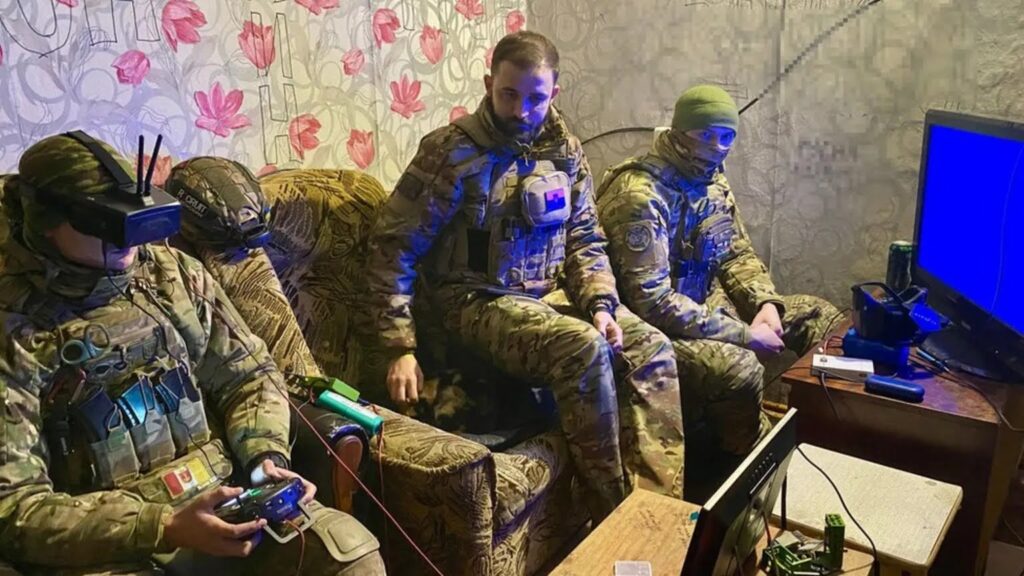
Le système offre plusieurs avantages stratégiques qui témoignent de la transformation rapide des institutions militaires ukrainiennes. Chaque vidéo vérifiée fournit des données uniques sur le champ de bataille, qui enrichissent progressivement l’apprentissage et permettent de reléguer définitivement l’organisation obsolète de type soviétique des années précédentes. L’accès direct au matériel par l’intermédiaire de Brave1 supprime le système bureaucratique et lent décrit précédemment, qui constituait jusqu’ici le principal obstacle. La possibilité offerte au soldat d’acheter du matériel lui confère un avantage stratégique, puisqu’il sait de première main ce qui est le plus nécessaire à cet instant. Le suivi et la vérification produisent des résultats mesurables, en déterminant quels types de drones sont les plus efficaces et dans quels types de combats, puisque les commandes les plus importantes reposent sur des données opérationnelles plutôt que sur des intérêts économiques. Cet avantage a fait naître ce que des entreprises comme Ukroboronprom n’avaient pas su créer : un système qui s’adapte et s’améliore constamment, car il est directement relié aux personnes qui utilisent les armements sur les lignes de front.
Chaque soldat agit de manière indépendante, se procure le matériel et décide quand et comment attaquer. Le changement tient au fait que ces décisions individuelles, quoique dispersées, ont été formalisées sous forme de données qui déterminent ce qui est produit à l’échelle nationale. Il ne s’agit pas d’une évolution soudaine, mais d’une accumulation de transformations qui se sont institutionnalisées au cœur d’une guerre asymétrique.
Le contraste avec l’Occident ne réside pas dans sa lenteur à s’adapter, mais dans le fait que, lorsqu’il finit par s’adapter, il reconnaît ouvertement la source de ce savoir. Cela inverse la logique habituelle des flux et réfute empiriquement le récit qui présente l’Ukraine comme une bénéficiaire passive de l’aide : l’Ukraine produit un modèle institutionnel que le système international importe de plus en plus activement.
En Allemagne, le nombre de grands projets d’acquisition d’armements approuvés par le ministère de la Défense est passé de 55 à 97 en une seule année, un niveau record. Le gouvernement allemand a lui-même a déclaré que la hausse des investissements dans la défense s’expliquait en partie par les enseignements tirés de la guerre russo-ukrainienne, qui ont conduit à mettre en œuvre plus rapidement des mesures de défense cruciales.
Dans le cas des États-Unis — pays traditionnellement considéré comme un exportateur plutôt que comme un importateur de doctrine militaire —, la Defense Innovation Unit (DIU) a lancé le Project G.I. en juin 2025, une initiative conçue pour accélérer rapidement le développement, les essais et le déploiement de systèmes aériens sans pilote (UAS) et de technologies connexes, dotée d’un fonds de 20 millions de dollars. Il s’agit d’une » qui, selon plusieurs experts, s’inspire de l’innovation rapide de l’Ukraine sur le champ de bataille. L’objectif est que les entreprises chargées du développement restent en contact permanent avec les opérateurs de drones plutôt que principalement avec les responsables des achats, afin de contourner la hiérarchie existante. La relation avec la DIU et Brave1 n’est pas fortuite ; dès 2023, un forum sur l’avenir des systèmes sans pilote avait été coorganisé à Varsovie, avec la participation du directeur de la DIU. Il a même été reconnu que l’objectif principal était de réduire les délais de livraison, un problème déjà identifié et corrigé en Ukraine.
Ces changements, inspirés des enseignements tirés de l’Ukraine, ne se limitent pas aux pays : ils s’étendent également aux organisations. Plus tôt la même année, l’OTAN et l’Ukraine se sont associées pour créer le Centre conjoint OTAN-Ukraine d’analyse, de formation et d’éducation —JATEC— en Pologne. Il s’agit de la première organisation conjointe entre l’Ukraine et l’OTAN, au sein de laquelle des personnels des deux parties s’emploient à dégager et à appliquer en temps réel les enseignements de la guerre, puis à les traduire en nouvelles stratégies, politiques et opérations. Par la suite, en 2025, UNITE–Brave a été lancé : ce programme conjoint vise à déployer à plus grande échelle des technologies innovantes déjà prototypées et testées, en mettant l’accent sur le renforcement de la défense aérienne et de la sécurité des communications sur la ligne de front. Son financement pour 2026 devrait atteindre 50 millions d’euros.
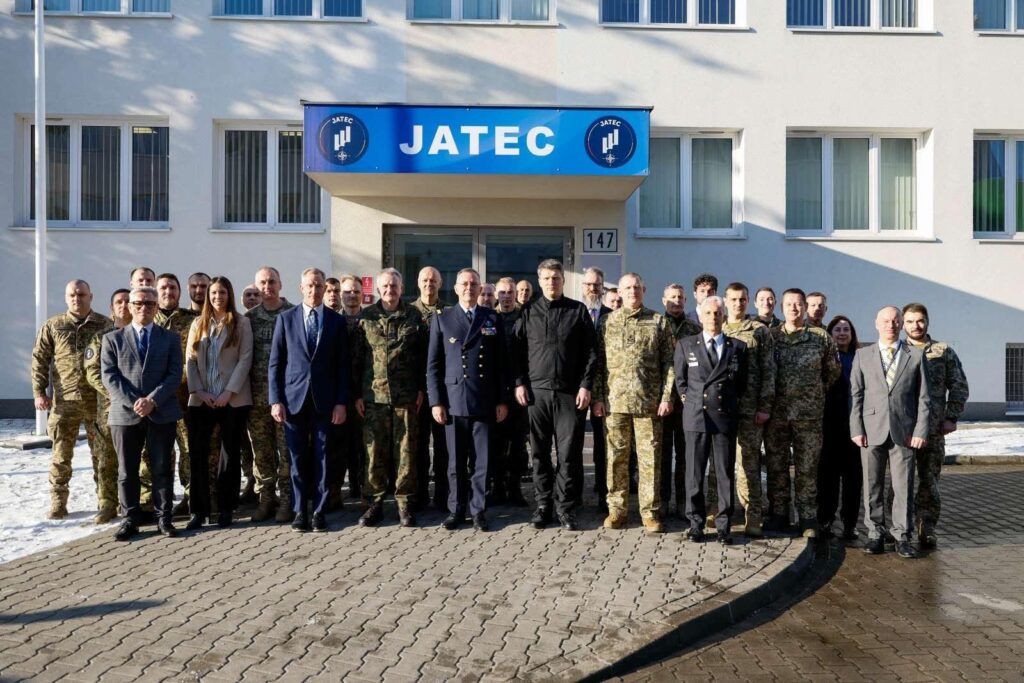
Ce qui importe dans les transformations à l’œuvre dans d’autres pays et organisations hors d’Ukraine, c’est le sens du processus d’apprentissage : ils adoptent explicitement la conception institutionnelle que l’Ukraine développe sous la pression de la guerre. Ils n’adoptent pas le courage individuel ukrainien, mais des procédures précises adaptées au contexte propre à chaque pays : des délais d’approvisionnement plus courts, des comités plus horizontaux et des canaux plus directs entre le développeur et l’opérateur.
Si la résistance ukrainienne ne devait son existence qu’à cet « héroïsme » individuel, il n’y aurait aucune doctrine militaire à exporter ou à reproduire dans d’autres pays afin de contourner cette bureaucratie. L’Ukraine ne fait pas que résister ; elle exporte des institutions de guerre vers des acteurs dont elle dépendait traditionnellement pour apprendre. Le flux traditionnel du savoir militaire dans les relations transatlantiques — des puissances mondiales vers des pays plus petits comme l’Ukraine — s’inverse constamment.
La principale question de recherche était la suivante : par quelles infrastructures institutionnelles le courage diffus dans la société ukrainienne a-t-il été formalisé en une capacité permettant de soutenir indéfiniment une guerre asymétrique ? La réponse trouve son origine en 2014, lorsque Kyiv a compris qu’aucune garantie extérieure ne pouvait remplacer l’autodéfense, ce qui l’a obligée à engager des transformations parallèles, mais convergentes. Et c’est sous la pression de l’invasion à grande échelle qu’ont été développés des mécanismes efficaces pour les institutions chargées de mener la guerre.
Cela remet également en question les récits qui présentent le soutien militaire et financier occidental comme l’unique explication de la résistance ukrainienne. Si cette aide est effectivement essentielle dans de nombreux cas, comme nous l’avons montré, elle ne peut produire ses effets que grâce à un cadre institutionnel que l’Ukraine construit elle-même. Sans cet écosystème, l’aide aurait été moins efficace.
Il a également été démontré que ces innovations ne sont pas des anomalies qui ne fonctionneraient qu’en temps de guerre, mais des modèles reproductibles et exportables, déjà mis à l’épreuve dans d’autres pays actuellement en paix. En outre, l’étude de cas Brave1 montre que, même en partant d’un appareil d’État centralisé, lent et embourbé dans des scandales de corruption, il est possible de bâtir des systèmes horizontaux d’innovation en matière de défense, adaptables aux réalités du moment.
Pour l’Occident :
Pour l’UE :
À l’intention de l’Ukraine :
Ce texte a été traduit automatiquement à partir de l’original anglais, qui reste accessible en passant le site en anglais.


_03.jpeg)
