

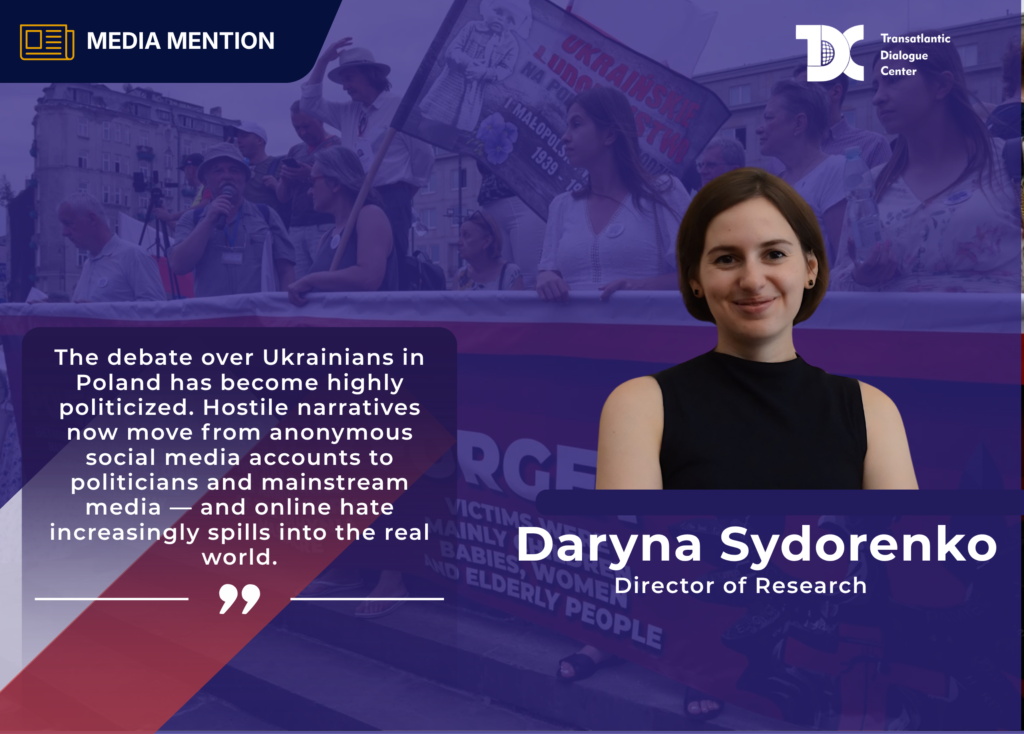
Daryna Sydorenko, Directora de Investigación del Transatlantic Dialogue Center, apareció en New Eastern Europe en el artículo «De las redes sociales a la política: el debate polaco sobre Ucrania».
En el artículo, Daryna comentó cómo el debate público en torno a los ucranianos en Polonia se ha politizado cada vez más. Basándose en su labor más amplia de seguimiento del discurso de odio antiucraniano, la desinformación y los incidentes violentos en Polonia, explicó que el contexto de la presencia de los ucranianos en el país ha cambiado considerablemente en los últimos años.
Daryna observó un aumento notable de los comentarios negativos sobre los ucranianos en Facebook, TikTok, Telegram e incluso LinkedIn. Estas narrativas suelen circular entre cuentas anónimas en redes sociales, canales de Telegram, figuras políticas y medios de comunicación generalistas, moldeando gradualmente la percepción del público en general.
Una de las principales tendencias que destacó es la forma en que historias aparentemente aisladas sobre ucranianos se presentan de modo que refuercen narrativas hostiles más amplias. Por ejemplo, la cobertura mediática puede enfatizar de manera desproporcionada la nacionalidad ucraniana de un sospechoso o utilizar titulares sensacionalistas que asocian a los ucranianos con la delincuencia, la ingratitud o las amenazas a la sociedad polaca.
Daryna también señaló el papel de los canales de Telegram en polaco en la difusión de estos mensajes. Aunque Telegram no es la plataforma dominante en Polonia, funciona como un espacio sin regulación donde las ideas marginales pueden acercarse a la corriente dominante. Una de las narrativas más extendidas presenta a los ucranianos como delincuentes y como un peligro para Polonia.
Los temas históricos también se instrumentalizan. Las narrativas relacionadas con Volinia, el UPA y los «banderistas» se combinan cada vez más con historias actuales sobre los ucranianos en Polonia, creando asociaciones emocionales entre la violencia del pasado y la comunidad ucraniana de hoy.
Daryna recalcó que los periodistas tienen una responsabilidad especial en este contexto. Aunque se debe informar sobre las historias importantes, los medios de comunicación han de ser conscientes de cómo los titulares, el encuadre y el énfasis selectivo pueden reforzar involuntariamente las narrativas de odio.
«Es muy importante que los periodistas vigilen no solo el espacio de la propaganda rusa, sino que también se aseguren de no convertirse ellos mismos en amplificadores de estas ideas, estados de ánimo y marcos», declaró Daryna Sydorenko a New Eastern Europe.
Lee el artículo completo en New Eastern Europe.
Este texto fue traducido automáticamente del original en inglés, que sigue disponible al cambiar el idioma del sitio web a inglés.