

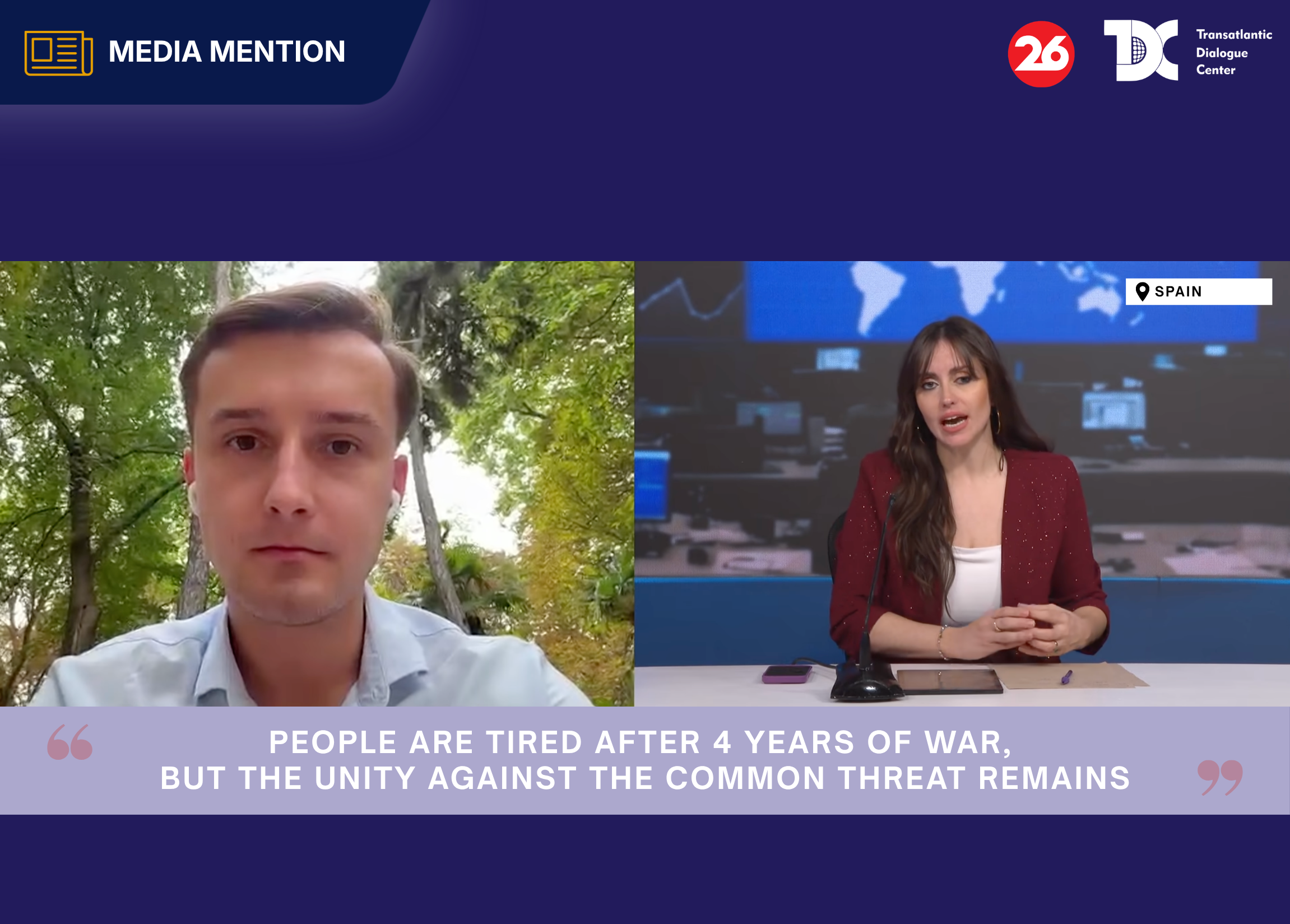
Олександр Сливчук, Coordinator of the Spain and Latin America Cooperation Program at the Transatlantic Dialogue Center, appeared in an interview with Argentina’s Canal 26 to discuss US mediation efforts, Russia’s temporary pause in attacks, and the risks Ukraine faces as winter approaches.
In the interview, Slyvchuk explained that the 72-hour pause should not be interpreted as progress toward a ceasefire. According to him, it was linked to the security of US envoys Steve Witkoff and Jared Kushner during their visits to Moscow and Kyiv, rather than to preparations for a sustainable cessation of hostilities.
Slyvchuk stressed that Russia’s continued missile strikes show Moscow is not ready to pursue even a temporary negotiated pause in the war. Instead, Russia continues to combine military pressure with diplomatic manoeuvring to create the appearance of engagement while maintaining its broader strategy against Ukraine.
As temperatures fall, Slyvchuk warned that Russia is likely to intensify attacks on Ukraine’s electricity, gas, and water infrastructure in order to increase pressure on civilians. Such attacks, he noted, remain part of Moscow’s effort to weaken Ukrainian resilience ahead of winter.
The interview also addressed Russia’s attempts to legitimize its occupation of Ukrainian territories. Slyvchuk pointed to Moscow’s organisation of parliamentary elections in occupied areas and the involvement of foreign figures as so-called “international observers” as part of an effort to create the appearance of legitimacy for illegal occupation.
Насамкінець Slyvchuk emphasized that despite war fatigue and public criticism of some government decisions, Ukrainian society remains united on the need to resist Russian aggression. Temporary pauses in attacks do not change Russia’s strategy: Moscow continues to use negotiations, strikes on civilian infrastructure, and political manipulation in occupied territories as interconnected tools of pressure.
Watch the full interview with Oleksandr Slyvchuk via the посиланням.