
 14 min read
Ukraine’s energy security has become one of the central issues of the nation’s resilience, comparable with international peace negotiations and geopolitical maneuvering. Regular Russian attacks against the critical infrastructure lasting four years have created an unparalleled crisis in humanitarian, economic, nuclear, and corruption dimensions. This article explores the way the energy issue transformed from a domestic challenge into a lever of international influence and a factor defining Ukraine’s future in the context of war and post-war recovery.
The energy sector of Ukraine has sustained unequalled damage since the beginning of the full-scale invasion. Throughout 2024, the Russian forces have launched over 400 drone and rocket strikes against energy infrastructure. The attacks that began on March 22, 2024, were particularly intense: by the end of the year, Russia had carried out 13 massive combined attacks on the country's energy system, compared to 11 attacks in 2022 and 5 in 2023.
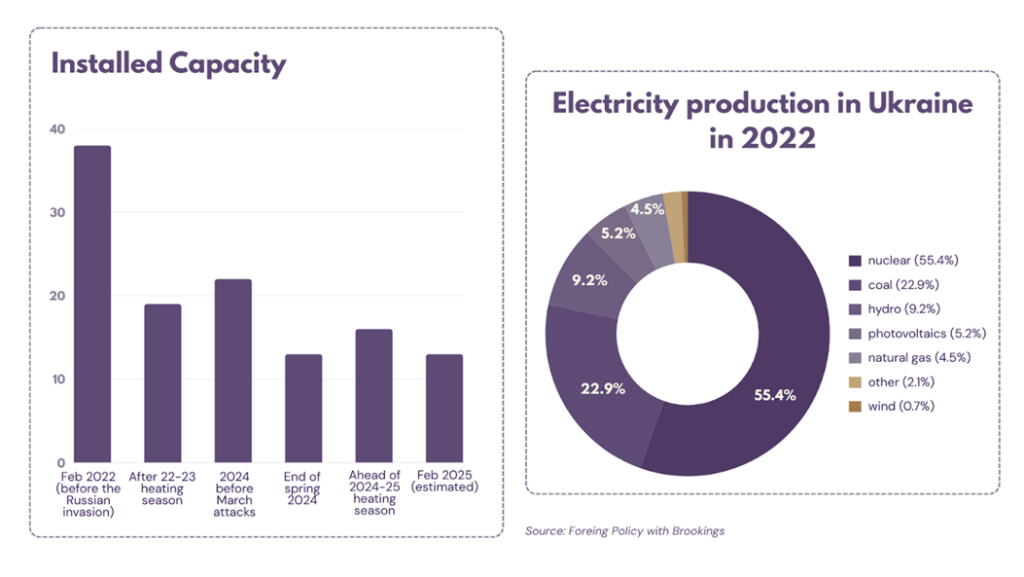
As a result of the war, Ukraine's energy sector has undergone significant changes. Before the full-scale invasion of 2022, Ukraine’s power balance consisted of several key sources: nuclear power provided about 55% of electricity production, coal- and gas-fired thermal power plants (TPPs) provided about 22.9%, hydroelectric power plants (HPPs) provided about 9%, and renewable energy sources (solar and wind) provided about 8%. Total power output accumulated to around 55 GW, with winter-time peak demand amounting to 24-26 GW.
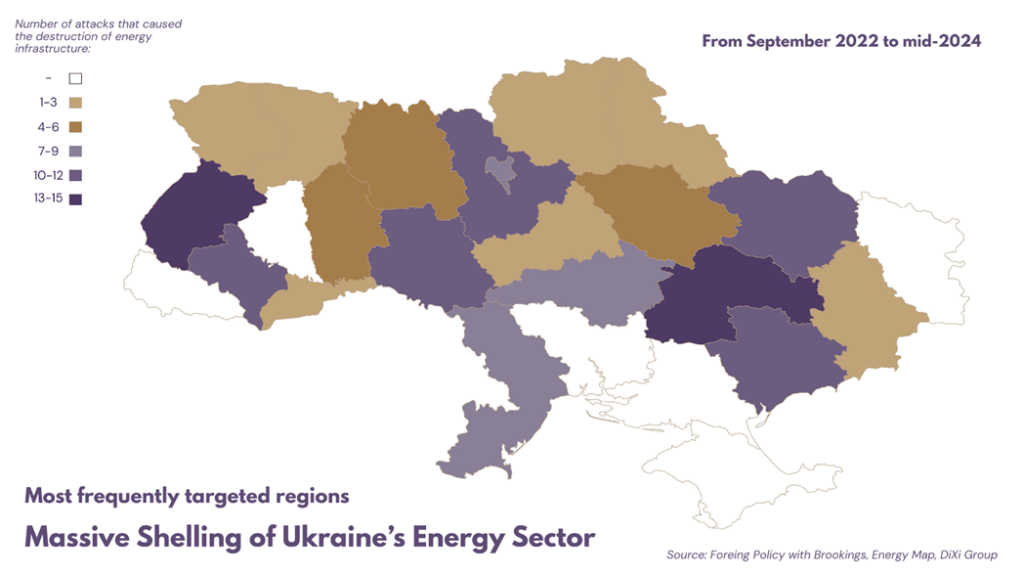
Three years of war later, the structure changed drastically. As a result of systematic attacks, nuclear power’s share rose to 70% of total power output as of 2025 due to the large-scale destruction of other sources. Every thermal and hydropower plant in the country has been under attack, which led to a temporary loss of approximately 9 GW of power output in 2024 alone. All 15 TPPs were damaged or destroyed, and their share in the energy balance fell to about 5% from 23.5% in 2022. Hydropower has also suffered greatly, especially with the destruction of Kakhovka HPP and major damage to Dnipro HPP.
Another part of the power output was lost due to occupation. ZNPP (and its 6 units with a total output of 6 GW) has been under Russian control since March 2022, and all units are shut down. It practically stripped Ukraine’s energy system of its biggest energy source. Moreover, a part of wind and solar power plants remains in temporarily occupied territories - more than three-quarters of pre-war wind farms have been utterly destroyed or captured.
The International Energy Agency predicted that winter peak demand would rise to 18,5 GW, a sharp contrast to summer’s 12 GW. Matthias Schmale, the UN Resident and Humanitarian Coordinator in Ukraine, stated that Russian forces had destroyed nearly 65% of Ukraine’s power output.
Despite grim predictions, the energy sector has shown unexpected resilience. The country endured the heating season of 2024-2025 without massive power cuts thanks to favorable weather conditions, stable operation of nuclear power plants, enhanced defense of energy facilities, and swift restoration of damaged sources. In H1 2024, energy companies of Ukraine repaired 4 GW worth of thermal and hydropower plants.
The situation worsened significantly in H2 2025, however. Russia intensified its attacks during the very ceasefire negotiations. On December 9, 2025, the Russian Federation launched one of the largest air strikes of the war, sending 704 UAVs and rockets against Ukrainian cities and infrastructure. The December 23rd attack, which came in the midst of talks aimed at ending the war, involved 635 drones and 38 missiles, of which 587 drones and 34 missiles were shot down. At least three people, including a four-year-old child, were killed, and 13 regions were under attack.
In this regard, the UN Human Rights Monitoring Mission in Ukraine has documented a sharp increase in civilian casualties. In January-November of 2025, Russian missiles and long-range UAVs killed 509 and injured 2462 civilians. According to the Council of Europe, 2025 has become the deadliest year for Ukrainian civilians, with 2514 killed and 12142 injured. Energy pressure continued in January 2026, when about 200,000 Kyiv residents were left with no heating or electricity after regular strikes, and more than 800 apartment houses were left with no power. President Zelenskyi has stated that the situation is the hardest in Kyiv and the Kyiv region, in Kharkiv and the Kharkiv region, as well as in the Chernihiv, Sumy, Dnipropetrovsk, and Zaporizhzhia regions. Emergency work continues daily, but the situation is complicated by severe frosts.
The Russian strategy of systematic attacks against energy infrastructure gained particular significance during peace negotiations, which began in 2025. Attacks on energy facilities were designed to put pressure not only on the Ukrainian population but on the country’s stance at the negotiating table. After the attack on December 23rd, President Zelenskyi stated that “this Russian strike sends an extremely clear signal about Russia’s priorities” and urged Western allies to strengthen their pressure on Moscow.
The use of energy as a weapon is manifold. Firstly, Russia aims to break the spirit of Ukrainians through systematic deprivation of basic services. Secondly, attacks on energy infrastructure create economic pressure by hindering the operation of industrial and logistical chains. Thirdly, the demonstration of the ability to strip millions of people of heating and electricity amid freezing temperatures is supposed to emphasize the futility of Ukraine’s resistance and improve Russia’s position at the negotiating table. These actions signal to Kyiv and its allies “the cost of prolonging the war”.
Ukraine responded with its own campaign of airstrikes on the Russian energy sector, aiming at disabling Russia’s financing of its war efforts. Attacks on oil refineries, storage, and other facilities up to 1200 miles deep into Russian territory forced Moscow to cut some export supplies and introduce domestic fuel rationing. As analysts note, the long-term consequences of both campaigns will depend on how long each side can sustain its attacks and how much strategic damage it can inflict.
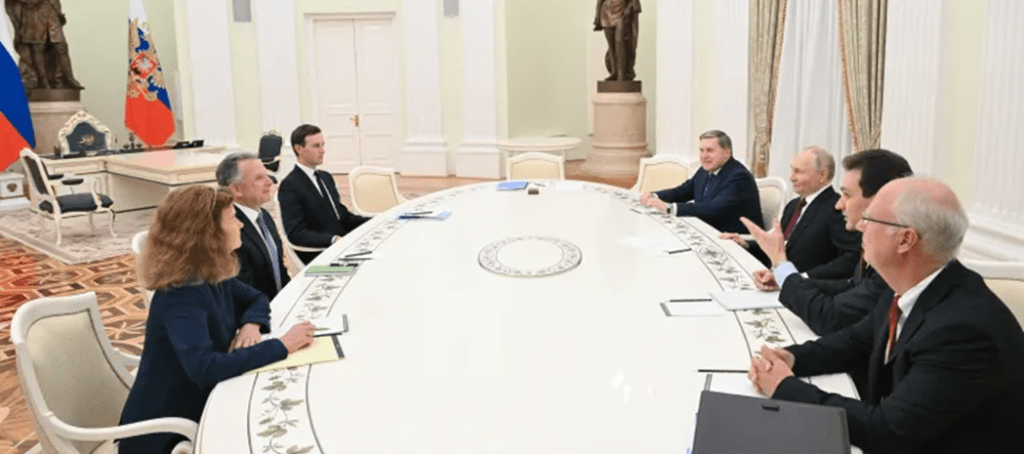
Simultaneously with the campaign of attacks on the energy system, certain critical facilities - primarily the Zaporizhzhia Nuclear Power Plant – have become a negotiating asset and a source of nuclear risks. In the draft 28-point ceasefire plan allegedly agreed upon by the US and Russia, one of the points envisaged the launch of the ZNPP under the supervision of the International Atomic Energy Agency (IAEA) with the equal distribution of the generated electricity between Russia and Ukraine – 50:50. Although the European counter-proposal contained minor editorial changes to this point, the concept itself demonstrates how energy assets have become a bargaining chip in geopolitical negotiations.
Russia's occupation of the Zaporizhzhia Nuclear Power Plant - the largest in Europe - has created an unprecedented situation. Captured by Russian forces on March 4, 2022, during the battle for the city of Enerhodar, the ZNPP became the first fully operational nuclear power plant in history to be under military occupation.
The ZNPP contains six reactors with a total installed output of 6 GW, which, before the war, comprised about 20% of Ukraine’s total electricity supply. Since September 2022, all six reactors have been in various states of shutdown, but the plant still requires uninterrupted power to maintain cooling systems and prevent the reactors from melting down - a process that could cause a nuclear disaster.
The ZNPP has lost access to the external power supply 12 times since February 2022. When external power is lost, emergency diesel generators are activated to provide electricity to the reactor cooling systems. In September 2025, the plant was without power for four consecutive days, the longest period of outage since the occupation began. "If these backup generators fail, further loss of coolant could cause a fuel meltdown," experts warn.
The IAEA maintains a permanent presence of experts at the plant to monitor safety, but the situation remains critical. Ukraine's top nuclear regulatory official said that the lack of maintenance and repairs during more than two years of occupation had led to "significant degradation of nuclear and radiation safety and lack of emergency response capability".
Russia's use of the ZNPP is a completely new phenomenon in military history. Never before has a nuclear power plant been used as a "nuclear shield" - to protect Russian troops and military equipment stationed on the site. In August 2022, video footage showed Russian military trucks and armored vehicles parked in buildings housing the turbines.
President Zelenskyi accused Russia of deploying troops at the station to shell the towns of Nikopol and Marhanets along the Kakhovka Reservoir. Both sides accuse each other of shelling the station. On April 7, 2024, drone strikes on the ZNPP were confirmed, with IAEA Director General Rafael Mariano Grossi reporting that the drones had hit several buildings.
This tactic creates an extremely difficult dilemma for Ukraine and the international community: any attempt to liberate the station by military force risks causing a nuclear catastrophe, while maintaining the status quo allows Russia to use the facility as a military base with guaranteed security from counterattacks.
However, the proposal to launch the power plant and distribute the generated energy has been controversial for several reasons. First, it effectively legitimizes Russian control over Ukrainian energy assets. Second, launching reactors in the midst of a continuing war and the lack of proper maintenance pose enormous security risks. Third, the 50:50 electricity-sharing arrangement turns the outcome of military aggression into a mere business deal.
Ukraine's state nuclear regulator claimed it would allow the resumption of electricity production at the ZNPP only after it is returned to Ukrainian control and a thorough inspection program is carried out to restore safe operating conditions. However, in reality, the future of the ZNPP depends on the outcomes of broader negotiations to end the war and determine the status of the occupied territories.
The IAEA continues to make efforts to maintain the safety of the plant in wartime. In October 2025, the agency reported that Russia and Ukraine had agreed to a special ceasefire zone to carry out repairs to damaged power lines leading to the ZNPP. However, such local agreements do not solve the fundamental problem: the ZNPP remains a hostage of the war, creating a constant threat of nuclear disaster for the entire region.
In November 2025, the biggest corruption scandal of Volodymyr Zelenskyi's presidency broke. On November 10, the National Anti-Corruption Bureau of Ukraine (NABU) and the Specialized Anti-Corruption Prosecutor's Office (SAP) uncovered a scheme to embezzle at least $100 million from the state-owned company Energoatom, which operates Ukraine's nuclear power plants.
At the center of the scandal was Tymur Mindich, a businessman and co-owner of the production company "Kvartal-95", which was founded by Zelenskyi. The scheme, uncovered after 15 months of investigation and over 1,000 hours of wiretapping, was simple and brutal: two people at Energoatom - Ihor Myroniuk and Dmytro Basov - controlled all of the company's contracts and demanded bribes of 10-15% from suppliers. Suppliers who refused to pay risked being left without payment for goods and services provided, as the state-owned company was exempt from the obligation to pay debts under martial law.
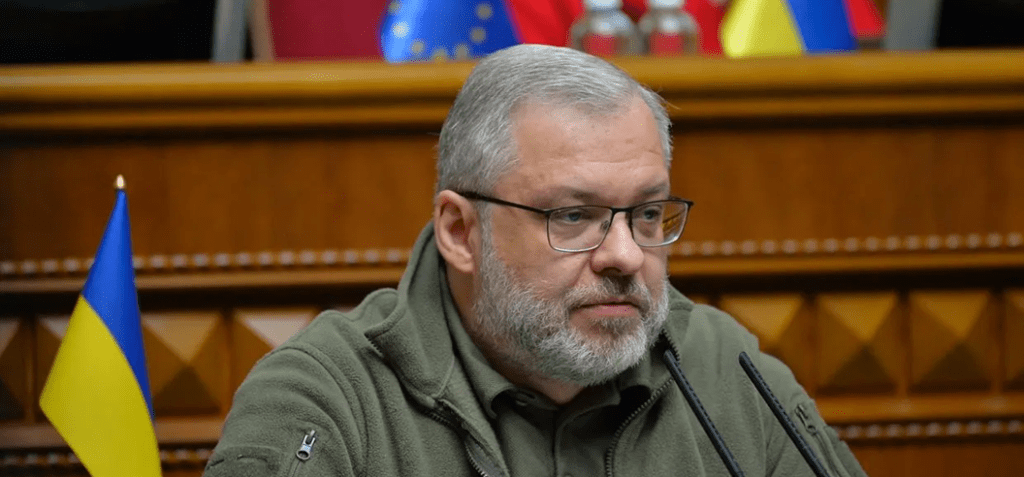
The scandal has engulfed the highest echelons of government. Herman Halushchenko, who served as Minister of Energy from 2021 to July 2025 and later became Minister of Justice, was suspended from his duties and later resigned. His successor as Minister of Energy, Svitlana Hrynchuk, also resigned after it was revealed that she had close personal ties with Mr. Halushchenko and that Ihor Myroniuk had interviewed her for the ministerial position. Parliament approved their resignations on November 19, 2025.
For Ukraine, which is seeking EU membership, the scandal had a particularly devastating effect. As MP Oleksandr Merezhko noted: "Inside the country, this scandal will be used to undermine unity and stability. Outside, our enemies will use it as a reason to stop aid to Ukraine".
German Chancellor Friedrich Merz, in a telephone conversation with President Zelenskyi, emphasized the concerns of European partners about corruption and "underlined the German government's expectations that Ukraine will vigorously move forward with the fight against corruption and further reforms, especially in the area of the rule of law".
Particularly disturbing was the fact that the corruption scheme operated at a time when Russia was systematically attacking Ukraine’s energy infrastructure. The wiretaps captured conversations about halting critical infrastructure protection projects - not for technical reasons, but because of disputes over the size of bribes. After the case was exposed, the European Bank for Reconstruction and Development reviewed its cooperation with Energoatom due to the company's reputational risks.
At the same time, it is important to view the scandal not only as a failure, but also as evidence of the success of anti-corruption reforms in Ukraine. "The positive point in this story is that we have effective and truly independent anti-corruption bodies that have shown concrete results," Merezhko said. "As it turns out, no one is above the law, and no one is immune from it." It is the ability of the NABU and the SAP to expose the scheme at the highest level of power, conduct searches of ministers' residences, and indict close associates of the president that demonstrates that anti-corruption institutions in Ukraine function independently even under martial law.
Similarly, the events of July 2025, when bill No. 12414, which subordinated the NABU and the SAP to the Prosecutor General, was adopted by the Verkhovna Rada and signed by the President on the same day, sparked protests in at least 27 places. They lasted a week until the Verkhovna Rada passed a new bill introduced by President Zelenskyi, which restored the independence of the NABU and the SAP. Although these protests were small – often fewer than 100 participants – and mostly led by youth, they matter: they demonstrate the resilience of Ukrainian civil society even in wartime and confirm that European integration remains a public agenda priority.
In parallel with the challenges posed by war and corruption scandals, Ukraine achieved a historic breakthrough in energy integration with Europe. Literally hours before the start of a full-scale invasion on February 24, 2022, Ukraine disconnected from the old Soviet energy grid. Previously planned for 2023, synchronisation with the Continental European Network was completed in three weeks under the extraordinary conditions of the start of the war.
On January 1, 2024, the power system operator of Ukraine, Ukrenergo, became the fortieth full member of the European Network of Transmission System Operators for Electricity (ENTSO-E). This membership has opened new opportunities for electricity exchange and investment, as well as increased energy security.
The practical significance of the integration was reflected in increased export capacity. In October 2024, ENTSO-E announced an increase in the limit on electricity exports to Ukraine and Moldova from 1,700 MW to 2,100 MW from December 1, 2024. Since March 2025, network operators have been reviewing commercial capacity between the EU and Ukraine monthly. In the second quarter of 2025, electricity export capacity from the Ukraine-Moldova block to the EU increased to 650 MW (up 18% from March 2024), helping stabilize the network.
Ukraine is actively establishing interconnections with neighboring European countries. Ukrainian engineers were building a new connection line with Poland even during Russian missile strikes. Similar work is planned with Romania and Slovakia, although details remain confidential for security reasons.
In February 2025, the European Commission announced a support package that will allow for the full integration of Ukraine's electricity market with the EU by early 2027, together with Moldova. The package envisages accelerating investments in renewable energy with the addition of up to 1.5 GW of generating capacity, which represents approximately a 25% increase in total renewable energy capacity in Ukraine.
The war paradoxically accelerated Ukraine's transition to renewable energy. If ever there was a country where the concept of "building back better" applies to the energy system, it is Ukraine. The country’s energy sector was heavily centralized; however, after Russian attacks, Ukraine is rebuilding it in a decentralized manner.
In June 2024, the Cabinet of Ministers of Ukraine approved the National Energy and Climate Plan (NECP) for 2025-2030 with investment needs estimated at between $41.5 and $50 billion. The plan aims to achieve 27% of renewable energy in final energy consumption by 2030, up from 10% today. The NECP includes adding approximately 10 GW of new renewable energy capacity and reducing greenhouse gas emissions by 65% below 1990 levels by 2030.
To support the green transition, the Ukrainian government has introduced tax incentives for investments in renewable energy. As of July 27, 2024, laws have been passed exempting certain energy-generating equipment from import duties and VAT, including photovoltaic panels, lithium-ion batteries, inverters, and specific components for wind turbines. These exemptions are valid for the duration of the martial law period, but are set to expire on January 1, 2026.
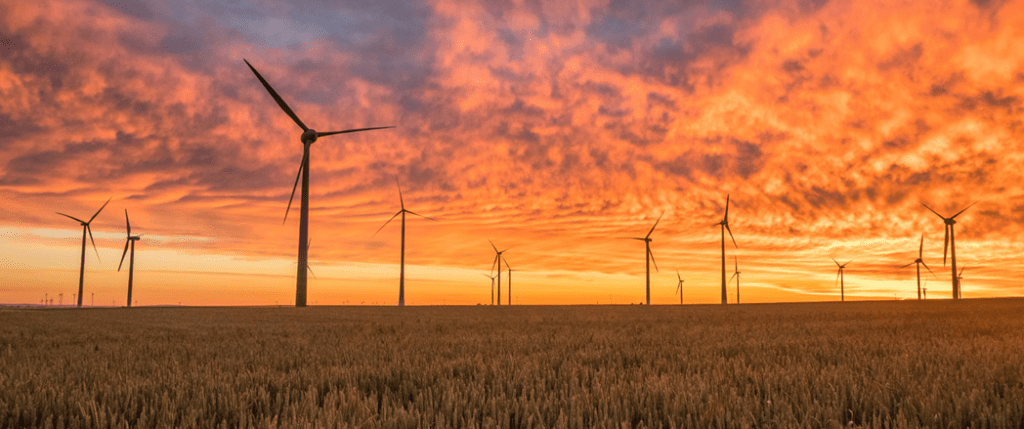
Ukraine has focused on decentralized solar energy projects as a strategic response to the war. The Ukrainian Ministry of Energy has outlined plans to develop renewable energy hubs, especially in the country's western regions. These hubs, often in the form of solar microgrids with integrated battery storage, will be critical to increasing the country's energy security by reducing reliance on the centralized grid.
At the international level, the EU has identified support for the Ukrainian energy sector as a priority. The Ukraine Energy Support Fund, managed by the Energy Community in cooperation with the European Commission and the Ministry of Energy of Ukraine, has received over €1.28 billion in commitments as of September 2025, of which €1.25 billion has already been disbursed. The Fund supports projects in winterization, distributed generation, and renewable energy deployment.
In July 2025, the European Investment Bank (EIB) and the United Nations Development Programme (UNDP) announced a significant new partnership aimed at strengthening the resilience of Ukraine's energy sector and accelerating the transition to renewable energy sources. The program is supported by a €20 million contribution from the German government and will finance renewable energy projects in Ukrainian municipalities.
Experts see the potential of Ukraine to become a green energy hub for Europe. According to the president of DTEK, Ukraine's largest private energy company, the country has the space, skills, favorable regime, and weather conditions to produce almost 19,000 TWh of solar and wind energy per year — seven times more than Europe's current demand. Ukraine features in several green hydrogen projects initiated by EU member states, such as the Central European Hydrogen Corridor (CEHC), which envisages exports to Slovakia, the Czech Republic, and Germany by 2030.
Ukraine’s energy sector is at a crossroads of critical challenges and historic opportunities. Systematic Russian attacks have destroyed a significant portion of generating capacity, corruption scandals have undermined the trust of international partners, and infrastructure needs are enormous. At the same time, the war accelerated processes that would normally have taken years: integration with the European power grid, the transition to renewable sources, and the decentralization of generation.
The corruption scandal at Energoatom revealed deep systemic problems in the corporate governance of state-owned enterprises and the need for real, rather than pretentious, anti-corruption reforms. The fact that the scheme operated in a wartime environment, when every dollar of international aid was critical, was particularly damaging to partners' trust. The response from European leaders clearly signaled that continued support was directly linked to progress in the fight against corruption.
Deepening energy integration with the EU and an accelerated green transition create the basis for Ukraine's long-term energy security and independence. Increasing export capacity, building interconnections, and investing in renewable energy not only help to survive the war but also lay the foundation for Ukraine's future role as a potential supplier of clean energy to Europe.
The success of Ukraine's energy transformation will depend on combining technical modernization with institutional reforms, ensuring transparency in the use of international assistance, and maintaining the trust of partners despite internal political crises. Energy independence in the context of war became only a technical issue of generating capacity, but also a question of governance, trust, and political will for systemic change.
The views, thoughts, and opinions expressed in the papers published on this site belong solely to the authors and not necessarily to the Transatlantic Dialogue Center, its committees, or its affiliated organizations. The papers are intended to stimulate dialogue and discussion and do not represent official policy positions of the Transatlantic Dialogue Center or any other organizations with which the authors may be associated.