
 4 min read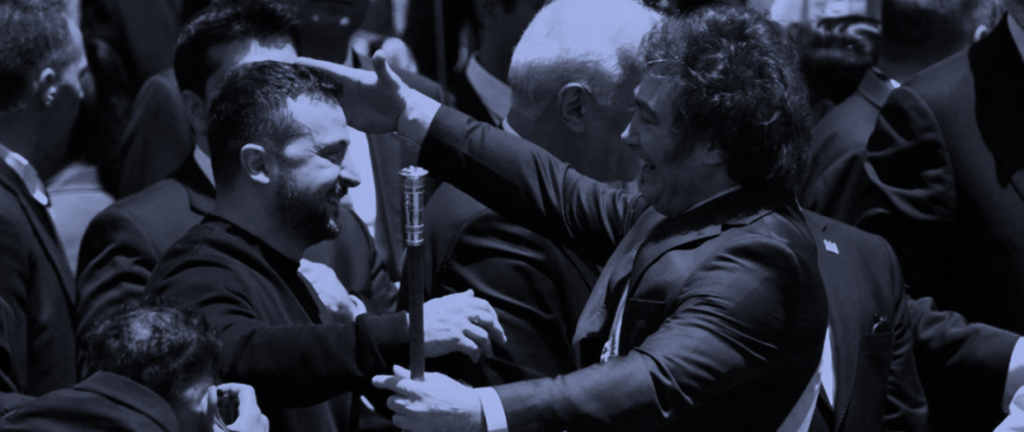
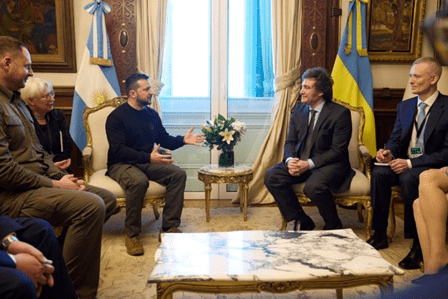
Ukrainian President Volodymyr Zelenskyy’s presence at President Javier Milei’s inauguration was marked by a series of meetings with various Latin American heads of government. The importance of this visit lies in seeking support for the sanctions imposed on Russia, as well as securing the backing of the Argentine state in multilateral organizations and other diplomatic, political, and economic actions to strengthen Ukraine’s position in Latin America.
Although the Ukrainian leader’s visit was brief, there was enough time to hold a series of meetings with the presidents of Ecuador, Paraguay, and Uruguay, with whom he held a cordial discussion in which the importance of the region in confronting the Russian invasion was explained. In the words of the Ukrainian president: "The powerful, united voice of the Latin American countries that support the Ukrainian people’s struggle for freedom and democracy is very important to us".

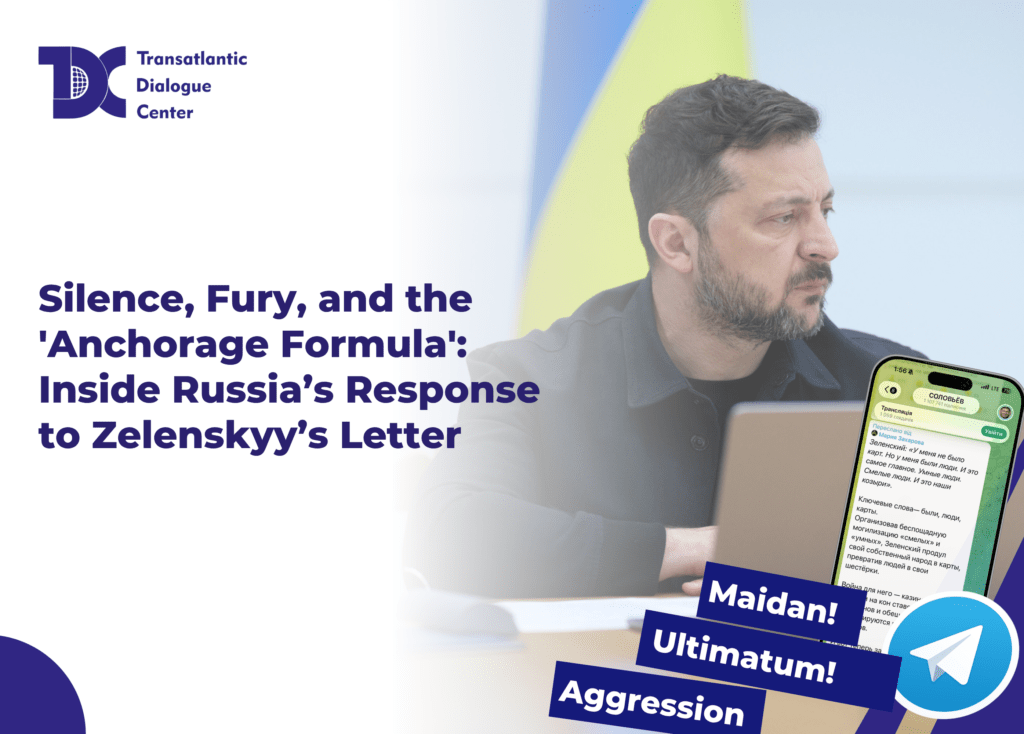
Regarding the main points discussed with each leader, the meeting with Uruguayan President Luis Lacalle Pou was the closest, given the Uruguayan state’s support for Ukraine’s territorial integrity and its participation in a third meeting of foreign advisers on implementing the Ukrainian formula in peace negotiations.
With regard to the meeting with Ecuadorian President Daniel Noboa and Paraguayan President Santiago Peña, he thanked them for their support in votes at multilateral organizations such as the UN, especially on the resolution calling for the “cessation of hostilities” in Ukraine and the withdrawal of Russian troops. Likewise, President Zelenskyy continued to demonstrate a strong interest in strengthening bilateral ties with the Latin American presidents gathered there and, as expected, with his host, President Javier Milei.
Moreover, the meeting between Zelenskyy and Milei was marked by gestures of cordiality and praise for the Argentine president, describing him as a “Latin American leader” and emphasizing the possibility of holding a summit between Ukraine and various leaders from Latin America and the Caribbean, in which the Argentine president would play a relevant role.
On the other hand, regarding the bilateral agenda, President Zelenskyy was very interested in addressing cybersecurity and disinformation issues, citing Russian activity in cyberattacks and highlighting the importance of combating Russian propaganda in the region. However, issues such as job creation and strengthening economic ties between the two nations were also discussed. One relevant detail is President Milei’s decision to negotiate the donation to the Ukrainian state of two Russian Mi-171E helicopters that remain out of service, as part of a possible defense agreement with the United States for the purchase of F-16 Fighting Falcon aircraft. It is also essential to note the absence of the Russian ambassador or delegations sent by the Russian state to attend the ceremony.
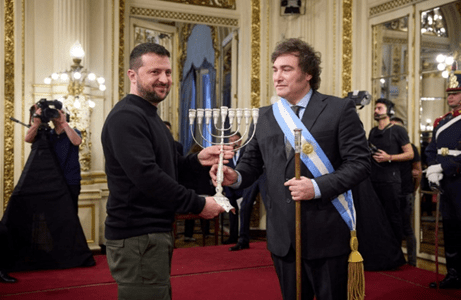
Regarding international policy matters, Zelenskyy did not hesitate to stress that the war between Israel and Hamas has repercussions for Russia’s invasion of Ukraine: on the one hand, on the attention of the international community, which is now focused on the Palestinian-Israeli conflict; and on the other, on the funds directed toward Russia’s war against Ukraine, as resources have been allocated to address the conflict in Israel.
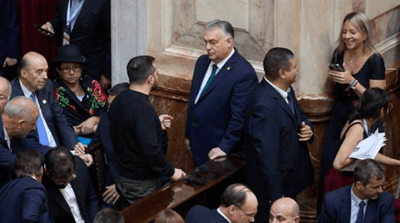
Another important meeting took place between Zelenskyy and Prime Minister Viktor Orbán, in which, without providing further details, the Ukrainian president mentioned that “European issues” were discussed. It should not be forgotten that Budapest has opposed Kyiv’s accession to the European Union and has made forceful statements that have generated friction between the two states.
In conclusion, the Ukrainian president’s presence in Buenos Aires marks an important rapprochement in Argentine-Ukrainian relations, which could open political ties with other countries in the region that align with certain ideological or political foundations of Argentina’s new leader. Along the same lines, President Milei’s capacity to lead regional support for Ukraine should not be overestimated, since relations with Brazilian President Lula Da Silva have been marked by disagreements with Argentina’s new government; there was also a significant absence of top-level European and Latin American leaders, as in the case of Colombia and Mexico, countries that are central to the region because of their political and economic weight.
This situation comes amid a possible weakening of financial support for Ukraine from the U.S. government to confront Russia, which means that the Ukrainian president needs greater support from Latin America.
Disclaimer: The views, thoughts, and opinions expressed in the documents published on this site belong solely to the authors and do not necessarily reflect those of the Transatlantic Dialogue Center, its committees, or its affiliated organizations. The documents are intended to stimulate dialogue and discussion and do not represent official policy positions of the Transatlantic Dialogue Center or any other organization with which the authors may be associated.