

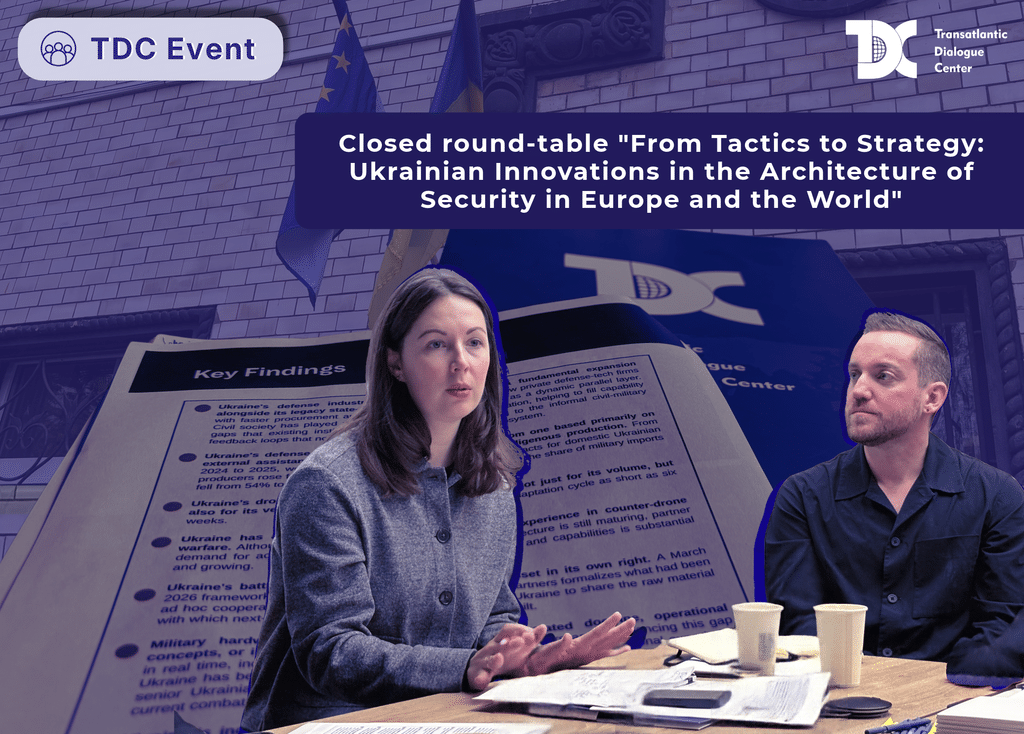
The Transatlantic Dialogue Center (TDC) hosted a closed-door roundtable, “From Tactics to Strategy: Ukrainian Innovations in the Architecture of Security in Europe and the World.” TDC Non-Resident Fellow John Drennan presented his study “The Arsenal of Experience: Ukraine’s Emerging Role as a Security Provider in Europe and Beyond” to leading security experts. The discussion focused on how to communicate Ukraine’s role in defending Europe, and how to show European partners the value of Ukrainian military technology and combat experience.
The starting point was a recent Bertelsmann Stiftung survey. Only 16% of EU citizens credit Ukraine with the greatest contribution to defending Europe from Russian aggression. 29% credit the EU and its member states. Participants called this gap a strategic problem as well as a reputational one, because Ukraine has consistently used its contribution to European security as an argument for EU integration.
Under the motto “If you have to deal with Russia, you are obliged to learn from Ukraine,” participants highlighted several key points:
- Ecosystem, not just products. Ukraine’s innovation lies less in inventing new items than in how it uses familiar means under extreme conditions. Its real potential is to export an entire ecosystem of doctrine, adaptation, and combat-tested practice.
- Competition vs. survival. Partners can buy licenses to produce Ukrainian-designed weapons and then drift away. Europeans also often lack the trust and the will to produce jointly, because they want to promote their national manufacturers. “For Europeans, it’s just a competitive industry, while for Ukrainians, it is about survival.” Joint ventures are one answer.
- Training. Joint training with Europeans should be institutionalized, because it still works largely ad hoc. Ukraine also needs to decide which military personnel are responsible for taking part in exercises.
- The recipient side. Sometimes the problem is that partners do not know how to handle the innovations they receive.
- “Tested in Ukraine.” Ukraine should formalize this label to protect Ukrainian testing expertise.
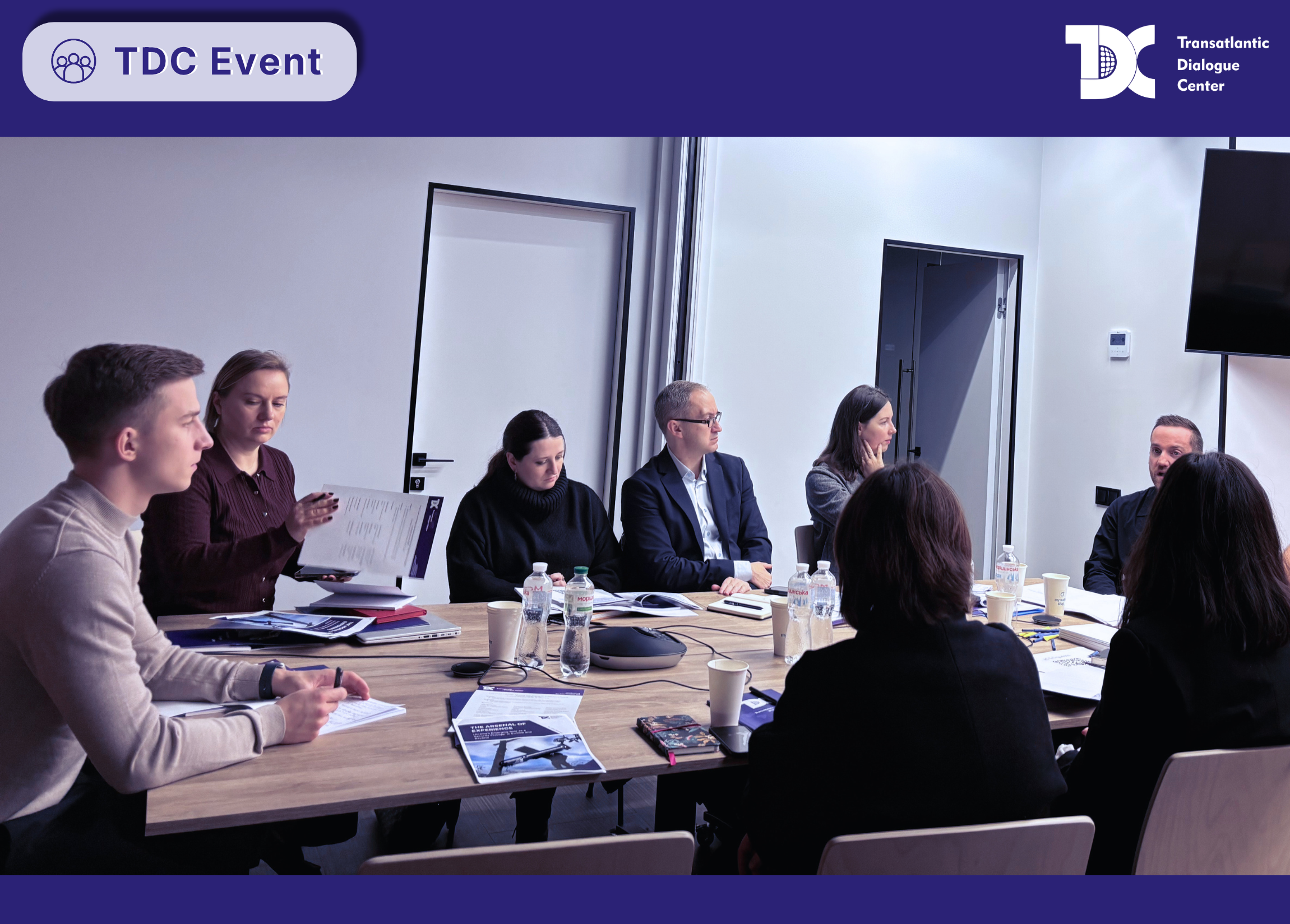
Presenting his study, John Drennan shared three initial findings. In military-to-military exchange, the main limit on transfer is how partners engage, not what Ukraine is willing to share. Industry ties appear to be where transfer is most sustained, at least in drone warfare. And the bigger risk for Ukraine is not that its experience loses value. It is that partners take what they can, through licenses, training, and software, and then see further cooperation as optional. Partners can buy or license equipment and software, but much of what they need to use the hardware effectively cannot be acquired so easily. It has to be learned together. Drennan concluded that European governments should ask how to make absorbing Ukraine’s experience more useful and efficient, not easier to walk away from.
Read John Drennan’s full study via the link.