
 11 min read
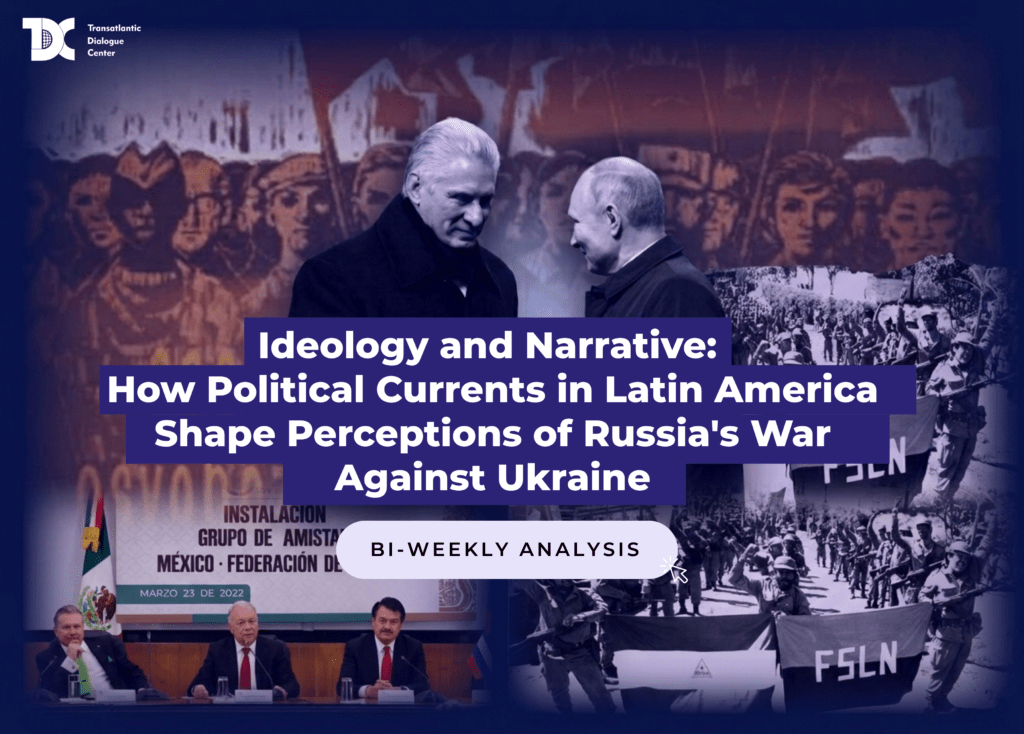
In the wake of the various elections held in Latin America in 2022 and 2023 and the diplomatic changes resulting from transitions of government, interstate relations between Latin America and the Caribbean (LAC) and the countries involved in the invasion of Ukraine have been affected to varying degrees. Meanwhile, the economic and political effects of the war have produced a new geopolitical landscape, both for the major powers whose interests have been compromised by the outcome of the war and for regions more peripheral and distant from the conflict. This analysis of the impact of the Russian invasion of Ukraine on LAC seeks to delve into the positions of the new Latin American governments and their political, diplomatic, and military dynamics in the face of the war, addressing three aspects of the situation:
Introduction
Two years after the Russian invasion of Ukraine began, Latin American states have played a role characterized by consistent neutrality regarding material support for either side. In this regard, the 2023 electoral results in LAC had certain effects on the positions held thus far by some states in the region, whether by emphasizing their interest in mediating the conflict, providing rhetorical and diplomatic support to one of the sides, or simply acting as more active players in global governance.
On this latter point, it should be emphasized that the Russian invasion has marked a turning point on the road to a multipolar international order; together with events as significant as the trade dispute between China and the United States (since 2018) and the COVID-19 pandemic, it has produced new challenges for the respective governments of LAC. This is due to the uncertainty generated by the transition from unipolar power to different centers of global power, such as China, Russia, or the European Union, to name a few, but also to the counterproductive effects on the region's economies. Without delving into other issues, it should be emphasized that the vulnerability Latin American states have faced following the aforementioned events and, especially, the effects of Russia's war against Ukraine on food security, rising fuel prices, and inflation (Giordano y Michalczewsky , 2022) place the region in a difficult position when it comes to adopting a more concrete stance on the war, also due to uncertainty about its outcome.
On the other hand, the dynamics of the actors involved in the invasion and defense of Ukraine are pushing the Latin American region to take some particular or collective action, whether to build new diplomatic ties, strengthen existing ones, or maneuver equidistantly among the central states. This is intended to ensure that the region's autonomous interests align with the West or other states contesting global hegemony in its political, institutional, or military dimensions (Levaggi, 2022).
Electoral Landscape in LAC Amid the Russian Invasion of Ukraine
The presidential elections in Colombia and Brazil in 2022, which elected Gustavo Petro and Lula Da Silva as presidents, respectively, coincided with the center-left governments of Alberto Fernández in Argentina, Gabriel Boric in Chile, and Manuel Obrador in Mexico, giving rise to what could be called a new wave of left-wing government in the region, or the “Pink Tide,” and with it the possibility of forging a new approach to regional politics (Schuster, 2023). Nevertheless, despite the possibility of coordination among ideologically similar governments in response to global challenges and current conflicts, each state’s actions have become fragmented in the face of global emergencies such as the COVID-19 pandemic or Russian hostilities against Ukraine.

Along these lines, the recent presidential elections in Argentina point to a change in the direction of the country’s foreign policy, selectively aligning it with Washington and Brussels with regard to the war in Ukraine (Krasnolutska, 2023) (Niebieskikwiat, 2023). This situation marks a break in the close relations between Buenos Aires and Moscow, which had been favorable following assistance from the Russian state with its Sputnik V vaccine and former president Alberto Fernández’s subsequent visit to Moscow (France 24, 2022).
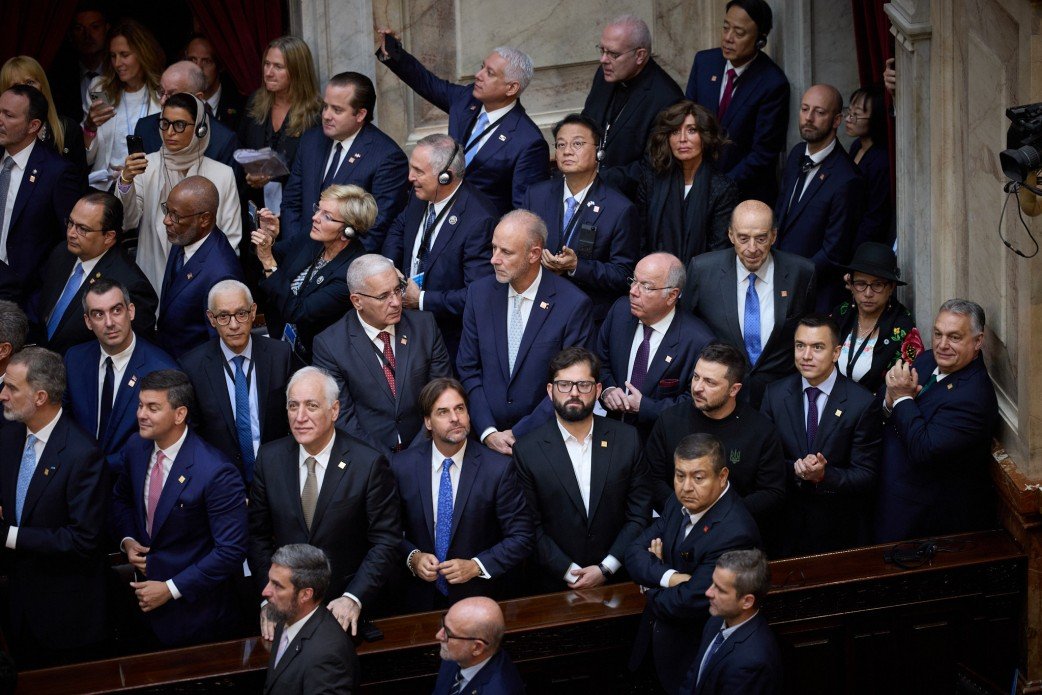
However, the current context following President Milei’s inauguration in December 2023 is entirely different, marked by growing rapprochement with Kyiv and Washington to the detriment of relations with Russia and emerging countries such as China, as evidenced by President Milei’s visit to the United States and the subsequent invitation to President Zelenskyi to Buenos Aires for the presidential inauguration (FRANCE 24, 2023). It is important to understand, however, that the Kremlin’s relations with the Casa Rosada (and with other Latin American governments) had already been deteriorating as the Kremlin lost its reputation as a state committed to international law in the settlement of disputes—one that seeks to undermine the Westphalian order based on respect for national sovereignty and territorial integrity while jeopardizing global food security.

As a result of this latter development, LAC countries suffered a particularly negative impact because of the weakness of their economies after the pandemic. Inflationary effects, the threat of running out of fertilizers, and rising fuel prices were sufficient reasons to act cautiously with regard to the invasion of Ukraine, so as not to compound the harmful effects on the economy or widen the distance between Moscow and Latin American governments.

For this reason, one might have expected the LAC region to join the economic sanctions imposed on Moscow in order to avoid further complications for its economies and safeguard the democratic-liberal order; however, LAC countries have adopted a more pragmatic stance toward the invasion that, regardless of their affiliation with the right or left of the post-election spectrum, prioritizes preserving relations with Moscow and other emerging countries such as China, amid dissatisfaction with the order imposed by Washington and its allies in Latin America. This dissatisfaction is reflected in three concrete facts:
In this context, the electoral landscape following the 2022 and 2023 presidential elections with respect to the situation in Ukraine has been ambivalent. While condemnation of the Russian invasion at the UN was nearly universal at first, positions soon began to change in other multilateral bodies. For example, “Argentina, Brazil, Bolivia, El Salvador, and Uruguay did not sign the February 26, 2022 declaration by the Organization of American States (OAS) condemning Russia’s invasion. The same countries, together with Mexico and Honduras, abstained from the decision to suspend Russia as a permanent observer state. At the Mercosur summit held on July 21, 2022, Brazil opposed the participation of Ukrainian President Volodymyr Zelenskyi (2019-present) by videoconference. A few days later, on July 29, at the 15th Conference of Defense Ministers, the representatives of Argentina, Mexico, and Brazil expressed reservations about their authority to discuss the invasion and condemn Russia’s actions, holding that the UN should be responsible for matters of that nature” (Marmeladova, 2023).
The foregoing highlights that, although the new Argentine government headed by Javier Milei seeks alignment with the United States and its allies in economic and diplomatic matters, and thus more active participation in favor of Ukraine, the rest of the region is more cautious about the outcome of the invasion. This is because the United States and Europe not only display contradictions in their respect for other states’ sovereignty (Saltalamacchia y Silva Castañeda, 2023) and their defense of human rights in other armed conflicts (MacFarquhar, 2023), but also because they are losing strength as the center of global capitalism, as the epicenter of world production and financial capital flows (of which LAC is a recipient through financing and loans) is shifting to the Asian continent (Afonso, Quinet de Andrade Bas y Salgueiro Perobell, 2021). It is therefore essential to maintain multilateral diplomacy, regardless of the regime in power, as alignment with the interests of Washington and Brussels does not necessarily coincide with the objectives or needs of LAC.
Developments on the Battlefield and Their Geopolitical Importance
Russian media propaganda aimed at legitimizing the invasion, as well as Western media’s efforts to provide truthful information about the war, give rise to uncertainty about the possible outcomes of the Russian invasion. At this point, the main developments at the front are occurring outside the battlefield, specifically in relation to two highly important developments: the difficulty of funding Ukraine’s efforts to confront Moscow and the conflict unleashed between Israel and Hamas.
With regard to the first situation, the difficult negotiations between President Biden’s administration and the Republican Party in the U.S. Congress over disbursing more funds to Kyiv (Liptak, Saenz y Lee, 2023) pose a problem for continuing the defense of the rest of Ukrainian territory and the recovery of the invaded lands, as there is no certainty about what kind of support Ukraine will receive from its partners.
As a result, the Latin American region has little relevance, lacking both the willingness to participate actively on behalf of either side and substantial political or diplomatic assets to act as a veto player on the global stage. Thus, unable to advance its interests in the geopolitical order, it will deepen its role as a spectator, limiting itself to specific aspects such as humanitarian assistance or receiving refugees who are victims of the war.

On the other hand, the conflict unleashed between Israel and Hamas leaves the West in a difficult situation, as it would have to provide support on two fronts that could escalate disproportionately at any moment.
In this scenario, countries in the Latin American region are even less coordinated in aligning themselves with the interests defended by the West on both fronts, given the human rights violations in the Gaza Strip (MacFarquhar, 2023), uncertainty over U.S. support for Ukraine (because of the Republican veto in Congress, the cost to the Biden administration of supporting two fronts at once, or a new direction from the next U.S. government) (Liptak, Saenz y Lee, 2023), and, finally, because material support from Latin America in both conflicts would in itself mean a continuation of the counterproductive effects on the regional economy.
Thus far, prospects on the battlefield in both Ukraine and Israel are uncertain for the Latin American region, giving neutrality a predominant place as a diplomatic and political stance while also leaving open the possibility of participating in peace negotiations or receiving war refugees.
What is clear, however, is that while the West sustains both battlefronts financially and logistically, Latin America gives priority to more urgent issues, such as reducing poverty levels, fighting urban crime, finding a solution to its current debt crisis, curbing high inflation, and reactivating its national economy. This leads the LAC region to remain inward-looking as it seeks to solve its own problems before it can become a relevant player in global governance.
Security Dynamics in the South Atlantic Following Russia’s Aggression
The South Atlantic has been characterized as a zone of peace for three decades, with the Falklands War in 1983 as its most recent conflict. Since then, economic and political integration in the South American region has sustained a “positive peace” (Levaggi, 2022), that is, an area where the likelihood of conflict is remote because of the ties built and consolidated by the region’s most influential states, in this case Argentina and Brazil.
This regional stability, in both its maritime and continental areas, is characterized by the absence of major conflicts among member states. This has made it possible to experiment with different forms of institutionalized regional integration, some more successful than others, while upholding the premise that the Latin American region should be a zone of peace, whether through unrestricted respect for territorial sovereignty or adherence to international law in resolving disputes. But one must ask: where could a threat to regional stability in LAC come from?
Although the characteristics of the North Atlantic differ from those of the South Atlantic, especially because of the economic and political dynamism of being increasingly close to the U.S. sphere of influence, neither area has been part of large-scale armed conflicts among the states that make up the Americas, at least not in recent history. On the other hand, the maintenance of LAC as a U.S. sphere of influence has meant that global disputes in contexts such as the Cold War have played out in some LAC territories, for example, the case of Cuba and the embargo imposed on it (ONU, 2022).
While the fall of the Soviet Union meant a drastic loss of Russian influence in LAC, giving rise to a unipolar international order and the United States as the region’s main hegemon, this situation has begun to change again after nearly 30 years of hegemony. The status once enjoyed by the United States is being challenged by China’s rise as the main trading partner of almost all Latin American economies (Afonso, Quinet de Andrade Bas y Salgueiro Perobell, 2021) and by the diplomatic and economic ties built with Putin’s Russia, which has become a relevant—though increasingly difficult to sustain because of its invasion of Ukraine—strategic partner for some Latin American states, including Argentina, Venezuela, Bolivia, and especially Brazil. As a member of the major multilateral group BRICS, Brazil has notable prominence.
Ultimately, if the Latin American region has remained outside the large-scale conflicts of the great powers, it has been due to its limited influence in the international order to collectively impose its own interests, its geographic distance from the major centers of power and the wars arising in their spheres of influence, and also because some Latin American states have maintained autonomous diplomacy in the face of conflicts that have emerged over the past fifty years.
Thus, the likelihood that the Russian invasion of Ukraine will directly affect the continent in military terms would arise primarily through a conflict between spheres of influence, in which the great powers have a military presence and a reason for the North and South Atlantic to become contested areas.
Finally, although competition between the United States and China has indirect repercussions in the region through “trade wars,” there is no sign that this situation will escalate militarily, at least in the LAC region. Added to this is the fact that the invasion of Ukraine has cost Moscow much of its reputation as a state that respects the sovereignty of other states; consequently, the LAC region has cooled relations with the Kremlin, both because of the adverse effects on the economy and because of the violent incursion into Ukraine and its consequences for maintaining international security.
Conclusions
It can be observed that the stance of neutrality toward the Russian invasion has only been broken by Argentina’s new government, which, given the transition it is undergoing, cannot be said to have materially participated in the war beyond the symbolic gestures surrounding Zelenskyi’s visit to Buenos Aires. This leaves only a handful of countries—Venezuela, Nicaragua, Bolivia, and Cuba—as the Kremlin’s principal sympathizers, but they do not carry substantial weight in the decisions of the region and its multilateral institutions.
Likewise, the rest of the countries in the region, although they share the same Westphalian values of territorial integrity and respect for each state’s sovereignty and uphold democratic systems in their respective countries, allow state interests to prevail when avoiding alignment with the West or Russia for ideological reasons. The autonomy of their foreign policy and their light weight in global governance make them more cautious about taking early positions on the invasion. This is of substantial value, as multilateralism can help diversify LAC’s investments and trade exchanges rather than locking it into a value-based isolation, where the West—and more specifically organizations such as the G7—has not generated major benefits for Latin America in terms of improving its citizens’ living conditions.
Finally, in military terms, there is little possibility that LAC will become involved. The real threat to regional stability is the adoption of positions similar to Russia’s in claiming and subsequently modifying borders through military means, without first resorting to the guidelines of international law and the peaceful settlement of disputes. In this sense, global security is compromised as centers of power become dispersed and replicate the same belligerent conduct of the central countries in order to assert their interests, which will challenge LAC as a zone of peace.
Disclaimer: The views, thoughts, and opinions expressed in documents published on this site belong solely to the authors and do not necessarily reflect those of the Transatlantic Dialogue Center, its committees, or its affiliated organizations. The documents are intended to stimulate dialogue and discussion and do not represent official policy positions of the Transatlantic Dialogue Center or any other organization with which the authors may be associated.