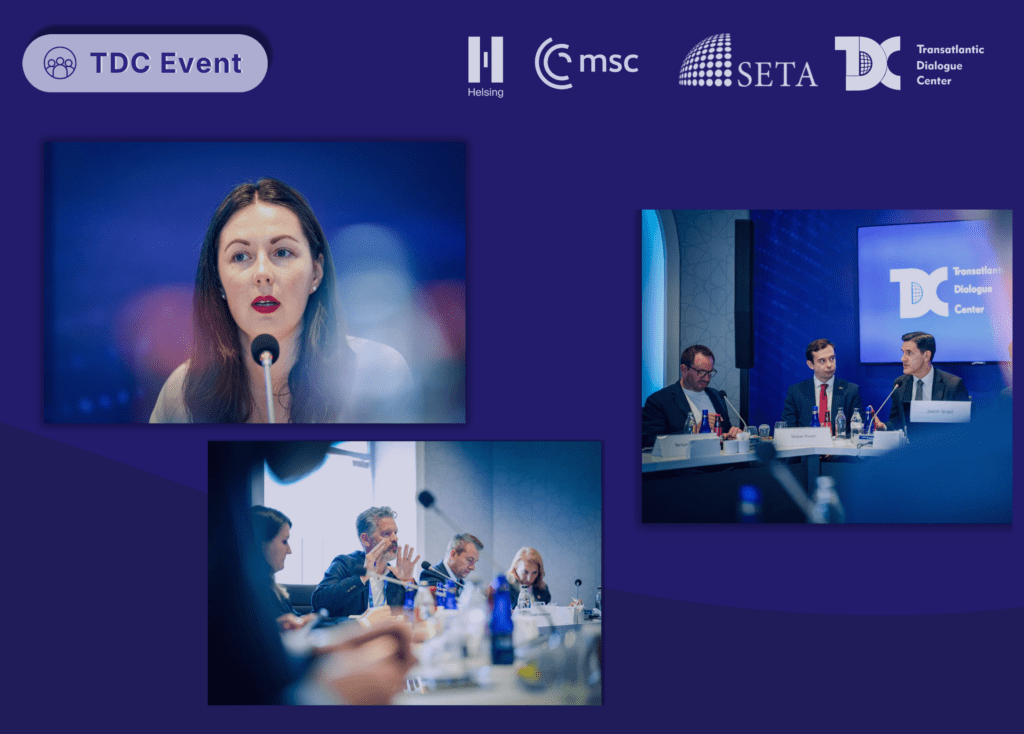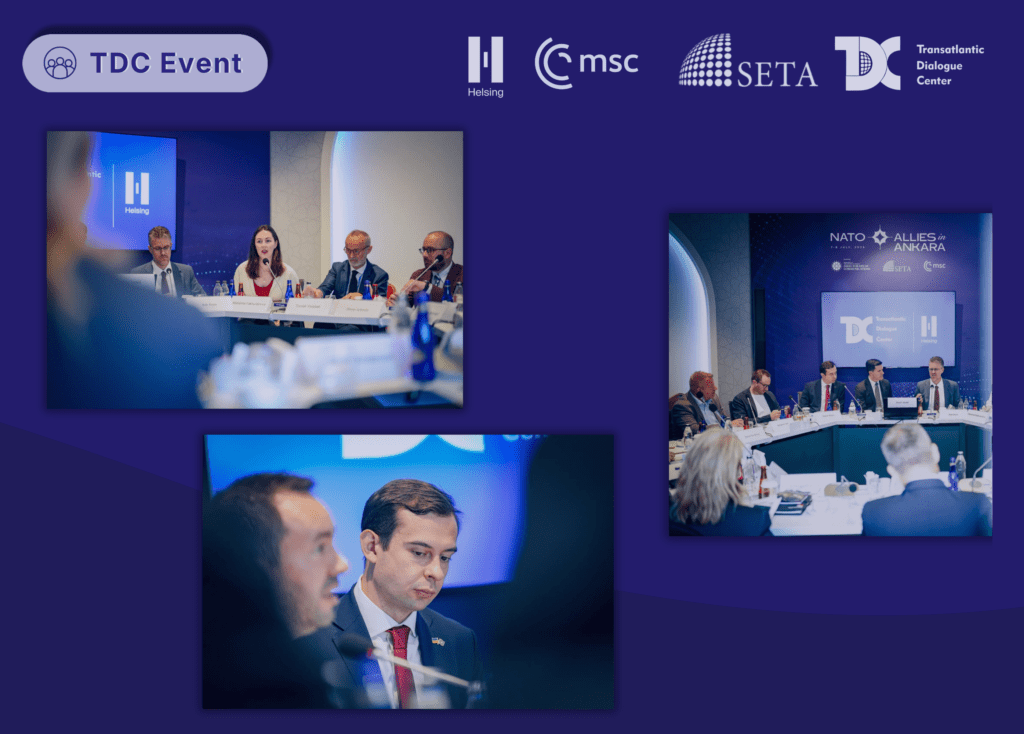
El 7 de julio, el Transatlantic Dialogue Center (TDC), en colaboración con Helsing, coorganizó un evento paralelo, «The Missing Angle: Mapping the U.S.-EU-Ukraine Security Triangle», en el foro «Allies in Ankara», organizado por la Munich Security Conference y la Fundación SETA en el marco de la Cumbre de la OTAN 2026.
La discusión abordó la necesidad urgente de sostener una cooperación pragmática en materia de seguridad entre Estados Unidos, la Unión Europea y Ucrania en medio de prioridades estratégicas divergentes y de la guerra en curso de Rusia. El evento se inauguró con una presentación de Marianna Fakhurdinova, Coordinadora del Programa de Asociación UE-Ucrania del TDC e Investigadora en CEPA, basada en el reciente estudio del TDC «Navigating the U.S.-EU-Ukraine Triangle: Revitalizing Transatlantic Security Cooperation».
El panel reunió a Bob Deen, Director General de The Clingendael Institute; Jason Israel, Auterion Senior Fellow for the Defense Technology Initiative en CEPA y profesor invitado en la National Defense University; Benjamin Tallis, Director de Política y Análisis en Helsing; y Tomáš Valášek, miembro del Consejo Nacional de Eslovaquia y exrepresentante permanente de Eslovaquia ante la OTAN.
Los ponentes examinaron cómo Estados Unidos, la UE y Ucrania pueden mantener la cooperación en un momento en que los debates sobre la seguridad transatlántica suelen centrarse en el reparto de cargas entre Estados Unidos y Europa, mientras que el papel de Ucrania como proveedor de seguridad probado en el campo de batalla y socio emergente en la industria de defensa sigue estando insuficientemente explorado. El intercambio se centró en los plazos de la disuasión convencional europea y sus brechas de capacidades, la evolución de la división del trabajo en tecnología de defensa y adquisiciones, y las barreras estructurales para una integración más profunda de Ucrania en la industria de defensa de la UE, incluidos la financiación, las normas sobre propiedad intelectual, los controles de exportación y la competencia.
En lugar de tratar a Ucrania únicamente como receptora de asistencia de seguridad, la discusión enfatizó la necesidad de integrar más plenamente a Ucrania en la futura arquitectura de seguridad europea. Los participantes también abordaron mecanismos para asegurar compromisos a largo plazo con Ucrania pese a los ciclos electorales fluctuantes, el papel de la coordinación UE-OTAN y de las garantías de seguridad, las oportunidades para la cooperación industrial en defensa y la coproducción, así como el desafío más amplio de responder al alineamiento entre Rusia, China, Irán y Corea del Norte.
El TDC expresa su agradecimiento a los miembros de la Asamblea Parlamentaria de la OTAN, a los representantes de la industria de defensa y a los colegas de centros de pensamiento que contribuyeron a este diálogo sustantivo. La sesión fue convocada por el equipo del TDC, incluidos Stepan Rusyn y Maksym Skrypchenko.