

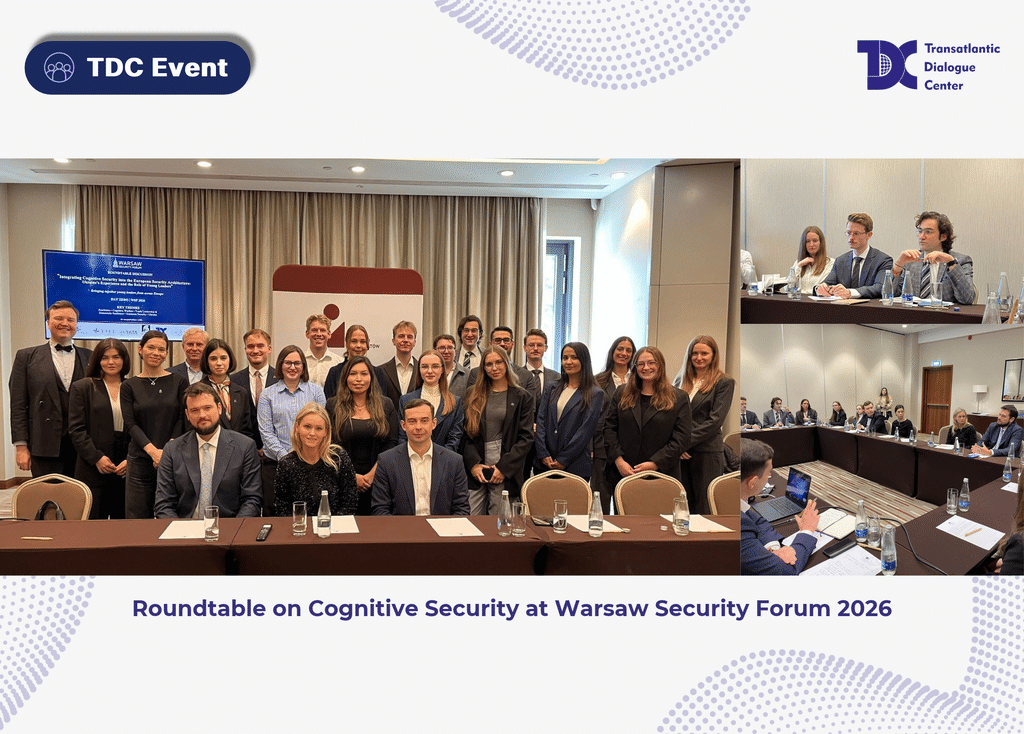
On October 11, 2026, the Transatlantic Dialogue Center (TDC) co-organised a roundtable titled “Integrating Cognitive Security into the European Security Architecture: Ukraine’s Experience and the Role of Young Leaders” as part of Day Zero of the Warsaw Security Forum 2026. The event was jointly organised by the Young Diplomats Forum (Poland), des Youth Atlantic Treaty Association (YATA), together with its national chapters in Norway und Belgium, Victory Neurones (Ukraine), les Jeunes IHEDN (France), the Transatlantic Dialogue Center (Ukraine). The roundtable brought together experts to examine Ukraine’s experience in countering Russian cognitive warfare, the role of information resilience in European security, and the importance of preparing younger generations to address emerging hybrid threats.
The discussion was moderated by Stepan Rusyn, Coordinator of the Germany-Ukraine Partnership Program at TDC, and featured contributions from Liubov Tsybulska, Jade Normann, and Bohdan Bevza. The roundtable provided a platform for exchanging perspectives on integrating cognitive security into European security policies and on how Ukraine’s experience could inform broader international responses to Russian influence operations.
A central focus of the discussion was Ukraine’s experience as a frontline state in Russia’s cognitive warfare. The conversation addressed lessons learned since 2014, particularly following the full-scale invasion in 2022, and examined approaches to strategic communication, public resilience, and countering foreign information manipulation. Ukraine’s experience provided a basis for considering how European democracies can strengthen their preparedness against similar threats.
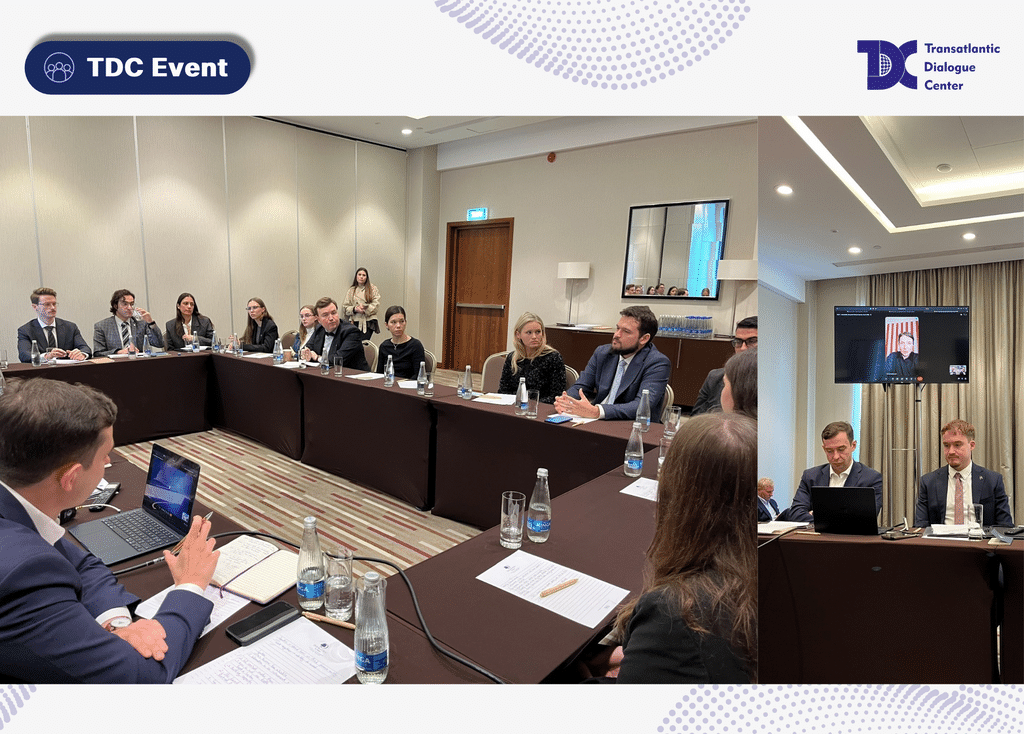
The roundtable also explored the role of cognitive security in Europe’s evolving security architecture. Key themes included cooperation between public institutions, civil society, independent media, and international organisations, as well as the challenges of responding to hostile influence operations while preserving democratic freedoms and public trust. Participants considered the relevance of cognitive warfare for NATO and EU security policy and the importance of distinguishing foreign interference from legitimate political debate.
Particular attention was given to the role of young leaders and emerging technologies in strengthening societal resilience. The discussion examined how education, community engagement, and practical training can help younger generations recognise and counter cognitive threats. It also addressed the growing influence of artificial intelligence and data analytics on information operations, including their potential to improve the detection of coordinated manipulation campaigns.
The event concluded with a discussion of possible priorities for national governments, the European Union, NATO and youth organisations to strengthen cognitive security and democratic resilience.
By co-organising the roundtable, TDC contributed to the exchange of Ukrainian expertise on countering Russian hybrid threats and strengthening European security. The discussion highlighted the importance of international cooperation, public awareness, and the involvement of younger generations in building societies capable of responding to evolving information and security challenges.