
 16 min read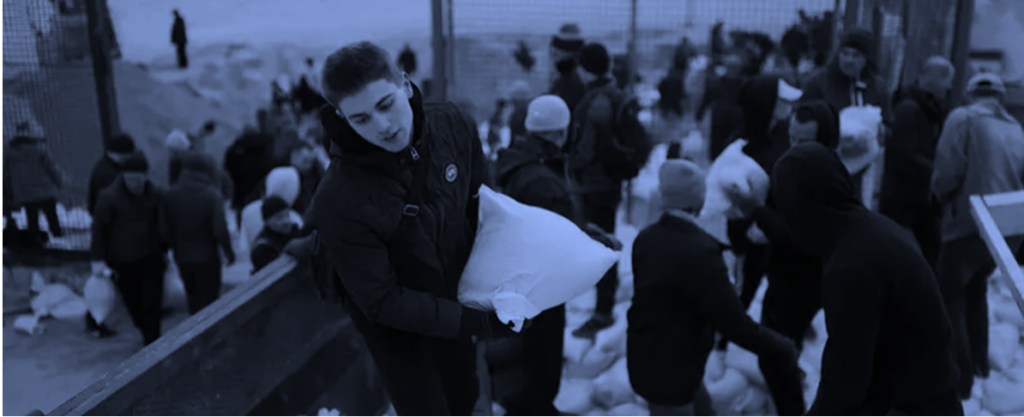
In wartime, internal cohesion is a strategic resource. Russia’s long-running efforts to portray Ukraine as inherently divided draw on older narratives of “Two Ukraines,” but today’s most destabilizing tensions are less regional than institutional. This article evaluates how these divides were manufactured and suggests that the path forward lies in addressing governance-linked friction rather than outdated cultural maps.
Ukraine continues to be described, often inaccurately, through the shorthand of a “West–East divide.” The concept is widely associated with Mykola Riabchuk’s framing of two co-existing identity orientations. What began as a scholarly attempt to capture the complexity of post-Soviet identity has been repeatedly repurposed as a political instrument: first in domestic electoral competition and later as part of Russia’s long-term strategy to portray Ukraine as structurally ungovernable and therefore “unfit” for sovereignty.
To address this vulnerability, it is necessary to move beyond the basic split of Ukrainian society into "nationalist" versus "pro-Russian" camps and their perspectives. One should re-examine the political framework through a more precise view of how identity has changed, and reveal that ‘a division’ is caused not by clashing civilizations, but by two different and complementary methods for building a nation.
In practice, these competing framings are often mapped onto a simplified “West–East” geography. One pole of the spectrum (West) emphasizes an ethno‑cultural understanding of national belonging, where language, historical memory, and symbolic distance from Russia carry particular weight. Another pole (East) places greater emphasis on a civic, state-anchored understanding of belonging, where loyalty to institutions and the functioning of the state takes precedence over cultural markers.
Importantly, these are ideal types rather than fixed regional identities. The experience of Russia’s aggression has demonstrated that civic attachment to the Ukrainian state is widely distributed across the country. This helps explain why the Russian Federation’s 2014 and 2022 invasions failed to trigger the collapse that Moscow expected: many communities in the South and East mobilized to defend the Ukrainian state as a guarantor of their freedom and way of life.
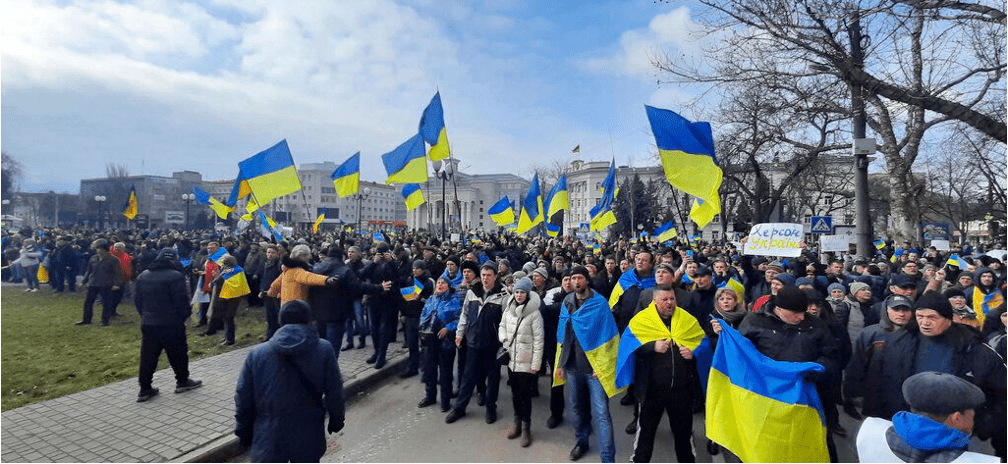
Recognizing this distinction, that the East is not "anti-Ukrainian" but rather "centrist", is the foundational key to the following analysis, as it reveals that Russia's strategy relies on convincing these two camps that they are irreconcilable opponents, even when their preferences can be understood as complementary pillars of a single political nation.
Building on this understanding, this article argues that the most consequential fault lines today are not “civilizational” but are governance-linked tensions that can be externally amplified. We will evaluate three specific fault lines that may persist into the post-war period:
The analysis concludes with policy options to prevent these grievances from hardening into durable political cleavages.
The transformation of Ukraine’s regional diversity into a critical vulnerability of national security represents one of the most sophisticated influence operations in modern hybrid warfare. It began as a sociological heuristic to explain the coexistence of civic and neo-Soviet identities, but was later weaponized. Domestic elites used it for election-rallying support while Russian strategists turned it into a mechanism of "identity warfare", designed to eliminate the centrist middle ground and force a complex society into a binary conflict.
This process of artificial polarization reached an industrial scale during the 2004 presidential election. The contest was widely interpreted as a strategic choice between divergent governance and foreign‑policy trajectories. Viktor Yushchenko articulated a pro‑European direction, while Viktor Yanukovych, backed by incumbent power networks, was broadly associated with a pro‑Russian, Eurasian orientation. This framing elevated the incentives for manipulation and made identity‑based mobilization politically efficient.
The campaign quickly became one of the most contested and ‘dirty’ in Ukraine’s post‑independence history. To ensure Yanukovych's victory, his supporters deployed "technical candidates" to dilute the vote, monopolized mass media to demonize Yushchenko, and engaged in direct sabotage – most notably, they schemed the dioxin poisoning of Yushchenko in September 2004 and organized the hacking of the Central Election Commission (CVK) servers to manipulate final results.
Within the broader strategy of political technologists working in Yanukovych’s team (which included Kremlin-aligned consultants), the pro-government campaign deployed the methodology of "dramaturgiya" (scripted artificial drama) to replace substantive policy debate with a controlled, high-stakes meta-narrative that framed the political opposition as a "nationalist" existential threat to the identity of the industrial Southeast. Thus, in this campaign, regional diversity was reframed as a political instrument.
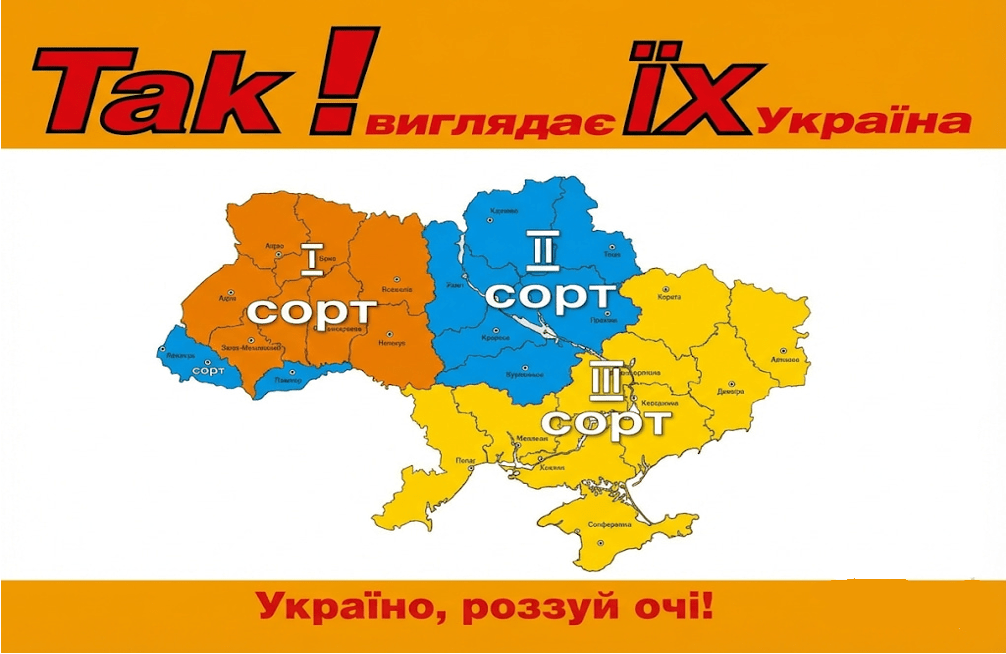
One of the most recognizable artifacts associated with this approach was the “Three Sorts of Ukrainians” poster. It has often been described as a black‑PR device aimed at discrediting Yushchenko by attributing to the “Orange” camp a hierarchy that would relegate the South and East to second‑ or third‑class status. The poster’s core function was to activate status threat and defensive consolidation. This delivered short-term turnout gains, but it also deepened regional mistrust and left a ready-made script that could be reused in later political battles and exploited by external actors.
This manufactured polarization entrenched a “quota principle” within state institutions, where ministries and security agencies were carved up between rival political clans rather than staffed by professionals, thereby eroding public trust and creating the institutional fragility that Russia would later exploit.
Crucially, its impact was not confined to one electoral cycle: it contributed to the longer‑term normalization of zero‑sum identity framing in Ukrainian politics, shaping later contestation around language policy, historical memory, and state legitimacy.
Following the Orange Revolution and the victory of the pro-Western Yushchenko, Russia’s strategy shifted to the international level. For the Kremlin, keeping Ukraine within its sphere of influence was a vital interest. To undermine Ukraine's European aspirations, Moscow launched a campaign of international discredit. The “Gas Wars” were orchestrated to portray Ukraine as an unreliable energy transit partner for Europe, effectively sowing seeds of doubt in Western capitals. Simultaneously, Russia utilized an extensive network of lobbyists to block Ukraine’s path to NATO, successfully preventing the country from receiving a Membership Action Plan (MAP) at the 2008 Bucharest Summit.
Once the immediate threat of NATO integration was stalled externally, Russia pivoted back to eroding Ukraine from within by supporting the political resurrection of Viktor Yanukovych. His eventual presidency marked a shift from temporary electoral tactics to permanent legislative tools of division.
Beyond politics, this era focused on "worldview engineering" – reintroducing Soviet-style May 9th parades and other "Great Patriotic War" myths to anchor Ukraine in a common "Russian World" (Russkiy Mir) cultural space. These symbolic acts were designed to keep the "identity divide" relevant and prevent the formation of a unified Ukrainian civic identity.
The strategic logic of this internal erosion culminated in the 2012 “Kivalov-Kolesnichenko” Language Law. This was not a genuine effort to protect minority rights but a cynical political gesture designed to institutionalize linguistic segregation. By lowering the threshold for "regional language" status to 10%, the law allowed local elites in the South and East, predominantly Russian-speaking, to bypass the state language entirely, effectively removing the incentive for national integration.
This was a textbook application of the Reflexive Control strategy, which was engineered to provoke a defensive reaction from the patriotic center. The resulting "Language Maidan" protests calling to protect Ukrainian language rights were televised by Russian media as evidence of "Western intolerance" and "nationalist radicalism".
The legacy of this law remains one of Ukraine's most complex challenges. Even today, the issue of minority language rights is weaponized on the international stage, most notably by Hungary within the EU, to stall Ukraine's European integration. This demonstrates that the identity traps set decades ago continue to function as tools for external geopolitical pressure.
Russia subsequently weaponized the inevitable Ukrainian backlash against these policies – specifically the attempted repeal of the language law after the 2014 Revolution of Dignity – as a primary justification for military intervention. By framing the defense of national identity as "cultural genocide," the Kremlin successfully reframed external aggression as a domestic "civil war", exploiting the very divisions it had spent a decade meticulously cultivating.
Due to the war in Ukraine, the long-standing internal tension associated with a “West–East divide” has evolved into a more complex struggle over national belonging, institutional legitimacy, and perceived fairness. While the country initially saw a massive wave of unity after the full-scale invasion, current social data suggest that cohesion is being tested by several internal problems. Taken together, these pose a threat to national stability, as they compromise the social cohesion and institutional integrity required for the state to function effectively.
The least influential factor in deepening the current rift is language policy. Although it was once a primary tool for political manipulation, a broad consensus has emerged; as of mid-2024, approximately 78% of citizens identify Ukrainian as their native language, and over 70% use it primarily at home.
This was, however, preceded by a significant social friction that began following the invasion of Ukraine in 2022. The invasion triggered a massive internal migration, forcing hundreds of thousands of citizens from predominantly Russian-speaking regions to settle in the largely Ukrainian-speaking communities of the West. This movement brought the country’s regional differences into immediate, daily contact, often resulting in localized conflicts where the Russian language was stigmatized as the "language of the occupier" or the "language of the aggressor".
For many displaced persons, who were already reeling from the trauma of losing their homes to Russian aggression, being told that their native speech was a marker of political disloyalty created a profound sense of alienation, effectively making them feel like "outsiders" within their own country. These linguistic tensions were not merely organic social misunderstandings but were exacerbated by a "war of words" in the media, which reinforced negative stereotypes and hampered the social integration of newcomers.
Language has become one of the clearest markers of a broader debate over nation-building: whether Ukrainian identity should be defined primarily in civic terms (loyalty and citizenship) or in ethno‑cultural terms (language, heritage, and tradition). While the majority (71%) supports the inclusive definition of a Ukrainian citizen, a smaller but vocal group remains skeptical of those who speak Russian, which creates a "status threat" where some patriots feel their contribution is undervalued because of their linguistic background.
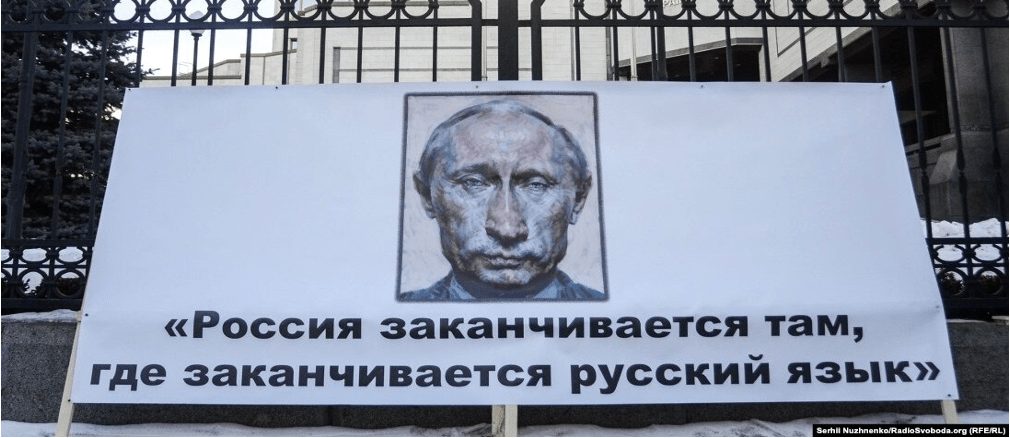
At the same time, language policy remains the least escalation‑prone line of division because the state’s direction is relatively clear and institutionalized. Ukraine has consolidated a model in which Ukrainian is reinforced as the sole state language and the default language of the public sphere, while private communication is not the target of direct state control. The creation of the Language Ombudsperson institution further routinizes enforcement through administrative mechanisms rather than ad hoc political campaigns. This means the issue will continue to surface in public debate – especially as compliance problems persist nationwide and are reported most frequently in large multilingual cities such as Kyiv, Odesa, Kharkiv, and Dnipro.
Yet the overall trajectory is stabilizing: language protection is widely perceived as defensive, shaped by a long history of restrictions on the Ukrainian language and its displacement in Soviet-era public and professional life. In this context, the likely medium‑term outcome is gradual normalization of Ukrainian as the language of institutions, elites, and professional communication, reducing the space for language to operate as a high‑volatility political wedge – even if localized conflicts and symbolic disputes persist.
A more significant source of friction is the religious confrontation, specifically regarding the role of the Ukrainian Orthodox Church linked to the Moscow Patriarchate (UOC-MP). In this area, the tension lies between those who view this church as a direct tool of Moscow’s influence and propaganda and those who believe that religion should remain outside of politics.
In connection with the war in Ukraine, this divide has triggered a massive shift in the country's religious landscape, resulting in a dramatic decline for the Moscow-linked institution. Before the start of the full-scale invasion in 2021, approximately 13% of Ukrainians identified as followers of the UOC-MP, while 24% belonged to the independent Orthodox Church of Ukraine (OCU). By late 2024, the picture had changed completely: affiliation with the UOC-MP plummeted to just 5.5%, while the OCU grew to represent 35% of the population (according to the Razumkov Centre poll).
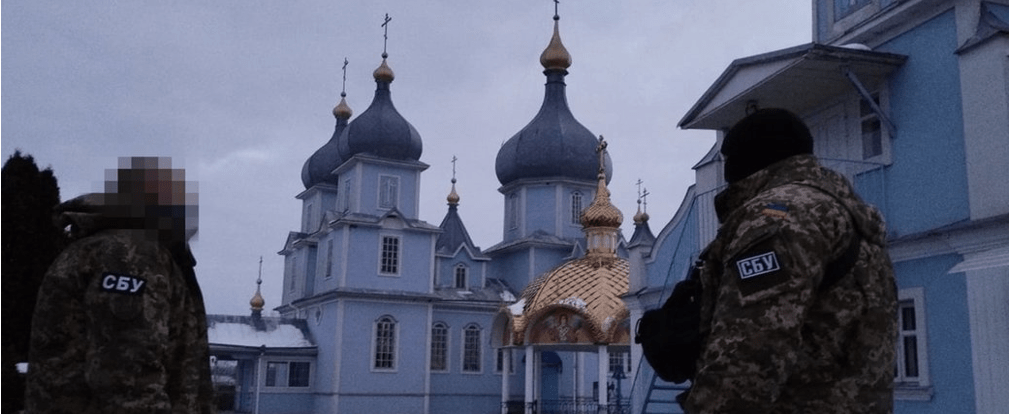
For the group viewing the church as an instrument of the aggressor, this perspective is supported by more than 180 criminal proceedings opened by the Security Service of Ukraine (SBU/SSU) against UOC-MP clergy since 2022, including cases against 23 bishops. These legal actions involve specific charges of espionage and high treason that go beyond ideological debate. For instance, in April 2025, SBU counterintelligence detained an archpriest from the Pokrovskyi Vicariate in Donetsk Oblast who was caught gathering intelligence on the locations of backup command centers and logistics hubs for the Russian FSB in exchange for his family’s evacuation to Russia. Similar cases have been documented in Kharkiv, where a rector spied on Ukrainian troop movements near checkpoints, and in Sumy, where an archpriest was sentenced to 15 years for providing coordinates for missile strikes. Perhaps most sensitive is the case of a Zaporizhzhia priest detained in August 2025, who is accused of using the privacy of religious confessions to identify and recruit pro-Russian residents for a GRU-led intelligence network. Due to that, a share of Ukrainians, representing about 74% of the population, supports a total ban on the Russian Orthodox Church, viewing its influence as a national security risk. On the other side is a group of faithful who argue that their spiritual life has nothing to do with the war. This group has become even firmer in its convictions; about 44% of UOC-MP followers report that their faith has only strengthened under the current pressure, which is a higher rate of "spiritual hardening" than seen in other denominations. This creates a dynamic where a segment of the population begins to feel like an oppressed minority, potentially isolating them from the rest of the national community.
Ultimately, the religious crisis is expected to intensify as Ukraine aligns itself more closely with the European legal and political space. A total de jure ban on the Russian Orthodox Church presents a significant diplomatic risk, as European partners and international human rights bodies often view such broad restrictions as potential violations of Article 10 of the Charter of Fundamental Rights of the European Union and the principle of religious non-discrimination. This institutional vulnerability provides a convenient narrative for skeptical states, most notably Hungary, to obstruct Ukraine’s EU accession process by framing security-driven law enforcement as the state-sponsored persecution of believers. Consequently, despite the vast evidence of systematic recruitment and espionage within church structures, the Ukrainian government cannot easily eliminate Moscow’s spiritual and organizational influence through a single legislative stroke without triggering a massive international backlash and accusations of collective punishment. This puts the administration in a profound dilemma, requiring it to move away from blunt prohibitions toward a strategy of "delicate counteractions". This approach focuses strictly on individual criminal liability, while carefully upholding the standards of religious pluralism necessary to maintain support from Western allies.
The third friction point concerns the notion of justice and equal burden-sharing. A majority of citizens (53%) believe authorities are failing to ensure social justice. Under wartime pressure, that perception translates into a sense that rules are enforced selectively, burdens are distributed unevenly, and accountability is episodic rather than systemic.
This persistent struggle with legislative failures and social injustice is not a recent development but rather a crisis with deep historical roots that the war has only intensified. In the early stages of the hostilities, there was a widespread public expectation that the shared national trauma would serve as a "reset" button, forcing government officials to acknowledge the fragility of their positions and finally address the structural deficiencies that had long hindered the state. Many citizens believed the urgency of survival would instill a new sense of accountability and self-reflection. Yet the expectations were not met.
The pace of reform stagnated under the distraction and pressure of wartime challenges. Members of Parliament, largely elected in 2019 against the old administration and in support of the new president, were unprepared to assume responsibility for the survival of the state. Consequently, they became implementers of top-down directives rather than architects of solutions. This contributed to a feeling of stagnation, of being bogged down in systemic issues that are widely recognized but left unaddressed. This disillusionment has eroded the hope for a more equitable system and paved the way for a fracture in the relationship between the state and its people.
The most acute stress test for the wartime social contract is the mobilization system. While indispensable for Ukraine’s defense, it becomes a driver of polarization when citizens view the process as opaque, humiliating, or susceptible to disparate treatment. The phenomenon known colloquially as “busification” is not merely a matter of isolated abuses; it has become a symbol of whether the state can enforce extraordinary obligations while remaining bound by predictable rules and equal standards.
In 2024, more than 51,000 soldiers deserted their units. These metrics should be understood not as a deficit of individual patriotism but as a direct systemic response to institutionalized unfairness. When the rules of sacrifice are perceived as selective, the moral obligation to the state is increasingly replaced by a survivalist withdrawal from a broken social contract. In addition, the belief that wealth and connections can purchase exemptions, while others are exposed to coercive enforcement, directly undermines the principle of equality before the law. As the SCEEUS report notes, mobilization increases domestic polarization if it is not managed transparently and fairly.
This institutionalized unfairness is compounded by the psychological toll of open-ended service with unclear demobilization and rotation horizons. For personnel deployed since 2022, the absence of predictable exit pathways and transparent rotation rules produces chronic uncertainty and a sense of entrapment – an experience that damages morale and trust in the state’s reciprocal obligations to those who serve.
The post-war dimension of this grievance is likely to be even more sensitive. Once the immediate existential pressure eases, wartime role differentiation may harden into moral hierarchies: “who carried the burden” versus “who avoided it”. This is particularly salient for veterans and for men of conscription age who lived abroad or are regarded as draft evaders. Even when individuals have legitimate reasons, such as health, family responsibilities, or legal status, the social stigma can persist. If left unmanaged, such narratives can fuel social hostility, complicate reintegration, and create fertile ground for political entrepreneurs and hostile information operations to weaponize the question: “Where were you during the war?”
Furthermore, post-war veterans will not constitute a single, uniform constituency. Differences in service pathways and incentives (between mobilized personnel and career soldiers, between combat and rear assignments, and between cohorts operating under different contractual frameworks) may shape expectations about recognition, benefits, and post-service support. Such asymmetries can deepen perceived inequities, including within groups that share frontline experience. If institutional responses are fragmented or perceived as dismissive, this can translate into political alienation and, in the worst cases, increased susceptibility to radical narratives that normalize coercion or “extra-legal” action as a substitute for justice. The scale of post‑2022 veteran demobilization, estimated at 5–8 million including family members, makes this challenge qualitatively different from previous cycles, even if Ukraine has some positive prior experience of integrating armed volunteers into state structures after 2014.
Cohesion is further complicated by mass displacement, unequal wartime experiences between citizens abroad and at home, and a widening mental‑health burden. These factors accumulate into fatigue and irritability that lower the threshold for social conflict.
To reduce the risk of post-war social escalation, Ukraine should treat cohesion as a governance outcome built through legitimacy, fairness, and delivery capacity.
In practical terms, this means moving from ad hoc crisis management toward a coherent approach that (a) protects the legitimacy of state decisions in the eyes of citizens, (b) makes justice and equal standards visible in day-to-day enforcement, and (c) scales reintegration and mental-health support through the institutions and partnerships that can actually deliver.
The policy options below follow this sequence: first, stabilize the narrative and legitimacy environment; second, address the highest-friction wartime obligations; third, build the long-term reintegration infrastructure that prevents grievances from hardening into political conflict.
Ukraine should replace “silence and avoidance” models with structured truth-telling and evidence-based communication. Public acknowledgment of wartime governance failures, clear explanations of constraints, and routine progress reporting reduce rumor-driven anger and deprive the Russian disinformation industry of exploitable ambiguity.
At the same time, fairness must be made visible, not assumed: citizens need to see consistent rules, equal enforcement, and credible consequences for abuse. This layer is also where the state and civil society can pre-empt the post-war stigma spiral (“Where were you during the war?”) by discouraging moral labeling of returnees, men abroad, and perceived draft evaders. This is not moral relativism. It is a social cohesion and security measure that narrows the space for political entrepreneurs and adversarial information operations.
However, narrative management is only credible when it is backed by procedures that citizens experience as lawful and equal, especially in the single most sensitive domain of the war: mobilization. Without procedural legitimacy, even accurate messaging will read as deflection, and grievances will continue to accumulate.
Mobilization is a strategic necessity, but it becomes politically corrosive when procedures look opaque, humiliating, or selectively enforced.
To stabilize the front-line presence, Ukraine should consider a strategic shift toward a high-incentive contract model. This includes significantly increasing base salaries and sign-on bonuses to transform service from a coercive mandate into a professional choice. Given domestic fiscal constraints, this 'professionalization fund' could be structured as a targeted international aid program (an idea recently floated by the Ukrainian leadership) where European partners directly finance the wages of those defending the continent’s security. This approach would not only increase recruitment throughput but also reduce the social friction caused by coercive 'busification'.
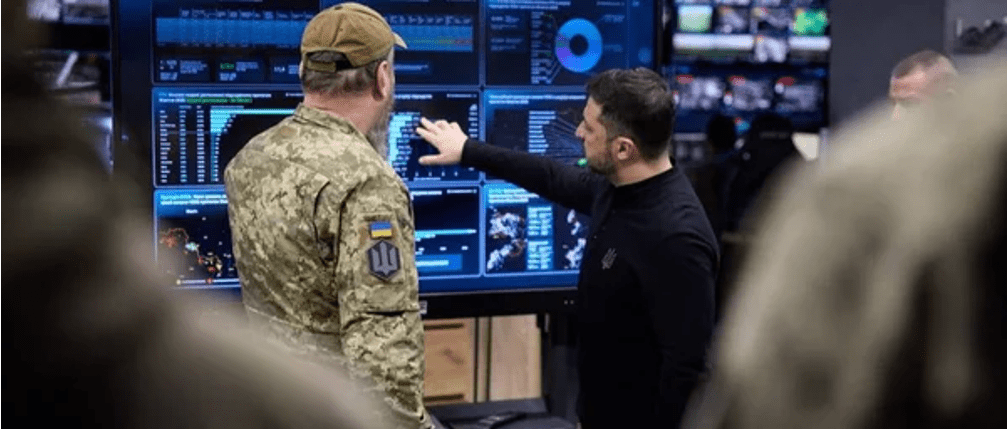
Moreover, a basic “mobilization legitimacy package” should also combine standardized procedures across regions, documented oversight, accessible complaint channels, and public reporting on disciplinary outcomes. It would also be highly effective if the government were to introduce predictable service horizons and rotation principles. Even when full demobilization is not feasible, transparent logic for rotation, rest cycles, and medical and psychological pathways reduce uncertainty and protect morale.
Yet even a procedurally legitimate mobilization system will not, by itself, prevent post-war fragmentation. The scale of veteran return, displacement, and accumulated psychological strain requires a delivery model that can absorb demand and convert it into jobs, services, and social inclusion. That is a capacity problem, not only a values problem.
Post-war stability requires a delivery model that matches the scale of needs. Ukraine should institutionalize the “whole-of-society” mechanisms that proved effective during the war: co-design and implementation with municipalities, veteran organizations, and trusted civil society networks, supported by central coordination and funding. Where feasible, public–private partnerships can scale faster than purely centralized programs, especially for employment pipelines, retraining, workplace standards for veteran support, and reintegration-friendly HR practices. Mental health support should be treated as a cohesion policy, not only a healthcare item: expanding access through community-based services, peer support, and primary care integration reduces domestic violence risks, substance abuse, and susceptibility to radical narratives.
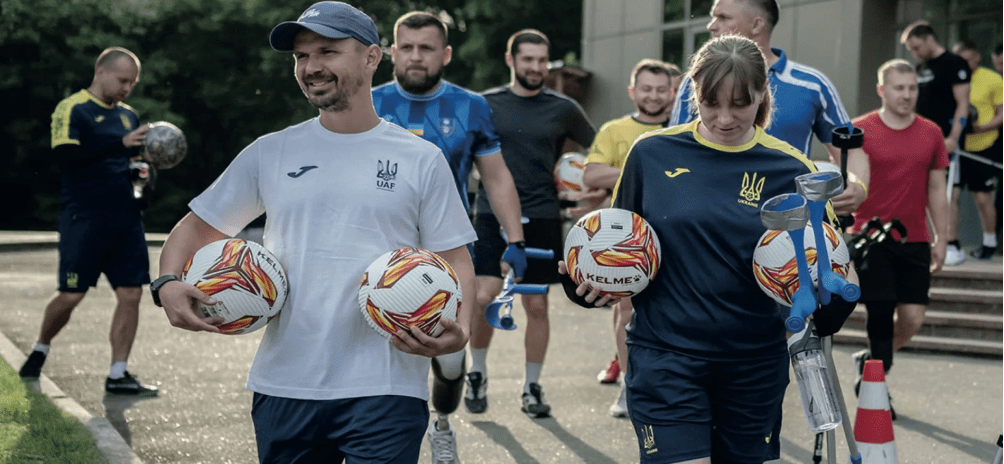
In sum, Ukraine’s post-war stability will depend less on rhetoric than on whether citizens experience the state as fair, predictable, and capable of delivering reintegration at scale. If legitimacy is rebuilt through visible justice and whole‑of‑society implementation, the most divisive wartime pressures can be contained rather than weaponized.
The views, thoughts, and opinions expressed in the papers published on this site belong solely to the authors and not necessarily to the Transatlantic Dialogue Center, its committees, or its affiliated organizations. The papers are intended to stimulate dialogue and discussion and do not represent official policy positions of the Transatlantic Dialogue Center or any other organizations with which the authors may be associated.