TDC 在墨西哥的交流活动——乌克兰公民社会动员能为拉丁美洲伙伴带来哪些启示

Clock Icon 2 分钟阅读
3 月 12, 2026
Transatlantic Dialogue Center logo

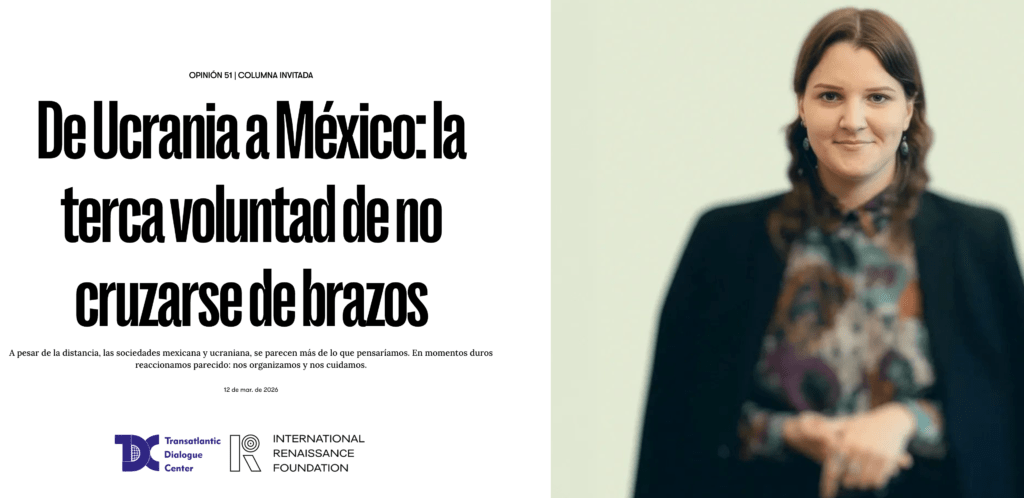
2026 年 3 月 12 日,博赫达娜·巴茨科西班牙与拉丁美洲合作项目的项目助理,就职于跨大西洋对话中心,并在Opinión 51(一个立足墨西哥、由女性专栏作家主导的订阅制数字新闻平台)发表专栏,探讨危机时刻连接乌克兰与墨西哥社会的公民本能。

Batsko argues that, despite the geographic distance, both societies share a similar instinct to self-organize, build horizontal networks, and protect one another — often faster than institutions can respond. She describes 24 February 2022 as a societal rupture for Ukrainians: “we woke up to explosions.” Yet the initial paralysis quickly turned into a practical question — “what is my role?” — triggering mass mobilization: evacuation routes, supplies for the army, support for displaced people, translation, and fundraising.

A key point in the column is that this mobilization did not emerge out of nowhere. Batsko traces it to Ukraine’s long tradition of grassroots organization and “healthy distrust” toward abusive power, including the legacy of the 1990 Granite Revolution. She also notes how war expands civic responsibilities dramatically — beyond human rights work, gender equality advocacy, and oversight of public spending — to supporting veterans, displaced women, and bottom-up reconstruction, all while living in constant uncertainty.

The text also highlights the gendered impact of war and women’s leadership: occupation has intensified risks for women and girls, yet women are not passive victims. Batsko points to women’s growing role in security and management decisions, including the fact that over “70,000” women currently serve in the Armed Forces of Ukraine, while many also sustain families financially and lead community resilience.

要阅读Opinión 51 的完整专栏,请点击链接.

本项目得到国际复兴基金会的支持。

本文由英文原文自动翻译而成;切换网站语言至英语后,仍可查看英文原文。