

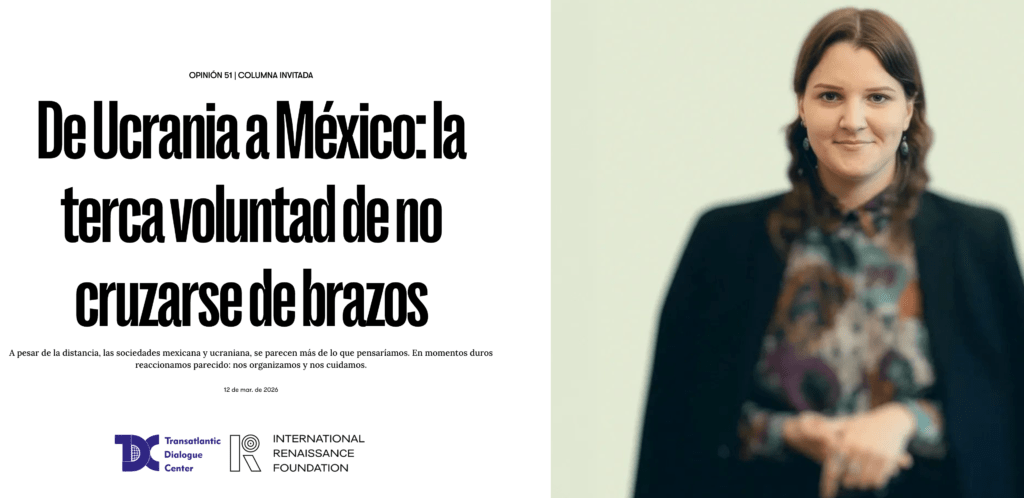
في 12 مارس 2026،بوهْدانا باتسكو، مساعدة مشروع فيبرنامج التعاون مع إسبانيا وأمريكا اللاتينيةفي مركز الحوار عبر الأطلسي، نشرت مقالًا فيOpinión 51(منصة صحافة رقمية مكسيكية قائمة على الاشتراك وتقودها كاتبات أعمدة) تتناول فيه ردّ الفعل المدني الذييربط بين المجتمعين الأوكراني والمكسيكيفي لحظات الأزمات.
Batsko argues that, despite the geographic distance, both societies share a similar instinct to self-organize, build horizontal networks, and protect one another — often faster than institutions can respond. She describes 24 February 2022 as a societal rupture for Ukrainians: “we woke up to explosions.” Yet the initial paralysis quickly turned into a practical question — “what is my role?” — triggering mass mobilization: evacuation routes, supplies for the army, support for displaced people, translation, and fundraising.
A key point in the column is that this mobilization did not emerge out of nowhere. Batsko traces it to Ukraine’s long tradition of grassroots organization and “healthy distrust” toward abusive power, including the legacy of the 1990 Granite Revolution. She also notes how war expands civic responsibilities dramatically — beyond human rights work, gender equality advocacy, and oversight of public spending — to supporting veterans, displaced women, and bottom-up reconstruction, all while living in constant uncertainty.
The text also highlights the gendered impact of war and women’s leadership: occupation has intensified risks for women and girls, yet women are not passive victims. Batsko points to women’s growing role in security and management decisions, including the fact that over “70,000” women currently serve in the Armed Forces of Ukraine, while many also sustain families financially and lead community resilience.
اقرأمقال Opinión 51 كاملًاعبرالرابط.
حظي هذا المشروع بدعم من مؤسسة النهضة الدولية.
تُرجم هذا النص تلقائيًا من الأصل باللغة الإنجليزية، الذي يظل متاحًا عند تغيير لغة الموقع إلى الإنجليزية.