
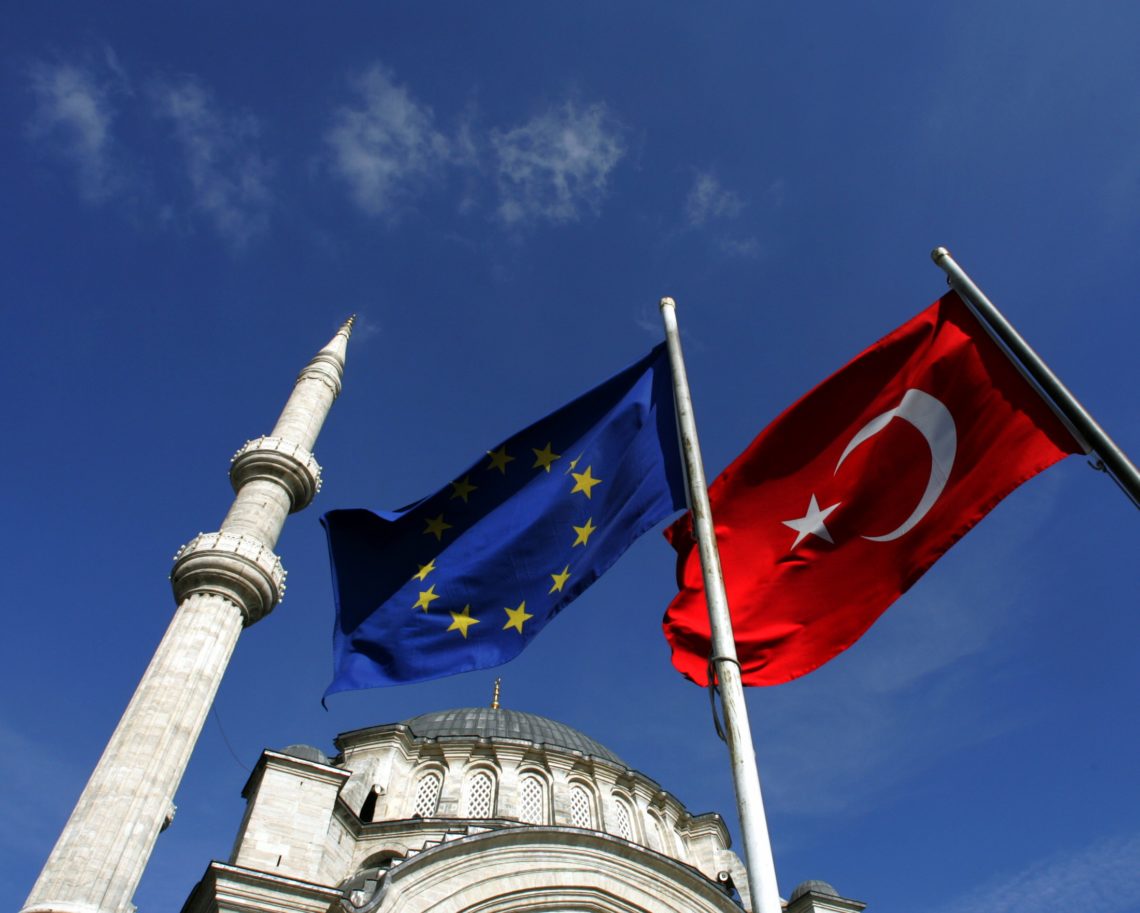

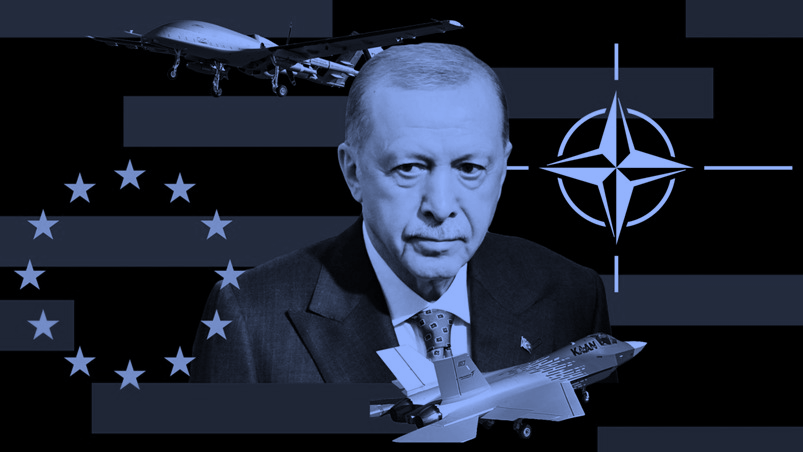
After the beginning of Russia’s full-scale invasion of Ukraine, strengthening security became one of the most pressing and urgent concerns for the European Union. For many years, this question was largely entrusted to NATO and, in particular, to the United States. This institutional equilibrium began to erode following the change of U.S. administration and President Trump’s statements urging Europeans to assume primary responsibility for their own defense, coupled with his declared intention to reduce the American military footprint in Europe. These developments signaled to EU member states that they must be prepared to shoulder the burden of regional security regardless of how difficult this may be under present conditions.
This shift triggered an intense debate across Europe about the need to assume greater responsibility for the continent’s defense. In recent years, a clear trend has emerged: military expenditures have been rising across most EU countries, and even Germany, long constrained by fiscal orthodoxy, has eased its long-standing budgetary limitations to support both national and European defense industries.
At the same time, the United Kingdom and France have taken the lead in forming a “coalition of the willing” aimed at preventing further aggression against Ukraine in the event of a peace settlement. Supporting Ukraine without depleting national resources has become a strategic necessity for many EU member states. Although the United Kingdom is no longer part of the EU, it continues to share a collective responsibility with European nations for maintaining regional security.
Given the gradual reduction of the U.S. military presence in Europe and the intensifying debate over the need to ensure security autonomy, the European Union has faced the challenge of limited defense-industrial capacity. Despite increased defense spending, Europe’s defense industry remains unable to meet the demands of modern warfare in a timely manner, creating a structural deficit that was previously offset by American supplies.
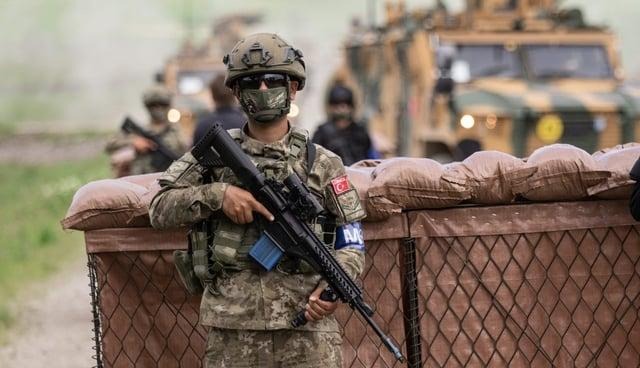
In this context, cooperation with partners outside the EU capable of providing technological flexibility and production dynamism has become increasingly significant. Turkey, one of the non-EU countries with a robust military-industrial complex, stands out in this regard. Its defense products are not only competitive in quality but have also repeatedly demonstrated their effectiveness in real combat situations, such as in Syria, Libya, Nagorno-Karabakh conflictа також в Russo–Ukrainian war. As a result, Turkey’s defense technologies have undergone continuous modernization, adapting to the evolving dynamics and technological trends of contemporary warfare.
Therefore, this article will examine the evolution of Turkey’s defense industry, assess whether Europe can rely on Turkey as a defense supplier, and explore the potential implications of this partnership for the geopolitical balance of power.
The Preconditions for the Rise of Turkey’s Defense Industry
Two main factors can be identified as driving forces behind this process.
First and foremost is the persistent existential threat facing the country and its desire to pursue its national interests, even through the potential use of force when necessary. This primarily concerns the threat emanating from Syria, where a civil war raged until recently, giving rise to numerous radical groups such as the Islamic State, Hayat Tahrir al-Sham, Ahrar al-Sham, Jund al-Aqsaта the Free Syrian Army. These groups not only sought to destabilize Syria itself but also posed direct threats to neighboring states.
As a result, Turkey recognized the need to build a modernized national army equipped with technologies adapted to asymmetric warfare and capable of operating effectively in the conditions of contemporary conflicts.
A second important factor was that Turkey had long depended on arms imports from Western countries, which often used such dependence as a tool of influence and leverage over the Turkish government and its president. This dynamic has deep historical roots. One of the earliest examples is the arms embargo imposed on Turkey after its 1974 military intervention in Cyprus and the occupation of the northern part of the island. Another example was the U.S. decision to block the delivery of F-35 Joint Strike Fighter aircraft to Turkey in 2018, following the country’s growing military cooperation with Russia.
In 2017, Turkey signed an agreement with Moscow to purchase the Russian-made S-400 air defense systems, a move that triggered a strong reaction from NATO partners. Despite the controversy, the deal began to be implemented two years after it was signed.
In response, the United States imposed a series of sanctions under the Countering America’s Adversaries Through Sanctions Act (CAATSA) and officially removed Turkey from the F-35 program. According to the U.S. Department of State (2020) and Reuters reports, these measures targeted Turkey’s Presidency of Defense Industries (SSB) and restricted export licenses and financing for its defense sector.
The F-35 program was also negatively affected by Turkey’s exclusion, since elements of its supply chain had been closely integrated with Turkish defense manufacturers, which were responsible for producing hundreds of components for the aircraft.
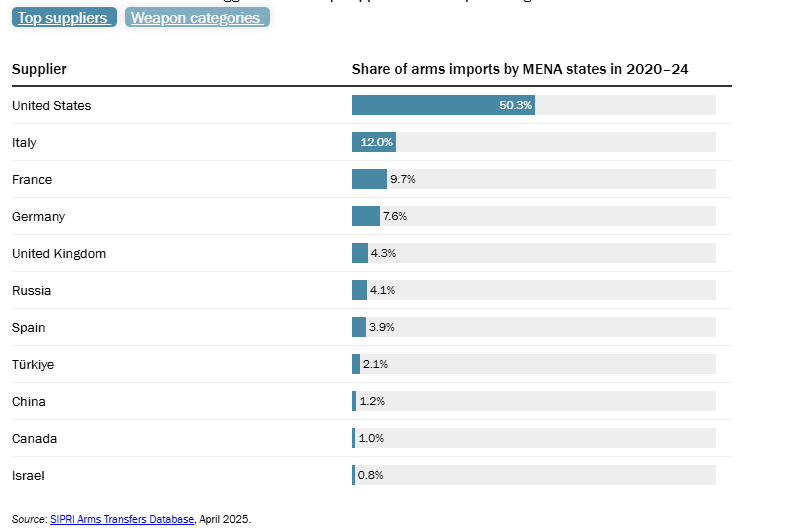
Today, Turkey has become a major player in the global defense market, home to well-known companies such as Aselsan, Baykar, TUSAŞ (Turkish Aerospace Industries), Roketsan, ASFAT, and MKE. Turkish defense exports have increased by 103% between 2015 and 2024, making the country the 11th largest arms exporter in the world. Turkey’s export portfolio includes missiles, military aviation equipment, naval vessels, and ground-based military systems.
Turkish defense firms manufacture and export electronic and communication systems, electronic warfare (EW) equipment, air defense and missile subsystems, tactical and operational UAVs (Bayraktar TB2, Akıncı), aircraft (Hurjet, Hurkus, and the fifth-generation fighter TF Kaan), naval vessels (corvettes and patrol boats), tactical and operational missiles, guided and unguided artillery rockets (TR series), anti-ship and tactical guided missiles (Atmaca, Cirit, UMTAS/OMTAS), and tactical ballistic missile systems (Bora, J-600T Yıldırım).
The growing influence of Turkey’s defense industry has become increasingly visible in Europe through expanding military cooperation and a growing portfolio of arms contracts, opening the door to deeper, strategically oriented partnerships that could reshape regional defense dynamics.
Turkey has entered the European defense market in a targeted and incremental manner, pursuing sector-specific agreements while positioning itself as a scalable partner for individual EU member states. Among the successful cases, one can mention ammunition production together with Poland, the supply of vehicles to Romania, and naval-military cooperation with Portugal. Beyond bilateral contracts, Turkey has also deepened its role in maritime security in the Black Sea and the Mediterranean – an area of strategic concern for both NATO and the EU. This maritime dimension functions as a multiplier, reinforcing Ankara’s value as a partner in collective deterrence and potentially incentivizing broader cooperation with EU member states.
Turkey’s Leadership in the Black Sea and Mediterranean Regions
After Russia’s invasion of Ukraine, the Black Sea region became a zone of challenges and threats for the NATO member states. By adhering to the 1936 Montreux Convention, which restricts the passage of military vessels into the Black Sea in the event of war between two littoral states, Turkey prevented the sea from turning into a Russian-controlled area, or a so-called “Russian lake.” This policy helped maintain a more balanced battlefield, enabling the Ukrainian Armed Forces to resist the Russian Navy and its maritime blockade.
Later, through the use of modern anti-ship missiles, including strikes on Russian vessels, and the introduction of innovative strategies such as the deployment of maritime drones, Ukraine significantly weakened Russian forces. This, in turn, enabled the establishment of a new humanitarian maritime corridor for the export of Ukrainian goods.
In this context, Turkey emerged not only as a regional player but also as a key guarantor of the balance of power in the Black Sea basin. Its consistent policy and diplomatic flexibility helped restrain Russian dominance, which, combined with the successes of the Ukrainian Armed Forces, contributed to restoring partial stability and enabled the continuation of maritime trade.
In the Mediterranean, the Turkish Navy has contributed to curbing illegal migration from North African countries – a challenge facing many Southern European states, including France, Italy, and Spain. To effectively address this issue, these countries need a reliable ally in these waters and a navy capable of countering such threats. Consequently, Turkey has become a natural partner, both as a state capable of controlling maritime routes and as a producer of modern military and patrol vessels.
Turkey’s importance in these regions is increasing in proportion to the expansion of its naval fleet, as the country continues to enhance its maritime patrol capabilities. Since the beginning of 2025, Turkey has already launched several new vessels, while an additional 31 ships are under construction in domestic shipyards – including the country’s first indigenously produced submarines, destroyers, and an aircraft carrier. It is noteworthy that the localization rate of the recently launched Turkish naval vessel stands at approximately 70–80%. The commissioning of these additional ships is expected to raise the total size of Turkey’s fleet to 209 vessels, thereby reinforcing its status as a major maritime power.
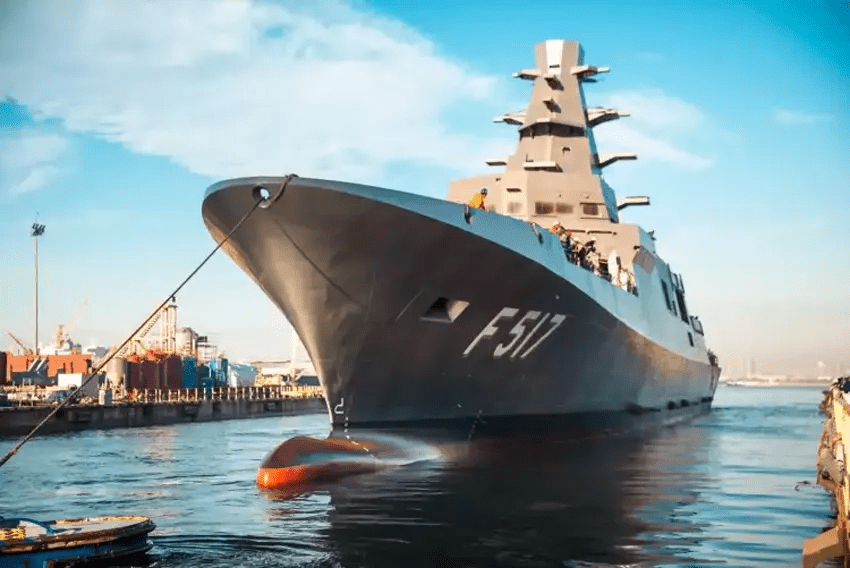
Moreover, Turkey`s shipbuilding industry operates too meet both domestic needs and serve export markets. Among the current foreign customers for Turkish-made naval platforms are the navies of Qatar, Pakistan, Ukraine, and Iraq. In the past year, new shipbuilding agreements were signed with Saudi Arabia and Malaysia, and, for the first time, a contract was concluded with Portugal. This development marks Turkey’s entry into the European defense and shipbuilding market.
Thus, Turkey’s prominent role in the Black Sea and the Mediterranean, combined with its competitive and technologically advanced shipbuilding sector, represents a significant advantage that the European Union is likely to take into account when considering closer cooperation with Ankara in the broader context of strengthening Europe’s security architecture.
Turkey as a Strategic Outpost Against Russia
With rising tensions between Russia and the European Union, EU member states are increasingly turning their attention to Turkey as a potential partner capable of deterring existing and potential risks, as well as providing modern military equipment in the event of further escalation. Turkey plays a crucial geopolitical role for the EU countries, serving as the main buffer and hub between Europe and Asia, including the Middle East. The emphasis on the Middle East is not accidental: after rejecting Russian energy resources, the EU countries turned to the Gulf states as an alternative source of supply.
For Turkey, this cooperation also carries significant geopolitical value, as it provides the country with additional resources and leverage to advance its foreign policy objectives.
Moreover, the country plays an exceptional role in the Caucasus, preventing Russia from fully reallocating its resources (economic, political, and diplomatic) from that region to fuel its hybrid confrontation with the EU. A similar situation exists in Central Asia, with which Turkey actively engages through the Organization of Turkic States, a platform uniting Turkic-speaking nations. In recent years, the organization’s activities have intensified; notably, the 12th summit was held on October 8, 2025, in Baku, Azerbaijan.
These developments demonstrate that Turkey is an active regional player capable of effectively countering Russia across various dimensions and regions, making it a valuable strategic ally for EU member states in the event of further escalation with Moscow.
Turkey and the European Union: A Pragmatic Approach to Security and Cooperation
As an integral part of Europe, Turkey considers its membership in the European Union a strategic priority. During a festive Iftar attended by all ambassadors, President Recep Tayyip Erdoğan emphasized the importance of relations between Turkey and the EU, noting that “establishing European security without Turkey is unthinkable.” He also stressed his expectation that European partners would recognize this reality and promote Turkey’s progress towards full membership with a long-term perspective.
At the same time, efforts to build closer relations with Turkey face several barriers. These include political obstacles, such as the growing autocratic tendencies inside Turkey, tensions in its relations with Cyprus and Greece, as well as the longstanding stagnation of EU accession talks. The integration issue is effectively on a “long pause”: the EU’s enlargement process concerning Turkey has been frozen, no new negotiating chapters are being opened, and the European Commission consistently reports backsliding in the areas of the rule of law and democratic standards. The political decision to advance the negotiations is further complicated by the lack of consensus among EU member states.
Despite this, President Recep Erdoğan continues to declare Turkey’s interest in European integration. The question is to what extent these statements are merely rhetorical. On the one hand, Ankara utilizes European discourse to maintain leverage in negotiations and legitimize its foreign policy. On the other hand, Turkey does undertake certain practical steps: it modernizes institutions in areas such as customs regulation, migration policy, and digital infrastructure, participates in selected European research and innovation programs, and expresses readiness to deepen sectoral integration. However, these steps are selective and do not change the overall political dynamic.
For this reason, security and defense cooperation remains the most promising avenue for rapprochement. In this domain, Turkey is an important partner for both the EU and NATO, creating a realistic space for developing relations even in the absence of progress on political integration. Joint military-technical projects, participation in EU defense capability programs, and cooperation in counter-terrorism and border management can significantly strengthen mutual interdependence.
The EU’s position in this context is also pragmatic. Despite criticism of Turkey’s domestic political developments, the EU recognizes its role in regional stability, energy security, migration management, and defense initiatives. Therefore, in the short term, the two sides are likely to develop cooperation within the logic of a “multi-speed Europe.” This means that Turkey may gradually integrate into the security and defense dimension (through participation in joint programs, military-industrial projects, and the development of protective systems), while remaining outside the EU’s political architecture. Such an approach allows both sides to maximize mutual benefits while maintaining flexibility and pragmatism in their strategic partnership.
Potential Development Scenarios:
Deepening Defence Cooperation within NATO and the EU
Given Turkey’s NATO membership, the gradual deepening of security cooperation and further political alignment can be viewed as one possible scenario for the future development of EU–Turkey relations.
Turkey’s role in the European Sky Shield Initiative (ESSI) is of strategic importance, as its participation not only expands the geographical coverage of Europe’s airspace protection but also strengthens the initiative through its own technological and military capabilities. As a key state on NATO’s southern flank, Turkey provides additional depth for monitoring and early threat detection, which is particularly crucial in the context of growing risks associated with missile strikes and the use of unmanned systems. Turkey’s developed defence-industrial base, including its national air-defence systems, offers an opportunity to enhance ESSI’s overall capabilities by integrating indigenous technological solutions and contributing to joint projects.
Moreover, Turkey’s extensive operational experience in complex regional security environments makes it a valuable partner in building a resilient, multi-layered European air-defence architecture. Beyond the technical dimension, Turkey’s accession to ESSI also carries significant political weight, demonstrating Ankara’s willingness to engage in European security initiatives, strengthening mutual confidence, and creating additional opportunities for gradual political alignment with the EU in the defence domain.
Another important step toward deeper cooperation could be Turkey’s potential involvement in the SAFE (Security Action for Europe) instrument, established under the EU’s Re-Arm Europe / Readiness 2030 plan. SAFE is designed to provide up to €150 billion in long-maturity EU-backed loans to support rapid, large-scale investments in critical defense capabilities, such as missile defense, drones, and other strategic enablers. The instrument encourages common procurement among participating countries to foster economies of scale and interoperability. Importantly, SAFE is open not only to EU Member States but also to third countries under certain conditions. Ukraine and EEA-EFTA countries are explicitly eligible, and countries that have signed a security and defence partnership with the EU, potentially including Turkey, could also join common procurement schemes.
For Turkey, as a significant exporter of military equipment, participation in SAFE would offer a concrete opportunity to both expand its defence-industrial business in Europe and align more closely with European security priorities. By contributing its systems to joint European acquisition programs, Turkey could deepen its integration into the European Defence Technological and Industrial Base (EDTIB), increase its influence in the regional security architecture, and benefit from favorable financing terms for its defense exports. Moreover, such engagement would reinforce Turkey’s political alignment with EU defence initiatives, signaling a tangible commitment to European collective defence while leveraging its industrial strengths.
Turkey’s Sectoral Integration into EU Defence Initiatives and Frameworks
Under this scenario, Turkey would be able to participate only in selected projects within its cooperation with the European Union, without the possibility of expanding into broader defence-industrial engagement with all EU member states. This would primarily involve participation з specific components of EU programmes, such as joint technological development in the field of C4ISR, modernization of air defence systems, cybersecurity initiatives, or involvement in selected PESCO projects where third-state participation is formally permitted. These could include, for example, projects related to military mobility platforms, components of unmanned systems, or participation in consortia producing elements funded through the European Defence Fund (EDF). However, such participation would not evolve into systemic integration, as most EU member states are likely to remain cautious about granting Turkey access to strategically sensitive industrial value chains.
In the context of a potential redistribution of security responsibilities, particularly in the event of a reduced U.S. military presence in Europe, EU member states would face a strategic dilemma: to guarantee security either through the import of foreign weapons systems or through the expansion of their own defence-industrial base. The first path would increase dependence on external technologies and result in substantial financial outflows outside the Union. The second path would generate employment, support the development of local industrial clusters, and contribute to strategic autonomy, albeit at the cost of further fragmentation and duplication within the European defence industry. Given current geopolitical trends, the latter scenario appears more plausible.
A further dimension relates to the leverage this could provide Turkey. Ankara has already used its role as a buffer for migration flows as a bargaining tool in its relations with the EU. Deepening defence cooperation could provide Turkey with additional instruments of influence, for example, through control over critical components or technologies embedded in European weapons systems. Such a development would potentially strengthen Turkey’s regional ambitions and enhance its bargaining position on issues related to the Eastern Mediterranean, Cyprus, and the modernization of the EU-Turkey Customs Union. Several European think tanks have already expressed concern that excessive EU dependence on Turkish industrial capacities could introduce political risks similar to those already observed in the migration domain.
Thus, Turkey would likely serve primarily as a temporary provider of technology and an advisor on the localization of defence production within the EU, rather than as a long-term supplier. Nonetheless, Ankara could remain a competitive exporter in certain sectors, particularly in domains where it already possesses advanced capabilities, such as unmanned aerial vehicles (UAVs), loitering munitions, and a growing portfolio of missile systems. Turkey’s current technological advantages in these areas would allow it to maintain export positions until EU member states develop their own fully autonomous production capacities for such complex systems.
Security Partnership as an Alternative to Full EU Membership
The European Parliamentary Research Service (EPRS) has studied and projected possible scenarios for the development of the European security architecture up to 2035 and 2050. These scenarios include the continued centrality of NATO as the main security framework in Europe; the creation of a separate “European NATO” that could potentially include Turkey while excluding non-European states; the establishment of an independent European Defence Union; a “patchwork” policy involving the emergence of separate centers within the EU, each uniting other member states under a single framework; and a transition toward a model of cooperation based on peaceful coexistence, which could result from the preceding four scenarios.
Within these scenarios, Turkey’s role varies from a positive actor, sharing security threats and challenges with EU countries, to a potentially adversarial element, given its occasional divergences from EU policies and unilateral actions in contested regions. Another scenario envisions Turkey acting as a regional mediator, bridging fragmented parts of Europe and coordinating joint efforts by cooperating individually with member states. Turkey’s leverage in this role stems from its geographic position, control over migration flows, established bilateral relations, and defence-industrial capacities that can support localized European initiatives.
Under the current circumstances, with Turkey’s EU integration effectively on hold, the most probable scenario sees Ankara concentrating on regional initiatives and bilateral projects, while maintaining limited coordination with the EU. This approach enables the mitigation of tensions in specific areas without necessitating significant progress in formal integration, thereby providing Turkey with room to maneuver in advancing its national interests. It demonstrates that Turkey’s role is neither unequivocally positive nor negative, but rather flexible, depending on the context and the areas of interaction with the EU.
Conclusions
Turkey has significant potential for deepening its cooperation with the European Union in the field of security; however, realizing this potential remains constrained by a range of political and strategic factors. Despite its advantages (having a developed defence-industrial base, strategic geographic location, strong armed forces, and extensive experience in international missions), the interaction between Ankara and Brussels largely retains a selective and pragmatic character.
A key precondition for any substantial rapprochement is mutual political readiness. For EU member states, Turkey’s increasingly autocratic domestic governance remains a notable limiting factor. Conversely, the Turkish leadership demonstrates limited willingness to compromise, seeking to preserve strategic autonomy in both domestic and foreign policy and showing reluctance to enter into deep institutional integration within EU security structures.
Under these circumstances, full-scale integration of Turkey into the EU’s security architecture appears unlikely. Instead, a more realistic scenario is the continuation of selective, issue-based, and bilateral cooperation with individual EU member states, which enables Ankara to employ such partnerships as instruments for advancing its own foreign policy objectives.
At the same time, deeper defence cooperation could generate mutual benefits. Turkey could enhance the EU’s defence capabilities through participation in joint projects, access to its defence technologies, the development of co-production initiatives, and its contribution to stability in strategically important regions. For Ankara, potential benefits include expanded access to European defence markets, EU technological and financial instruments, and an increase in its political agency within the European context.
Thus, the most probable trajectory is a model of selective, pragmatic, and mutually beneficial cooperation, one that does not entail full integration of Turkey into EU security structures, but nonetheless contributes to strengthening regional security and improving both sides’ capacity to address contemporary challenges.
The views, thoughts, and opinions expressed in the papers published on this site belong solely to the authors and not necessarily to the Transatlantic Dialogue Center, its committees, or its affiliated organizations. The papers are intended to stimulate dialogue and discussion and do not represent official policy positions of the Transatlantic Dialogue Center or any other organizations with which the authors may be associated.