
 52 min de lectura
The Russo-Ukrainian war has placed unprecedented strain on Ukraine’s governance, economy, and institutions. Yet amid destruction, fiscal pressure, and constant security threats, Ukraine has demonstrated a remarkable capacity to endure, adapt, and reform. This paper starts from a deliberately constructive premise: Ukraine is exhausted, but there’s no mood to surrender.
The strategic objective of Ukraine is clear: to exist as an independent, sovereign, and democratic state, capable of determining its own political, economic, and security future without external coercion. This vision implies not only national survival, but the consolidation of an effective, economically viable, and reform-oriented state, able to defend itself, govern transparently, and integrate into the Euro-Atlantic community. Wartime governance, therefore, is not a deviation from Ukraine’s long-term trajectory, but a critical stress test of its institutional capacity and political maturity.
The core argument of this paper is that even under extreme conditions Ukraine has preserved macroeconomic stability, maintained core public services, introduced digital governance tools, and continued key reforms. These accomplishments point to a state that is learning, adjusting, and remaining functional under pressure. At the same time, the war has exposed real governance bottlenecks particularly in public financial management, procurement, oversight, and institutional accountability that must be addressed to sustain domestic legitimacy and international trust.
With targeted support, technical assistance, and sustained political engagement, Ukraine is well positioned to accelerate institutional progress. External support is therefore not a substitute for domestic capacity, but a catalyst, enabling Ukraine to move faster, more predictably, and more securely along its strategic priorities, including EU accession. Beyond immediate wartime needs, Western partners can reinforce Ukraine’s democratic resilience by linking financial and technical assistance to transparent governance, judicial independence, anti-corruption measures, and civil society oversight. Structured reconstruction programs that empower local authorities, integrate displaced populations, and strengthen social cohesion will help prevent governance gaps and mitigate the risks of hybrid threats in frontline and formerly occupied areas.
Simultaneously, Ukraine’s international and economic engagement should be expanded through co-located diplomatic hubs, e-governance partnerships, and counter-disinformation initiatives, enabling the country to project soft power, build global alliances, and diversify trade and technological partnerships. In the defense sector, support should focus on Ukraine as a laboratory for innovation, local production of strategic systems, and the development of NATO-standard capabilities, thereby enhancing both national self-reliance and broader European security. By combining investments in governance, security, and socio-economic resilience, foreign partners can ensure that Ukraine recovers from the war with stronger institutions, a more robust economy, and a firmly EU-aligned trajectory.
Russia’s war against Ukraine represents the largest and most consequential conflict in Europe since the Second World War, posing a direct challenge to democratic governance in conditions of sustained high-intensity aggression. At its core lies a fundamental question: can a democratic state withstand prolonged attacks from a major autocracy while maintaining institutional integrity and protecting citizens’ rights? Since the onset of the war, Ukraine’s democracy has undergone significant transformation, increasingly oriented toward national survival under constant security threats.
Despite the imposition of martial law, which postponed presidential and parliamentary elections and temporarily restricted certain civil liberties, Ukraine’s democratic indicators have shown remarkable resilience. According to Freedom House, Ukraine’s overall democracy score evolved from 60/100 in 2021 to 61/100 in 2022 and remained at 51/100 by 2025. Importantly, Freedom House explicitly notes that Ukraine’s democratic institutions remain intact, anti-bribery and corruption compliance systems continue to function, and public trust in democratic governance has remained comparatively strong under extreme conditions. The score decline is therefore best understood as a methodological penalty for emergency governance, not evidence of authoritarian drift.
The unity of Ukrainian citizens under martial law strengthened the state’s overall resilience, while their active participation in local and national political life demonstrated that, even under constant threat, people see themselves as meaningful contributors to governance. At the same time, the war has placed significant pressures on Ukraine’s democratic system. In connection with the ongoing martial law and restrictions, some assessments of public opinion were voiced regarding the temporary restrictions on civil liberties, including limited access to parliamentary proceedings. Nevertheless, all parliamentary votes and related details remain fully transparent while according to polls, at least 62% of the population expresses its interest in the country’s political life. The society remains highly engaged and responsive to political developments, with many citizens closely monitoring public messaging on the war and negotiations and ready to voice concerns when needed. Polls show that a significant share of Ukrainians value freedom and civil liberties even amid security pressures, with roughly 46% prioritizing freedom over security in recent surveys. At the same time, Ukrainians continue to support democratic principles and active participation: around 90% believe the government should be open to criticism even during war, often framed as constructive dialogue rather than destabilization, and many are deeply involved in volunteering and civic networks that support both frontline needs and broader governance processes.
Special anti-corruption institutions remain vulnerable to political influence, which continues to pose a risk to institutional integrity. In July 2025, for example, the Ukrainian parliament passed a law that reduced the independence of key anti-corruption bodies, and sparked domestic protests and temporarily delayed EU aid. In response to widespread public protests and pressure from civil society and international partners, the Ukrainian parliament adopted new legislation at the end of July 2025 restoring the independence of these institutions that had briefly lost autonomy under the earlier law. The episode highlighted that, even under emergency governance, authorities remain primarily accountable to the public and take societal opinion into account when making decisions. The Office of the President regularly monitors public sentiment, functioning as an indirect plebiscite. Given the practical impossibility of holding elections during wartime, public trust as such has become the decisive measure of political legitimacy.
Democratic institutions have continued to function and adapt. Between September 2024 and August 2025, the Ukrainian Parliament passed 208 laws, of which 192 came into force, demonstrating the legislature’s ability to fulfill its core functions under crisis conditions. The parliamentary landscape has shifted away from a monolithic majority, evolving into a more competitive environment with an active opposition and diverse viewpoints. Parliamentary diplomacy has intensified, and discussions around elections continue, reflecting a healthy and functioning political system where competition and public debate remain central. At the same time, decentralization policies have further reinforced resilience by giving local authorities greater political power to respond effectively to community needs during wartime. This system enabled rapid decision-making, flexible implementation of policies, and enhanced government efficiency under crisis conditions.
When it comes to sustaining the economy under extreme conditions, Ukraine has demonstrated resilience and internal cohesion with continued economic activity by businesses and workers and steady flow of financial aid from the Western partners under emergency mechanisms established to support the country. As the war approaches its fifth year, the EU, G7, and IMF as key financial backers of Ukraine seek to establish conditional support frameworks to ensure greater transparency and spending oversight. In 2025, Ukraine has planned to spend roughly 31% of its GDP on defense (roughly $65 billion), and as the wartime dynamics evolve, the government faces the need for additional allocations throughout the year. At the same time, the country needs to focus on maintaining long-term economic stability, particularly prioritizing sufficient defense spending and preserving resources for future reconstruction and recovery. Reconstruction and social welfare obligations compete directly with defense needs, creating a structural imbalance that cannot be managed through short-term emergency financing alone.
As defense spending takes the largest share of Ukraine’s state budget, transparency of spending, procurement and planning is the key to ensure the government’s reliability. Ukraine has demonstrated high flexibility and adaptability in military acquisitions, recognizing the need to establish the framework for the integration of military innovation facing the need to sustain the demand on the frontlines and decrease reliance on costly foreign systems. Current Ukraine’s defense procurement structure essentially consists of two tracks, with lethal systems being procured through government-led structures and non-lethal systems being purchased through the DOT-Chain Defense online marketplace. The latter allows units to independently procure directly from defense start-ups and SMEs. Introducing the two-pillar system has facilitated a rapid development of Ukraine’s defense technology and commercial sector while also integrating cost-efficient solutions and expediting deliveries to the frontline. Therefore, the trajectory of military acquisitions is largely defined by the actual battlefield needs. The decentralization of procurement processes allowed for streamlining the acquisition processes and enhancing Ukraine’s resilience amid rapidly evolving high-tech warfare. For example, in Ukraine’s reformed system, certain unmanned systems and electronic warfare solutions can be procured and delivered in as little as two weeks, compared with traditional defense acquisition timelines that often take multiple years in more conventional military procurement systems like those in the United States or Europe.
Ukraine is currently capable of satisfying 60% of its overall arms need. However, the degree to which Ukraine can satisfy its armament needs is driven not only by the procurement scheme but by the capability of its military-industrial complex and the level of funding devoted to research and development. Domestic firms such as Fire Point are now designing and manufacturing long-range strike drones and cruise missiles, including the FP-5 “Flamingo” system and emerging tactical ballistic systems, illustrating the growing indigenous R&D and production base that goes beyond simple acquisition mechanisms. Meanwhile, the Ministry of Defence continues to prioritize development of long-range weapons, ballistic missiles, and homegrown missile defence systems, integrating modern Ukrainian expertise with allied technical support.
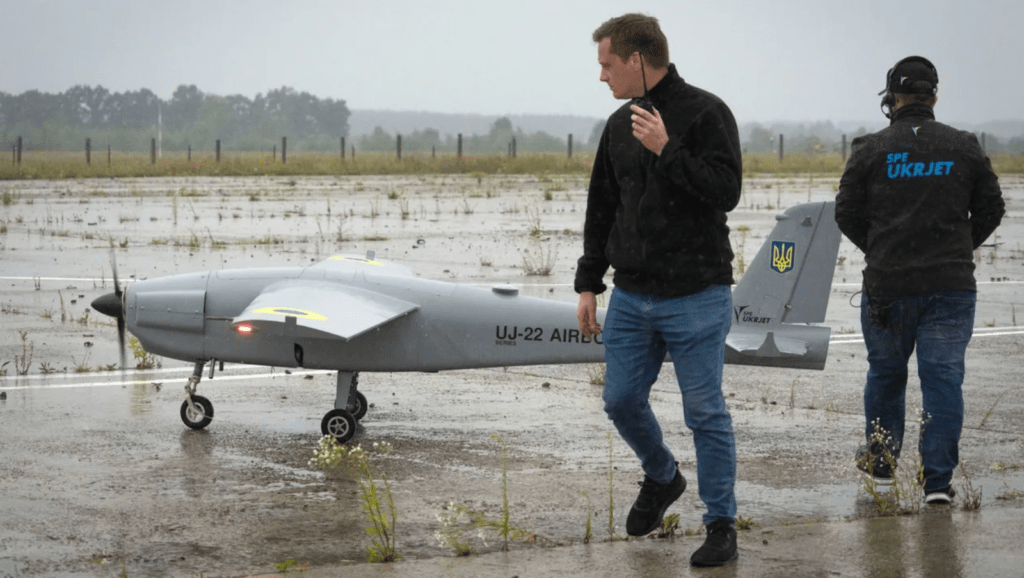
Reducing dependence on politically exposed and non-transparent supply chains means lowering the risk that external political shifts – particularly a deterioration of relations with China – could block access to critical defence components. Ukraine plays an important role here as a platform for friend-shoring: it allows for the localization of production and the testing of tactics and weapons in combat conditions, which directly strengthens the defense autonomy and resilience of the EU and NATO.
For example, the European Defence Industry Programme (EDIP), agreed in October 2025, creates a unique window of opportunity for Ukraine to integrate more deeply into the European defence industrial ecosystem. The program provides for Ukraine’s participation in joint European Union defense projects and allocates up to €300 million through the Ukraine Support Instrument (USI) for the modernization of the Ukrainian defense industry and the development of partnerships with EU Member States companies. The restriction on the use of components from non-associated third countries (no more than 35%) makes Ukraine a natural platform for localizing production and defense friend-shoring. Thus, investments in Ukrainian defense production not only strengthen Ukraine's capabilities, but also reduce the long-term burden on overloaded European production lines, reduce logistical risks, and increase the strategic autonomy and resilience of the EU and NATO.
Foreign partnerships are also expanding Ukraine’s technological and industrial capacities. Joint ventures with major international contractors – such as the registration of a cooperation between UkrOboronProm and Thales to develop advanced air-defence, radar, and electronic warfare technologies – help transfer cutting-edge know-how into the domestic sector. Additional collaborations include a Rheinmetall-Ukrainian Defence Industry venture in Kyiv to produce and maintain military vehicles and systems. Ukraine’s ability to satisfy around 60% of its arms needs is rooted in a combination of domestic industrial capacity, strategic R&D investment, and targeted international cooperation rather than a procurement structure alone.
To ensure investment flow into the Ukrainian defense industry and allow for technology development and the expansion of domestic production capabilities, the government has launched the program of controlled arms export earlier this year. In 2025, projected capacity exceeds $35 billion, while actual state procurement contracts account for only $12-12.5 billion. According to the National Security and Defense Council of Ukraine, in 2026, the total capacity of the Ukrainian defense industry may exceed $60 billion.
With the current supply surplus of approximately 55-60%, the country is planning on targeting the European, U.S., and MENA markets to create a financial flow for scaling and reducing production costs. Furthermore, the flow of revenue to the state budget could support further defense modernization and the ongoing defense expenditure as a self-reliance mechanism. By reinvesting in both domestic production and selective foreign procurement of capabilities that Ukraine does not possess, the country could fill capability gaps, strengthen its domestic industrial base, and build a sustainable long-term mechanism for funding national security and supporting economic growth. Ukraine’s defense industry, by contrast, anticipated these risks and pre‑positioned stockpiles of key inputs such as magnets and other components, enabling its domestic firms to sustain and scale drone production even amid global supply disruptions, and contributing to the country’s ability to produce parts at scale. In contrast, China’s export restrictions implemented in 2025 caused deep shortages and disrupted production lines across European automotive and industrial sectors, highlighting the continent’s dependence on imports rather than domestic capabilities.
Nevertheless, the industry is concerned about legal constraints for defense exports, especially to the EU and the U.S., considering therefore “politically friendly” countries with lesser bureaucratic red tapes, such as the Balkan, MENA, and Latin American states. Other companies seek to establish production facilities in the EU, such as FirePoint in Denmark and Skyeton in Slovakia, Denmark and the UK after attracting €10 million in foreign investment. Fire Point is opening a production facility in Denmark to manufacture components such as solid rocket fuel.
In parallel, Western defense and tech firms present in Ukraine are learning from frontline experience and scaling operations, creating strong narrative and commercial cases for deeper cooperation. This dynamic creates a positive image: Western and Ukrainian companies collaborating on cutting‑edge systems that have been battle‑tested in high‑intensity conflict. Ukrainian naval drones and unmanned maritime systems – such as those used to counter Russian naval assets in the Black Sea – are gaining attention from NATO countries for their effectiveness and could be adapted for missions such as patrolling in the North Sea or Arctic regions, where autonomous systems are increasingly relevant for both defense and commercial maritime security. Ukraine’s drone industry has become globally recognized for producing 4 millions of unmanned aerial vehicles in 2025.
International financial aid mechanisms have been a lifeline for Ukraine’s budget, which has been severely strained by the shocks of Russia’s invasion. The IMF has been Ukraine’s third largest creditor, following the U.S. and the EU. Since 2023, Ukraine's drained economy has benefited from the 2023-2027 Extended Fund Facility (EFF) loan program that aims to provide Kyiv with $15.6 billion in financing for budget support over four years. Most of these funds have already been disbursed.
In September 2025, the IMF identified that Ukraine is likely to need as much as $20 billion more than Kyiv is currently predicting. The total financing gap for the 2026-2029 period is forecasted to reach $136.5 billion. Ukraine is currently negotiating a new program over 2026–2029, worth $8 billion, yet the conditionality of the funding mechanism requires the country to show progress in mobilizing more domestic revenue, restraining public expenditure, and improving fiscal governance. For example, the IMF is encouraging Kyiv to increase domestic taxes to 30%, yet Kyiv has been hesitant so far. Ukraine is also expected to shrink the shadow economy, which makes up as much as 30% of the current GDP.
One of the IMF’s strongest concerns so far is that Ukraine’s debt may become unsustainable by 2027, especially as international donor aid experiences delays, putting additional pressure on the budget execution. The IMF continues to emphasize Ukraine’s need to complete its debt restructuring strategy. In terms of the future funding, the Fund expects Ukraine to complete the reform of the Public Investment Management (PIM) system, which is important to ensure transparent disbursement of reconstruction funds.
One of the most important frameworks vital for keeping the Ukrainian budget afloat is the G7 Extraordinary Revenue Acceleration (ERA) Loans initiative, launched in October 2024 to provide Ukraine with $50 billion of loans paid for by the windfall proceeds earned from Russia’s immobilized assets, under the Ukraine Loan Cooperation Mechanism. As of 2025, the ERA loans account for 69% of the total sources of financing the state budget deficit since 2022, with the current disbursed funds reaching as much as $33 billion and the rest due for transfer until December 2027. The EU as the main donor has already provided Ukraine with the full pledged loans of €18.1 billion though the European Commission's exceptional MFA programme for Ukraine. In terms of the conditionality of this mechanism, the MFA program requires the policy conditions that are consistent with the Ukraine Facility, in particular the Ukraine Plan. Meanwhile, the U.S. had disbursed approximately $20 billion in loans under this mechanism in December 2024.
As of November 2025, the total EU aid to Ukraine provided since 2022 has reached €187.3 billion, including over €85.6 billion in macrofinancial assistance, budget support, humanitarian and emergency support, provided or guaranteed by the EU budget, and €3.7 billion from the proceeds of Russian immobilised assets.
Launched in 2023, Ukraine Facility represents a blueprint for reform-for-funding mechanism of financial support for macroeconomic stability and institutional resilience. The EU has pledged €50 billion in non-repayable grants and guarantees (€17 billion) and loans (€33 billion) to be disbursed until 2027. Each disbursement is contingent upon the implementation of reforms aimed at advancing the rule of law, fighting corruption, building greater transparency, and complying with the requirements of the EU integration process. In August 2025, Ukraine fulfilled only 13 out of 15 reform benchmarks and, as a result, received a partial tranche from the EU. Learning from its own mistakes, Ukraine has fulfilled all its obligations and received the November 2025 tranche on time.
As part of the 2028-2034 budget proposal, the EU plans on establishing the Ukraine Reserve embedded with €100 billion that can be mobilized for Ukraine’s needs. This program is seen as a continuation of the Ukraine Facility and demonstrates a deep integration of Ukraine into the EU’s financial agenda – yet it also means that Ukraine’s EU membership is unlikely to become a reality until at least 2034. Brussels aims to prioritize long-term funding to ensure Ukraine’s macroeconomic sustainability, infrastructure reconstruction and modernization, and further reforms of governance, public administration, the rule of law, justice, and anti-corruption policy.
Washington prioritizes investment in post-war reconstruction, announcing the U.S.-Ukraine Reconstruction Investment Fund fully operational and ready for first investments in 2026. Both sides committed $150 million to mobilize substantial private capital investment in projects in Ukraine. This instrument entails targeted financing and risk-mitigation instruments for strategic sectors, including mining and the energy sector. As a limited partnership on a 50:50 basis, neither country has a preferential vote, and all decisions will be made by the Board, consisting of three Ukrainian and three American members. According to Steve Witkoff, BlackRock, the world’s largest asset management firm, has been selected to advise the U.S. Development Finance Corporation on the allocation of funds. The Ukrainian government has also been working on aligning the national legislation with the requirements of the agreement, particularly with regard to the mining sector. Such a mechanism has the potential to lay down a foundation for a long-term economic partnership between two countries through a targeted investment in Ukraine’s natural resources and the energy infrastructure to support the industrial development of the country.
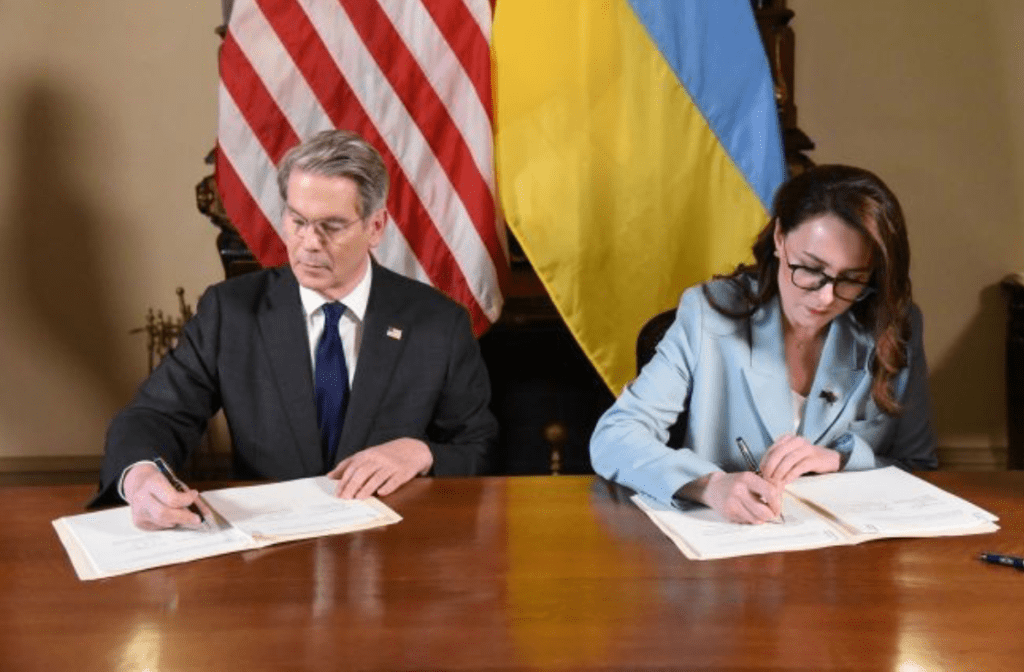
Several initial projects have already been launched under the U.S.–Ukraine Investment Fund, demonstrating growing international interest in Ukraine’s strategic sectors. Among these, the Dilyanka Dobra lithium project stands out as a groundbreaking opportunity for Ukraine. Dobra Lithium Holdings JV, LLC has been selected to develop and process metallic minerals at the Dilyanka Dobra deposit, with shareholders including TechMet – backed by the U.S. Development Finance Corporation, Qatar’s sovereign wealth fund, and Dutch clean-energy investor Mercuria Clean Energy Investments – and The Rock Holdings, owned by American businessman and philanthropist Ronald Lauder. The terms of the competition require a substantial minimum guaranteed investment of USD 179 million. If the industrial launch of the extraction and processing complex is successful, total investment could exceed USD 0.5 billion, underscoring the project’s scale and potential economic impact. This project opens entirely new avenues in a highly complex and competitive industry, offering the potential to integrate into global supply chains.
Another initiative recently announced by President Zelenskyy is the plan to sign a $800 billion deal with the U.S. at Davos in late January. The package aims to mobilize public and private investment to contribute to Ukraine’s recovery, and promises to strengthen U.S.-Ukraine economic cooperation, laying the groundwork for stronger U.S. interest in Ukraine’s post-war security and stability. According to Zelenskyy, Ukraine hopes to develop a “roadmap to prosperity”, which will particularly target the demographic issues, bringing back refugees and creating jobs to ensure the country’s recovery and economic development.
International funds for investing in Ukraine’s reconstruction are limited and highly dependent on the political will of individual countries and international organizations. Here comes private capital, the mobilization of which should become a long-term priority to ensure a sustainable recovery. The private sector is particularly vulnerable to the wartime risks such as unpredictable security conditions, regulatory instability, and the threat of physical damage to assets. The Ukraine Facility, as well as international development organizations of various EU and G7 countries, already have mechanisms to provide the private sector with loans at reduced rates and guarantees. The priority sectors often include energy (with a focus on renewables), critical infrastructure, agriculture, transport, housing, dual-use goods, digital transformation, and industrial modernization.
Key international guarantors include:
Investment for Ukraine’s post-war recovery will be contingent on a comprehensive risk-sharing architecture, including political and war-risk insurance, sovereign and multilateral guarantees, first-loss capital, concessional financing, and co-investment by international financial institutions and development finance institutions. Such mechanisms should be jointly established and funded by Ukraine, the EU and international financial institutions, with the aim of crowding in private capital, reducing perceived risk, and accelerating reconstruction at scale.
To ensure smooth implementation and sustain donor confidence, Ukraine needs to deepen public financial management, strengthen anti-corruption institutions, improve transparency around procurement and asset management, and put in place independent audit and reporting mechanisms aligned with EU and international standards.
Ukraine’s international partners have, to a certain extent, accepted elevated risks in light of the country’s existential security challenges and the necessity to maintain uninterrupted support in the face of Russia’s aggression. However, long-term reconstruction and recovery efforts require a governance framework in which risks related to misuse of funds are systematically mitigated rather than tolerated. Without credible safeguards, large-scale reconstruction financing cannot be deployed effectively or sustainably. On a positive note, experts emphasize that the current procurement system is a unique legal hybrid, combining the basic EU standards and the integrity structure of the Prozorro electronic system[1] that has so far proven credible and effective in improving procurement transparency. Furthermore, Prozorro and procurement reforms have reached OECD compliance levels, which strengthens transparency and equal access in contracting.
In this context, foreign partners play an important role in reinforcing accountability by maintaining consistent expectations regarding transparency, oversight, and institutional independence. International monitoring mechanisms, alongside greater access for civil society and independent experts to supervisory and advisory bodies of key agencies have already proven effective in strengthening transparency and reinforcing Ukraine’s international credibility. Ensuring that oversight bodies remain independent and professionally staffed is essential for preserving the progress achieved in institutional reform and for advancing Ukraine’s EU integration ambitions.
[1] Prozorro is Ukraine’s central electronic system for public procurement. It provides open access to all procurement-related information, including announcements, submitted bids, customer decisions, contracts, and clarifications or complaints. This system helps ensure public oversight and creates a level playing field for both domestic and foreign participants.
Regardless of how the war develops, Ukraine will need long-term funding to fill up its budget gap, sustain high defense spending, and continue reform implementation. Independent multilateral institutions estimate very large financing needs – the IMF projects tens of billions of dollars of external financing that will be required throughout the coming years to keep the economy and public services functioning. Defence and internal-security spending alone have been projected at roughly a quarter of GDP in recent budget plans, driving large deficits and rapidly rising public debt that will require sustained external support. At the same time, new funding frameworks need to be developed in accordance with Ukraine’s obligations to ensure a smooth implementation of governance and transparency reforms required by international organizations, G7, and the EU.
Furthermore, to ensure the continuation of reforms, raise Ukraine’s credibility, and secure long-term foreign funding, Ukraine should set its reconstruction, modernization, and development goals in each critical sector, including energy and critical infrastructure, defense industry, agriculture, social services, and broader recovery efforts. In fact, structured planning will allow foreign partners to plan their financial allocations in accordance with Ukraine’s needs while also obliging the country to fulfill its plans. Connecting financial disbursements with continuous oversight, compliance checks, and transparency will increase accountability, reinforce reform discipline, and align Ukraine’s progress with the expectations of its international partners.
This approach is already being operationalized through various institutional mechanisms and multilateral events. For example, at the Ukraine Recovery Conference 2025 in Rome, international financial institutions and donors committed over €10 billion in support for Ukraine’s rebuilding, with EU agreements worth €2.3 billion expected to mobilize up to €10 billion in investment for homes, hospitals, energy, transport, and industry.
With the goal of joint effort, Ukraine and EU member states have launched the EU4Reconstruction project worth €37 million spearheaded by GIZ, Expertise France, the Danish Ministry of Foreign Affairs, and the Central Project Management Agency of Lithuania (CPVA). This initiative represents a blueprint for international coordination of reconstruction projects with the focus on reforms, transparency, and green recovery, bringing together international stakeholders and laying the foundation for sustainable recovery and long-term development of the country.
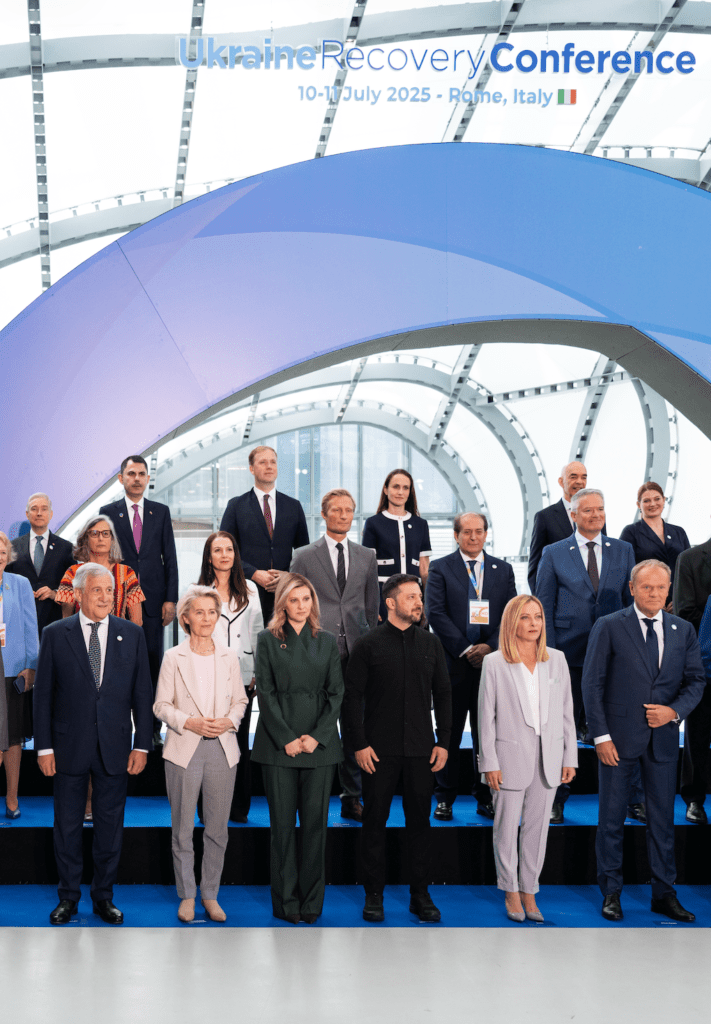
Europe’s role as Ukraine’s strategic enabler is central to ensuring sustained financial assistance, credible reform progress, and a clear pathway toward long-term political and economic integration. Ukraine’s stability, resilience, and development are crucial to security and stability of the EU’s eastern border. Therefore, it is in the EU’s interest to combine financial pledges with stricter conditionality for Ukraine.
While debates in the EU over the legitimacy of using frozen Russian assets to fund support for Ukraine are understandable, delays and political disagreements have contributed to critical budgetary pressures in Kyiv’s 2026 planning, including risks to financing defence, social services, and essential state functions. To address this, European leaders agreed in December 2025 to provide Ukraine with a €90 billion Ukraine Support Loan for 2026–2027, structured as a limited-recourse loan backed by EU market borrowing and the EU budget headroom, with repayment tied to future reparations and immobilised Russian assets once they can be utilised under international law. Two-thirds of this package (about €60 billion) is earmarked for military and defence support, while roughly €30 billion is intended to cover general budgetary support to keep the state functioning.
Had Ukraine’s partners agreed earlier on a broader reparations financing mechanism based directly on Russia’s frozen sovereign assets (estimated at around €210 billion), this could have mitigated both the procedural delays and budget shortfalls. Nevertheless, the current Support Loan is designed to avert an imminent liquidity crisis and to ensure continued financing of defence production and frontline needs.
In related fiscal planning debates, Ukrainian officials have underscored the scale of financial needs tied to both security and recovery. Deputy Prime Minister Taras Kachka noted that maintaining Ukraine’s armed forces at current strength and capability could cost up to $700 billion over the next ten years of continued conflict. At the same time, the World Bank and partner institutions estimate that Ukraine will require roughly $524 billion for reconstruction and recovery over the coming decade. Taken together, these figures illustrate that Ukraine’s long-term stability and resilience will depend on a coordinated combination of sustained financial support and credible security guarantees from international partners, including the EU.
Institutional fragmentation has been a persistent structural challenge in Ukraine, manifesting most clearly in weak coordination among ministries and central executive bodies. Although Ukraine has undertaken multiple governance and public administration reforms since 2014, decision-making authority remains dispersed across ministries with overlapping mandates, unclear lines of responsibility, and limited mechanisms for effective horizontal coordination.
The frequent restructuring and changing mandates of ministries – often unreasonable – illustrates how ministries’ domains are not stable or consistently coordinated, leading to confusion over responsibilities and destabilization in their every-day operations. For example, economic, energy, defense, and infrastructure policies frequently intersect, yet coordination among the Ministry of Economy, Environment, and Agriculture, Ministry of Energy, Ministry of Defense, and Ministry of Infrastructure has historically been ad hoc rather than institutionalized.
The recent report of the Anti-Crisis Headquarters for Economic Stability under Martial Law emphasizes that weak coordination between line ministries and insufficient level of strategic planning causes the lack of effective industrial and monetary policy. This is especially dangerous during wartime when limited resources and the importance of fast and efficient decision-making should be prioritized over the political objectives of redistributing areas of responsibility between ministries.
Limited cross-government coordination also represents a challenge for EU integration due to the lack of an effective system of cross-ministerial planning, implementation, monitoring and reporting on the fulfillment of integration obligations.
Four years of the full-scale war in Ukraine have had a profound impact on the society – as Ukraine is fighting for every inch of its territory, war fatigue is slowly gradually taking hold, affecting public morale and social resilience. Social cohesion was one of the primary factors in sustaining national resilience and halting the advance of Russian troops in 2022. Yet, the protracted nature of the war, economic hardship, attacks on the critical infrastructure and electricity blackouts, mobilization, and Russia’s overwhelming pressure erode the society’s belief in the positive outcome of the war. According to Gallup's encuesta in August 2025, as much as 69% of the population believes Ukraine should seek to negotiate an ending to the war. Yet, the society closely monitors shifts in the international context, resists hasty compromises and demonstrates a mature stance on the prospects of peace, evaluating proposals not through emotion but through the lens of long-term security. Three-quarters of respondents oppose a plan involving troop withdrawals from Donbas, military constraints, and the absence of specific security guarantees while 63% of Ukrainians are ready to endure war as long as necessary.
The Ukrainians also recognize the importance of the EU’s and U.S. role in the negotiations, even though the public perception of the current U.S. political trajectory toward Ukraine is rather critical, with 73% of the population expressing negative sentiment toward the U.S. leadership. Nevertheless, maintaining partner relations with key Western partners is vital for Ukraine’s survival, and the government should seek balancing Ukraine’s key interests and red lines in the negotiations with the Western vision of how the war must end. Ukraine’s long-term alignment with the U.S., the UK, and the EU is the only way the country can sustain foreign aid and ensure political support and post-war investment in reconstruction.
Safeguarding democracy and institutions in Ukraine represent another key challenge that a war-torn country has to navigate. Key branches of power, civil society, local authorities, and media have demonstrated a significant level of resilience as the war began in 2022. However, as the full-scale invasion war is about to enter its fifth year, public trust has been gradually eroding while the elections and a comprehensive upgrade of institutions is being indefinitely postponed until after a ceasefire. While the restrictions imposed as a result of martial law are mostly objective, only 19% of the public expresses trust to Verkhovna Rada (Parliament of Ukraine) and 33% – to the Government of Ukraine. In contrast, the President of Ukraine still enjoys 62% of complete or partial trust, which can primarily be attributed to active work on the international arena.
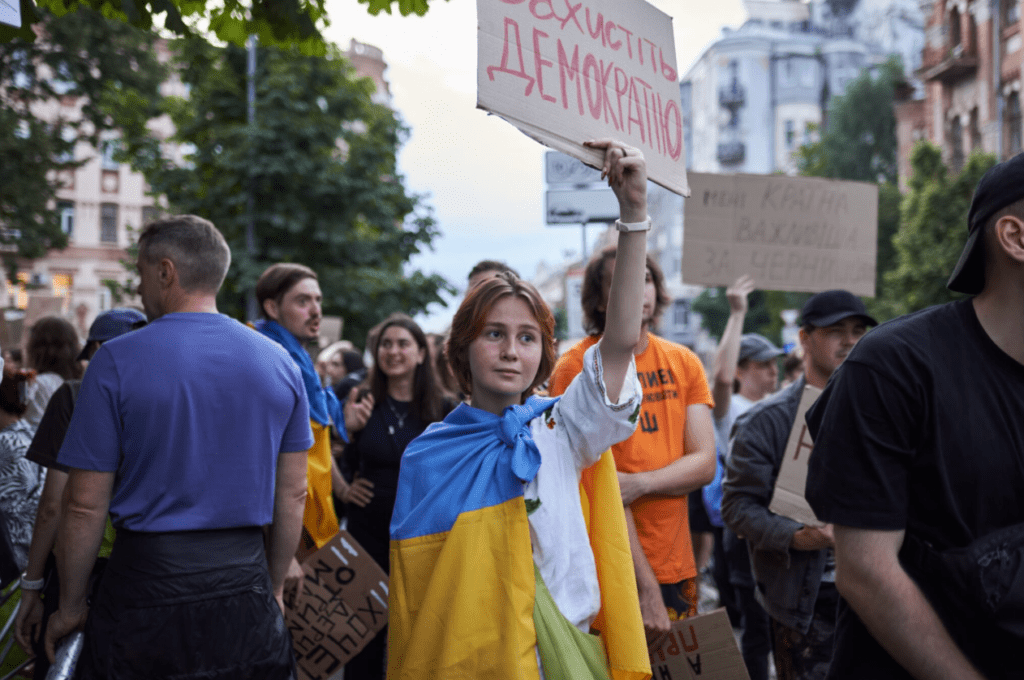
As the central legislative body, the Parliament of Ukraine (Verkhovna Rada) continues to play a formally legitimate and internationally recognized role in the governance system, including during wartime. Neither Ukraine’s international partners nor external actors have questioned the legal legitimacy of the Verkhovna Rada as an institution. However, the wartime context has altered the functioning of parliamentary democracy in ways that raise concerns about public trust, institutional balance, and the quality of democratic governance.
While certain legislative initiatives have been postponed due to security constraints and the prioritization of wartime governance, this delay in itself does not undermine the Parliament’s legitimacy. Rather, the more significant challenge lies in the reduced scope for substantive parliamentary debate, limited opportunities for opposition influence, and the broader concentration of decision-making power within the executive branch.
One of the sources for legitimacy and social cohesion during the war and after the end of hostilities is the “from the bottom up” model of democracy. Surveys conducted by the Razumkov Center show that trust in local authorities is usually 2-3 positions higher than trust in Parliament/Government. It is the communities that are the first to respond to attacks, accommodate internally displaced people, and restore critical infrastructure. Decentralization allows for flexible management of resources rather than waiting for directives from above. However, the decentralization reform has largely stalled due to the war, as security concerns and emergency governance understandably shifted priorities toward centralization. Looking ahead, the second stage of decentralization will be critical for Ukraine’s recovery and EU integration and will require substantial Western support. Strengthening the institution of prefects, clarifying center–region relations, and empowering regions with both resources and accountability mechanisms represent a serious and complex reform agenda with long-term implications for state capacity and resilience.
A critical challenge will be managing the transition from wartime governance to democratic normalcy. The longer elections and institutional renewal are postponed, the higher the risk of political fragmentation, declining trust, and contestation of legitimacy once a ceasefire is reached. Preparing legal, administrative, and political roadmaps for post-war elections and institutional renewal in advance will be essential to ensure a rapid democratic rebound rather than a prolonged legitimacy vacuum. The Central Election Commission of Ukraine faces significant challenges, which mainly lies in realizing the right of certain groups of citizens to participate in elections. As of 2025, an estimated 3.7–3.8 million people are internally displaced within Ukraine, and around 6.9–7.0 million Ukrainian refugees remain abroad. Together these groups constitute roughly 26–27% of Ukraine’s pre-war population – a substantial proportion that the Central Election Commission would need to account for in securing electoral participation and administering voting rights across displaced populations. Furthermore, the lack of accurate and up-to-date data on the actual place of residence of displaced populations presents an additional challenge for the Central Election Commission, which must already begin addressing this issue to ensure the efficient allocation of funds and resources and the creation of safe and accessible conditions for future elections. The country also lacks a legislative basis for post-ceasefire elections that would address territorial and electoral district changes, the participation of active military personnel, and voting arrangements for internally displaced persons and citizens abroad.
According to UN estimates, Ukraine’s population has declined by 10 million, or about a quarter, since February 2022. Labor shortages and brain drain risks limiting the pace of reconstruction, especially in industry, infrastructure, medicine, and education. The World Bank points out that the lack of human capital is one of the key risks to Ukraine's post-war recovery and development. One of the main problems is the narrowing tax base, which means lower budget revenues amid rising expenditures on defense, social services, and debt servicing. Post-war investment will only be feasible if there is strong human capital. Moreover, supporting employment, reintegration, and human capital policies represents fewer costs than covering chronic budget deficits in the future.
The IMF and the EU directly link Ukraine's medium-term fiscal and debt sustainability to the return of the working-age population and productivity growth. Successful EU and IOM practices are already being implemented to support programs for the voluntary return of Ukrainians from abroad and their reintegration in Ukraine. For instance, the joint initiative Skills4Recovery (a retraining program targeting sectors with labor shortages) is funded by the EU, Germany, Poland, and Estonia. One promising idea for the future is to link part of the EU's macro-financial assistance to employment rates, population return, and the participation of women and veterans in the labor market. Strengthening Ukraine's human capital will help reduce the risks of Ukraine's continued economic dependence on donor aid.
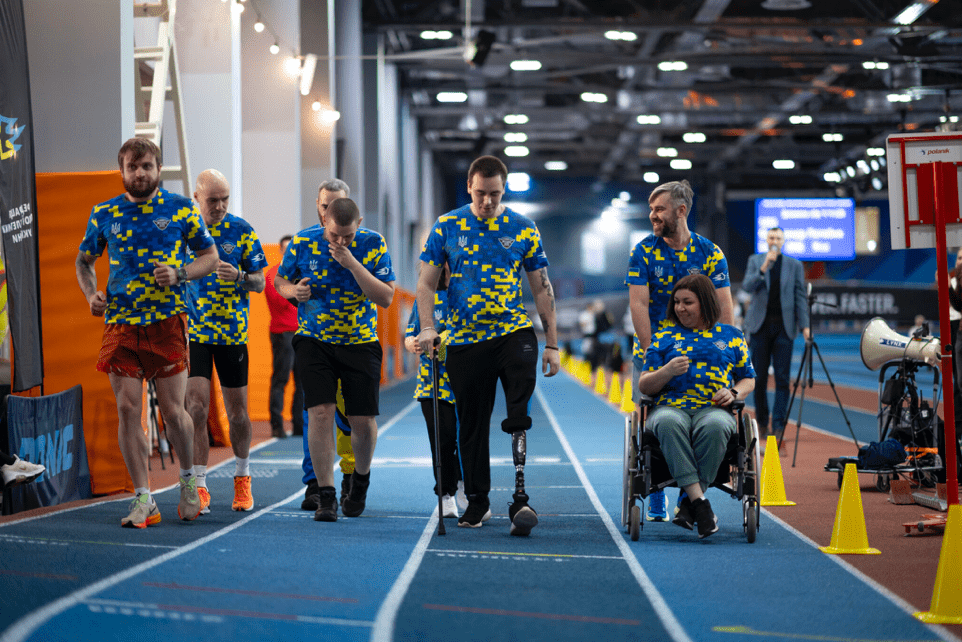
As of 2025, the Ukrainian armed forces number approximately 880,000 soldiers. The question of their reintegration into society will become even more acute after the end of hostilities. After completing their service, the employment of military personnel is a key factor in ensuring social stability. Without effective integration into society, veterans face the risks of isolation, psychological problems, and social tension.63.3% of veterans consider returning to work a difficult process, and as of May 2025, 41.3% of veterans have not returned to their previous jobs. The main reasons include the physical and psychological impact of war (36.3%), the mismatch between the civilian market and veterans' skills (25.5%), and discrimination and stigmatization (23.3%).
The surveyed military personnel who have returned to civilian life mention a number of tools that can facilitate their integration into society. Accessible jobs are a tool favored by 46.8% of the veterans. In Ukraine, support for veteran entrepreneurship is growing not only through state programs, such as the Ukrainian Veterans Fund, which has invested approximately $16 million in veteran-owned businesses since 2022. The EU, in partnership with IOM and the Ministry of Veterans Affairs, runs programs combining business training, mentorship, and grants to support the development of veteran enterprises. At the same time, commercial banks like UKRSIBBANK, in cooperation with the EBRD, offer loans with partial compensation, enabling veterans to purchase equipment or technologies to expand their businesses. These support mechanisms promote the economic reintegration of veterans, foster a vibrant civilian business environment, and strengthen civil society in Ukraine.
One of the ways to improve reintegration strategies is through the transfer of know-how on veteran employment policies from Western countries. For instance, the U.S. offers tax credits for employers who hire veterans while the UK evaluates companies based on fair treatment of veterans. Another tool for integrating military personnel is professional retraining. In this regard, Ukraine needs funding for retraining programs similar to the model of EU skills & reskilling programs to ensure rapid integration of veterans into civilian sectors. Other tools in demand are psychological support and integration programs for people with disabilities. With the Western assistance, Ukraine should also seek to build a system where psychological assistance is available at the community and family medicine level. An example of such an initiative is the Mental Health Gap Action Programme, which trains non-specialists in primary psychological care with the support of WHO. Another example is the Swiss-funded “Mental Health for Ukraine” project and USAID's active support for the First Lady's “How are you?” initiative. The idea of creating Veteran Development Centers based on the U.S. model, where psychological support is integrated with career counseling. Ukraine needs not only prostheses themselves, but also transfer of technology (localization of bionic prosthesis production in Ukraine) and funding for training programs for prosthetists and physical therapists. Western donors are already investing in Centers of Excellence in Rehabilitation but these models need to be scaled up to the regions. A successful example of how Western endowments help injured veterans adapt to new realities is the Superhumans Center located in the Lviv region. It is funded with the support of The Howard G. Buffett Foundation (the U.S.) and UNBROKEN – a national rehabilitation center actively supported by the German government (GIZ) and sister cities (e.g., Freiburg).
One of the persistent challenges in wartime governance is the expanding role of the military in political and decision-making processes. In many countries engaged in prolonged war, the armed forces gain significant public trust and visibility, which can translate into increased influence over policy choices and, in some cases, electoral outcomes once the war subsides. This dynamic raises important questions about the appropriate balance between civilian and military roles in future political decision-making. In particular, 19.1% of Ukrainians are ready to vote for Valery Zaluzhny, former Commander-in-Chief of the Armed Forces of Ukraine, and 5.1% – for Kyrylo Budanov, former Chief of the Main Directorate of Intelligence of the Ministry of Defense of Ukraine, if they decide to run for office in the next presidential election.
While the transition of wartime military leaders into politics can follow different trajectories, ranging from stable democratic integration under strong civilian oversight to less desirable outcomes, it underscores the importance of safeguarding civilian control and institutional checks throughout and after the war. Nevertheless, the numbers above clearly demonstrate low public support for military leaders in political office. Ensuring clear boundaries between military authority and political leadership will be critical for preserving democratic governance and supporting Ukraine’s long-term reform and European integration objectives.
Social fragmentation undermines Ukraine's resilience to Russian operations and undermines the role of partners' investments in its development. Since the start of the full-scale invasion, more than 3 million citizens have left Ukraine and not returned. Many of them feel increasingly disconnected from political, social, and economic developments inside the country and, at times, face resentment or stigmatization from those who remained.
At the same time, citizens who stayed in Ukraine continue to live under constant wartime pressure, including missile strikes, drone attacks, prolonged power outages, and broader disruptions to daily life. The divergence between these lived experiences has deepened mutual misunderstandings and reinforced social divides, creating a contrast that complicates national cohesion at a time when unity remains a critical component of Ukraine’s resilience and long-term recovery. Ukraine's partners can encourage Ukrainian refugees to return by investing in creating favorable conditions in Ukraine. Conscription and, thus, defense cannot be effective if 68% of Ukrainian citizens (as of July 2025) do not trust the Territorial Centers of Recruitment and Social Support – key military recruitment institutions across the country.
All these social divisions increase the likelihood of prolonged instability and continue Ukraine's dependence on donor aid, while demographic and labor market pressures further constrain the country’s productive capacity. As a result of the full-scale war and associated migration and mobilization, Ukraine has lost a significant share of its working-age population – estimates suggest around 40% of the pre-war working-age labor force is no longer in the domestic labor market, and a large majority of employers report ongoing staff shortages. Employers across sectors are experiencing gaps that average roughly 15% of their workforce, reflecting both demographic shifts and the challenges of sustaining economic activity with a smaller workforce. Russia is exploiting these social problems to spread psychological operations (PSYOP). Its main goal is to increase the polarization of society, delegitimize Ukraine as a state, and recruit Ukrainians to carry out sabotage. Practical steps by the EU and international organizations should be aimed at supporting the government’s effort to “ease tensions” between different population groups. It is advisable to strengthen support for the rights of internally displaced persons, who numbered approximately 4.6 million as of November 2025. An example of a successful project is the Council of Europe's Internal Displacement in Ukraine: Building Solutions project, which includes psychological, legal, and professional counseling for IDPs. Another effective measure is to support independent media to counter Russian propaganda. Free media literacy courses for Ukrainian citizens could be an additional reinforcement. Western partners, together with Ukraine, can implement joint mechanisms to monitor hate speech and disinformation. This will help consolidate Ukrainian society to effectively counter the enemy and, after the war ends, rebuild effectively. A consolidated Ukrainian society is the key to deterring Russian aggression.
Due to limited resources, Ukraine’s Ministry of Foreign Affairs prioritized Euro-Atlantic partners at the expense of the Global South – a strategy that is unsustainable in a long war. Ukraine has only 11 missions in Africa compared to Russia’s 39; in Asia, Ukraine has 31 missions while Russia has 73; and in Latin America, Ukraine operates 6 embassies versus Russia’s 26. Economic presence in these regions also remains limited. For example, as of 2024, Ukraine’s trade with Africa accounted for only $4 billion while Russia’s at roughly $25 billion.
Global geopolitical competition is intensifying, making it essential to bring African, Asian, and Latin American countries closer to the democratic community. The challenge is that China leads in diplomatic presence and economic cooperation across Africa, East Asia, and the Pacific, while Russia maintains historic ties and remains a large arms supplier, destabilizing the situation in all three regions. To sustain effective support for Ukraine, the EU and the United States should act jointly with Kyiv to prevent a vacuum that Moscow and Beijing would quickly fill.
Low Ukrainian diplomatic presence directly weakens the effectiveness of Western sanctions, as many states facilitate Russia’s evasion due to insufficient coordination with Kyiv. Latin America often serves as a transit hub for sanctions circumvention, while Central Asian countries could play a critical role in closing loopholes. No African country has imposed sanctions on Russia, and in Asia only six states have done so, while all Latin American governments have refrained.
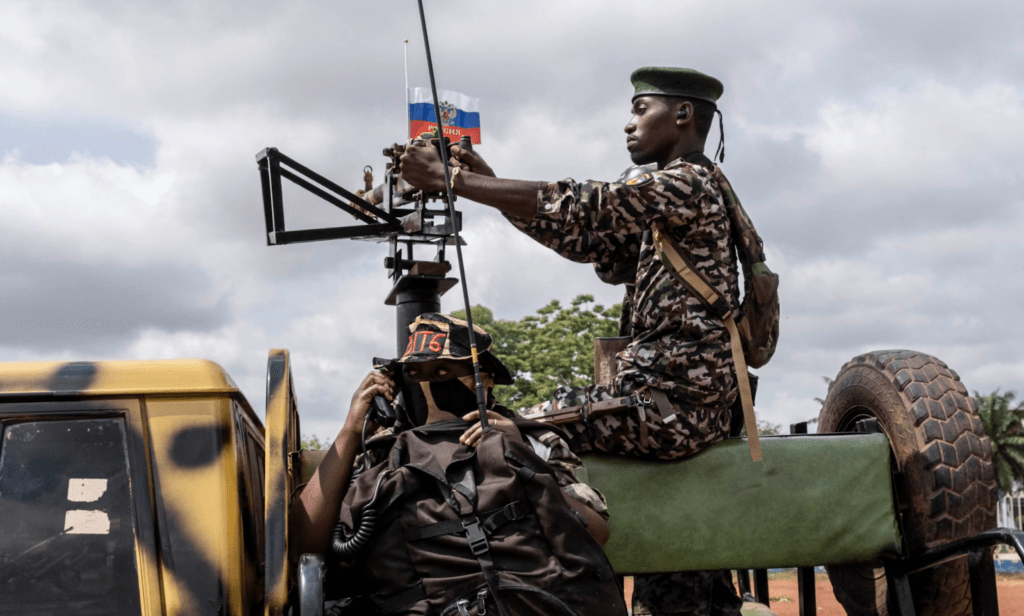
The costs of under-representation for coalition-building are high: limited diplomatic presence correlates with weaker voting outcomes in the UN and regional organisations, where many African, Asian, and Latin American states still avoid condemning Russian aggression. Russia also uses private military companies (Wagner Group/ “Africa Corps”) as instruments of political influence.
There are also significant economic risks for Western partners. Russian and Chinese investments reinforce dependence on Moscow and Beijing, restricting Western access to strategic markets and resources. Latin America, for instance, holds some of the world’s largest copper reserves, 35–40% of global lithium deposits, and substantial nickel and cobalt resources – critical inputs for the defense sector, clean energy transition, and emerging technologies.
Ukraine has effectively set about expanding its representation in the world since the start of the full-scale war. In particular, between 2023 and 2025, the number of Ukrainian diplomatic missions in Africa increased from 10 to 18. In 2023, Ukraine's Communication Strategy on African States was developed, which can serve as a theoretical basis for coordinating efforts with Western partners to expand Ukraine's representation. However, due to a lack of resources, it is difficult for Ukraine to establish long-term relationships and compete with countries that have extensive trade, security, and intelligence networks.
The international isolation of Russia until it stops the unjustified war of aggression against Ukraine should be a common goal of Ukraine and the West. Expanding Ukraine's global presence strengthens democratic narratives and reinforces the international community's efforts to hold Russia accountable for its crimes. For instance, Costa Rica and Guatemala have participó the initiative to establish the Special Tribunal thanks to Ukraine's powerful diplomatic efforts.
To expand Ukraine’s presence, if Western partners should fund operational grants that allow rapid office leasing, local staff hiring, and basic operational capacity. Another tool is secondments, where partners temporarily “loan” experienced diplomats to help new Ukrainian missions operate at a high professional level from day one.
Another effective model for expanding Ukraine's representation is to use existing EU infrastructure or create joint regional hubs in key locations such as Lima or Brasilia for Latin America, Cape Town or Nairobi for Africa, and Singapore or New Delhi for Asia. The European Union already applies similar approaches through EU Delegations accredited to multiple countries, regional trade and innovation hubs, and co-located diplomatic missions operated by groups of member states, particularly in regions where maintaining full embassies is costly or operationally challenging.

Building on this experience, Ukraine, together with willing EU partners, could pilot a small number of jointly funded regional offices embedded within EU Delegations or operating alongside them. These hubs would not replace national embassies but would function as multifunctional platforms covering several neighboring countries simultaneously. Their core mandate could include political outreach and strategic communication, trade and investment promotion (including reconstruction-related engagement), coordination with civil society and think tanks, support for Ukrainian businesses and digital solutions abroad, and cooperation on countering disinformation and authoritarian influence.
A concrete implementation plan could begin with a feasibility assessment jointly conducted by Ukraine’s Ministry of Foreign Affairs and the European External Action Service, identifying priority regions, legal frameworks for co-location, and funding mechanisms. This could be followed by a pilot phase establishing one or two regional hubs with clearly defined mandates, limited staffing, and shared logistical support. If successful, the model could be gradually expanded, offering a cost-efficient way to strengthen Ukraine’s global presence, enhance coordination with EU external action, and increase visibility and influence in strategically important regions without overstretching Ukraine’s diplomatic capacity.
Now is the right moment to advance Western presence in regions where Russian influence is eroding. Moscow’s presence on the African continent has weakened, particularly after the collapse of the Assad regime in Syria. Because of its invasion of Ukraine, Russia has been forced to close 14 diplomatic posts abroad, while 16 foreign missions have closed within Russia. At the 2019 Russia-Africa Summit, Moscow gathered 45 heads of state and government; by 2023, participation had dropped by half. This thinning of Russia’s diplomatic connections will increasingly constrain its ability to advance its global interests.Russia is also largely invisible in key economic sectors due to capacity constraints: as of 2025, its trade with Africa stands at only around $30 billion – significantly lower than that of India or Turkey. Instead of economic influence, Russia relies on the Wagner Group, propaganda networks, and arms transfers to replace Western presence where it has weakened. After France ended Operation Barkhane in the Sahel in 2022, countries such as Burkina Faso, Mali, and Niger effectively shifted into Russia’s sphere of influence, even though Moscow’s limited economic power continues to restrain its long-term ambitions.
Africa
Africa is strategically important due to its 30% share of the world’s mineral reserves. The continent holds 54 votes in the UN, which is critical in the context of China’s growing assertiveness, including the risk of a Taiwan crisis by 2027, and intensifying U.S.-China rivalry. The West should support democratic movements resisting Russian and Chinese influence, as this enables African states to articulate independent positions internationally. Russia is expanding its influence in Africa by exploiting political instability in some countries, while China is luring them into a “debt trap.” The problem for the US in Africa remains the unevenness of trade relations due to limited diversification and trade deficits.
Since Soviet times, Russia has had a developed diplomatic network in Africa, Latin America, and Asia, spreading its narratives there through RT/Sputnik media. In recent years, these networks have been used to amplify Russian messaging around the war against Ukraine, particularly in regions already affected by economic fragility and political instability. Russia’s invasion of Ukraine has had indirect but significant spillover effects on food security and inflation in parts of Africa, especially in the Sahel, exacerbating existing vulnerabilities. These dynamics have created a more permissive environment for Russian influence operations, as economic and political pressures increase receptiveness to alternative narratives. Addressing food security and governance challenges in affected regions therefore has broader strategic relevance, as it can help reduce the effectiveness of external information influence and contribute to a more balanced international understanding of the war in Ukraine. Ukraine is already providing food aid to the continent, with Kyiv supplying nearly 300,000 tons of food through the WFP with funding from the EU and the US. As a result of joint efforts, 8 million people in 12 African countries have received aid from Ukraine, including support for Malian refugees in the Mbera camp in Mauritania.
Russia uses anti-colonial narratives to rally African partners and avoid diplomatic isolation. Ukraine and its allies should counter disinformation by supporting local media platforms and exposing Russia’s recruitment of Africans for the war and its attacks on Black Sea ports that drove up global food prices. Another way to facilitate the development of Ukrainian-African relations is to finance Ukraine-Africa summits, inviting both government officials and members of civil society. Solutions in e-governance, cybersecurity, and digital services represent another potential area of cooperation as Ukraine can export the know-how and provide training on the integration of such services into governance. governments have already engaged with Ukrainian digital transformation models: Ethiopia and Zanzibar (Tanzania) have begun creating their own state applications based on the Ukrainian Diia platform, adapting its approach to local needs. More recently, the Ministry of Digital Transformation of Ukraine and the Ukrainian Embassy conducted an online presentation of Diia for counterparts in Nigeria, highlighting the platform’s features and its potential applicability in the Nigerian context. In May 2025, Ukrainian GovTech firm Kitsoft signed a memorandum of understanding with the Pan-African Postal Union (PAPU) to support digital transformation of postal services in member countries, illustrating growing regional interest in Ukrainian digital expertise. Ukraine’s GovTech ecosystem is also being showcased globally through platforms such as Digital State UA, designed to promote Ukrainian digital innovations and facilitate collaboration with international governments and investors. These developments suggest that Ukrainian e-governance and digital services offer tangible value not only for domestic modernization but also as international cooperation tools, supporting capacity building in partner countries, enhancing global digital governance networks, and creating new opportunities for economic and technological engagement.
One of the most powerful levers of influence that Russia uses in Africa is the Wagner Group and weapons export. For example, 73% of Algeria's weapons in 2018–2022 came from Russia. In this case, Ukraine, together with the U.S. and the EU, can offer an alternative to cooperation with Russia by initiating dialogues on security issues in centres such as Nairobi and Cape Town. Cooperation could include training in policing, logistics and crisis response. Given its experience in warfare, Ukraine could become an alternative partner for Africa in the field of defense, particularly in arms exports. In particular, Ukraine possesses developed drone technology, including maritime and underwater drones, for both civilian and defense use. The priority areas for defense cooperation could be the modernization of Soviet-era equipment, personnel training, and drone-related technologies. Ukrainian instructors are already providing military training to Mauritania amid its tensions with Mali, where Moscow supports government forces.
Belarus is currently attempting to establish a joint project with Algeria and Oman to produce complex NPK fertilizers, promoting Russia's narrative of a “fair multipolar world order” and condemning “Western colonialism.” Russia completely covers Algeria's grain needs. In response, Ukraine plans to expand fertiliser exports to Africa and the Middle East via a logistics hub in South Africa and can supply potassium chloride currently imported mainly from Russia and Belarus. Ukraine is also increasing its metallurgy exports. Joint transparency programmes for natural resources can reduce corruption channels through which Russia and China entrench themselves. Ukraine can offer technological expertise in extraction, transport, and processing of energy resources, while the EU can invest in climate-related projects that address environmental impacts of China’s economic practices.
Latin America
Beijing is now the second-largest trading partner of South America while Russian propaganda, long-standing economic ties, and a strong leftist political current amplify Moscow’s influence. China is the largest export market for Brazil, Chile, and Peru and the second largest for Argentina, Costa Rica, and Cuba, and has recently signed a Belt and Road cooperation plan with Colombia, further strengthening its role in the region’s trade and development landscape. Ukraine and its partners must coordinate efforts with local journalists, experts, and civil society actors, and expand joint student exchanges with the U.S. and the EU to promote democratic values, particularly as Cuba and Nicaragua remain under non-democratic leaders supported by Russia.
Against this backdrop, Ukraine could share with Latin American partners its unique wartime experience in resilience, including in defence and technological domains. The key priority is to engage the region’s principal players – Brazil, Argentina, and Mexico – and bring them closer to the Western side.
Asia
Many Asian states remain economically and technologically dependent on China through BRI infrastructure, ports, digital systems, and 5G technologies. Russia continues exporting arms and energy to the region and promoting narratives about Western “double standards” in the war against Ukraine. Integrating Ukraine into dialogues with ASEAN and Indo-Pacific initiatives, focusing on maritime security, air defence, and counter-drone and counter-missile capabilities, can offer Asian states practical alternatives to Russian weapons and training programmes. For example, according to Taras Kachka, Deputy Prime Minister for European and Euro-Atlantic Integration of Ukraine, Malaysia could become a gateway to ASEAN markets for Ukraine’s drone technologies, as the military cooperation between two countries has intensified over the last years. Asian governments should also be provided with options to avoid elements of China’s debt-trap diplomacy through Western investment packages for transport, port, and digital infrastructure implemented under transparent conditions. Japan’s recent decision to decline the EU’s proposal to join the plan on using frozen Russian assets for Ukraine illustrates the urgency of strengthening Ukraine-focused engagement and lobbying efforts in the region.
From a global perspective and in the current environment of U.S.–Russia–Ukraine negotiations, the EU and Ukraine should share a joint vision for the future, with Ukraine serving as Europe’s forward defense buffer. The mutual benefit is clear – the EU strengthens its security architecture and deterrence capacity, while Ukraine gains long-term security guarantees, accelerated integration, and a credible pathway toward sustained political and economic stability.
Ukraine has accumulated unparalleled experience in conducting modern, high-intensity warfare against what was long considered the world’s “second-strongest army.” Since 2022, Ukrainian forces have operated under conditions of sustained numerical and material inferiority, compensating for this imbalance through operational adaptability, technological innovation, and external military support. As of 2025, Ukraine’s Armed Forces number approximately 880,000 personnel, compared to around 1.13 million in the Russian military, making Russia’s force roughly 1.3 times larger in manpower. While this difference may appear relatively limited in absolute terms, it obscures a critical asymmetry: Russia retains significant mobilization reserves and strategic depth, whereas Ukraine’s manpower pool is far more constrained. This asymmetry reinforces the structural challenges Ukraine faces rather than suggesting parity between the two forces.
The imbalance is more pronounced in heavy equipment. Russia maintains a vastly larger inventory of tanks and armored vehicles, with tens of thousands of systems in active service and storage. As of 2025, Russia operates the largest tank fleet in Europe of 5,750 tanks while Ukraine fields approximately 1,114 tanks, even after accounting for sustained Western military assistance. Similar disparities exist in other categories of armored vehicles, artillery systems, and long-range strike capabilities. Without NATO-supplied platforms and ammunition, Ukraine would be unable to compensate for these quantitative gaps through domestic production alone.
Despite these constraints, Ukraine has demonstrated a high degree of operational innovation, leveraging precision strike capabilities, unmanned systems, intelligence integration, and asymmetric tactics to offset Russia’s numerical superiority. Ukrainian forces have conducted sustained deep-strike operations against Russian military infrastructure, including oil refineries, ammunition depots, logistics hubs, and airfields, degrading Russia’s long-term war-fighting capacity rather than seeking direct force-on-force parity. This experience positions Ukraine as a uniquely valuable source of operational knowledge on contemporary high-intensity warfare against a materially superior adversary.
Ukraine is not just a recipient of aid, but a source of ready-made, scalable military solutions that can become part of Europe's defense industry. While at the beginning of the invasion the country had only one prototype of the domestic Bogdan howitzer, by 2024 Ukraine had produced more artillery guns than all NATO countries combined. Ukraine is innovative in the development, application, and scaling of various types of weapons. In 2024, a class of “missile drones” was developed, particularly, Palyanytsia, Peklo, Ruta, and Bars. The production of towed artillery is cheaper, simpler, and therefore faster compared to self-propelled installations. If a truck breaks down, it can be replaced. Such artillery systems are stable, which reduces the level of danger for their crews.
Ukraine has become a leading innovator in the combat use of ground-based robotic systems, using unmanned ground vehicles (UGVs) for logistics, reconnaissance, demining, and fire support. In 2024, Ukraine saw the emergence of 324 new codified developments, such as the Long Neptune rocket drone. Production began on 155 mm artillery shells and 60 mm NATO-standard mines.
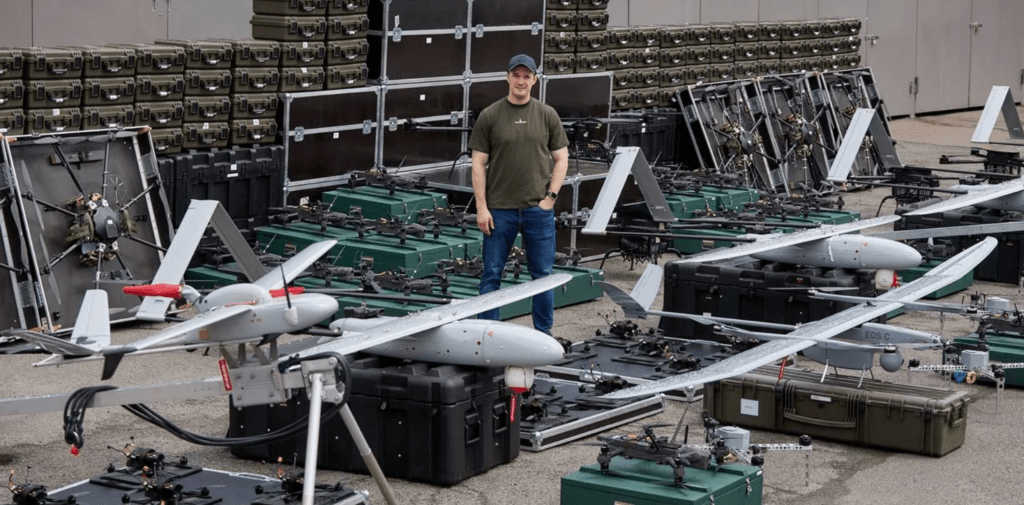
Investing in Ukrainian battle-tested solutions is economically and strategically beneficial for the EU and NATO: it allows them to integrate proven technologies into European production chains without years of costly R&D cycles. The cost of manufacturing and repairing weapons in Ukraine is significantly lower than in EU countries, while the speed of adaptation to changes on the battlefield is significantly higher. Ukraine will be able to quickly master its own defense industry and reduce its dependence on imports of critical systems. For partners, this will mean a reduction in the burden on overloaded European production lines, diversification of supplies, and access to technologies that have already been optimized against Russian tactics.Ukraine and the EU companies are actively exploring opportunities for establishing joint ventures and localizing European production on the Ukrainian territory while transferring Ukrainian technology for production abroad. For instance, in February 2024, Rheinmetall and a Ukrainian partner signed a memorandum to establish a joint venture for the production of ammunition in Ukraine. They plan to produce six-digit quantities of 155 mm artillery shells and powder charges annually. Rheinmetall and Ukraine's state-owned enterprise Ukrainian Defense Industry JSC have also established a joint venture in Kyiv to repair armored vehicles with a view to localizing production. Such joint production formats reduce the burden on overloaded European factories, reduce logistical risks, and strengthen sustainable defense supply chains within the politically reliable space of the EU and NATO.
The Russian-Ukrainian war has become a testing ground for many types of weapons, providing NATO countries with valuable experience in their use in real combat conditions. Ukraine's ability to rapidly deploy innovative technologies and integrate them into traditional combat operations is fundamental to its ability to counter Russia's conventional military advantages in armored vehicles, artillery, and manpower, as well as in the cyber and hybrid domains. Ukraine has the most valuable experience in the field of unmanned systems, electronic warfare, and reconnaissance. The rapid cycle of innovation in Ukraine (UAVs, UAV countermeasures, artificial intelligence, laser weapons) allows allies to adapt their own armies more quickly, reduce testing costs, and increase the effectiveness of defense innovations without direct involvement in the war. With the growing operational significance of Emerging and Disruptive Technologies (EDT), the potential for mutually beneficial exchange of technological developments and best practices between NATO and Ukraine is also growing. Operational data-sharing and innovation exchange, joint testing, and R&D cooperation with Ukraine significantly reduce NATO’s R&D risks and costs, shorten the “prototype-to-production” cycle, and allow systems to be designed from the outset in full compatibility with NATO standards.
Ukraine as Europe’s forward defense buffer should be understood as a shared security project, embedded in EU integration, democratic reform, and economic convergence. Beyond its military dimension, this role directly affects the stability of the EU’s eastern flank and the Union’s ability to prevent the emergence of persistent “grey-zone” instability in its immediate neighborhood. Weak governance, insufficient accountability, or excessive accommodation of the aggressor would create openings for Russia’s hybrid operations, particularly in frontline areas and temporarily occupied territories.
As the country is currently undergoing immense challenges – from nationwide electricity blackouts, continued missile and drone attacks to severe fiscal constraints and mounting societal fatigue, sustaining this role requires not only military support, but also long-term political commitment, institutional reform, and targeted economic assistance from the EU. At the same time, the scale of wartime expenditures and international assistance makes a stricter system of accountability essential. Clear conditionality, independent oversight mechanisms, and robust parliamentary and civil society monitoring are necessary to ensure that emergency governance measures do not erode democratic standards or institutional resilience.
From a broader European security perspective, proposals that prioritize short-term de-escalation through territorial concessions risk producing the opposite effect. The creation of uncontrolled or weakly governed zones would likely serve as platforms for renewed military pressure, hybrid interference, and future escalation, rather than durable stability. Moreover, precedents established in one region would almost certainly be replicated elsewhere, increasing long-term risks for both Ukraine and the EU. Preventing grey-zone instability thus requires a comprehensive approach that links security assistance with governance reform, accountability, and sustained engagement in Ukraine’s recovery and integration trajectory.
Western partners should approach support for Ukraine as a dual challenge: sustaining immediate wartime survival while safeguarding long-term democratic resilience. This requires conditional financial aid, strategic investment in human and institutional capital, enhanced global representation, and structured reconstruction planning that empowers local communities. By combining security, governance, and development support, the West can help Ukraine endure the war, prevent democratic erosion, and lay the foundations for a sustainable, independent, and European-aligned future.
3. Shared Democratic Interests and Mutual Benefit
The views, thoughts, and opinions expressed in the papers published on this site belong solely to the authors and not necessarily to the Transatlantic Dialogue Center, its committees, or its affiliated organizations. The papers are intended to stimulate dialogue and discussion and do not represent official policy positions of the Transatlantic Dialogue Center or any other organizations with which the authors may be associated.
This publication was compiled with the support of the International Renaissance Foundation. It’s content is the exclusive responsibility of the authors and does not necessarily reflect the views of the International Renaissance Foundation.