

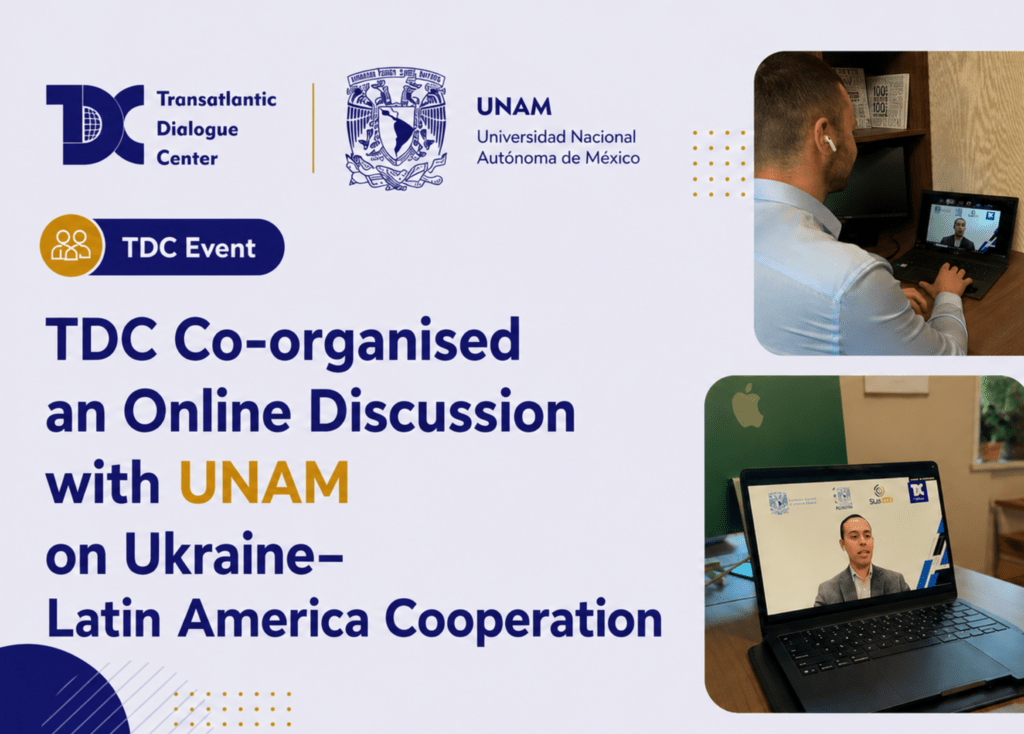
El 7 de mayo, el Transatlantic Dialogue Center (TDC) coorganizó, junto con la Universidad Nacional Autónoma de México (UNAM), una charla académica pública titulada «Relaciones Ucrania-América Latina en las relaciones internacionales contemporáneas: potencial político, económico y diplomático».
La conferencia fue impartida por Oleksandr Slyvchuk, Coordinador del Programa de Cooperación para España y Latinoamérica del TDC, con comentarios de José Joel Peña Llanes, Profesor de tiempo completo de la Facultad de Estudios Superiores Acatlán de la UNAM. La discusión reunió a estudiantes de Relaciones Internacionales, principalmente de la UNAM, así como de otras universidades, académicos y colegas de centros de pensamiento para un intercambio sobre la cooperación entre Ucrania y América Latina y sus perspectivas.
Entre los puntos clave abordados durante la charla figuraron:
- las fortalezas y limitaciones de la cooperación entre Ucrania y América Latina: valores democráticos compartidos y una visión similar del orden internacional, pero una atención históricamente limitada, una presencia diplomática modesta y bajos volúmenes comerciales;
- cómo el interés mutuo entre Ucrania y América Latina ha aumentado considerablemente desde 2022 como consecuencia de la invasión rusa a gran escala;
- el cambiante entorno informativo: si bien la desinformación pro-Kremlin fue más visible a comienzos de 2022, el espacio para la propaganda se ha reducido con el tiempo, la simpatía hacia Ucrania ha crecido y narrativas como la de los «nazis en Ucrania» se han vuelto cada vez más marginales;
- un desafío persistente en la región: las percepciones de Estados Unidos y la OTAN como antagonistas, así como la necesidad de explicar claramente que Rusia no se está «defendiendo de la OTAN» al atacar a Ucrania, y que la afirmación de que la expansión de la OTAN «provocó» la guerra es un mito;
- la importancia de desmontar otro malentendido arraigado: Rusia no es defensora de las ideas de «izquierda» ni de los grupos vulnerables; esta narrativa está arraigada en los marcos interpretativos de la época soviética, mientras que hoy Rusia promueve posiciones de extrema derecha y revisionistas, y viola sistemáticamente el derecho internacional;
- una conclusión alentadora: la comunidad académica mexicana interpreta en gran medida correctamente la guerra ruso-ucraniana, incluida como una violación del derecho internacional, aunque la neutralidad histórica de México sigue configurando una participación cautelosa en algunas iniciativas internacionales relacionadas con la guerra;
- el considerable potencial no aprovechado de la cooperación entre Ucrania y México, especialmente en los ámbitos académico y mediático: el fuerte interés de la UNAM en colaborar con contrapartes ucranianas señala próximos pasos concretos, incluidos intercambios, conferencias conjuntas, paneles, debates y una cooperación más profunda que ayude a superar la brecha previa en el compromiso sostenido.
Agradecemos a la UNAM y a todos los participantes por una discusión activa y sustantiva. Como coorganizador de este intercambio, el TDC espera seguir desarrollando la cooperación entre las comunidades académicas y expertas de Ucrania y México.