

In an exclusive article for The National Interest, Maksym Skrypchenko, President of Transatlantic Dialogue Center, discusses the dual challenge Ukraine faces in its defense against Russia. As the war continues, Skrypchenko argues that Ukraine must balance the immediate need for affordable, mass-produced weapons with the longer-term goal of building a qualitative military edge that can deter Russia in the years ahead.
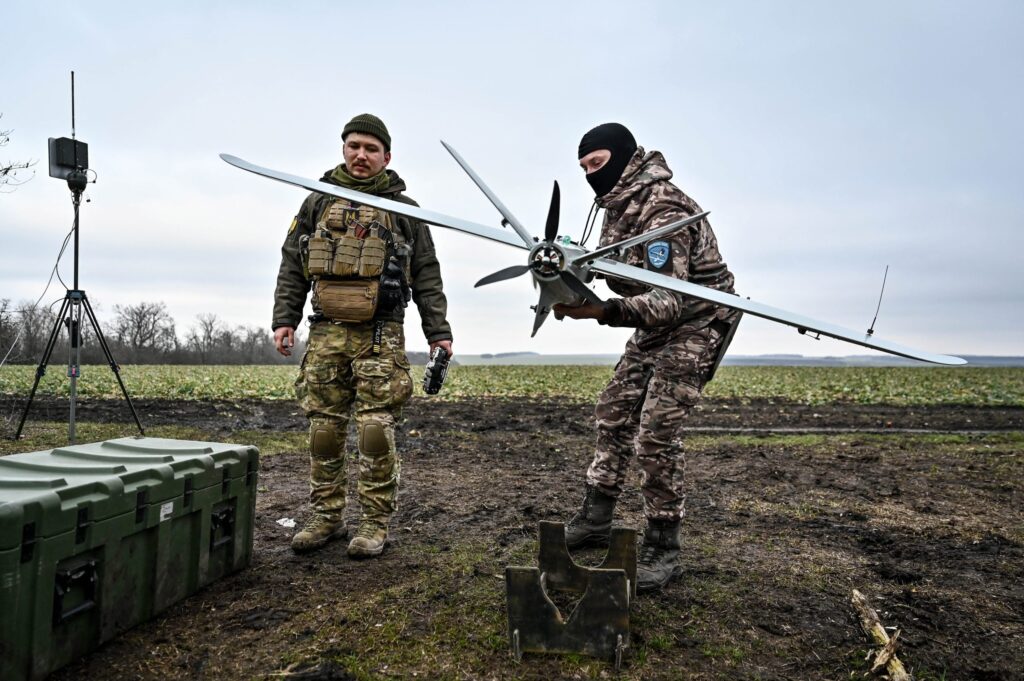
He stresses that the pace of technological innovation on the battlefield has drastically accelerated, with the life cycle of military gadgets shrinking from a season to just weeks. The key to Ukraine’s success, according to Skrypchenko, is adapting to this new pace, emphasizing cost-effective solutions such as drones and smart automation, while ensuring continuous upgrades to maintain a qualitative advantage.
Drawing parallels with the U.S.-Israel relationship, Skrypchenko proposes that Ukraine and its allies create an Allied Qualitative Military Edge (QME), a model that combines industrial-scale production with strategic innovation. The U.S.-Israel QME, developed after Israel’s wars in the 1960s and 1970s, allowed Israel to overcome larger adversaries by leveraging joint development, rapid upgrades, and access to advanced systems.

For Ukraine, an institutionalized QME could do three crucial things:
- Anchor this cooperation in a political commitment that outlasts electoral cycles, ensuring the consistency of long-term support.
- Guarantee timely supply by aligning US and European production with Ukraine’s needs, including co-production in Ukraine.
- Ensure that Ukraine’s qualitative edge remains fresh by funding periodic upgrades in key technologies like sensors and counter-drone systems.
Ukraine and its allies must invest in both mass-producing affordable solutions for today’s battlefield and developing high-tech systems that will enhance defense affordability in the future. This approach will ensure that Ukraine remains resilient in the face of aggression, regardless of the changing dynamics of warfare.
To make this vision a reality, the United States and Europe should support Ukraine’s QME as a foundational strategy. By framing it as a transatlantic compact, the US can provide essential technologies and joint testing, while Europe and Ukraine handle the bulk of funding and co-production. Measurable targets will ensure the partnership remains effective, with clear goals such as monthly drone output and interceptor replenishment rates.
Skrypchenko argues that the battle ahead will not be decided by sheer mass, but by the ability to sustain and innovate. By combining mass production of effective solutions with long-term investments in high-tech systems, Ukraine and its allies can win the contest for strategic advantage, ultimately ensuring that short-term aid evolves into long-term deterrence.
Read the full article via the link.