

The Transatlantic Dialogue Center welcomed Camila Romano, an International Relations student в Universidad de San Pablo —Tucumán and Executive Director of the NGO Rise Up Tucumán, as part of a study-driven visit aimed at building a more accurate, human-centered understanding of Ukraine in Argentina.
Camila was among the Argentine students who won Model European Union 2025 and took part in a study trip to Brussels to learn how EU institutions work. After Brussels, she traveled to Ukraine to move beyond headlines and “geopolitics-only” narratives — focusing instead on daily life, social resilience, and public attitudes under full-scale war.
Throughout her visit, Camila consistently explored questions that shape how societies endure prolonged conflict: how “normal life” continues despite air alerts and curfews; how civilians manage risk and adapt psychologically over time; how displacement and return patterns differ across regions; and how Ukrainians understand “real peace,” security guarantees, and the risks of territorial concessions. A separate focus was the role of disinformation and propaganda — how narratives travel internationally, what distortions Ukrainians consider most damaging, and why information integrity matters for public resilience. She also looked at the practical realities of democratic governance under wartime constraints, including elections, legitimacy, institutional continuity, and the impact of mobilization and displacement.
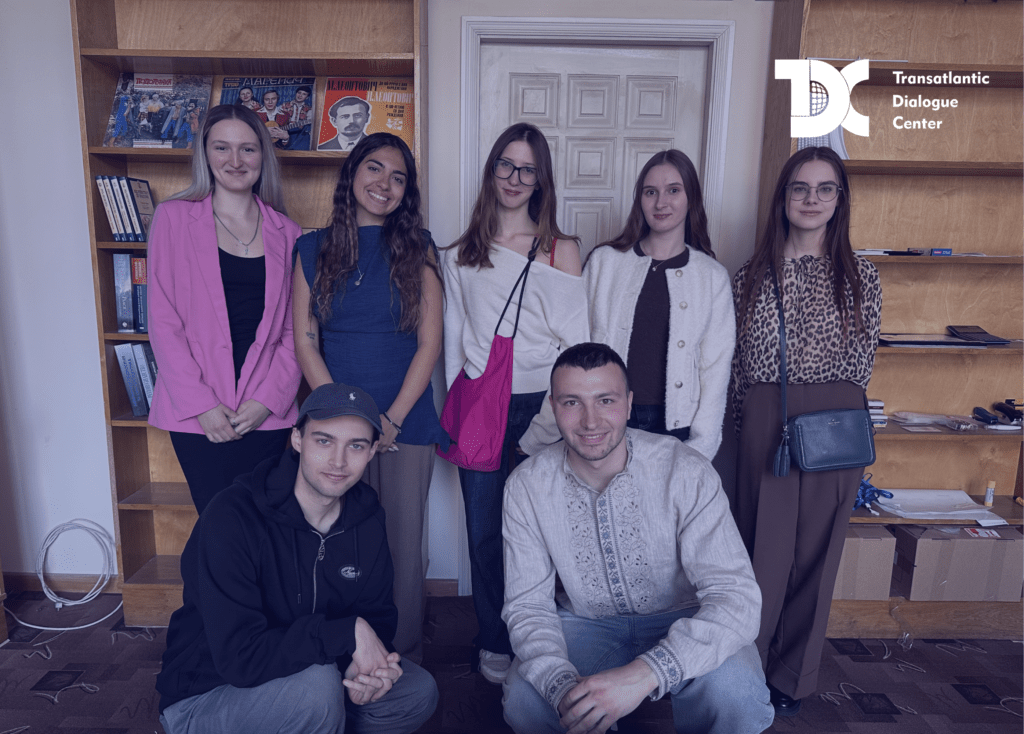
A central element of Camila’s agenda was a peer-to-peer meeting with students of the Educational and Scientific Institute of International Relations (Taras Shevchenko National University of Kyiv). Framed as an exchange between young IR communities in Ukraine and Argentina, the discussion translated “war” into lived experience: studying, planning a future, and making daily decisions under risk. It also created space for grounded conversations on peace scenarios, the narratives that resonate abroad, and how Ukrainians respond to information warfare — linking public attitudes to real security realities rather than slogans.
To document these perspectives in a credible and accessible way for Argentine audiences, Camila also conducted short interviews with several students, prioritizing first-person voices and everyday observations.