

 14 min di lettura

China’s growing international influence has raised questions about the consistency between its diplomatic discourse and its actual practices. Beijing tends to frame its foreign policy around principles such as non-interference in the internal affairs of states, respect for national sovereignty, and the pursuit of negotiated solutions. Russia’s war against Ukraine is one of the most relevant cases for examining the tensions between these principles and the preservation of China’s strategic relationships.
In February 2023, Beijing presented a 12-point peace proposal that sought to promote a political solution to the conflict and strengthen its image as a mediating actor. However, the proposal avoided explicitly identifying Russia as the aggressor, did not call for the withdrawal of Russian troops from occupied territories, and maintained an ambiguous position regarding the responsibilities of the parties involved. At the same time, China has continued to strengthen its economic and diplomatic ties with Moscow. The increase in bilateral trade and energy cooperation has raised questions about the extent to which Beijing maintains a genuinely neutral position on the war.
In this context, the concept of strategic silence takes on particular relevance. Rather than simply representing an absence of positioning, this silence operates through selective omissions, narrative framing, and practical decisions that signal preferences without explicitly stating them. From this perspective, diplomatic ambiguity is not a sign of passivity, but a deliberate instrument for preserving room for maneuver. Yet the preservation of strategic relations with Russia does not imply an unconditional commitment: negotiations over gas supplies and infrastructure also reveal Beijing’s determination to secure favorable commercial terms and limit the costs of excessive alignment.
Against this backdrop, this article examines how China combines its mediation discourse with practical cooperation with Russia, and where its own interests set limits on that partnership. It traces the evolution of China’s diplomatic principles, analyzes its peace proposal and diplomatic engagement with the Global South, and examines Sino-Russian trade and gas negotiations. The aim is to understand how diplomatic ambiguity enables Beijing to preserve its relationship with Moscow while retaining the freedom to determine the extent and terms of its commitments.
Following the founding of the People’s Republic of China in 1949, foreign policy was influenced by three ideational components: communism, nationalism, and pragmatism, whose relative presence shifted over time. In its early decades, the People’s Republic adopted a confrontational foreign policy—first allied with the Soviet Union, then opposing both superpowers—aimed at breaking with the so-called “century of humiliation” and consolidating its sovereignty against the imperial powers that had subjugated the country since the 19th century.
Against this historical backdrop, one of the most consistent pillars of Chinese foreign policy has been the principle of non-intervention in the internal affairs of other states. It was formalized in 1954 through the Five Principles of Peaceful Coexistence, first formulated in a treaty between China and India, which subsequently became an ideological foundation of the Non-Aligned Movement and a central framework of Chinese foreign policy. The five principles are: mutual respect for sovereignty and territorial integrity, mutual non-aggression, non-interference in each other’s internal affairs, equality and mutual benefit, and peaceful coexistence.
Within this framework, Cina advocates for the peaceful settlement of international disputes while opposing the use of force or the threat of war; it argues that the resolution of each country’s internal problems should remain exclusively in the hands of its own people, rejecting foreign intervention; and it calls for the establishment of a fair and reasonable new international order, both politically and economically. This position enabled Beijing to build relations with developing countries in Africa, Asia, and Latin America on the basis of anti-colonial solidarity and formal equality among states, regardless of their political or economic systems.
The pragmatic shift began with the economic opening initiated by Deng Xiaoping in the late 1970s. Following the events of Tiananmen in 1989 and the collapse of international communism, Deng formulated the so-called “24-character strategy”: observe calmly, secure the position, deal with affairs calmly, conceal capabilities and bide time, maintain a low profile, and never claim leadership. This doctrine of strategic discretion allowed China to integrate into the international system, accumulate economic power, and avoid direct confrontation with the West for more than two decades.
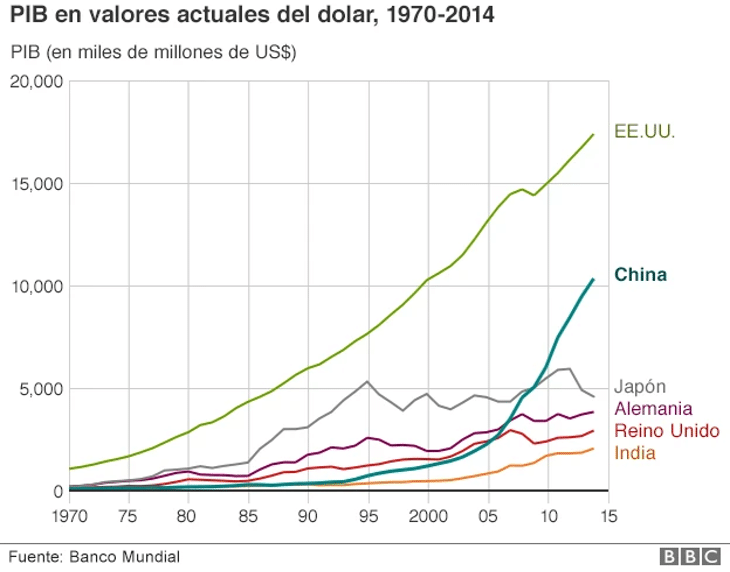
The outcome was transformative. The Chinese economy grew at an annual rate of approximately 10%, expanding from $1 trillion in 1990 to $17.5 trillion in 2014, which increased its share of the global economy from 4% to 16.5%, making it the world’s largest economy in terms of purchasing power parity. This growth transformed China’s external reliance into an interdependent relationship, compelling Beijing to redefine its foreign policy strategy progressively.
Xi Jinping’s ascent to power in 2012–2013 marked a significant departure from the low-profile strategy inherited from Deng. Xi’s doctrine has three constituent elements: the “great rejuvenation of the Chinese nation,” the “community with a shared future for mankind,” and “China’s new and greater contributions to mankind.” Ultimately, this task entails making China a “modern socialist nation” by 2035 and a “strong and prosperous” great power by 2049, when the centenary of the founding of the People’s Republic will be celebrated.
Under Xi Jinping, Beijing intensified its commitment to acting as a responsible actor within the international community, providing international public goods such as environmental improvement and the maintenance of peace, while simultaneously adopting more assertive positions in territorial disputes with neighboring countries in the South China Sea and the East China Sea. This duality—multilateral cooperation and firmness in defending interests considered “core”—defines the ambivalent character of Chinese foreign policy in the Xi era.
Nevertheless, the principle of non-intervention has been consistently reaffirmed. In June 2024, for instance, on the 70th anniversary of the Five Principles, President Xi Jinping presented the building of a community with a shared future for humanity as a contemporary response to these principles, stating that non-interference in the internal affairs of other countries and peaceful coexistence remain the direction for building the desired world.
This discursive continuity is significant: non-intervention remains a central element of China’s diplomatic narrative, even as its practical application reveals mounting tensions. With the adoption of a more assertive foreign policy, the need to protect Chinese citizens and assets abroad began to come into tension with this principle. This shift was not formally announced; rather, it manifested itself progressively through operations to repatriate Chinese citizens abroad, the naval presence in the South China Sea, and the economic and political influence that Beijing exerts over its partners through the Belt and Road Initiative.
The tension between the declared principle and actual practice reveals a dual logic that runs through China’s foreign policy: invoking non-intervention as a normative shield against Western criticism (particularly regarding Taiwan, Tibet, or Xinjiang), while deploying an active and at times coercive presence in other contexts. This selectivity is part of a strategic rationale that uses the principle of non-intervention as a rhetorical tool to protect its own interests, without implying an equivalent obligation to refrain from action when Beijing’s interests so require.
Strategic silence refers to a deliberate stance of calculated ambiguity, whereby a state actor avoids explicit statements that would commit it to one side or the other in an international conflict or dispute, while preserving its relational and material benefits. Unlike neutrality, which entails abstention from participation in a conflict and concrete obligations under international law, strategic silence does not necessarily imply impartiality. Rather, it is a form of political action that operates through selective omissions, narrative framing, and economic decisions that signal preferences without explicitly stating them.
At the diplomatic level, China has developed a consistent practice of narrative reframing in multilateral forums. In the face of conflicts or disputes, Beijing tends to shift the debate away from identifying responsibility toward abstract principles—sovereignty, dialogue, a political solution, and non-interference—which none of the parties can formally reject. This mechanism allows China to present itself as a voice of moderation without explicitly addressing responsibility for the conflict. What is left unsaid is therefore as significant as what is declared: a state that refrains from condemning an action, expands its trade with one of the parties, and proposes mediation initiatives that favor one of the contenders is adopting a position (even if it does not formally declare it).
Strategic silence is not sustained by rhetoric alone. For ambiguity to be functional, it must be backed by concrete tools that allow China to exert real influence without compromising its declaratory position. The expansion or contraction of trade relations, access to the Chinese market, and participation in financing and investment projects create incentives and disincentives that shape other states' choices.
I Belt and Road Initiative, for instance, does not operate solely as an infrastructure and connectivity project: it can create financial and logistical dependencies that constrain the political room for maneuver of recipient countries without China needing to exert explicit pressure. Together, these instruments allow Beijing to shape the environments in which decisions are made without becoming directly involved in the conflicts that generate them.
This combination of declarative omission, narrative reframing, and selective economic engagement is closely linked to the concept of hedging: a foreign policy that combines competitive and cooperative behavior, maintaining ties with actors who are at odds while avoiding exclusive political or military commitments. From this perspective, diplomatic ambiguity is not a sign of passivity, but a deliberate instrument for preserving room for maneuver. In Russia’s war against Ukraine, this framework directs attention to three dimensions of China’s conduct: the principles Beijing invokes, the responsibilities it leaves unnamed, and the practical decisions through which it preserves its relationship with Moscow.
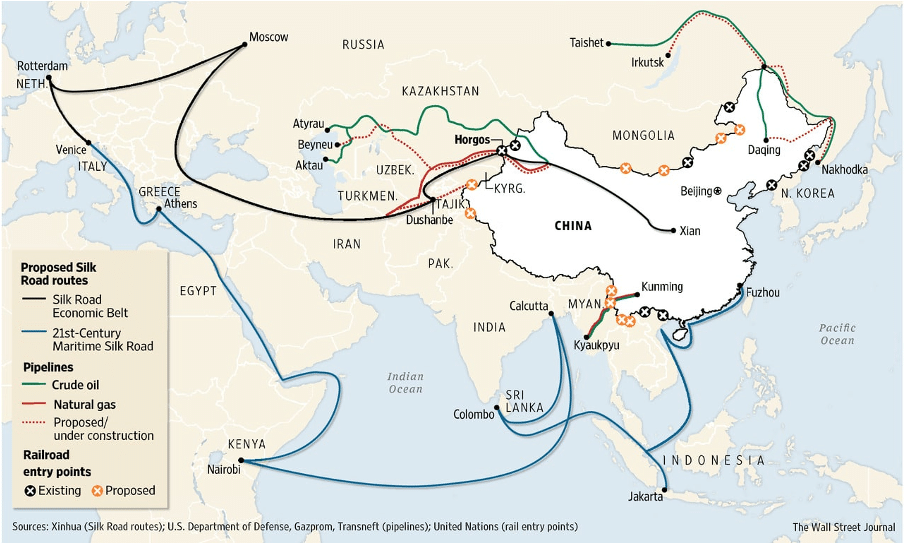
Chinese foreign policy operates across two levels that do not always align. Declaratively, Beijing promotes sovereignty, multilateralism, non-interference, and negotiated settlements. Operationally, it secures material interests and consolidates strategic relationships even when those ties contradict its stated principles. This dual logic explains how the 12-point plan could be presented as a peace proposal without demanding an explicit condemnation of the aggression or a withdrawal of Russian troops. Ambiguity was not an unintended flaw in the document, but the condition that enabled China to appear as a mediator without severing ties with Moscow.
In the war between Russia and Ukraine, China's strategic silence emerges first in its language. On the first anniversary of the Russian invasion, the Chinese Ministry of Foreign Affairs published a 12-point plan addressing sovereignty, a ceasefire, humanitarian relief, the protection of civilians, nuclear safety, prisoner exchanges, supply chains, and opposition to unilateral sanctions. The crux lay in what it omitted: Beijing referred to a "crisis" rather than an invasion, presented “parties to the conflict” without distinguishing between the aggressor and the invaded, invoked sovereignty without demanding a Russian withdrawal, and proposed dialogue without attributing responsibility to Moscow. This formula shifted the debate from territorial aggression toward a narrative of de-escalation between ostensibly equivalent actors.
For Ukraine, a ceasefire without a military withdrawal might reduce the fighting, but also freeze the occupation under the guise of a negotiated solution. Russia emerged as an actor open to dialogue without returning territory or assuming accountability for the invasion. Consequently, criticism from the United States, the European Union, and the North Atlantic Treaty Organization was based on the same objection: a mediator that does not differentiate between aggressor and victim softens the responsibility of the party that initiated the war. While the Chinese proposal invoked sovereignty, it offered no viable pathway for defending it.
Normative selectivity makes this contradiction more visible. China built much of its international stature on defending national sovereignty and non-interference—principles it invokes vigorously regarding issues such as Taiwan or Xinjiang. Yet, Russia’s annexation of Ukrainian territories did not elicit an equivalent response from Beijing. General references to international law displaced clear condemnations of a war of territorial annexation. An analysis by Bonnie Glaser for the German Marshall Fund, a transatlantic think tank based in the United States and Europe, characterizes this selectivity as a foreign policy pattern rather than a temporary exception.
This calculated ambiguity is also evident in other highly complex theaters: the conflict in the Middle East and the dispute over Taiwan and the Indo-Pacific. Across each of these, Beijing has pursued a strategy of strategic silence—understood not as passivity, but as a deliberately ambiguous posture that allows it to maximize benefits without incurring the costs of explicit alignment.
Outside the Western bloc, the response was even more ambivalent. Several governments in Latin America, Africa, and Asia defended Ukrainian sovereignty at the United Nations, but avoided fully aligning themselves with the economic sanctions and arms shipments pushed by the United States and Europe. Brazil was the most prominent example: the government of Luiz Inácio Lula da Silva proposed a group of countries not directly involved in the war and then, together with China, spearheaded a joint initiative for a political solution. This stance reflects a quest for diplomatic autonomy, though it loses strength when it avoids explicitly naming the aggression.
In Africa, the Chinese plan was interpreted by several governments as a signal of a diplomatic path distinct from the Western one. Beijing sought to present itself to the Global South as a stabilizing power in contrast to the United States' approach of arming Ukraine and intensifying pressure on Russia. This narrative required regional endorsements carrying political weight. In June 2023, a delegation of seven African countries, led by South Africa and comprising the Comoros, the Republic of the Congo, Egypt, Senegal, Uganda, and Zambia, visited Kyiv and Moscow in the first African peace mission to a conflict outside the continent. Vladimir Putin stated that the African initiative echoed the provisions of the Chinese plan, while South African President Cyril Ramaphosa maintained that their ideas aligned with those presented by Beijing. China and South Africa formalized their alliance at the BRICS summit held in Johannesburg in August 2023. Both governments declared that dialogue and negotiation constituted the only viable path to resolving the Russo-Ukrainian war, pledging to play a constructive role in a political solution. However, this legitimacy remained fragile. The African mission lacked a formal mandate from the Peace and Security Council of the African Union, the body responsible for addressing crises and conflicts within the continental organization, and four of the countries involved—Egypt, South Africa, the Republic of the Congo, and Uganda—maintained significant ties or meaningful engagements with Russia. This proximity mirrored in Africa the same underlying tension that undermined the Chinese mediator: the difficulty of asserting neutrality when structural ties with one of the parties are public.
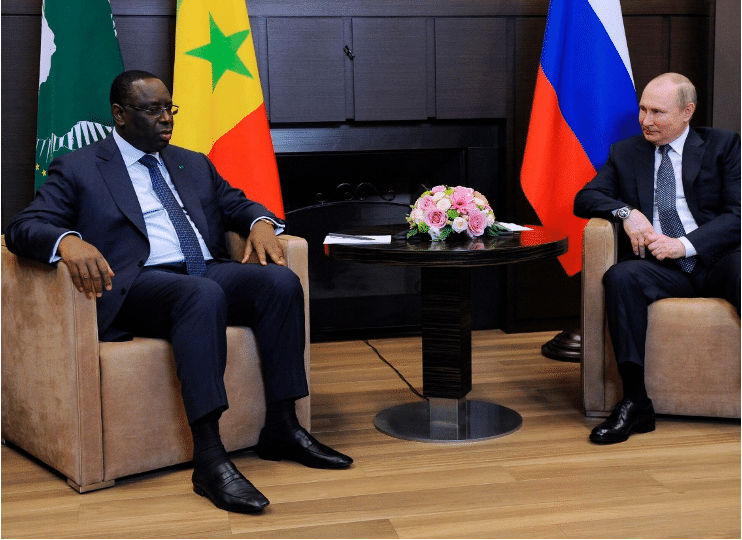
The peace plan strengthened China’s international image as a power seeking a mediating role in the Global South, particularly among actors that shared opposition to sanctions and Western leadership. Its effect, however, remained concentrated at the discursive level. It did not alter the military balance, prompt a Russian withdrawal, or initiate substantive negotiations. Its success lay on another level: positioning Beijing as an indispensable actor in any future negotiations without compromising its ties with Moscow or assuming concrete costs for the continuation of the conflict.
This diplomatic ambiguity yielded immediate economic dividends. In 2022, Chinese exports to Russia increased by 12.8%, while Chinese imports of Russian natural resources rose by 43.4%. By 2023, total bilateral trade expanded by an additional 26%. Western sanctions drove Moscow toward Beijing, which gained bargaining power over a partner urgently seeking alternative buyers, suppliers, and commercial routes. Russia provides strategic resources, military power, a permanent seat on the United Nations Security Council, and pressure against Europe. China offers a market, manufactured goods, technology, financial channels, and an economic lifeline. The relationship is not an alliance of equals, but rather an increasingly deep Russian dependency.
The energy dimension is one of the most visible expressions of this dynamic. Energy cooperation between the People's Republic of China and the Russian Federation has established itself as one of the central pillars of their bilateral ties, evolving from pragmatic commerce into a foundation of their contemporary geopolitical positioning. The war in Ukraine and Western sanctions against Russia accelerated a reconfiguration that strengthened Sino-Russian interdependence, although under conditions increasingly favorable to Beijing. Nevertheless, China remains heavily dependent on Russian energy imports.
The pursuit of energy security has acquired growing importance for the Chinese Communist Party (CCP), which has been driven to ensure access to energy resources and secure the maritime and overland routes through which they are transported, in a context in which energy consumption has progressively exceeded domestic production capacity. It is estimated that the rapid aging of the population, combined with economic growth, will widen this gap. A primary example of this strategic interdependence is the Power of Siberia gas pipeline, a massive infrastructure project inaugurated in December 2019 that links gas fields in eastern Siberia to northeastern Chinese provinces. Designed with a projected supply capacity of 38 billion cubic meters of natural gas annually over three decades, this overland corridor gained strategic importance for the Kremlin following the outbreak of the war in Ukraine. As European nations dismantled their dependence on Russian gas and shut down historical transit routes, state-owned enterprise Gazprom shifted its strategic focus toward the Asian market.
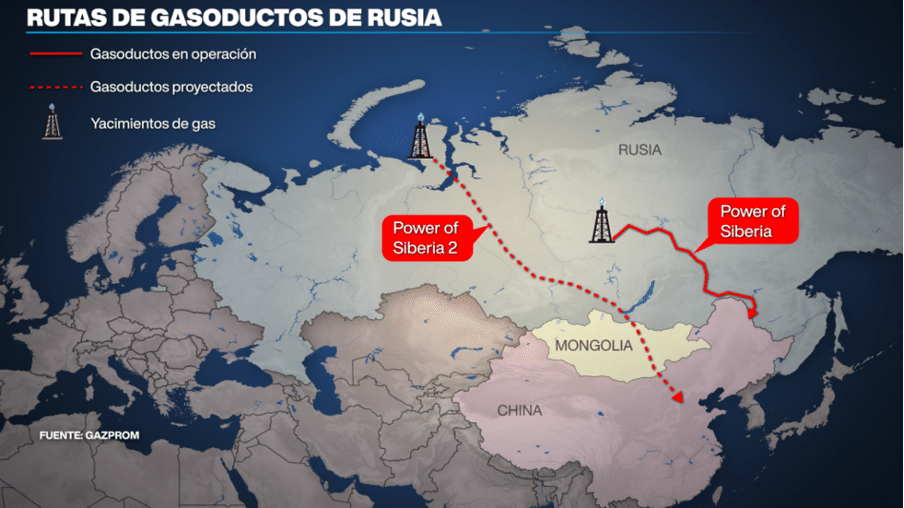
As international press records indicate, this urgency gave rise to intense negotiations surrounding the Power of Siberia 2 project, a second pipeline planned to cross Mongolia and transport 50 billion cubic meters of natural gas annually from the Yamal gas fields. Previously, in September of last year, an agreement had been reached to increase the capacity of Power of Siberia 1 to 44 billion cubic meters of natural gas per year. The new pipeline is a matter of urgency for Moscow, which has been cut off from the European market due to EU sanctions. Energy infrastructure is no longer a strictly commercial matter, but a mechanism of political survival for the Russian regime. Nevertheless, the realization of these megaprojects exposes the limits of the "no-limits friendship" proclaimed by both leaders. While Russia seeks to sign the contract to stabilize its long-term fiscal revenues, Beijing has maintained a cautious stance on its definitive approval to exert pressure for favorable prices and supply terms. This caution reflects the reality that Sino-Russian convergence does not eliminate divergent interests: alignment does not dispel distrust.
Chinese strategic silence is conditioned by a focus on maximizing its national security. China needs Russia as an energy supplier and geopolitical partner, but it avoids becoming subordinate and seeks to retain sufficient flexibility to maximize its economic benefits while limiting the costs of excessive alignment. Relying excessively on a single supplier entails a strategic vulnerability that China has spent years trying to minimize through the diversification of its energy sources. China possesses five existing pipelines that transport natural gas from Central Asia, Myanmar, and Russia, in addition to a new pipeline under construction designed to transport 10 billion cubic meters to China from the Russian Pacific island of Sakhalin. On the other hand, although both states share a worldview opposed to the United States-led international order, as evidenced in the recent dichiarazione congiunta advocating for a multipolar world and a new type of international relations, they are not aligned on their strategic and geopolitical priorities. After consolidating the Made in China model and multiplying its GDP, the Chinese economy has achieved a significantly higher level of integration with the global economy than Russia's. Consequently, a direct confrontation with the West would entail substantial economic and strategic costs for Beijing, which helps explain its interest in avoiding exposure to Western sanctions imposed on Russia.
In its pursuit of national security and global autonomy, China has adopted a strategy characterized by economic pragmatism and political ambiguity. This approach reflects the logic of hedging, which Fátima Fúnez and Verónica Pérez Taffi describe as an alternative to unconditional alignment or direct confrontation with any of the power poles. In its energy relations with Russia, Beijing preserves cooperation while seeking favorable supply terms and avoiding excessive dependence on a single partner.
The negotiations surrounding Power of Siberia 2 illustrate this calculation. While Moscow seeks a long-term outlet for its gas, Beijing has maintained a cautious stance regarding definitive approval, seeking favorable prices and supply terms. Political proximity to Moscow, therefore, does not oblige China to accept unfavorable commercial conditions. The limits of the “no-limits friendship” become visible precisely where Russia’s urgency meets China’s bargaining power.
Chinese strategic silence is not equivalent to neutrality, but rather a form of implicit positioning. Beijing declares principles and promotes negotiations, yet avoids explicitly identifying Russia as the aggressor or defining the limits of its own support. Its peace proposal invokes sovereignty without demanding a Russian withdrawal, allowing China to present itself as a potential mediator without compromising its ties with Moscow. This ambiguity preserves diplomatic options and reduces the reputational costs of explicit alignment.
China’s position, however, is expressed not only through what it says or leaves unsaid, but also through its practical decisions. The expansion of bilateral trade and energy cooperation preserves an economic lifeline for Russia while securing resources and commercial opportunities for China. Diplomacy and economic engagement thus form part of the same strategic calculation: Beijing maintains its discourse of negotiated solutions while sustaining a partnership that serves its material interests and broader geopolitical objectives.
Yet this partnership does not constitute an unconditional commitment. Russia’s need for alternative markets strengthens China’s bargaining position, while Beijing’s interest in diversified energy supplies and continued access to the global economy limits its willingness to assume the costs of excessive alignment. The negotiations over gas infrastructure reveal this asymmetry: China can preserve political proximity to Moscow while withholding commercial commitments that do not offer sufficiently favorable terms.
Strategic silence, therefore, reveals both the substance and the limits of China’s position. Beijing is neither an impartial observer nor a partner prepared to support Moscow at any cost. It preserves the relationship while retaining the freedom to determine its terms. Its diplomatic ambiguity and practical cooperation with Russia are connected by the same priority: protecting China’s own interests rather than accepting obligations imposed by political solidarity.
Le opinioni, i pensieri e le valutazioni espressi negli articoli pubblicati su questo sito appartengono esclusivamente agli autori e non necessariamente al Centro per il Dialogo Transatlantico, ai suoi comitati o alle organizzazioni a esso affiliate. Gli articoli hanno lo scopo di stimolare il dialogo e la discussione e non rappresentano posizioni politiche ufficiali del Centro per il Dialogo Transatlantico né di altre organizzazioni alle quali gli autori possano essere associati.