

 17 min di lettura
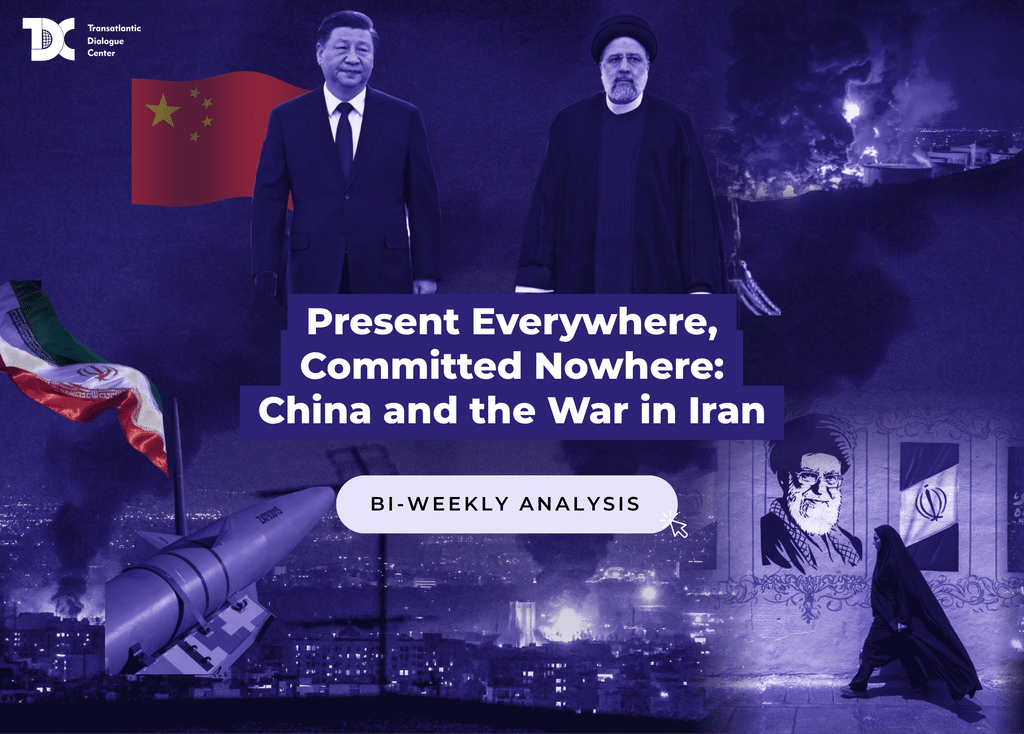
On 2 November, as Washington weighed new strikes on Iran after the midterm elections, Beijing staged one of the busiest days of its war diplomacy. Xi Jinping received Oman's Sultan Haitham bin Tariq and told him that the Gulf should not become a battleground for great-power rivalry. Wang Yi met Ali Bagheri Kani of Iran's Supreme National Security Council and called for a political solution. Chinese officials briefed on a special envoy to Tehran, Muscat and Riyadh, and on separate high-level talks with Saudi Arabia. For a government that has spent eight months presenting itself as a principled bystander, it was an unmistakable bid for a seat at the table.
The war began in February with joint American and Israeli strikes that killed a host of senior Iranian officials, including the Supreme Leader. It is now in its eighth month. The Strait of Hormuz has been closed or contested for most of that time, a memorandum of understanding signed in June has not produced a settlement, and Washington has spent recent weeks carrying out limited strikes while publicly holding out the prospect of a deal. Trump has said he would not launch new attacks before the midterms, and has not ruled them out afterwards. The question that has followed Beijing since the first week of the war has not gone away: what, exactly, is China prepared to do for Iran?
The answer so far is a great deal of language and very little obligation. China's response is better described as bounded support than as neutrality: diplomatically vocal, militarily absent, commercially transactional, and constrained by the Strait itself. The four principles Xi set out in April 2026 supply the basis of that position. Oil, investment, and the competition with Washington supply its limits.
This article examines how those principles translate into practice, what the war has already cost Beijing, and what a second round of fighting would do to them. If the campaign resumes, China will face the choice it has avoided for months: to keep condemning in principle while trading in practice, or to move from political cover to material support. How it answers will shape not only the outcome of the war but the terms of its relationships with Tehran, the Gulf states, and Washington for years.
Rather than a neutral stance, China's response to the war involving the United States, Israel, and Iran reflects an active, yet carefully circumscribed foreign policy. Beijing condemns the use of force, defends Iranian sovereignty, and advocates for negotiations, while refraining from deploying troops, offering mutual defense guarantees, or prioritizing its relationship with Tehran over ties maintained with other Gulf nations. This conduct aligns with the four principles outlined by Xi Jinping in April 2026: peaceful coexistence, national sovereignty, respect for international law, and a balance between development and security. Beyond articulating China's official position, each pillar safeguards strategic interests tied to the questions of oil supplies, trade, and broader geopolitical competition with the United States.
Surrounding the conflict is an array of military alliances, armed organizations, energy producers, and governments seeking to prevent the hostilities from escalating. Israel aims to weaken Iran's military, nuclear, and regional capabilities, while Washington supports this objective through weapons, intelligence, attacks, and a substantial military presence in the Middle East. Tehran responds with its own forces and allied organizations that have enabled it for years to exert pressure without entering into a conventional war. China participates in a different manner, as its influence rests on oil purchases, investment, technological cooperation, and diplomacy, rather than on a military alliance equivalent to the one linking the United States and Israel.
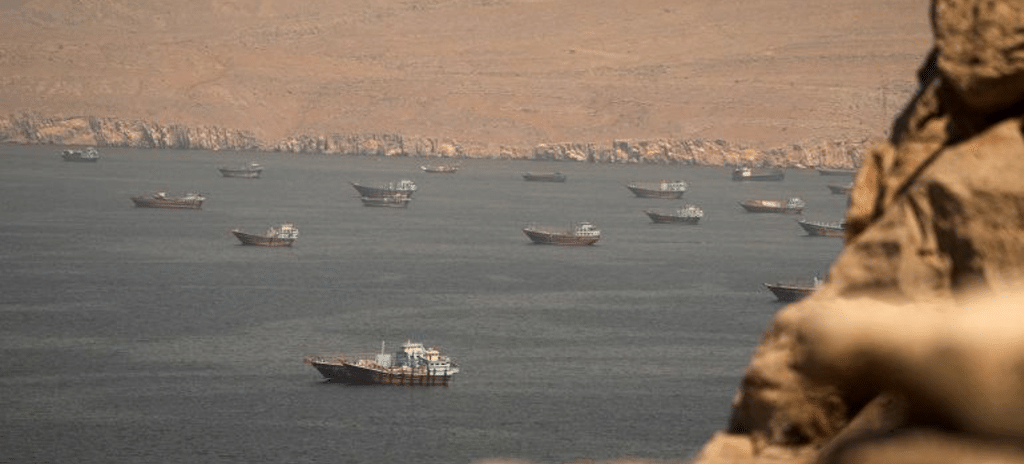
Iran's geography explains why the war cannot remain local. The Strait of Hormuz lies at the country's southern end, between the Persian Gulf and the Gulf of Oman, and carries a substantial share of global oil and gas exports originating from Iran, Saudi Arabia, the United Arab Emirates, Qatar, Kuwait, Bahrain, and Iraq. A sustained blockade of the strait would disrupt all regional energy exporters as well as key Asian consumers, notably China, India, Japan, and South Korea.
The difference between U.S.–Israeli and China–Iran relations is essential. Washington provides Tel Aviv with direct military support, operational intelligence, advanced technology, and explicit political backing. Tehran receives from Beijing substantial oil purchases, economic cooperation, and diplomatic shielding, but no formal defense obligations. Furthermore, shared opposition to Western dominance does not erase fundamental differences between Beijing and Tehran. Both governments present themselves as heirs to ancient non-Western civilizations and challenge an international order dominated by the United States, although Beijing conditions its support on stability and the protection of its own interests.
The first principle set forth by Xi Jinping proposes a common, comprehensive, cooperative, and sustainable security architecture. Its premise is that the Gulf States are permanent neighbors that cannot guarantee their own security through the destruction of others. This proposition also addresses an essential Chinese interest: maintaining simultaneous ties with competing governments.
Saudi Arabia and the United Arab Emirates contest regional influence with Iran, but they do not desire a war that would destroy oil facilities, expose their cities, or paralyze maritime navigation. Qatar and Oman frequently act as mediators because they preserve communication channels with opposing actors. Bahrain hosts the headquarters of the U.S. Fifth Fleet, while Qatar accommodates the Al Udeid Air Base, the operational hub for regional military coordination. Kuwait, Saudi Arabia, the United Arab Emirates, and Iraq also maintain U.S. military personnel, facilities, or cooperation agreements.
The United States regional military posture facilitates close surveillance, protects allies, and enables rapid strike execution. At the same time, these installations render host nations potential targets for Iranian retaliation. A strike against U.S. bases in Qatar, Bahrain, or Saudi Arabia could widen the conflict and force Arab governments into a war they seek to avoid.
In response to this risk, Beijing refuses to structure its regional policy solely around Tehran. Saudi Arabia, the United Arab Emirates, and Qatar sell energy to China, receive foreign direct investment, and participate in infrastructure, telecommunications, science, and technology projects. Unconditionally supporting Iran would imperil this network of partnerships and erode China's capacity to engage in dialogue across all regional actors.
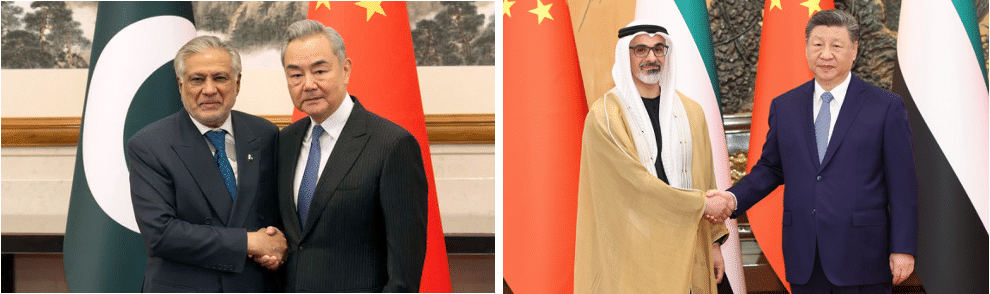
The April 14, 2026 meeting between Xi Jinping and Sheikh Khaled bin Mohamed bin Zayed Al Nahyan, Crown Prince of Abu Dhabi, illustrated this calculated engagement strategy. Alongside his four proposals for the Middle East, the Chinese president advocated expanded cooperation with the United Arab Emirates in energy, investment, trade, science, technology, education, civil aviation, tourism, the United Nations, and BRICS. The Crown Prince praised China's role and agreed on the need to achieve a ceasefire, restore stability, protect maritime transport, and prevent further damage to the global economy.
A day earlier, Wang Yi held talks with Mohammad Ishaq Dar, Deputy Prime Minister and Minister of Foreign Affairs of Pakistan. Islamabad briefed Beijing on its mediation efforts between Iran and the United States, the temporary ceasefire, and the talks convened in the Pakistani capital. The Chinese Foreign Minister characterized the truce as fragile and endorsed the China-Pakistan Five-Point Initiative to restore peace and stability across the Gulf and the wider Middle East.
Through the United Arab Emirates, Pakistan, and other interlocutors, China advances diplomatic negotiations without assuming the role of sole guarantor of regional security. Its diplomatic involvement is prominent, yet it excludes military deployments or binding defense obligations. Peaceful coexistence thus serves a dual function: it offers a regional way forward while preserving China's ability to engage with opposing actors.
The second proposal presented by Xi Jinping maintains that the sovereignty, security, and territorial integrity of the Gulf States must not be violated. From this position, China condemns U.S. and Israeli attacks against Iran and opposes interventions aimed at imposing political change by force. However, the defense of the Iranian state does not signify a commitment to the survival of the Islamic Republic.
The distinction matters because of a record that Chinese analysts have followed for years. In January 2020, the United States assassinated General Qasem Soleimani in Baghdad. As commander of the Revolutionary Guard's Quds Force, Soleimani had coordinated Tehran's ties with militias and armed organizations across Iraq, Syria, Lebanon, and other countries in the region, and his death eroded a foundational component of Iran's Middle Eastern strategy. In April 2024, Israel struck Iran's consular building in Damascus, killing members of the Revolutionary Guard and demonstrating that it could reach Iranian commanders abroad. Tehran responded with drones and missiles, but avoided inflicting damage of a scale that could justify a broader-scale campaign.
The same pattern held for the Axis of Resistance. For years the network, which includes Hezbollah in Lebanon, the Houthis in Yemen, militias in Iraq and Syria, and ties with Hamas in the Palestinian territories, allowed Iran to exert pressure on Israel and the United States without exposing its own mainland to a conventional war. It was never a formal alliance of states, and its members did not operate under Tehran's direct orders, although they received varying degrees of political, financial, logistical, or military support. After Hamas's October 7, 2023 attack on Israel, Israel degraded the operational capacity of Hamas and Hezbollah while the United States attacked Iran-aligned groups elsewhere across the region, and Tehran could neither prevent the blows nor shift the balance of power through its own actions. In December 2024, then-Vice President Mohammad Javad Zarif denied that his country directed the Axis of Resistance at all, and in April 2025 the government withdrew military personnel from Yemen, scaling back support for the Houthis to prevent wider escalation and preserve the possibility of negotiating with Washington.
The twelve-day war of June 2025 made the constraint explicit. Both states exchanged air strikes, drones, and missiles, but Tehran provided prior notification to Qatar and the United States before executing select retaliatory strikes, allowing facilities to be evacuated and casualties and infrastructure damage to be minimized. Read together, these episodes formed a pattern: a state able to absorb punishment, but unable to change the balance of power.
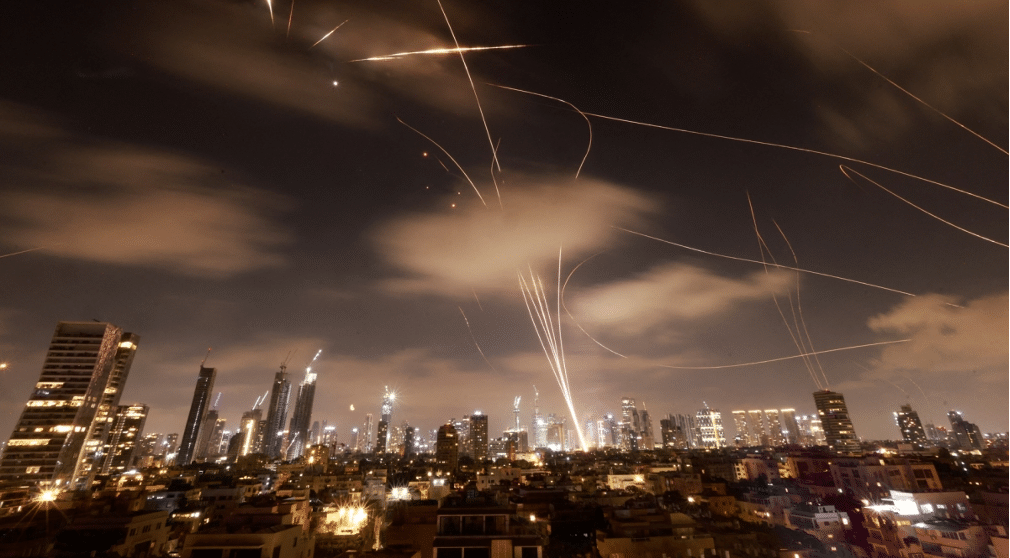
Several Chinese analysts characterized these responses as performative retaliation. The Iranian government needed to demonstrate to its domestic audience and allies that it would respond to aggression, while avoiding catastrophic damage or triggering a full-scale conventional conflict. The reaction fulfilled an internal political and symbolic role, even as it left the overarching military balance unchanged.
From a less critical perspective, this caution aimed to preserve the regime in the face of superior adversaries. For part of the Chinese strategic community, however, the combination of heightened threats, predictable responses, and renewed negotiations diminished Tehran's credibility. Iran appeared willing to defend its image, but unwilling to bear the costs of a prolonged confrontation.
Economic vulnerabilities reinforced this perception. Iran's population is nearly ten times that of Israel and approximately three times that of Saudi Arabia, yet its gross domestic product is less than 90% of Israel's and equivalent to about 25% of the Saudi economy. Territorial and demographic size does not translate into commensurate economic strength, leading militias, drones, and asymmetric warfare to project an image of power for years that exceeded internal capabilities.
Problems of corruption, poor administration, and vulnerabilities within the security apparatus also undermine Chinese confidence. Israeli infiltration made it possible to locate military commanders, nuclear scientists, and strategic facilities during the twelve-day war. For some analysts, this penetration revealed institutional weaknesses and the possible collaboration of Iranian officials with external actors.
Within the Chinese Middle East policy community, Hu Xijin placed partial blame on the Iranian leadership for steering the country into crisis. Niu Xinchun identified a structural contradiction between the ideology of the Islamic Republic and its economic imperatives: it rejects making major concessions to the United States, yet it requires sanction relief, recovered oil revenues, and foreign investment to stabilize its economy.
The 25-year comprehensive strategic partnership signed in 2021 failed to dispel these doubts. Valued at approximately $400 billion, the agreement encompassed energy, infrastructure, trade, technology, and security; however, few projects materialized. Tehran feared losing autonomy and increasing its dependence, while Beijing questioned Iran's ability to honor agreements, protect investments, and provide stability.
Given these constraints, China does not necessarily view a regime change as the worst possible outcome. A new authority that controls the territory, maintains exports, respects investments, and guarantees freedom of navigation could become an acceptable partner. China's priority is to preserve a functioning state, not to protect a particular leadership at any cost.
Xi's third principle sets out the defense of the international system, with the UN at its core, together with international law and the UN Charter. China rejects the selective application of rules and uses the expression "law of the jungle" to criticize powers that resort to force without respecting commonly accepted limits.
Through this discourse, Beijing questions the operations of the United States and Israel and contrasts its own conduct with that of Washington. While US forces maintain bases, naval vessels, and strike capacity, China puts forward proposals, holds diplomatic calls, and promotes negotiations. The contrast reinforces its image as a less interventionist power.
Xi's four points do not, however, include sanctions, security guarantees, or mechanisms to compel the parties to respect a ceasefire. The proposal establishes general principles but avoids specifying what China would do if the United States, Israel, or Iran ignored them. Defending international law strengthens Beijing's political position without imposing the costs of ensuring compliance.
During its official statements, China's Ministry of Foreign Affairs condemned in particularly strong terms the killing of Iran's Supreme Leader, Ayatollah Ali Khamenei, but used more moderate language regarding the entire military campaign. Rather than assigning blame solely to Washington and Tel Aviv, it called on the relevant parties to halt their operations, a formula that also included Iran.
The diplomatic contact on April 15, 2026, once again revealed the limits of Chinese support for Tehran. During his conversation with Iranian Foreign Minister Seyed Abbas Araghchi, Wang Yi reaffirmed support for Iran's sovereignty, security, national dignity, and legitimate rights, while also insisting on guaranteeing freedom and safety of navigation through the Strait of Hormuz. In doing so, China made clear that its political support did not extend to actions capable of harming third countries or disrupting international trade.
Since June, a negotiation process aimed at ending the war, restoring navigation through the strait, discussing Iran's nuclear program, and reviewing the possible lifting of sanctions had remained underway. China defended the continuation of these talks without legitimizing US attacks or justifying the acts of aggression attributed to Iran against vessels from other countries.
Ding Long, a professor at the Institute of Middle East Studies at Shanghai International Studies University, argued that asking China to pressure Iran for the benefit of Washington or Israel amounted to a misreading of its foreign policy. Beijing had opposed the war from the outset and did not want to become a collaborator in a campaign it considered contrary to sovereignty.
Patricia Kim, a researcher at the John L. Thornton China Center at the Brookings Institution, noted that Chinese leaders view US interventions in the Middle East as a source of attrition for Washington. Prolonged wars consume resources, weaken legitimacy, and force the assumption of costly responsibilities. Beijing has no desire to replicate that model.
The possibilities for Chinese intervention are also limited. Unlike the United States, China does not have a network of bases, troops, and military infrastructure sufficient to protect Iran or sustain prolonged operations in the Middle East. Providing security guarantees would require deploying forces, transporting weaponry, protecting maritime routes, and assuming the risk of a direct confrontation with the United States and Israel. Nor can Beijing force Tehran to abandon its nuclear program through trade alone, since Iran's economic dependence does not eliminate the government's political autonomy or its ability to resist Chinese pressure.
Xi's fourth proposal links development with security and offers to share with the Gulf states the opportunities arising from China's modernization. Behind this formulation lies Beijing's most immediate interest: avoiding a disruption to energy supplies and maritime trade.
More than 55% of China's oil imports in 2025 came from the Middle East, and nearly 13% arrived directly from Iran. A large share of the regional volume passed through the Strait of Hormuz. Although China expanded its use of coal, solar power, wind power, and nuclear energy, oil retains functions that are difficult to replace in aviation, shipping, transport, and the petrochemical industry. During 2025, renewable energy overtook crude oil as the second-largest source of consumption after coal, but the transition did not eliminate external dependence.
China's strategic reserves were estimated at between 1.3 billion and 1.4 billion barrels, equivalent to about 30% of its 2025 oil imports. This volume would allow China to withstand a brief disruption, but not a prolonged closure affecting both Iran and the Arab producers simultaneously.
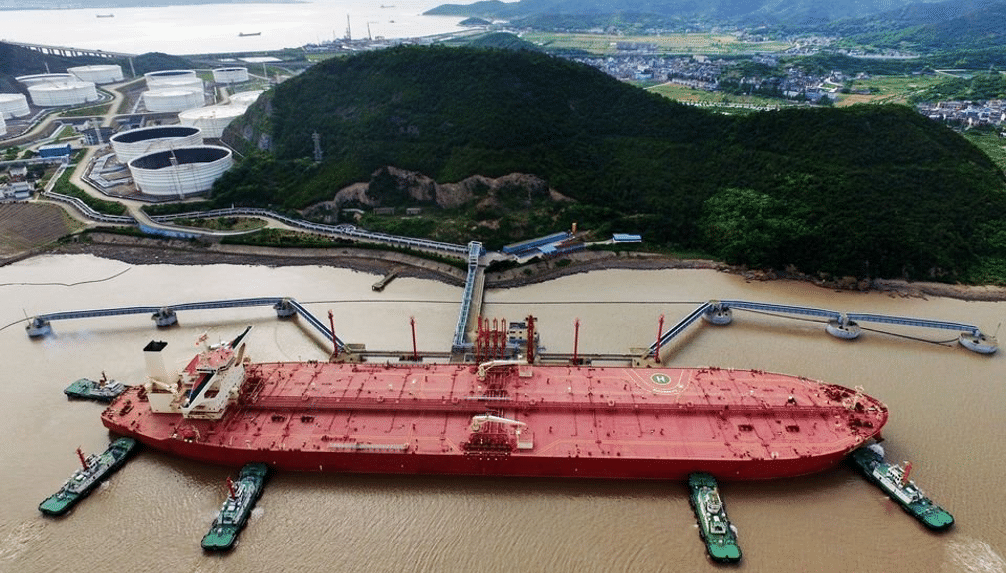
A prolonged crisis would increase industrial and transport costs, while higher international energy prices would reduce demand for Chinese goods. The war would thus affect both the inflow of resources and exports, which still sustain a significant share of economic growth.
Hormuz therefore represents the clearest limit to support for Tehran. China can condemn external attacks and defend Iranian sovereignty, but it will not accept the government closing a route indispensable to its economy. Support ends where a prolonged threat to oil, investment, and trade begins.
In the event of disruption, Russia could serve as an alternative supplier. During the period under review, Moscow supplied more than 17% of China's oil imports. Excessive dependence would also reduce Beijing's autonomy, which is why its energy strategy seeks to spread risk across multiple producers.
The level of Chinese support will depend on Iran's ability to hold out. A rapid collapse of the government would allow Beijing to establish relations with a new authority that controls the territory, maintains exports, and protects economic interests. By contrast, prolonged resistance would force a reassessment of the calculation.
If Tehran were to withstand the attacks, retain internal control, and cause significant damage, it would demonstrate a capacity that many Chinese observers question. Denying it all support would then damage China's credibility with other partners, as it would show that its strategic agreements produce no help in the face of an existential threat.
If it were to increase its support, Beijing could resort to measures similar to those it used with Russia during the war in Ukraine, including increased oil purchases, the supply of electronic components, drones, dual-use technologies, and technical assistance to strengthen Iran's defense industry. These actions would not require direct military intervention, but they would expand the government's ability to withstand a prolonged war.
Any increase in aid would also depend on the state of relations between China and the United States. According to one of the sources, Xi Jinping and Donald Trump were preparing a meeting at the end of March that could open a period of détente after eight years of intense competition. Open military support for Iran would have put that rapprochement at risk, since, within the hierarchy of Chinese interests, Tehran remains important, but not enough to sacrifice a possible stabilization with Washington.
From a broader perspective, the Thucydides Trap helps explain the tension that arises when a rising power threatens the position of a dominant one. In this case, instability in the Gulf could weaken China by disrupting its energy routes, increasing industrial costs, reducing its exports, and forcing it to devote attention to a region where the United States retains military superiority.
Even so, there is insufficient evidence to conclude that Washington launched the war solely with the aim of weakening Beijing. US objectives also include supporting Israel, containing Iran's nuclear program, protecting maritime navigation, and preserving its regional influence. The impact on China is therefore a strategic consequence that the United States can exploit within a broader competition.
At the same time, the concentration of US resources in the Middle East opens up some opportunities for Beijing. The attention devoted to the region reduces the bandwidth available for the Indo-Pacific, Taiwan, and alliances oriented toward containing China. Military operations also allow the Chinese government to present itself as a more peaceful, predictable, and negotiation-oriented power. The conflict harms its economy, but expands its diplomatic space and diverts attention from its main competitor.
The near-term trajectory of the war is now being decided on three tracks at once, and each produces a different set of incentives for Beijing.
A negotiated pause remains the outcome most officials describe in public. Iran has offered to reopen the Strait of Hormuz within two days if Washington accepts a list of conditions, including an end to the war on all fronts, the unfreezing of Iranian assets, and the lifting of oil sanctions. Talks have continued through Qatari mediators in Doha, Vice President JD Vance has said that no deadlines have been set, and oil prices fell sharply on 2 November on expectations of a deal. Tehran has since called the American reply to its proposal unconvincing, which suggests that the gap is narrower on procedure than on substance. For China, this is the preferred scenario: navigation restored, energy flows secured, and a mediation role available without any obligation to enforce the settlement.
A renewed campaign is the scenario markets and Gulf capitals are pricing. Trump has threatened new strikes after the midterms, additional American troops are reported to be moving to the region, and attacks on shipping transiting Hormuz in October reached their highest level since the war began. The strikes on Qeshm Island, described by US officials as limited and defensive and carried out after the Revolutionary Guard fired on an American aircraft, may be either a message before negotiations or the opening of a new phase. If a broader campaign begins, Beijing's initial response will most likely repeat the pattern of July: condemnation of the use of force, a call on all parties to exercise restraint, and no material commitment. The interesting question is what happens if Iran absorbs the blows and the war runs for another six months.
A third possibility is a slower unravelling, in which the Iranian state retains control of its territory but loses the ability to guarantee navigation or to pay for reconstruction. This is the scenario that would most directly test China's stated priority of preserving a functioning state rather than a particular leadership. It would also confront Beijing with the reconstruction question it has so far avoided in Ukraine: whether to finance the recovery of a country whose government it has defended rhetorically but never underwritten.
The short answer is yes in form and no in substance. The four principles, the refusal of security guarantees, and the Hormuz red line will all survive a second round. What has changed is the environment in which they are applied.
First, the energy shock is no longer hypothetical. Hormuz has been disrupted for most of the year, so Beijing has already absorbed part of the cost it once cited as the reason for restraint. That cuts both ways: it lowers the marginal price of condemning Washington, but it also raises the value of any settlement, which strengthens the case for diplomacy over material support.
Second, the Iranian leadership is not the one China spent two decades building relationships with. The war removed the Supreme Leader and much of the senior command, and the new leadership has granted the government powers to accelerate negotiations. Chinese analysts who questioned Tehran's competence before the war now have less reason to bet on its durability, which makes conditionality, not commitment, the rational posture.
Third, Beijing is no longer the only mediator, and it has started to compete for the role. Qatar and Oman have the channels; China has the weight. The November flurry of meetings in Beijing, and the dispatch of a special envoy to Tehran, Muscat and Riyadh, suggest that Beijing now values the diplomatic seat more than it values the ability to influence Iranian decisions. That preference is unlikely to change if the fighting resumes.
With Iran, the relationship is likely to move from the language of comprehensive strategic partnership to explicit conditionality. Tehran will emerge more dependent on Chinese purchases and political cover, while Beijing will extend less of both than Iranian expectations assume. The 2021 agreement is a useful indicator: a $400 billion framework that produced few projects reflects not Chinese weakness but Chinese caution.
With the Gulf, the war has given Beijing an opening it has sought for a decade. The Oman visit, the proposal to cooperate with the Gulf Cooperation Council, and Xi's warning against turning the region into an arena of great-power rivalry all point to a China that wants a standing political role rather than a transactional trading presence. That ambition will be tested on delivery: Gulf capitals will judge Beijing by whether it can restrain Tehran, not by whether it criticizes Washington.
With the United States, Iran becomes a bargaining instrument in a competition that is being managed rather than resolved. Beijing can offer help in ending the war at a moment when Washington wants an exit, and it can do so without spending anything. Whether that translates into leverage depends on the post-midterm mood in Washington and on whether the two governments return to the détente they were preparing before the war.
For everyone else, the lesson is the one already visible in China's approach to Russia's war against Ukraine. Political cover, dual-use trade, and diplomatic shielding are available to partners in difficulty. Security guarantees are not. Kyiv, Taipei, and the Gulf capitals will read the Iranian case through the same lens.
China's conduct in the war in Iran follows a pattern already familiar from its approach to Russia's war against Ukraine: political cover without alliance, trade without conditionality, and a readiness to define the limits of support according to its own exposure. The four principles are not a peace plan. They are a vocabulary that allows Beijing to be present everywhere and committed nowhere.
Hormuz is where that vocabulary meets its physical limit. China can condemn any attack on Iran and defend Iranian sovereignty in the language of international law, but it cannot accept the closure of a route on which its economy depends, and it cannot open that route by force. Everything else in its position follows from that constraint.
The test after the midterms is whether a formula built for ambiguity can survive a war that keeps demanding decisions. Beijing has spent eight months proving that it can condemn, mediate, and trade at the same time. The harder question is what it will do if it is finally asked to choose.
Le opinioni, i pensieri e le valutazioni espressi negli articoli pubblicati su questo sito appartengono esclusivamente agli autori e non necessariamente al Centro per il Dialogo Transatlantico, ai suoi comitati o alle organizzazioni a esso affiliate. Gli articoli hanno lo scopo di stimolare il dialogo e la discussione e non rappresentano posizioni politiche ufficiali del Centro per il Dialogo Transatlantico né di altre organizzazioni alle quali gli autori possano essere associati.
