

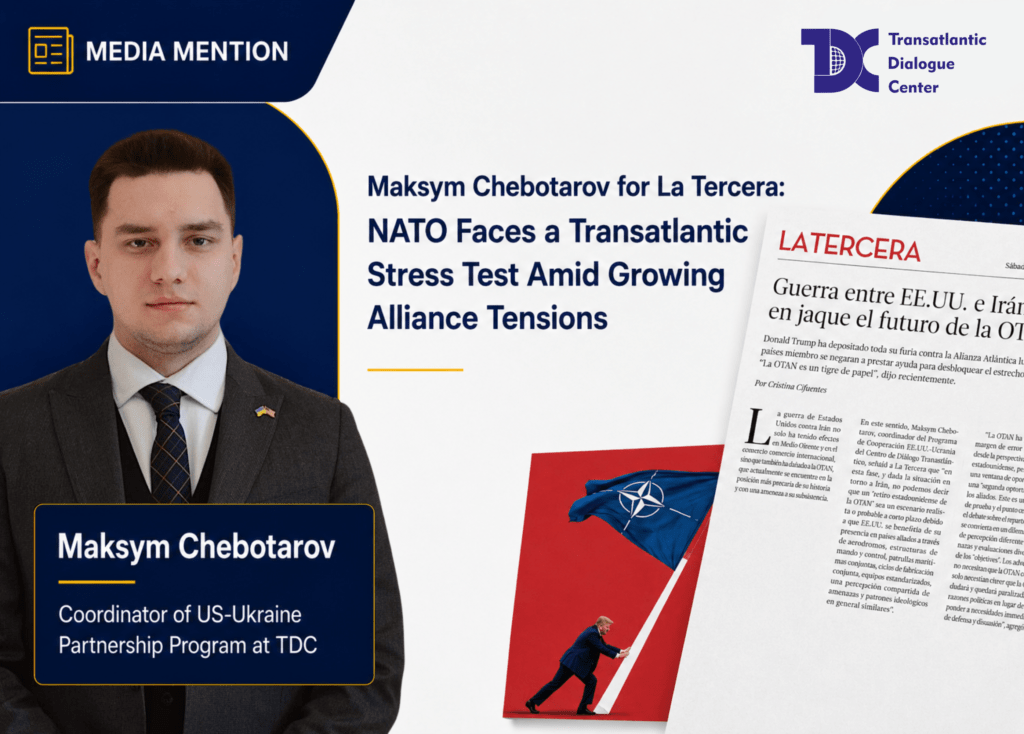
Am 11. April 2026 sprach Maksym Chebotarov, Koordinator des US-Ukraine-Partnerschaftsprogramms beim Transatlantic Dialogue Center (TDC), mit La Tercera, einer Tageszeitung aus Santiago, Chile, über die wachsenden Spannungen innerhalb der NATO infolge von Meinungsverschiedenheiten zwischen den Vereinigten Staaten und ihren Verbündeten bezüglich des Konflikts mit dem Iran.
In dem Artikel beschreibt La Tercera den Krieg mit dem Iran als einen bedeutenden Stresstest für die transatlantische Einigkeit, nachdem die US-Verbündeten die Bitte von Präsident Donald Trump um Unterstützung bei der Freihaltung der Straße von Hormus abgelehnt hatten. Der Beitrag beleuchtet zudem Trumps zunehmende Kritik am Bündnis, darunter erneute Drohungen mit einem Austritt der USA aus der NATO sowie Aussagen, die die Glaubwürdigkeit von Artikel 5 infrage stellen.
Chebotarov betonte, dass ein kurzfristiger Austritt der USA aus der NATO kein realistisches oder wahrscheinliches Szenario sei. Er wies darauf hin, dass die Vereinigten Staaten von ihrer Präsenz in verbündeten Ländern profitieren, nämlich durch Flugplätze, Führungs- und Kontrollstrukturen, gemeinsame Seepatrouillen, gemeinsame Produktionszyklen, standardisierte Ausrüstung und eine gemeinsame Bedrohungswahrnehmung.
Zugleich betonte er, dass die NATO aus Sicht der US-Führung „einen Teil ihres Fehlerspielraums und ihrer Glaubwürdigkeit eingebüßt“ habe, die Verbündeten jedoch weiterhin eine Chance auf eine „zweite Gelegenheit“ hätten. Seiner Einschätzung nach entwickelt sich die aktuelle Debatte über die Lastenverteilung zunehmend zu einem praktischen Dilemma, das durch unterschiedliche Bedrohungswahrnehmungen und divergierende Einschätzungen strategischer Prioritäten geprägt ist.
Chebotarov warnte zudem davor, dass Gegner nicht auf einen Zusammenbruch der NATO angewiesen seien; es genüge ihnen bereits, wenn sie glaubten, das Bündnis werde zögern und politisch gelähmt sein, anstatt auf unmittelbare Verteidigungs- und Abschreckungsbedürfnisse zu reagieren.
Den vollständigen Beitrag finden Sie über den Link.