In a new report for the Center for European Policy Analysis, Marianna Fakhurdinova, Coordinator of the EU–Ukraine Partnership Programme at the Transatlantic Dialogue Center, assesses how US and EU wartime support models for Ukraine have evolved since Russia’s full-scale invasion — and why, at the start of 2026, the question of how support is delivered is as important as how much is pledged.
The report situates these developments within a broader political and institutional context, examining how strategic choices, governance arrangements, and coordination formats have shaped the delivery of military assistance over time. It also explores how existing frameworks have adapted to evolving battlefield demands and shifting political conditions on both sides of the Atlantic.
Key takeaways
- Aid has often been reactive and fragmented, shaped by escalation concerns and slow decision-making.
- As stockpiles dwindled, support shifted from “from existing stocks” toward defense-industrial investment, co-production, and procurement models (including purchases from Ukrainian manufacturers through the “Danish model”).
- NATO’s role has expanded — with NSATU, a NATO mission coordinating security assistance and training for Ukraine, established to strengthen coordination and longer-term force development.
- With the US drawing down military funding, Europe needs more predictable instruments, including leveraging frozen Russian assets, using SAFE loans, strengthening contributions via PURL, and building multi-year funding approaches.
Read the full report.
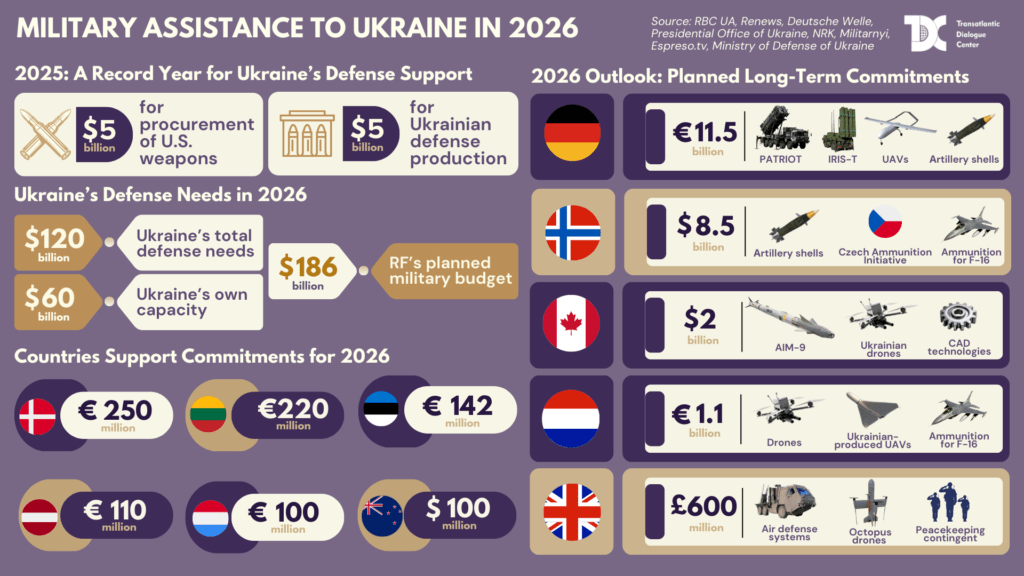
TDC has developed relevant infographics dealing with the military assistance to Ukraine