Marianna Fakhurdinova, Coordinator of the EU–Ukraine Partnership Program at the Transatlantic Dialogue Center and Fellow at CEPA
Dr Giuseppe Spatafora, Research Analyst at the EU Institute for Security Studies (EUISS)
Dr Joris Van Bladel, Senior Associate Fellow at Egmont – Royal Institute for International Relations
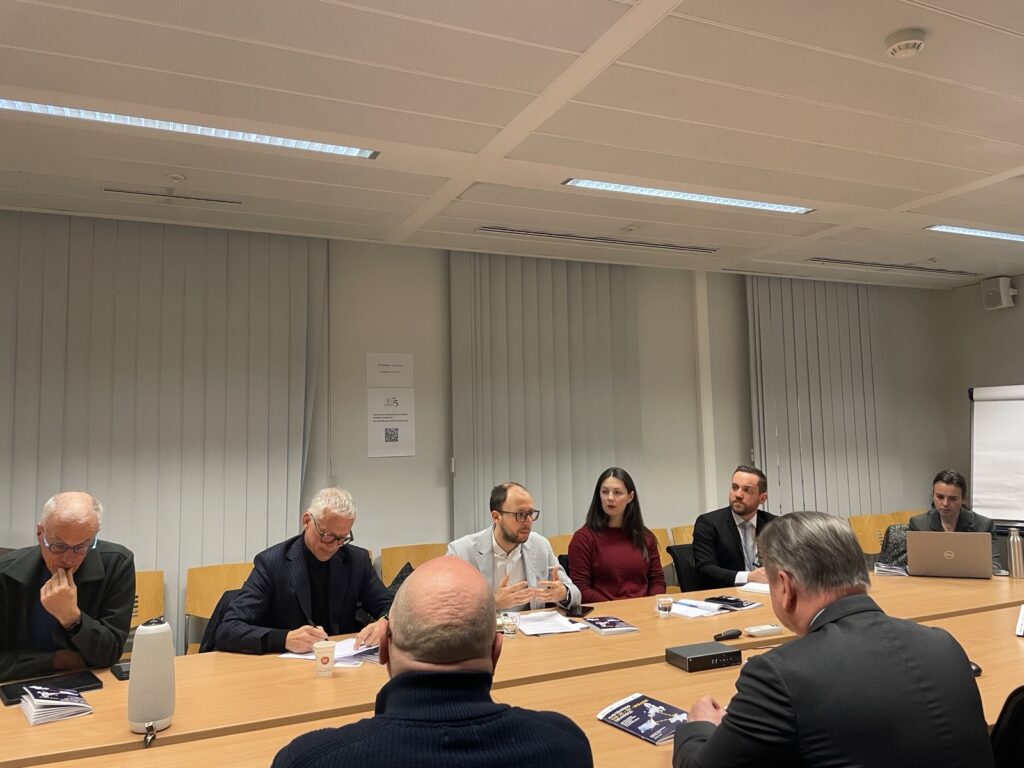
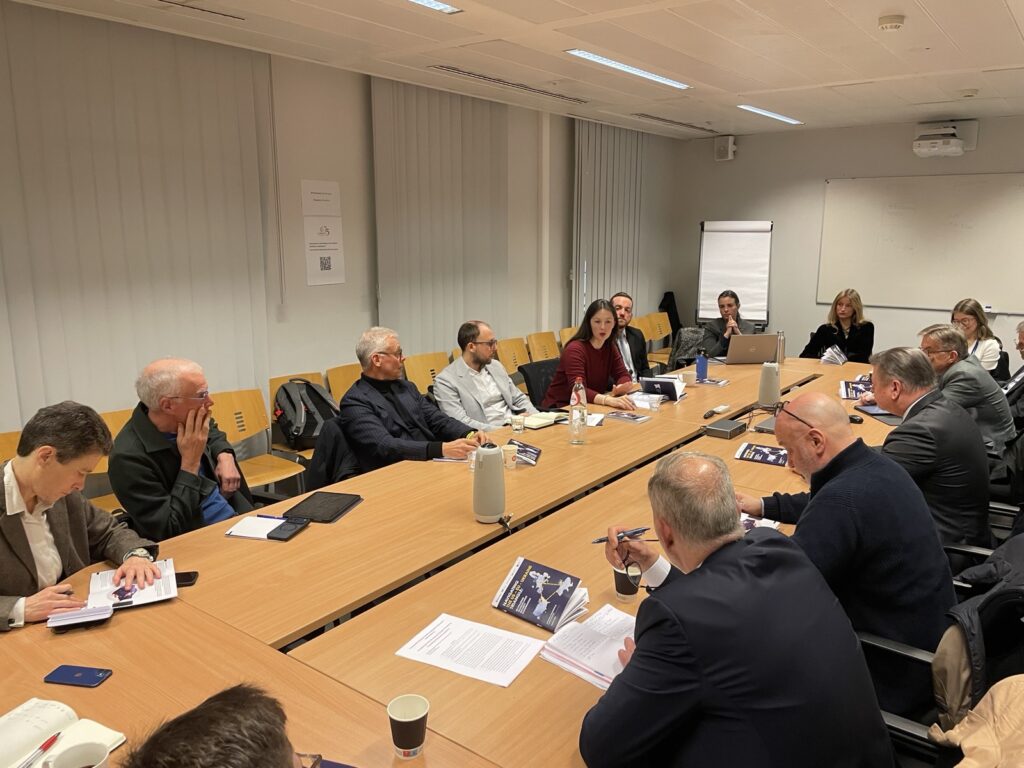
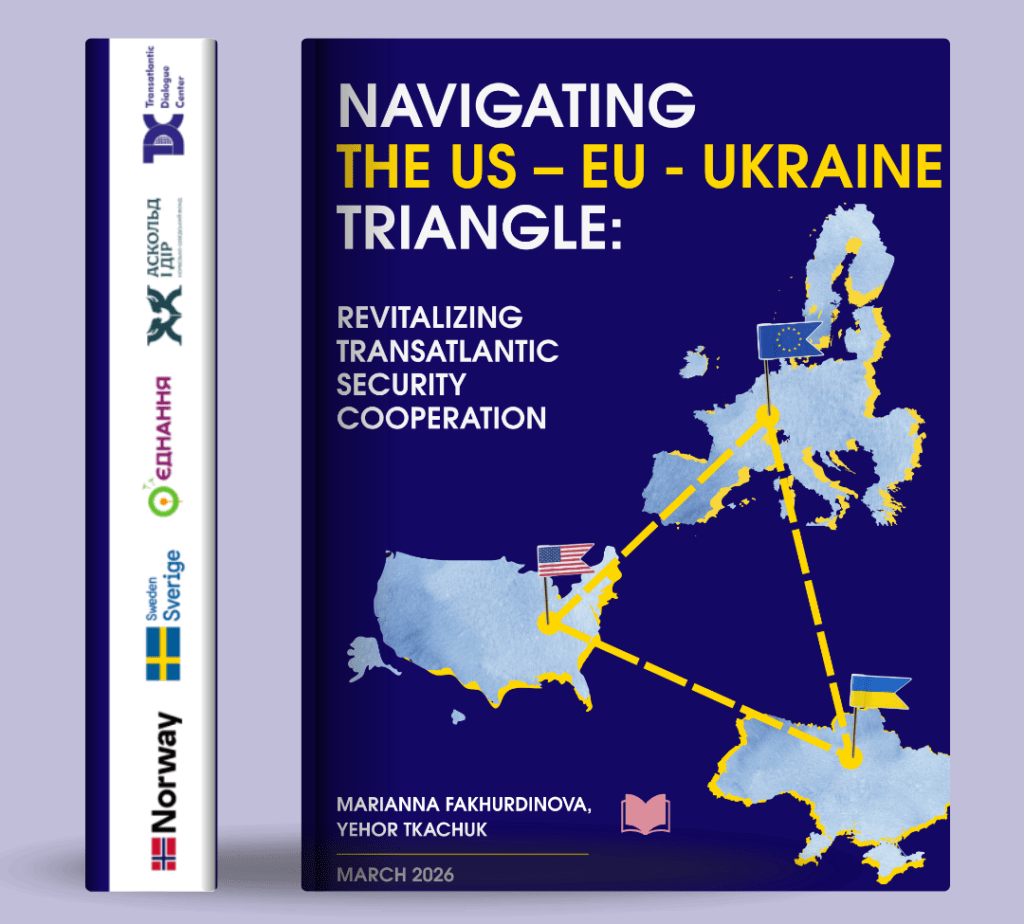
During the session, Marianna Fakhurdinova presented the report’s key findings, outlining why transatlantic security cooperation requires a more pragmatic “triangle” approach that recognises Ukraine as a central actor, rather than treating cooperation exclusively through a US–EU lens.
Despite the U.S. retreat from its traditional role in European security and the structural limits on European strategic autonomy, the EU, the United States, and Ukraine can still align their positions in a rapidly worsening security environment.
The report argues that even as the United States’ strategic priorities increasingly shift away from Europe, it remains in the vital interest of both Ukraine and the EU to sustain tactical engagement with Washington amid Russia’s ongoing war. Building on this, the discussion focused on where trilateral cooperation can stay practical and results-oriented, even as political and strategic divergences widen.
Dr Giuseppe Spatafora and Dr Joris Van Bladel provided their perspectives on the evolving transatlantic environment, including the implications of changing US–EU dynamics for European security and the need to identify workable formats for cooperation that strengthen deterrence and long-term resilience.
The conversation took place under the Chatham House Rule, encouraging a frank exchange and active participation from attendees. Overall, the discussion underscored the need to move from general alignment to pragmatic, trilateral cooperation that supports Ukraine’s defence and reinforces Europe’s long-term security.
The report is produced by Transatlantic Dialogue Center with the support of the Askold and Dir Fundas a part of the Strong Civil Society of Ukraine – a Driver towards Reforms and Democracy project, implemented by ISAR Ednannia, funded by Norway and Sweden. The contents of this publication are the sole responsibility of Transatlantic Dialogue Center and can in no way be taken to reflect the views of the Government of Norway, the Government of Sweden and ISAR Ednannia.