

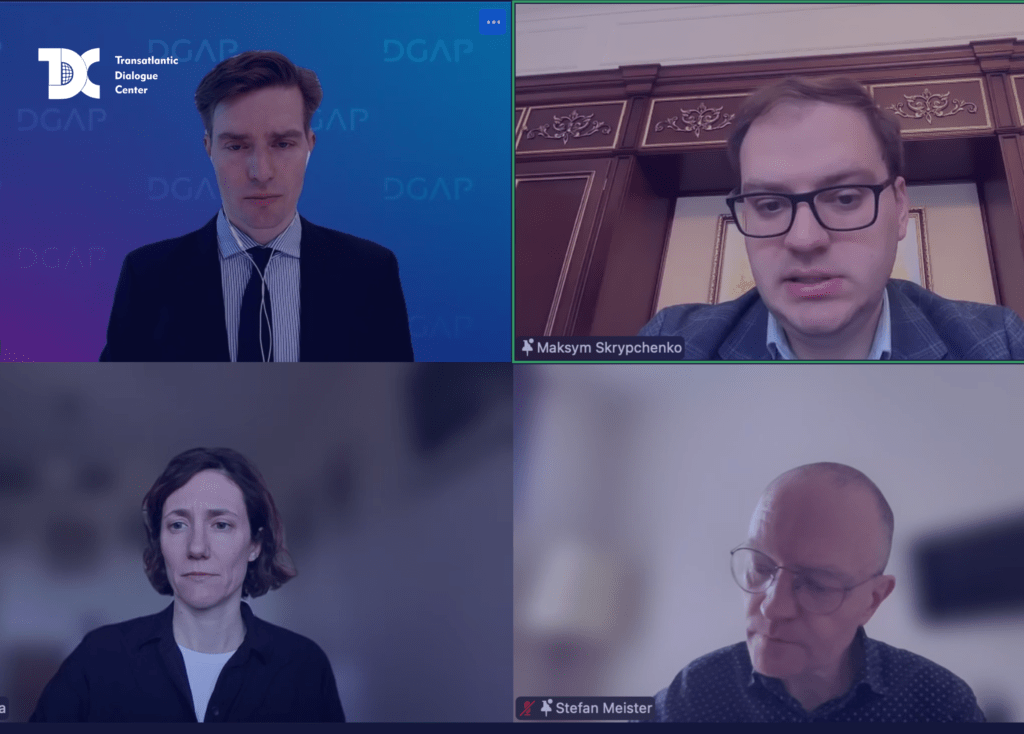
Maksym Skrypchenko, Präsident des Transatlantic Dialogue Center, sprach beim Morning Briefing on Ukraine des Deutschen Rats für Auswärtige Beziehungen (DGAP) zum Thema “An Update on Ukraine: Domestic, European, and Security Affairs,” das die DGAP am 30. April 2026 organisierte. Gemeinsam mit führenden europäischen Expert:innen bewertete er die militärische, politische und diplomatische Lage der Ukraine sowie die Zukunft der europäischen und transatlantischen Unterstützung.
Das Gespräch umfasste die sich wandelnde Sicherheitslage der Ukraine, Drohnen- und Verteidigungsinnovationen, die Beziehungen zwischen der Ukraine und den USA, die Auswirkungen des Krieges im Nahen Osten auf die globale Aufmerksamkeit sowie die für die Ukraine verfügbaren Ressourcen und die strategische Bedeutung des EU-Beitrittsprozesses der Ukraine.
Zentrale Punkte aus dem Briefing:
- Die Lage an der Front hat sich stabilisiert. Insbesondere die Drohnenkriegsführung schränkt Russlands Fähigkeit zu schnellen gepanzerten Vorstößen deutlich ein, während im Nordosten, vor allem in der Nähe von Sumy, weiterhin Risiken bestehen.
- Die Ukraine entwickelt sich zu einem Sicherheitsgaranten für Europa, und baut fortschrittliche Drohnen-Ökosysteme, Anti-Drohnen-Lösungen, digitale Systeme zur Gefechtsfeldführung sowie eigene Fähigkeiten für weitreichende Präzisionsschläge aus.
- Die EU übernimmt eine größere finanzielle und politische Rolle , bei der Unterstützung der Ukraine. Diese Hilfe muss jedoch planbar und systematisch werden, statt ad hoc zu erfolgen.
- Russland zeigt kein Interesse an Verhandlungen im guten Glauben. Zugleich scheinen sich beide Seiten auf einen langwierigen Abnutzungskrieg vorzubereiten, der Frontlinie, gesellschaftliche Resilienz, Energieinfrastruktur und Regierungsführung betrifft.
- Die EU-Integration bleibt für die Ukraine eine strategische Sicherheitsfrage, nicht nur wirtschaftlich, sondern auch institutionell. Sie bedeutet langfristige Zugehörigkeit zu Europa und den endgültigen Austritt aus Russlands Einflussbereich.
- Trotz institutioneller Belastungen, gesellschaftlicher Erschöpfung, Mobilisierungsdrucks und des Ausbleibens von Wahlen unter Kriegsrecht, funktioniert das innenpolitische System der Ukraine weiterhin.
In seinen Ausführungen betonte Maksym Skrypchenko, dass der Kampf der Ukraine nicht nur als Verteidigung gegen die russische Aggression verstanden werden sollte, sondern auch als umfassendere Herausforderung für die europäische Sicherheit. Die militärische Erfahrung, die Verteidigungsinnovationen und die ukrainische Resilienz machen die Ukraine zu einem entscheidenden Partner für die langfristige Stabilität Europas.
Die kommenden Monate werden für die Ukraine entscheidend sein: Die Wiederherstellung zentraler Energieinfrastruktur vor dem nächsten Winter, die Sicherung fortgesetzter internationaler militärischer Unterstützung sowie die Weiterentwicklung eines glaubwürdigen politischen Pfads in Richtung EU-Mitgliedschaft. Für Europa ist die Unterstützung der Ukraine eine strategische Investition in die Sicherheitsarchitektur des Kontinents und in seine demokratische Zukunft.
Sehen Sie sich das vollständige Briefing über den Link.