

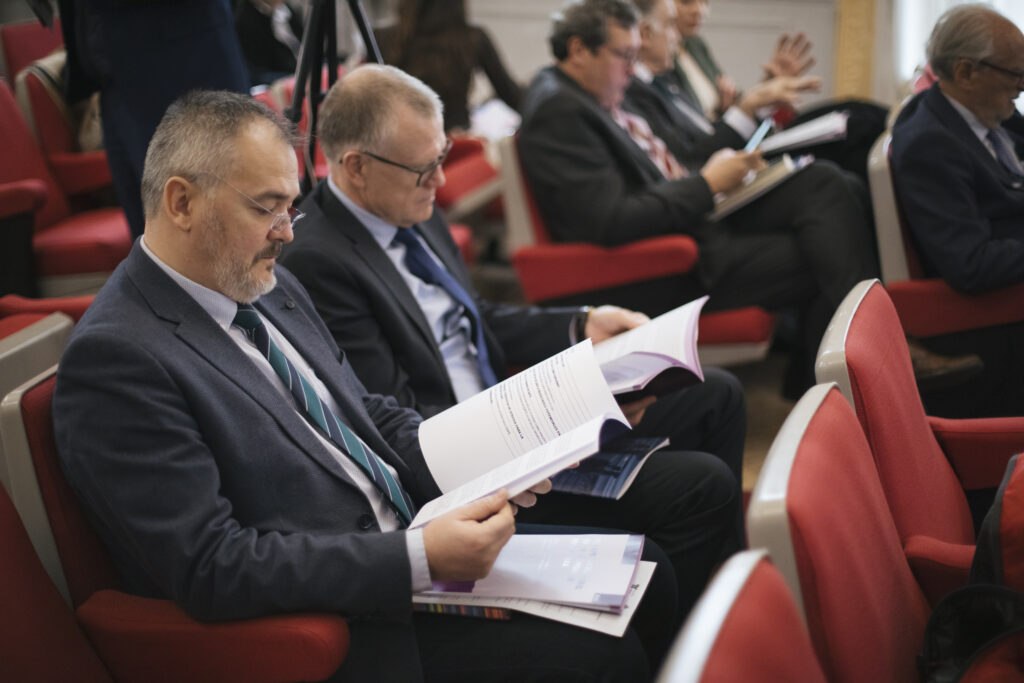
On November 26, Transatlantic Dialogue Center together with Eurodefense Joven España held a panel conference entitled “Europe in Defence: Strategies and Rearmament in the Face of the Russo-Ukrainian War“ in Madrid, gathering over 100 participants, including members of parliament, journalists, analysts, and students.
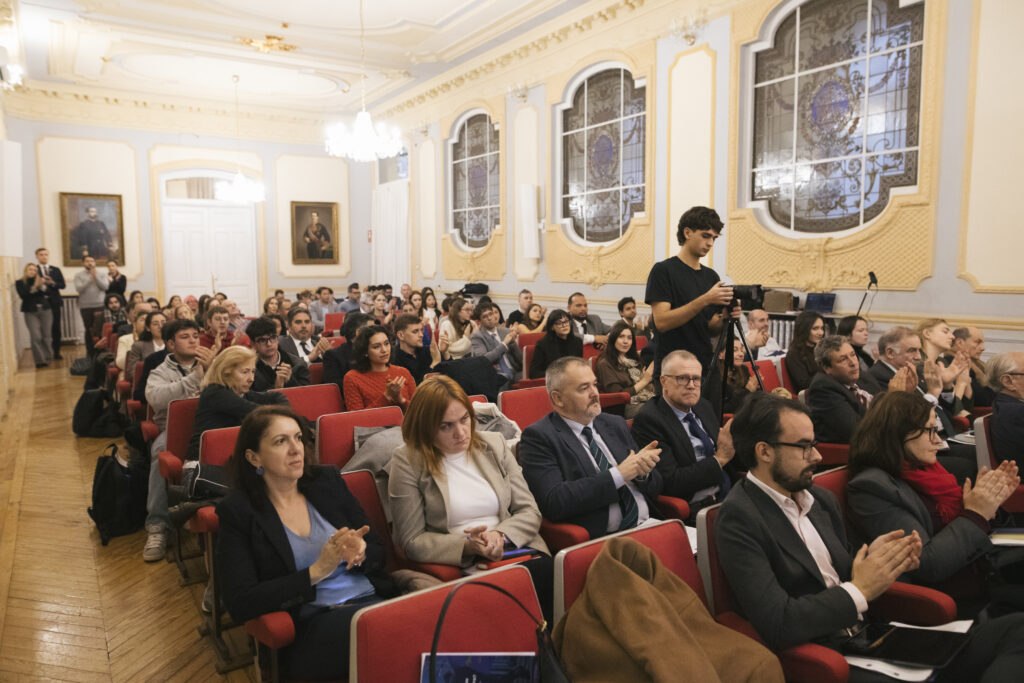
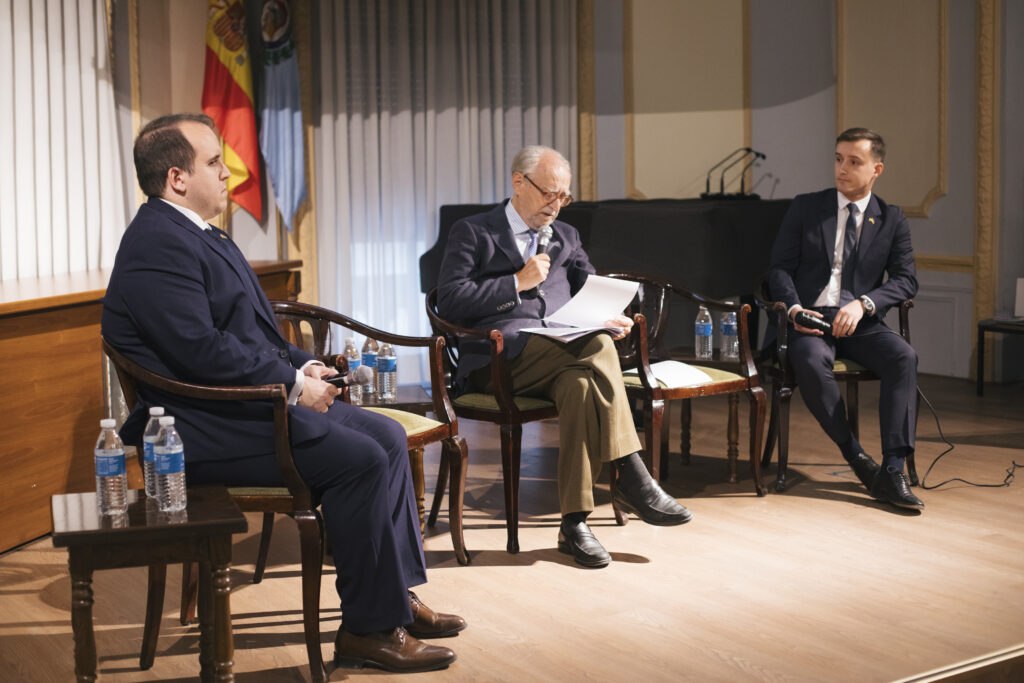
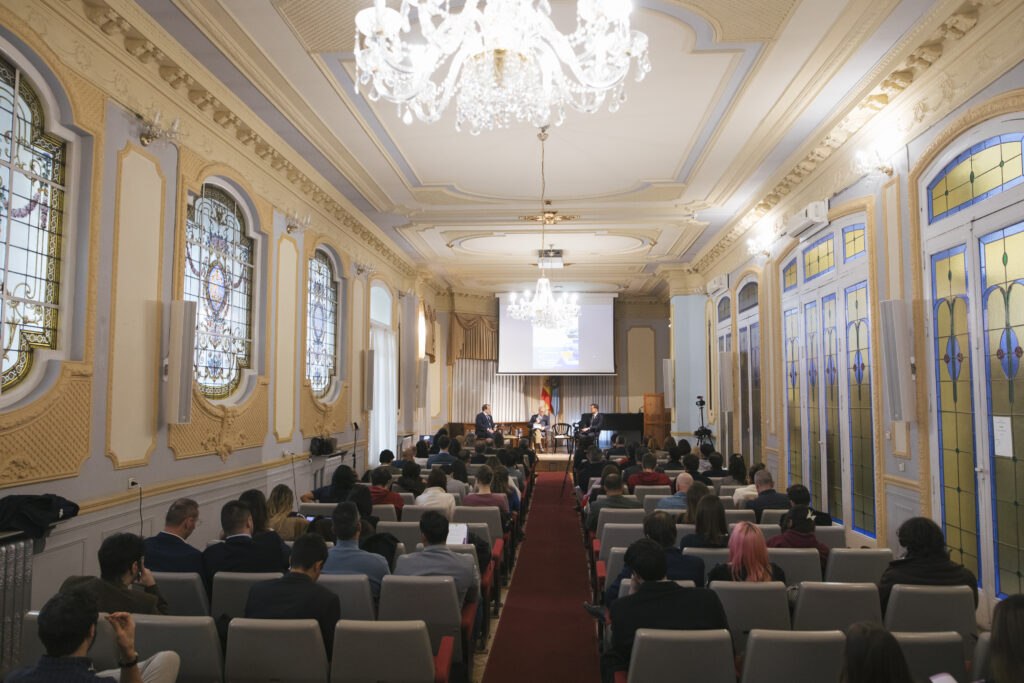
The event offered a platform to examine the Russian-Ukrainian war through political, economic, military, and technological perspectives, with a focus on strengthening European security.
Opening remarks were delivered by Oleksandr Slyvchuk, Coordinator of the Spain and Latin America Cooperation Program of the Transatlantic Dialogue Center, Amín Lejarza de Bilbao Essalhi, President of Eurodefense Joven España, and Francisco Aldecoa Luzarraga, Spanish European Movement (CFEME).
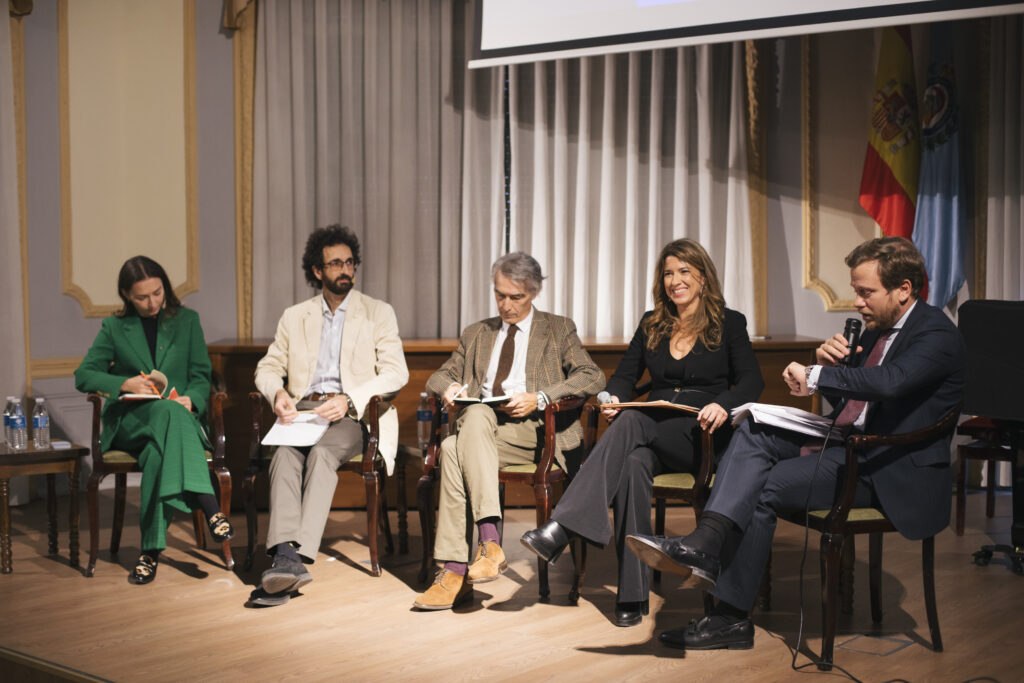
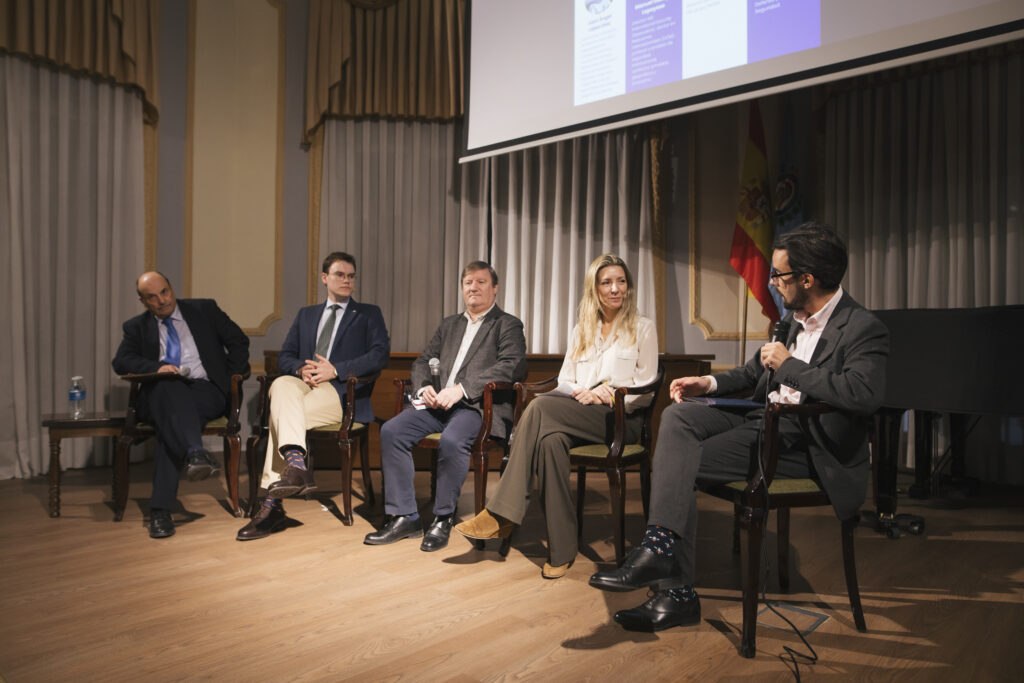
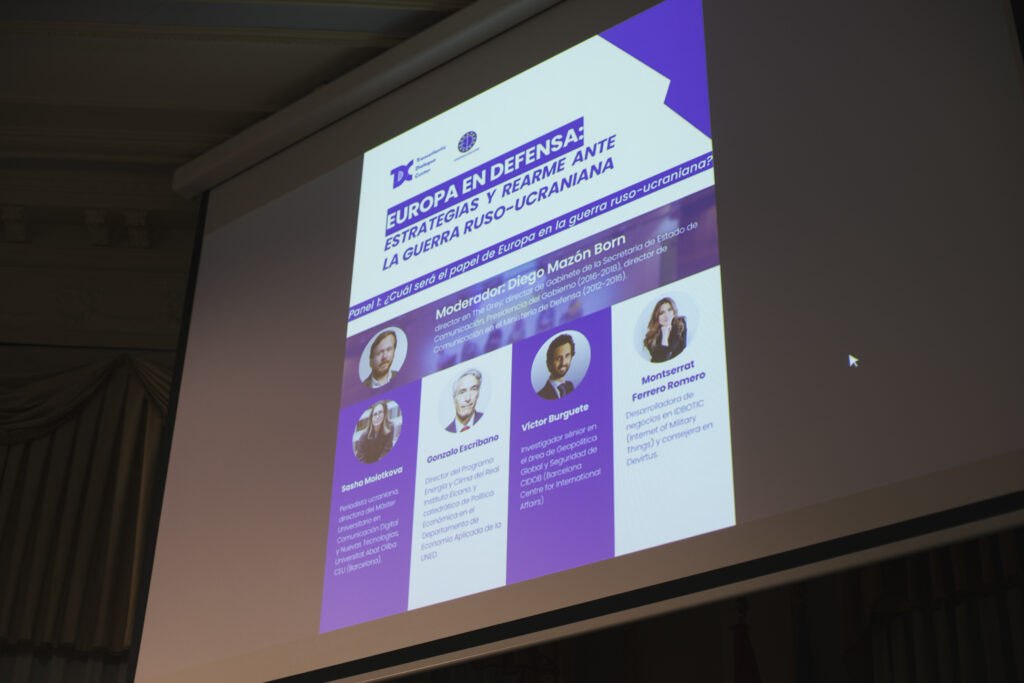
The first panel discussion “What role will Europe play in the Russian-Ukrainian war?“ examined Europe’s position and capacity to respond to the ongoing conflict, addressing questions of political will, economic constraints, and strategic autonomy. The panel gathered representatives from media, academia, and the analytical community and was moderated by Diego Mazón Born, Director at The Grey and former senior communication official at the Spanish Government and Ministry of Defence.
Die Teilnehmer der Diskussion:
- Sasha Molotkova, Ukrainian journalist, Master’s Program Director in Digital Communication and New Technologies, Universitat Abat Oliba CEU;
- Gonzalo Escribano, Director of the Energy and Climate Program, Elcano Royal Institute;
- Victor Burguete Vidal, Senior Researcher, Global Geopolitics and Security, CIDOB (Barcelona Centre for International Affairs);
- Montserrat Ferrero Romero, Strategy Director at Devirtus; Business Developer at IDBOTIC (Internet of Military Things).
Experts raised questions about Russian aggression as an attack not only on Ukraine’s sovereignty but on the European project and its core values. The panel explored the risks and shortcomings of peace proposals negotiated without Ukraine, particularly those centered on lifting sanctions and offering no sustainable security guarantees. Participants discussed the structural limits of European assistance, including rigid budget frameworks, legal and financial concerns around frozen Russian assets, and operational constraints. The discussion also addressed Ukraine’s role in Europe’s energy security, the vulnerability created by occupied resources and critical infrastructure, and the need to fully decouple from Russian energy. Additional topics included realistic EU integration through sectoral convergence in defence, energy and finance, alongside internal EU reforms, and hybrid and cognitive dimensions of the war, including disinformation ecosystems and growing societal fatigue in Europe.
In the second session of the conference, titled “The Russian-Ukrainian war as a turning point for Europe’s rearmament”, experts explored the implications of the war for Europe’s defence industrial base and military capabilities. The panel brought perspectives from defence operations, industry, and research, and was moderated by Santiago Moreno Vila, Editor-in-Chief at infodron.es and Director at Drone City Connect.
Die Teilnehmer der zweiten Podiumsdiskussion waren:
- Juan Ángel López Díaz, retired Marine Infantry Colonel, specialist in Communications and Electronic Warfare; graduate of EMACON and the NATO Defence College;
- Manuel José Gazapo Lapayese, Director, International Security Observatory; PhD in International Relations, professor and analyst of international security, armed conflicts, geopolitics and terrorism;
- Rafael Moreno Izquierdo, Director of Communications, Indra;
- Silvia Gamo, Managing Director, Fundación Círculo de Tecnologías para la Defensa y la Seguridad.
The discussion explored the coexistence of traditional and disruptive technologies in modern warfare, and Ukraine’s rapid adaptation of tactics and logistics. Participants addressed exposed weaknesses in Europe’s defence industrial base, including dependence on imported components, loss of ammunition production capacity, and the urgent need to scale output. The panel examined the economics of attrition, comparing cheap Russian systems with expensive European defenses, and discussed slow procurement cycles and bureaucratic barriers to timely response. Additional topics included the strategic value and limitations of dual-use technologies in modern warfare, the emergence of EU-level initiatives to support rearmament and industry capacity within a NATO framework, and the necessity of interoperability and institutional reform to sustain Europe’s long-term defence posture. The panel pointed to a shared conclusion: European rearmament is not merely a procurement challenge but demands strategic continuity, innovation ecosystems, and long-term political will.

The conference enriched the dialogue on the Russian-Ukrainian war and Europe’s defence capabilities, with insights contributed by all speakers and participants.