
 14 دقائق للقراءة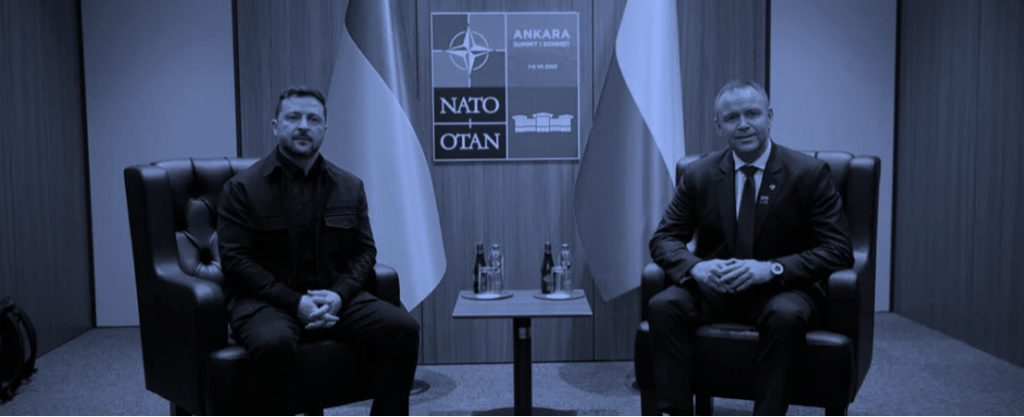
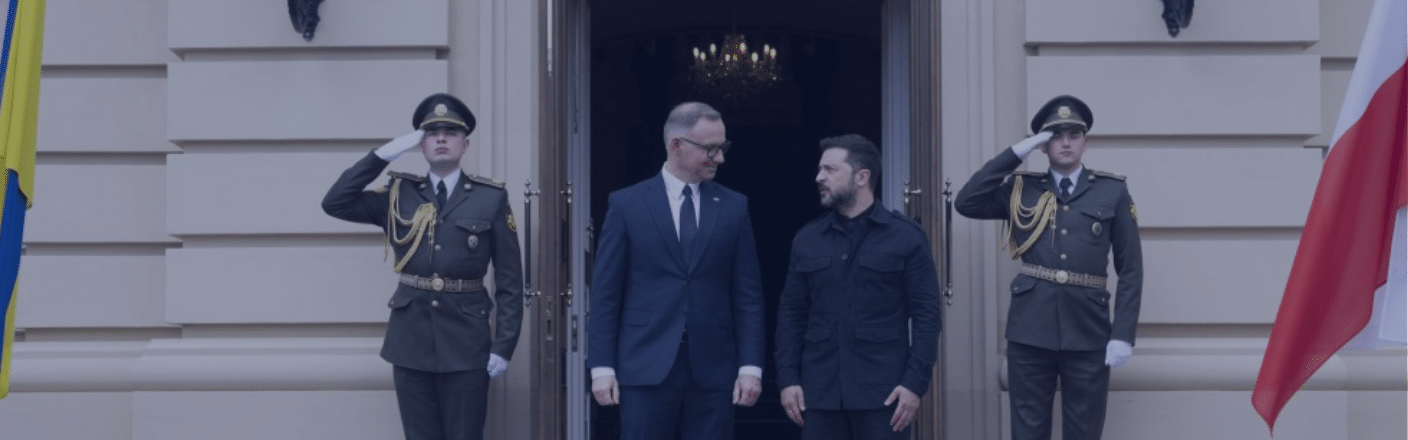
Historical disputes between Ukraine and Poland have again moved from the margins of bilateral relations to the center of political debate. The recent escalation of historical debates, accompanied by Russian information operations and growing anti-Ukrainian aggression in Poland, shows why this is no longer only a matter for historians. Arguments over the Ukrainian Insurgent Army (UPA), Volhynia, and exhumations increasingly affect discussions about Ukraine’s European integration, security cooperation, and the safety of Ukrainians in Poland. Yet public opinion in both countries suggests that society does not necessarily want confrontation: most Ukrainians and Poles still see cooperation in the face of the Russian threat as essential.
Drawing on the Polish-German and German-Czech experiences, this article argues for a model of “managed disagreement”: a framework in which unresolved historical conflicts are acknowledged, institutionalized, and contained rather than allowed to paralyze bilateral relations.
"Ukraine will not enter the European Union with Banderism," declared Mariusz Błaszczak, former defense minister and chairman of the Law and Justice (PiS) parliamentary caucus, on 2 July 2026. Eleven days later, PiS deputies submitted draft resolution No. 2807 to the Sejm, which calls on the government not to consent to subsequent stages of Ukraine’s EU accession that require unanimity among member states — and explicitly ties this demand to Ukraine's policy of commemorating the UPA. The draft was submitted by the opposition; it is not binding, yet its very appearance attests to an attempt to turn a historical dispute into an argument in favor of a Polish veto.
On 26 May 2026, Volodymyr Zelenskyi conferred on the Separate Special Operations Center "Pivnich" the honorary name "of the Heroes of the UPA." Three days later, the Polish Ministry of Foreign Affairs expressed its "indignation," yet in the same statement warned against allowing bilateral relations to be held hostage by every new dispute about the past. However, the news has already become the subject of widespread public and political debate.
At the same time, historical polemics increasingly coincided with aggression against Ukrainians in Poland. In the first half of 2026 alone, the police received 180 reports of hate crimes against Ukrainian citizens, 30% more than a year earlier. In July, two men associated with the Confederation party filmed and interrogated a Ukrainian employee in Poznań about Stepan Bandera; after the video was published, she faced insults and threats online. Rzeczpospolita, citing the Union of Ukrainians in Poland, noted that surges of anti-Ukrainian aggression coincided with political campaigns and flare-ups around Volhynia.In some cases, the historical grievances therefore become the language in which aggression is justified or politically mobilized.
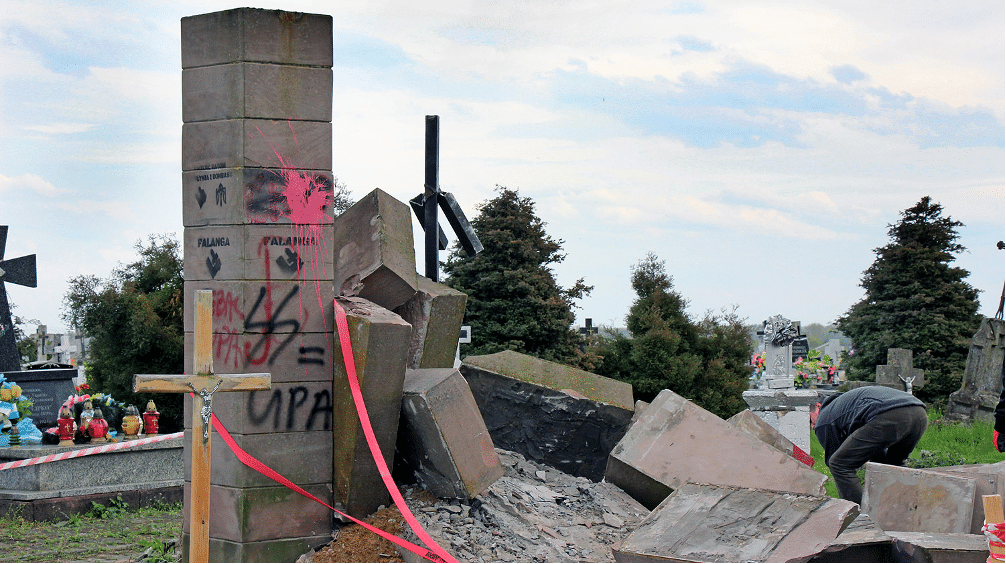
Against this backdrop, it is particularly important that a political crisis not become the reason for halting work on burial sites. Between 13 July and 7 August 2026, a Ukrainian-Polish team carried out exhumation work in the former villages of Ostrivky and Volia Ostrovetska in Volhynia and uncovered the remains of 55 people, among them 26 children. Not long ago, this would have been hard to imagine: in 2017, after the dismantling of a UPA monument in the village of Hrushovychi (Hruszowice, Poland), the Ukrainian side stopped granting approval for Polish search and exhumation work.
At that time, a dispute over a single site in Poland blocked humanitarian work at other locations in Ukraine (Stryjek, p. 258). This time, a rupture was avoided thanks to the Working Group on Dignified Burials, which held five sessions in 2025 and became a permanent venue for discussing applications, timelines, and the composition of expeditions. Meanwhile, as of 7 August 2026, the permit for Ostrivky remained the only one issued specifically for the exhumation of victims of the Volhynia tragedy.
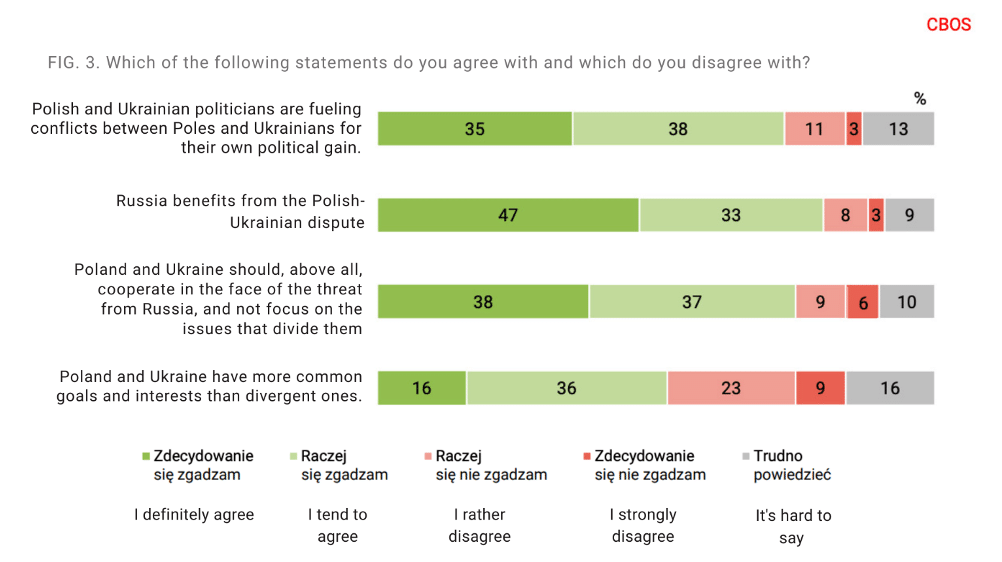
Sociological data, however, does not confirm a simple division into two mutually hostile societies. In July 2026, 84% of Poles held that the state should respond to the glorification of persons responsible for crimes against Poles, and 77% agreed that good relations cannot be built without coming to terms with the past. At the same time, 73% were convinced that Polish and Ukrainian politicians were stoking the conflict for their own benefit, 80% saw Russia as the beneficiary, and 75% considered cooperation in the face of the Russian threat to be the priority.
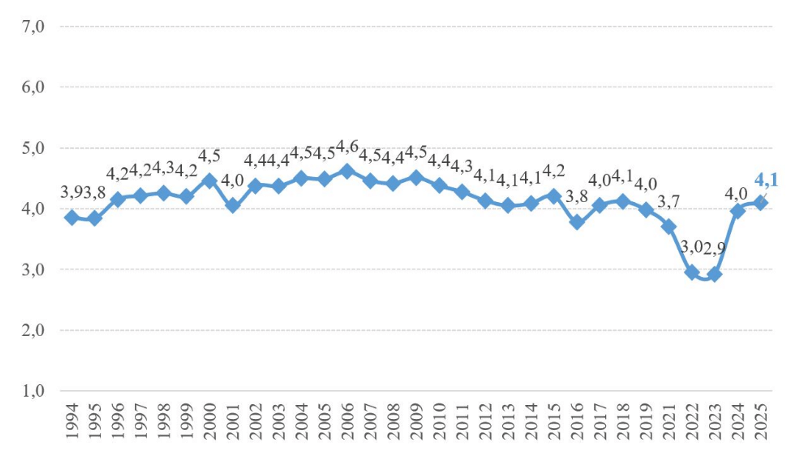
إن survey by the Ukrainian sociological institute KIIS, conducted a month earlier, showed that 90% of Ukrainians support a constructive settlement: 57% recognize each state's right to its own view without interference from its neighbor, 33% hope for a compromise through commissions of historians, and only 5% favor confrontation. Even after the cooling that set in once the "romantic" period in relations between the two countries in 2022–2023 ended, Ukrainians' attitudes toward Poles in 2025 remained within the tolerant range on the KIIS social distance scale, with no statistically significant deterioration compared with 2014.
Tensions in Polish-Ukrainian relations cannot be explained solely by domestic political issues and views in Ukraine and Poland. Russia is using existing contradictions as an instrument of pressure on bilateral relations. In July 2026, the Polish fact-checking project Demagog described the simultaneous spread of materials about Volhynia — purportedly "declassified" documents, fabricated images, and bot farms on the eve of the anniversary of the tragedy. The Ukrainian Center for Countering Disinformation separately warned of an FSB campaign using falsified documents, intended to deepen Ukrainian-Polish mistrust.
At the same time, the surveys cited above indicate that public attitudes are ambivalent but not necessarily confrontational: both Poles and Ukrainians attach great importance to the past, yet, for the most part, they do not want it to undermine cooperation in the face of the Russian threat.
This is precisely why historical disputes between Ukraine and Poland cannot be left in a mode of recurring political crises. Poland is one of Ukraine's principal partners in countering Russia and in defense cooperation, and at the next stages of Ukraine's EU accession, Warsaw's position will also carry procedural weight, since some decisions will require unanimity among member states. The issue, then, is not how to forge a shared memory, but how to prevent disputes about the past from blocking cooperation in other fields each time they arise.
Ukraine and Poland have more than once found political formulas for jointly commemorating the victims, but far more rarely have they turned these arrangements into ongoing projects. Between 1994 and 2005, historians held eleven seminars under the title "Ukraine – Poland: Difficult Questions" and published ten volumes on the conflict of 1918–1947 [Mędrzecki, pp. 243–244]. Once the cycle concluded, however, no permanent secretariat, dedicated budget, or mechanism for transferring the results into textbooks, teacher training programs, and political debate remained. The formula of joint commemoration of the victims at Pavlivka in 2003 was also interpreted in different ways: in Poland, it was increasingly understood as the beginning of a process after which Ukraine still had to determine the UPA's responsibility, while in Ukraine it was understood as a political compromise that had already been reached [Stryjek, p. 262].
In 2013, the dispute returned over how to define the events — a tragedy or a massacre, ethnic cleansing bearing the marks of genocide or part of a broader conflict that involved organized anti-Polish actions by the UPA and Polish retaliatory measures. In 2015, Ukraine recognized the OUN (Organization of Ukrainian Nationalists) and the UPA as fighters for independence, and in 2016, the Polish Sejm designated the killings of the Polish population as genocide; these differing assessments were enshrined in law and a parliamentary resolution.
The participants in the discussion "How to Demine Ukrainian-Polish History?" identified this problem as early as 2016. Heorhii Kasianov, Doctor of Historical Sciences and professor at Maria Curie-Skłodowska University (Poland), argued that a conflict between specific political forces is mistakenly presented as a conflict between two nations. Mykola Kniazhytskyi, Ukrainian MP and Co-chair of the Committee on Interparliamentary Relations with Poland, warned: "With the help of historians alone we will never cut through this complicated knot," and Paweł Kowal, a Polish political scientist, called the institutional level the foundation of Polish-German reconciliation.
In the same discussion, Ihor Iliushyn, Ph.D., drew attention to another problem: the dialogue takes place under the patronage of state institutions that not only research the past but also shape official narratives. As a result, a change in government or in political course can alter not only the tone of the discussion but also the very agenda of the historical dialogue. Historians can establish facts and explain discrepancies, but only politicians decide whether disagreement will become grounds for a diplomatic or administrative sanction.
Warsaw and Berlin also shared an extremely complex historical trauma: the Second World War, the German occupation, the shifting of borders, postwar expulsions, and long-running property claims. Their model did not remove all disputes — reparations demands continue to resurface in Polish politics — but it created an infrastructure of cooperation so dense that the historical conflict did not become the sole defining factor in bilateral relations.
The first element of this system was political interaction. The 1991 Treaty on Good Neighbourliness provided that the heads of government were to consult at least once every six months, the foreign ministers and the leadership of their ministries at least once a year, and that other ministries would maintain regular contacts. From 1997 onward, broader meetings began to be held with the participation of the heads of government and several ministers; by 2006, eight such meetings had taken place [Gardner Feldman, p. 238].
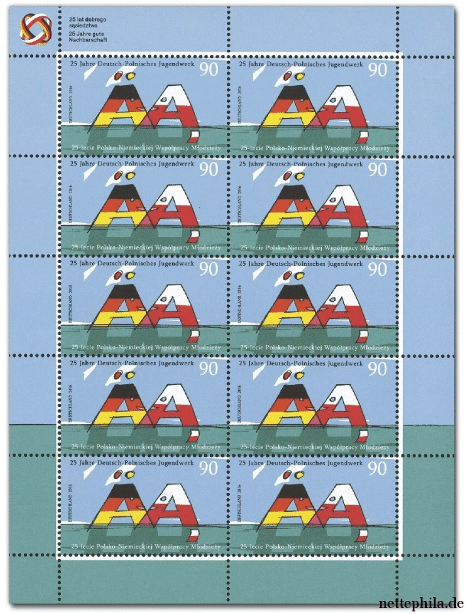
As a result, a political crisis did not require the creation of a channel for negotiations anew each time. It already existed and could be used even when the governments disagreed about the past. The second element was engaging young people. The Polish-German Youth Office was given binational management and permanent government funding. Between 1993 and 2006, it supported approximately 48,000 exchanges, in which some 1.88 million young people took part. In 2009 alone, more than 106,000 participants passed through youth and school exchanges [Gardner Feldman, pp. 229–230].
The Polish-Ukrainian Youth Exchange Council also operates, but its scale is so far incomparably smaller: between 2016 and 2025, it supported 640 projects and involved more than 21,000 participants. That amounts to roughly 2,100 participants a year. The problem, therefore, lies not in the absence of a Polish-Ukrainian institution, but in the fact that for most schoolchildren such participation remains an exception, whereas Polish-German exchanges have become a mass experience.
The third element was education. The Polish-German Textbook Commission has been operating since 1972. In 1976, it prepared the first recommendations for textbook authors, in 1995, it issued a revised edition, and in 2001, nineteen Polish and German researchers produced a bilingual handbook for teachers. The Commission held more than thirty specialized conferences and later united the effort to produce a joint textbook [Gardner Feldman, pp. 211–212].
This was precisely what the Polish-Ukrainian dialogue of historians lacked. "Difficult Questions" conference generated a vast amount of research, but its results were not consistently translated into materials for teachers, school curricula, and sustained bilateral educational work. A chance has now emerged to fill this gap in part through the Polish-German-Ukrainian project of the Georg Eckert Institute, which is working on recommendations and materials for teaching shared transnational history.
The fourth element was funding. The Foundation for Polish-German Cooperation was established in 1991. By 2001, it had supported approximately 4,600 projects in the fields of culture, education, science, language learning, town partnerships, ecology, and local development [Gardner Feldman, p. 230]. By 2008, more than 600 partnerships between Polish and German cities and municipalities [Gardner Feldman, pp. 225–226].
This changed the very structure of the relationship. It was sustained no longer by Warsaw and Berlin alone, but also by schools, universities, cities, foundations, museums, civic organizations, and local administrations. When the central governments entered into conflict, the other levels of cooperation did not disappear along with it. The fifth element was clearly visible during the 2004 crisis. The Prussian Trust (Preußische Treuhand), which represented some of the Germans expelled from territories that were ceded to Poland after the war, threatened to file lawsuits seeking restitution of property. The Polish Sejm responded by advancing a demand for war reparations from Germany. Despite the heated political vision on the issue, the governments proceeded to resolve the legal dispute not through mutual parliamentary resolutions.
Instead, they referred the question of individual property claims to a joint group of lawyers, which in November 2004 concluded that such claims had no legal basis [Gardner Feldman, pp. 212–213].
This did not eliminate the political demands. Polish politicians can still return to the subject of reparations, especially during election campaigns, while Germany continues to insist that there is no legal basis for new claims. The property dispute, however, did not become grounds for terminating any other contacts. It has its own separate political and legal level, while defense, economic, educational, and local cooperation have their own.
The scale of this infrastructure is evident in present-day relations: more than three million young people have passed through exchanges, over 500 town partnerships are in operation, about two million people are learning German in Poland, and Poland has become Germany's fifth-largest trading partner; these figures are cited by the German Federal Foreign Office. Yet between 2019 and 2023, no intergovernmental consultations were held, the dispute over reparations remained open, and mutual border checks in 2025 hit border communities hard.
إن CBOS survey in October 2025 revealed a mixed picture: 25% of Poles described relations as good, 18% as bad, and 48% as neutral, while 63% supported the demand for reparations. Despite this, in June 2026, the two countries signed a defense agreement.
The achievement of the Polish-German model, therefore, does not consist in the disappearance of historical conflicts. Its achievement lies in the capacity to continue cooperating when public sentiment deteriorates, and individual politicians use the past to mobilize voters. In June 2026, Johann Wadephul called these relations an "established friendship" and recalled Władysław Bartoszewski's words on the value of "everydayness and normality" between neighbors.
The German-Czech case makes it even clearer that reconciliation does not necessarily entail producing a shared historical assessment. The parties were unable to agree on the legal consequences of the Munich Agreement, the Beneš decrees, the expulsion of the Sudeten Germans, and property claims. The 1997 Declaration on Mutual Relations and their Future Development did not revoke the Beneš decrees — postwar acts under which a substantial part of Czechoslovakia's German-speaking population lost citizenship and property — nor did it establish a shared legal assessment of the expulsion. Instead, the two parties maintained their own positions and agreed that unresolved questions of the past should not burden present-day relations.
Alongside this political boundary, specific working instruments were established: the German-Czech Future Fund, to which Germany contributed 140 million marks and the Czech Republic the equivalent of 25 million, was given joint management. As of 2024, the Fund had supported more than 14,000 projects worth over 2.2 billion Czech crowns, and in 2024 alone, it financed 771 projects, among them more than 300 were directed to youth.
The German-Czech Discussion Forum operated alongside it, bringing together historians with politicians, party representatives, journalists, and activists. As a result, expertise did not remain confined to the academic community but became part of a broader public discourse and served as a precondition for consensus among political elites [Gardner Feldman, pp. 288–289].
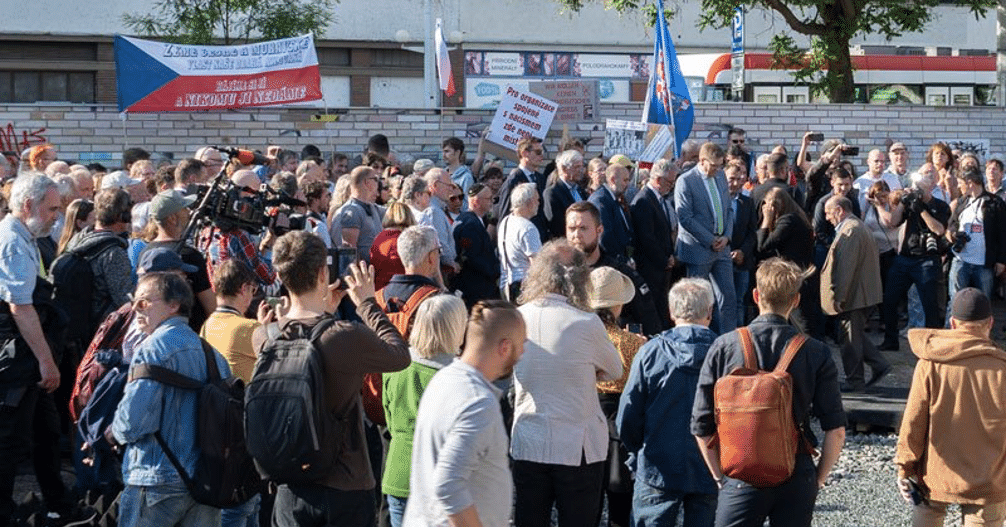
The 2026 conflict surrounding the first congress of the Sudeten German Association in the Czech Republic – an organization representing Germans expelled from Czechoslovakia and their descendants – demonstrated just how resilient this structure was. For supporters of dialogue, the meeting in Brno was a sign of normalization, whereas critics of the event saw it as a threat to the return of property and political claims. The senior levels of the Czech government officially distanced themselves from the event, the Chamber of Deputies adopted by majority vote a critical resolution calling for the congress to be canceled, and some three thousand participants were met by roughly the same number of protesters.
Despite the events, Prime Minister Andrej Babiš continued negotiations with Markus Söder and Friedrich Merz; economic relations were not revisited, and the governments extended the Fund's operation until 2037. Germany continues to account for about one-third of Czech exports, with Bavaria accounting for approximately a quarter of Czech-German trade. A politically heated dispute did not turn into a trade, governmental, or cross-border crisis.
Under the conditions of targeted Russian information operations, such a capacity to contain conflict is even more important for Kyiv and Warsaw than it was for Prague and Berlin in the 1990s.
The first conclusion concerns the distinction between procedures. The 1994 Agreement already regulates search, exhumation, reburial, and the protection of memorial sites, so the Working Group on Dignified Burials should not be debating the historical classification of each victim, but rather maintaining an open bilingual register of applications, publishing an annual calendar of works, and explaining delays in writing.
Disputes over monuments should be referred to a separate group of lawyers, heritage experts, and community representatives, which would establish ownership, legal status, and the procedure for restoring a given site. The Polish-German legal mechanism of 2004 can be applied to the problem that caused the crisis in Hrushovychi: a decision regarding a monument will no longer become a sanction against exhumations.
The second conclusion is that historical dialogue requires continuity and independence. The Polish-Ukrainian Historical Congress, which brought together around a hundred researchers in May 2026, should be transformed into a consortium of universities, academic institutions, and civic organizations with a joint secretariat and an independent scholarly council. As Heorhii Kasianov shows in his book Memory Crash, the politics of history is not only the work of historians but also a struggle over the use of the past to legitimize heroes, victims, and contemporary political goals [Kasianov, 2022]. When state memory institutions simultaneously open archives, organize research, and shape the official narrative, a dispute over the UPA or Volhynia quickly becomes a question of national dignity and political loyalty rather than of sources and facts alone.
This does not mean that memory institutions should be removed from the dialogue. But they should not be its sole arbiters: in that case, a change of political course brings with it a change in the agenda, the terminology, and the practical consequences of the discussion. Historical dialogue should therefore be entrusted to an independent consortium of institutions, while the Ukrainian and Polish Institutes of National Remembrance should provide documents and experts without unilaterally determining conclusions or linking them to diplomatic decisions. The annual output should consist of a review of agreed facts, points of divergence, and gaps in the sources, together with materials for teachers; a separate forum should regularly bring researchers together with deputies from various parties, journalists, and local activists.
The third step is to radically scale up youth cooperation. Between 2016 and 2025, the Polish-Ukrainian Council involved more than 21,000 participants, an average of roughly 2,100 a year; by comparison, the Polish-German result over 35 years is already measured in millions of participants. A working target for 2028 could therefore be not the mechanical copying of the German scale, but at least a doubling of Polish-Ukrainian coverage, to 150 projects and 5,000 participants a year. At the current reimbursement rates for seven-day exchanges, this would mean a budget on the order of 3 million euros annually; the specific proportion of contributions must be agreed upon by the governments, though, given their differing financial capacities, the Polish share could be larger or mixed up with the EU and donor funds. What should be financed is not one-off trips but partnerships of at least three years between the same schools, museums, and communities, since it was repetition, rather than the number of ceremonial gatherings, that turned Polish-German exchanges into social infrastructure.
Finally, no institution would fund all of this work: the present Youth Exchange Council covers only one area, while search work, translations of sources, local museums, and teacher training depend on separate competitions and political decisions. This gap could be filled by a Foundation for Polish-Ukrainian Cooperation with a parity board and an independent binational secretariat. A starting five-year budget of 20 million euros, at 4 million per year, would enable the shift from dozens of showcase events to multi-year grant competitions. The foundation should finance local museums and memorial sites, translations of sources, teacher training, a digital catalog of burial sites, and civic projects, with a focus on various aspects of the Polish-Ukrainian historical heritage.
The Polish-German and German-Czech experiences do not prove that states can produce a single memory. They demonstrate that even sharp disagreement can be kept within bounds if different rules apply to burials, monuments, research, and political responses. And that’s the path Ukraine and Poland could follow.
إن الآراء والأفكار والمواقف المعبر عنها في الأوراق المنشورة على هذا الموقع تخص المؤلفين وحدهم، ولا تعكس بالضرورة آراء مركز الحوار عبر الأطلسي أو لجانه أو منظماته التابعة. وتهدف هذه الأوراق إلى تحفيز الحوار والنقاش، ولا تمثل مواقف سياسية رسمية لمركز الحوار عبر الأطلسي أو لأي منظمات أخرى قد يكون المؤلفون مرتبطين بها.