

 12 دقائق للقراءة
Black Sea security is directly linked to the occupation and militarization of Crimea, as well as to the ability of regional states to protect shipping and critical infrastructure. Ukraine’s asymmetric actions have shifted the balance of power, but have not eliminated the threats: in 2026, Russian strikes effectively halted Ukraine’s main maritime export route, while attacks on merchant vessels near Romania showed that the risks extend across the region.
This article examines how the militarization of Crimea affects the current security environment in the Black Sea region, how Ukraine is countering Russia’s military and economic strategy, and how the littoral states, the EU, and NATO are responding to these challenges. The analysis shows that existing initiatives have yet to form a coherent regional security system. To reduce risks to shipping and trade, Ukraine’s partners should make Black Sea security a priority and deepen practical coordination.
Beginning on 20 February 2014, when the first cases of the Russian Armed Forces illegally crossing Ukraine’s state border were recorded, the Crimean Peninsula found itself at the epicenter of a geopolitical and security crisis. The illegal occupation, accompanied by illegitimate decisions such as the proclamation of the Declaration of Independence of the Autonomous Republic of Crimea on 11 March 2014, set in motion the irreversible transformation of a unique region into a vast military base.
From the very beginning of the occupation, the Russian Federation rapidly expanded its military capabilities in Crimea. Between 2014 and 2021, the number of Russian troops on the peninsula more than tripled, rising from 12,500 to more than 40,000. The peninsula was saturated with weapons: the occupying forces received hundreds of armored combat vehicles, tanks and artillery systems, as well as an air component comprising dozens of helicopters and aircraft.
A particular threat to regional security was Russia’s preparation of infrastructure for hosting nuclear weapons, including the modernization of Soviet-era nuclear warhead storage facilities and the deployment of potential delivery platforms—ships and missile systems. The illegal construction of the Kerch Bridge played a key role in enabling Russia’s accelerated militarization of the peninsula. It also facilitated the selective blocking of shipping in the Sea of Azov, which restricted Ukraine’s export capacity and adversely affected global food security.
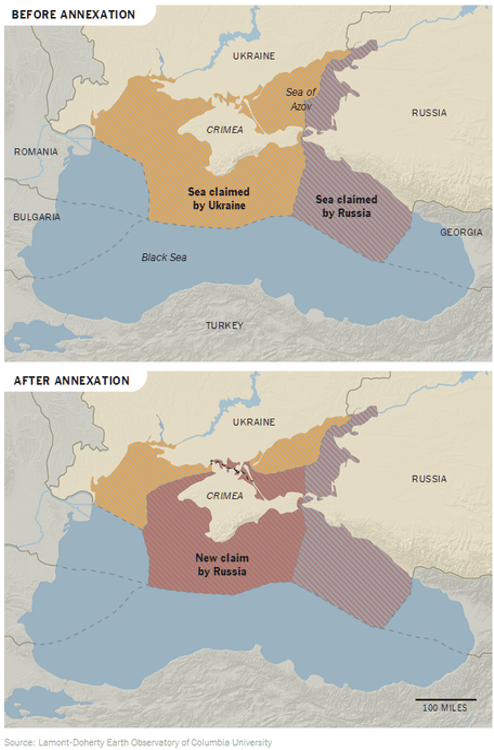
When Russia launched its full-scale invasion on 24 February 2022, occupied Crimea became a key staging ground for its offensive in southern Ukraine and a platform for projecting power across the Black and Azov Seas. The military capabilities built up over eight years of occupation, together with an extensive logistics network, enabled Russian forces to advance rapidly northward through the Crimean isthmuses. The movement of Russian assault groups from Crimea enabled them, in the first weeks of the invasion, to capture Kherson Oblast and a significant part of Zaporizhzhia Oblast, blockade the Azov coast, and establish the so-called “land corridor” linking Crimea with Russia.
Crimea also served as a platform for attacks on Ukrainian cities. Russian forces regularly launch large-scale combined strikes from the Black Sea and from the peninsula, using cruise and ballistic missiles, including Iskander-M, Kh-59/69, Oniks and Tsirkon, as well as thousands of Shahed, Gerbera and Italmas attack drones.
The militarization of Crimea has also directly affected the population of the temporarily occupied territories. In violation of international humanitarian law, Russia systematically and unlawfully conscripts Ukrainian citizens into its armed forces, turning them into “cannon fodder” in a war against their own country. By the end of 2021, more than 34,000 residents of occupied Crimea had been conscripted. Since February 2022, these unlawful practices have expanded. According to Ukraine’s Coordination Headquarters for the Treatment of Prisoners of War, between February 2022 and July 2025 Russia forcibly mobilized more than 46,000 additional Ukrainians in the temporarily occupied territories. More than 40,000 of them were residents of Crimea and Sevastopol; thousands of residents of the occupied parts of Donetsk, Luhansk, Kherson, and Zaporizhzhia oblasts were also subjected to unlawful mobilization.
The occupation authorities aggressively impose war propaganda on children, expand the Yunarmiya[1] network, and hold military-patriotic games, teaching teenagers to operate combat drones.
Large-scale infrastructure projects, including the construction of the Tavrida Highway, for which toxic sand was illegally extracted, as well as ongoing military exercises, are irreversibly damaging Crimea’s ecosystem. The impacts include the shallowing of coastal waters, mass dolphin deaths, and the loss of Red Book-listed freshwater crab species.
At the beginning of 2022, Ukraine faced a total maritime blockade and had virtually no conventional navy. It nevertheless managed to seize the initiative through asymmetric methods of warfare. The use of innovative naval drones and precision missiles enabled Kyiv to inflict what the UK Ministry of Defence described as a “functional defeat” on Russia’s Black Sea Fleet. According to data provided by the Ukrainian Navy, Ukraine’s Defense Forces destroyed or critically damaged around one-third of the Russian Black Sea Fleet’s warships. The subsequent withdrawal of Russian ships, according to the Centre for Defence Strategies, enabled Ukraine to regain control and set the operational tempo across more than 60% of the maritime battlespace, making it possible to launch Ukraine’s own export corridor.
Russia had regarded Crimea as its main ideological trophy after the 2014 annexation, but Ukraine’s Defense Forces have fundamentally changed the peninsula’s military role. By 2026, Ukraine’s actions had coalesced into a deliberate strategy to deprive Crimea of its status as a safe staging ground by disrupting logistics, wearing down air defenses and eliminating Russia’s naval presence. Ukraine’s military intelligence has consistently stressed that the main strategic objective in this direction is to “cut off Russia’s southern logistics through occupied Crimea.” According to the Defence Intelligence of Ukraine, the Kerch Bridge, ferry crossings and associated military logistics through the Kerch Strait are legitimate targets. Systematic strikes against them make it logistically impossible to sustain the occupying force and reliably supply the southern front.
Ukrainian Navy spokesperson Dmytro Pletenchuk has بأن that Russia’s logistics chain in Crimea is steadily collapsing: large landing ships and ferries that supplied the occupation forces with weapons and fuel have been destroyed or forced into hiding, and Crimea has “effectively been lost as a base for the Russian fleet.”
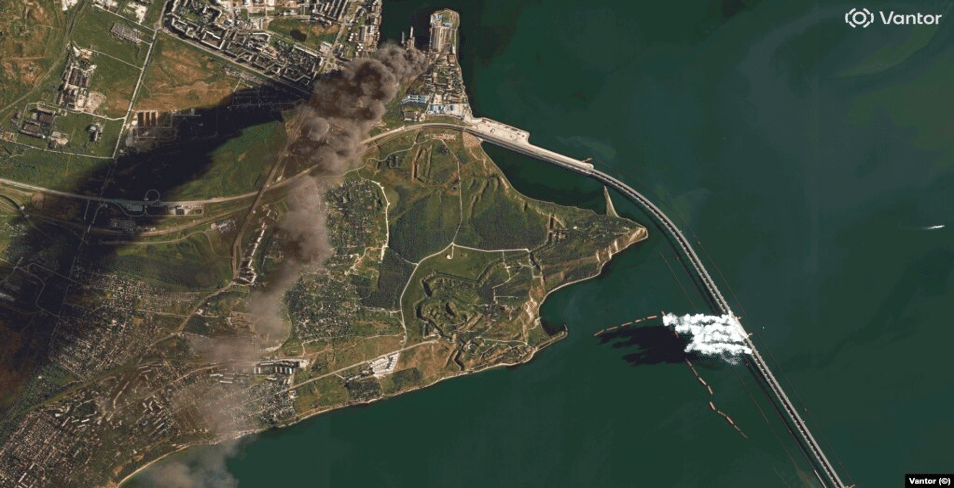
For a long time, Crimea served Russia as a logistics hub and an “unsinkable aircraft carrier.” Ukraine’s campaign is now cutting this artery from two directions. On land, Ukraine’s Defense Forces are striking the transport corridor along the M14 highway between Rostov-on-Don and Melitopol; at sea, they are interdicting small tankers and tugboats that supplied the occupation forces with fuel. In the summer of 2026, key airbases, including Hvardiiske and the airfield in Dzhankoi, were hit. According to Robert “Madyar” Brovdi, commander of Ukraine’s Unmanned Systems Forces, Ukrainian forces struck 196 Russian “shadow fleet” vessels and more than 100 energy facilities in a single summer month.
The strikes have also affected Crimea’s civilian infrastructure. Following large-scale attacks on electrical substations and transport hubs, the peninsula has increasingly resembled an isolated “island.” According to analysts, the destruction of a key thermal power plant, which supplied up to 60% of Crimea’s energy needs, triggered a cascading infrastructure failure. The occupation authorities are struggling to meet the basic needs of both the military contingent and the civilian population. Deutsche Welle بأن that fuel ration coupons were introduced on the peninsula in late May 2026 and ran out within a day. Repeated power outages in Sevastopol and other cities have led to states of emergency, disrupting electricity, water, internet, and mobile services. In northern Crimea, the infrastructure crisis has caused food shortages, as perishable foods spoiled when refrigeration equipment stopped working. The crisis has forced occupation administrations to urgently evacuate records (including from Kerch and Feodosia) to Krasnodar Krai and move to round-the-clock crisis management. As winter approaches, Moscow will have to address not only military logistics but also the civilian population’s ability to survive.
The civil resistance movement is another factor putting pressure on the occupation authorities. Despite the risk of severe reprisals, the Yellow Ribbon, ATESH and Zla Mavka movements, along with individual activists, conduct intelligence activities, distribute Ukrainian symbols and pass the coordinates of military facilities to Ukraine’s Defense Forces. Their actions show that, despite years of occupation, pro-Ukrainian sentiment and the capacity to resist remain in Crimea.
Ukraine’s actions have limited the Russian Black Sea Fleet’s freedom to operate near the Ukrainian coast. Moscow has responded by shifting pressure towards Ukraine’s port infrastructure, commercial shipping and exports. Russia’s systematic attacks on ports in Greater Odesa since summer 2026 have effectively halted Ukraine’s main maritime export route. In the short term, this strategy achieved its objective: shipping along the main route was interrupted. This did not mean that Ukraine’s exports stopped entirely—the country continued to use Danube and land routes, although they could not fully replace maritime transport. According to Ukraine’s Minister of Agrarian Policy, if the ports remain closed, potential export revenue losses from June 2026 to June 2027 could reach US$8 billion.
The effects of this campaign are already extending beyond Ukraine. On 15 October, drones struck two tankers near the Sulina Canal off the Romanian coast. One caught fire in Romanian territorial waters; the other was struck nearby. Seven crew members from one of the vessels were reported missing. Romania’s president confirmed that the vessels had been hit by drones but did not publicly attribute responsibility. A NATO source cited by Reuters said the drones were of Russian origin.
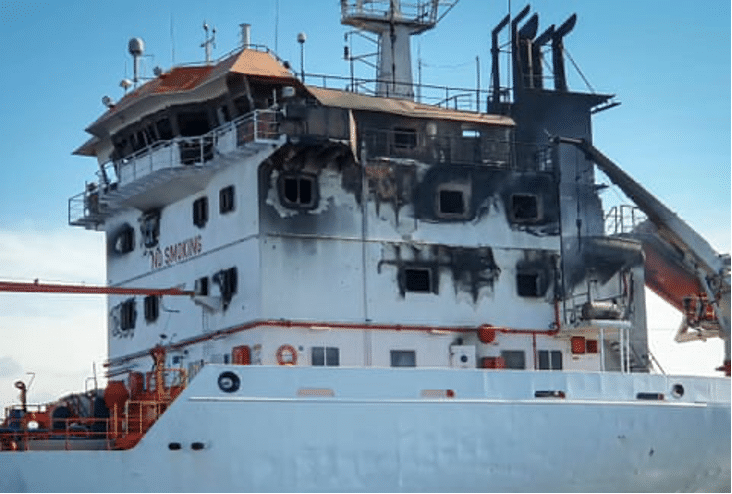
The Wine Trader ship was struck in the territorial waters of Romania, near Sulina, on Oct 15. Photograph: ARSVOM/AFP/Getty Images
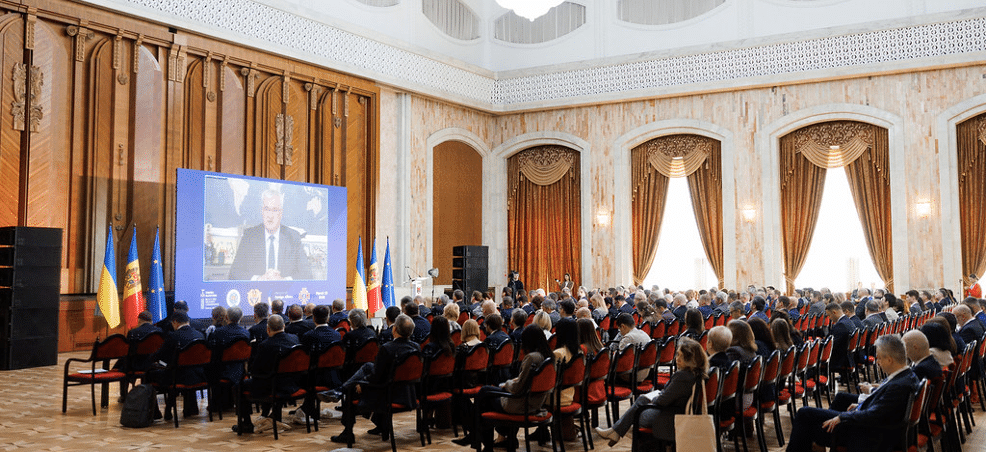
Ukraine’s asymmetric campaign has weakened Russia’s Black Sea Fleet and changed the regional security dynamic. The resumption of maritime exports in August 2023 and the withdrawal of Russian ships to the eastern part of the Black Sea created room for Romania, Bulgaria, Türkiye, and partner coalitions to play a more active role in protecting shipping. On the diplomatic front, Ukraine has been actively promoting the idea of making the Black Sea a secure zone under NATO’s umbrella. At the First Black Sea Security Conference in Bucharest, Ukraine’s foreign minister على ذلك the need to integrate Ukraine’s air-defense systems with those of the Alliance to create a comprehensive security network that would prevent further terror.
Beyond the direct naval confrontation, the shift in the Black Sea region’s balance of power calls for a reassessment by the international community, particularly the European Union and NATO. In response to Russian aggression, the EU adopted its first Black Sea Strategy, which identifies the region as an area of heightened geopolitical rivalry. Its main priorities include protecting critical infrastructure, such as grain ports on the Danube and energy facilities in Romania and Bulgaria, and deepening operational interoperability with Ukraine. However, as Centre for Defence Strategies experts Alina Frolova and Stepan Yakiymyak point out, the absence of a permanent Allied naval mission in the Black Sea leaves conceptual gaps in deterrence that Russia continues to exploit.
In turn, NATO’s updated Maritime Strategy gives the Black Sea region little strategic attention or detail. The Black Sea is mentioned only once in the entire strategy, and only nominally, as part of a general list of broader global and regional challenges facing the Alliance. The document neither recognizes nor analyses the scale of the military and hybrid threats created by Russia’s actions in the Black and Azov Seas, including the mining of shipping routes, attacks on port infrastructure in the Danube and Odesa regions, and the use of the “shadow fleet.” The strategy sets out neither the Alliance’s position nor specific mechanisms for collective deterrence or a permanent NATO naval presence in the region.
This approach stands in sharp contrast to the EU’s Black Sea Strategy, adopted in May 2025, and is pushing coastal NATO members and Ukraine to form regional coalitions and mine countermeasures groups to protect shipping.
In this configuration, Romania has taken on the role of one of Ukraine’s key political allies, reflecting its position on NATO’s eastern flank. Official Bucharest firmly supports Ukraine’s sovereignty, as set out in the joint security declaration with Ukraine and Moldova. Moreover, Romania’s Ministry of Foreign Affairs has strongly rejected attempts to promote Russian narratives domestically, as it did after former minister Andrei Marga made controversial statements calling for the partition of Ukrainian territory. Romania is directly experiencing the consequences of Russian terror: during attacks on Ukrainian ports on the Danube, debris from Russian attack drones has repeatedly fallen on Romanian territory, prompting the country to scramble fighter jets and issue air-raid alerts for border communities.
Cooperation with Bulgaria and Romania has also played a key role. Their mine-clearing efforts in the western Black Sea have helped ensure the safe passage of ships through their territorial waters. The NATO members with Black Sea coastlines—Türkiye, Bulgaria and Romania—have strengthened their regional cooperation in this area. In January 2024, they signed an agreement to jointly counter naval mines that threaten civilian shipping. In June 2026, the initiative conducted its tenth mission under Türkiye’s command, involving minehunters and support vessels from all three countries. Its goal is to ensure freedom of navigation in international waters by neutralizing drifting mines.
Meanwhile, the strategic partnership with the United Kingdom on maritime risk insurance helped restore commercial traffic and overcome Russia’s economic coercion. To consolidate these gains and protect shipping, the United Kingdom and Norway brought together more than 18 countries in the Maritime Capabilities Coalition in December 2023. The initiative provides Ukraine with practical support: through it, the Ukrainian Navy has received mine countermeasures vessels, including the British minehunters Chernihiv and Cherkasy, fast boats for special operations and modern reconnaissance systems. In addition, a training center was established in Romania, where Ukrainian marines are now training.
Türkiye remains the most complex actor, serving as a regional balancer. On the one hand, Ankara adheres to the Montreux Convention, having closed the straits to warships and thereby preventing the reinforcement of Russia’s naval grouping. Türkiye also does not recognize the annexation of Crimea, supports the peninsula’s Indigenous people, the Crimean Tatars (Qırımtatars), by providing refuge to those displaced, and seeks through its foreign ministry to help secure the release of Ukrainian political prisoners, although the Kremlin effectively blocks these efforts. On the other hand, Türkiye has not joined Western sanctions and, according to investigations and monitoring data, allows Russian vessels linked to the transport of grain from occupied territories to traffic through Turkish ports. Ukrainian media has بأن on schemes used to conceal the origin of grain and on the vessel Panormitis, whose unloading Kyiv asked Ankara to prevent. Ukrainian Shipping Magazine has also described the routes of the bulk carriers Matros Pozynich و Matros Shevchenko, which are linked to the transport of grain from occupied territories via Turkish ports. In this regard, Ukraine’s Presidential Commissioner for Sanctions Policy has characterized Türkiye as becoming a beneficiary of the protracted war.
On the diplomatic front, Ukraine uses the International Crimea Platform and related security formats to draw partners’ attention to the impact of Crimea’s occupation and Russian military activity on freedom of navigation and the security of the entire Black Sea region. The Crimea Platform also addresses the consequences of the occupation, from human rights violations and torture to the militarization of education.
Despite the importance of these regional efforts, the main gap remains the lack of a comprehensive, long-term framework to deter Russia in the region. A significant conceptual divide persists: Ukraine’s primary goal is the full de-occupation of Crimea and the restoration of the international legal order, while most partners pursue more limited aims—to contain escalation, protect commercial shipping, and avoid direct confrontation with Russia.
To fully neutralize the Russian threat in the Black Sea basin and address gaps in the regional security architecture, the international community must move from declaratory statements to concrete, sector-specific action. First, this requires NATO to give the region sustained attention. The Alliance should develop a separate Black Sea strategy that provides for expanded reconnaissance missions, mechanisms for a permanent naval presence to guarantee freedom of navigation, and a coordinated collective response to the threat posed by mines.
Practical support for Ukraine’s maritime capabilities remains equally critical. Partners should substantially expand funding for and the activities of the Maritime Capabilities Coalition, focusing on the transfer to Ukraine of mine countermeasures vessels, modern coastal missile systems, maritime electronic warfare equipment and technologies to scale up production of next-generation autonomous drones. Maritime military support should be accompanied by integrating Ukraine’s radar surveillance and air-defense systems into NATO’s eastern-flank network, particularly in Romania and Poland. Creating such a unified protective “umbrella” would help safeguard the strategic port infrastructure of Greater Odesa and the Danube cluster from regular Russian attacks.
In the economic and legal spheres, the main challenge is countering Russia’s “shadow fleet” and closing channels used to evade sanctions. International maritime organizations and littoral states, especially Türkiye, should implement strict mechanisms to verify cargo certificates of origin. Vessels that systematically switch off their transponders or use falsified bills of lading to export grain or petroleum products from occupied territories should face cargo seizure or a blanket ban on port services. This pressure should be complemented by robust secondary sanctions against companies and jurisdictions that supply Russia’s military-industrial complex with dual-use microelectronics, since these components enable the aggressor to continue producing ballistic and cruise missiles.
Finally, all military and economic efforts should be integrated into a unified political framework. The international community should comprehensively institutionalize the International Crimea Platform, establishing it as the indispensable diplomatic mechanism for coordinating efforts. The Platform should serve not only as a forum for documenting Russian crimes, but also as an effective tool for developing a joint plan for the full de-occupation and demilitarisation of the Crimean Peninsula and its post-war reintegration.
By turning Crimea into a vast military base, Russia made the peninsula a source of systemic threat not only to Ukraine but to the entire Black Sea region. The consequences of this militarization extend far beyond the military sphere, resulting in a major humanitarian, cultural, and environmental catastrophe. At the same time, the myth of the Russian fleet’s unquestioned dominance has been shattered: through unconventional and asymmetric actions, Ukraine has dealt Russia a significant defeat at sea. Yet these tactical successes and the emergence of flexible, ad hoc coalitions cannot fully substitute for a durable security architecture. As long as international institutions act in a fragmented way and some regional actors continue to hedge, Russia will keep finding openings for hybrid maneuvers and sanctions evasion.
Any proposals to “freeze” the conflict or preserve the status quo are an illusion that will inevitably lead to a new and even more destructive escalation. Long-term stability in the region and the restoration of global food security are impossible while Crimea remains occupied. The only viable path to a sustainable and just peace is the full de-occupation and demilitarisation of the peninsula, reliable protection of freedom of navigation, and Ukraine’s systematic integration into the Euro-Atlantic security space.
إن الآراء والأفكار والمواقف المعبر عنها في الأوراق المنشورة على هذا الموقع تخص المؤلفين وحدهم، ولا تعكس بالضرورة آراء مركز الحوار عبر الأطلسي أو لجانه أو منظماته التابعة. وتهدف هذه الأوراق إلى تحفيز الحوار والنقاش، ولا تمثل مواقف سياسية رسمية لمركز الحوار عبر الأطلسي أو لأي منظمات أخرى قد يكون المؤلفون مرتبطين بها.